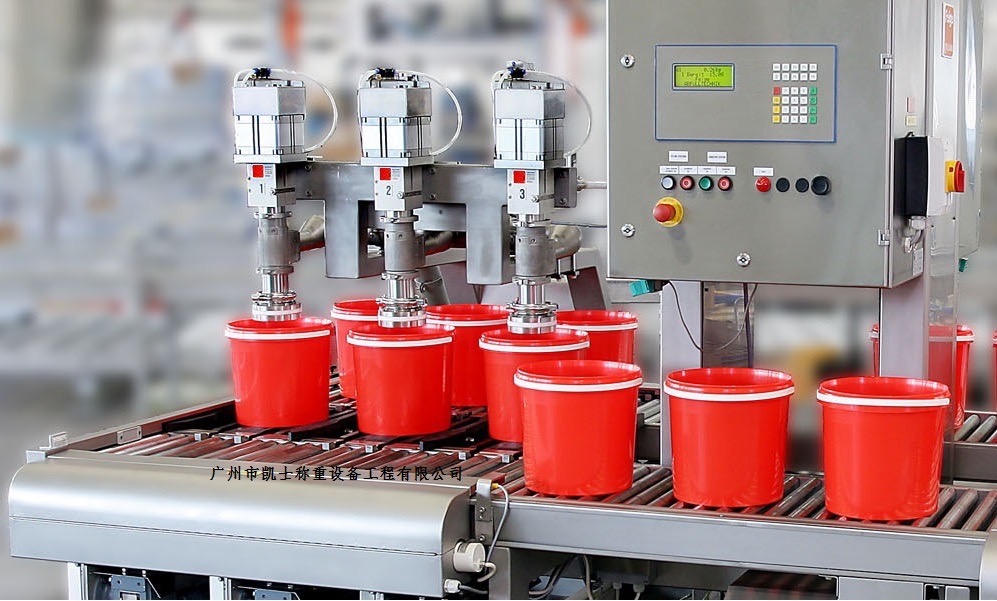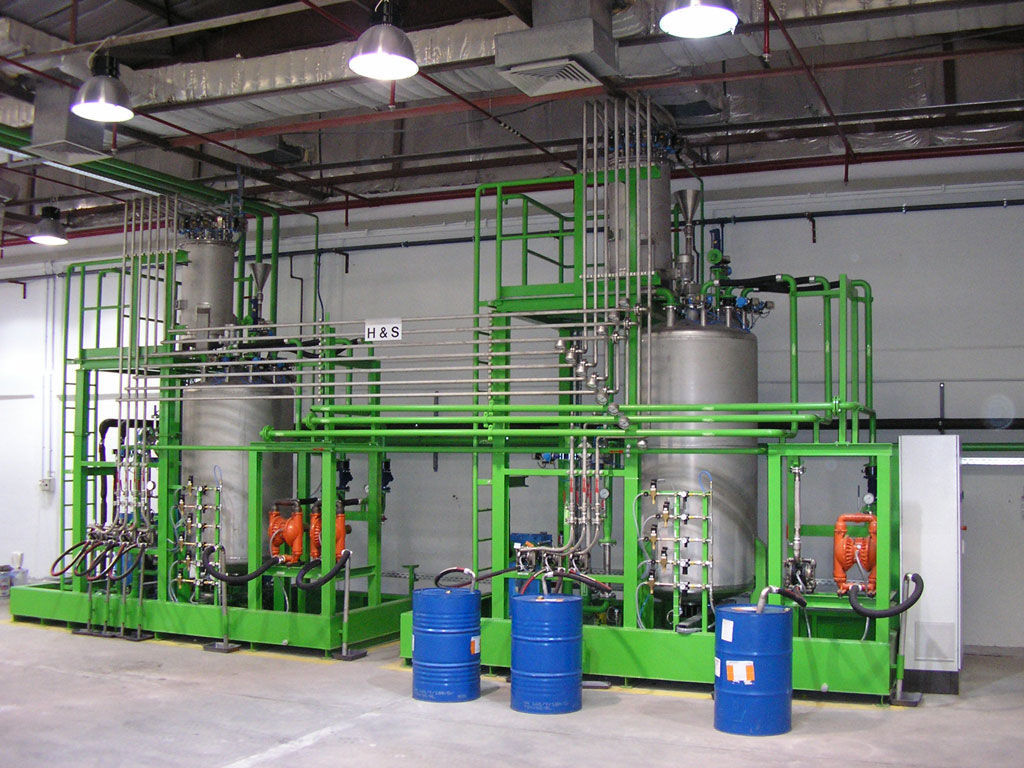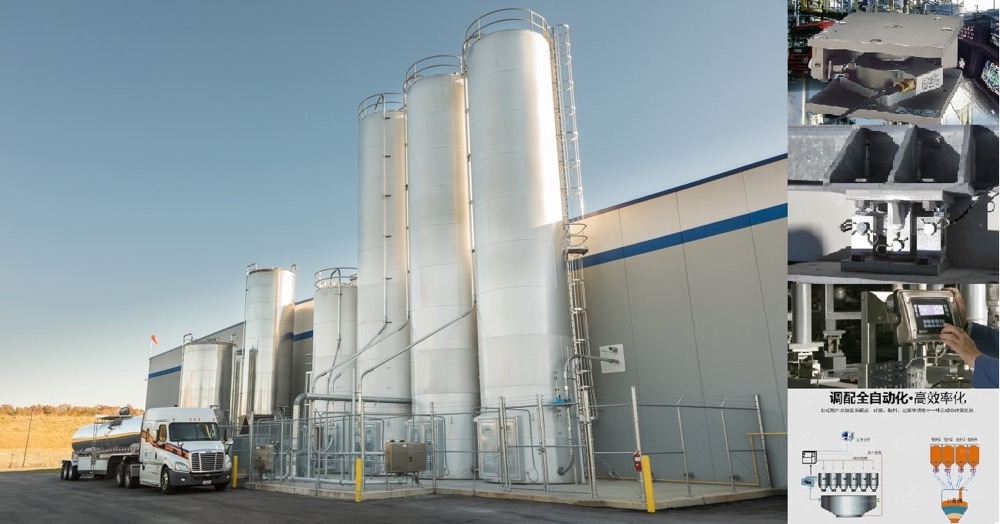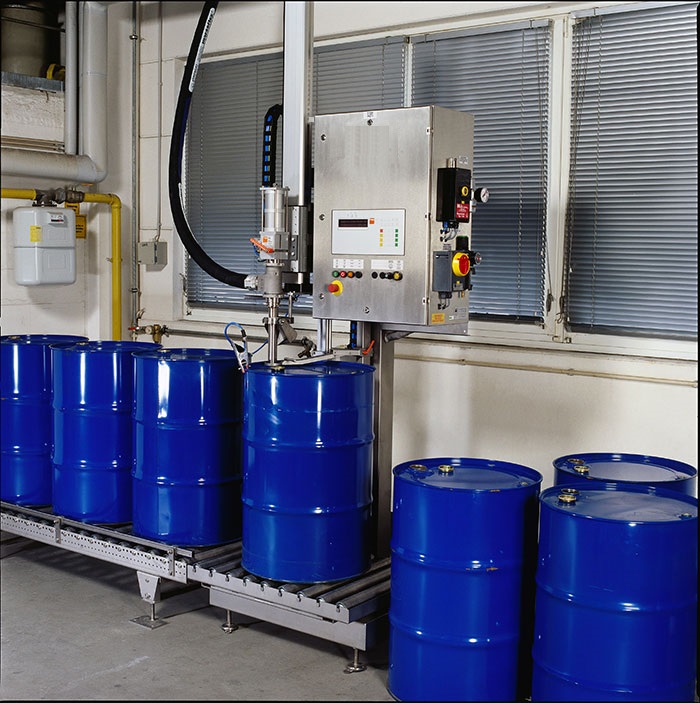





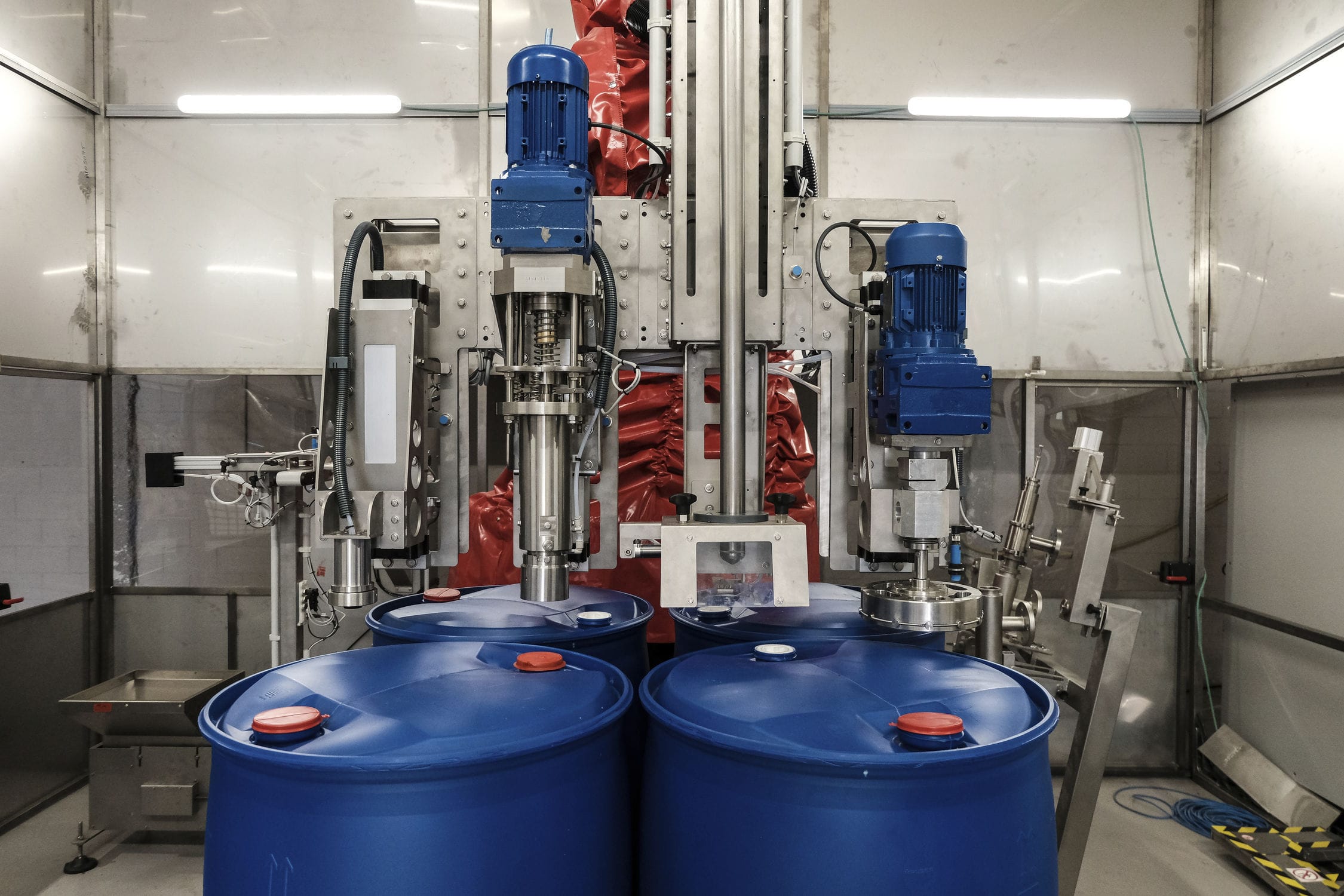
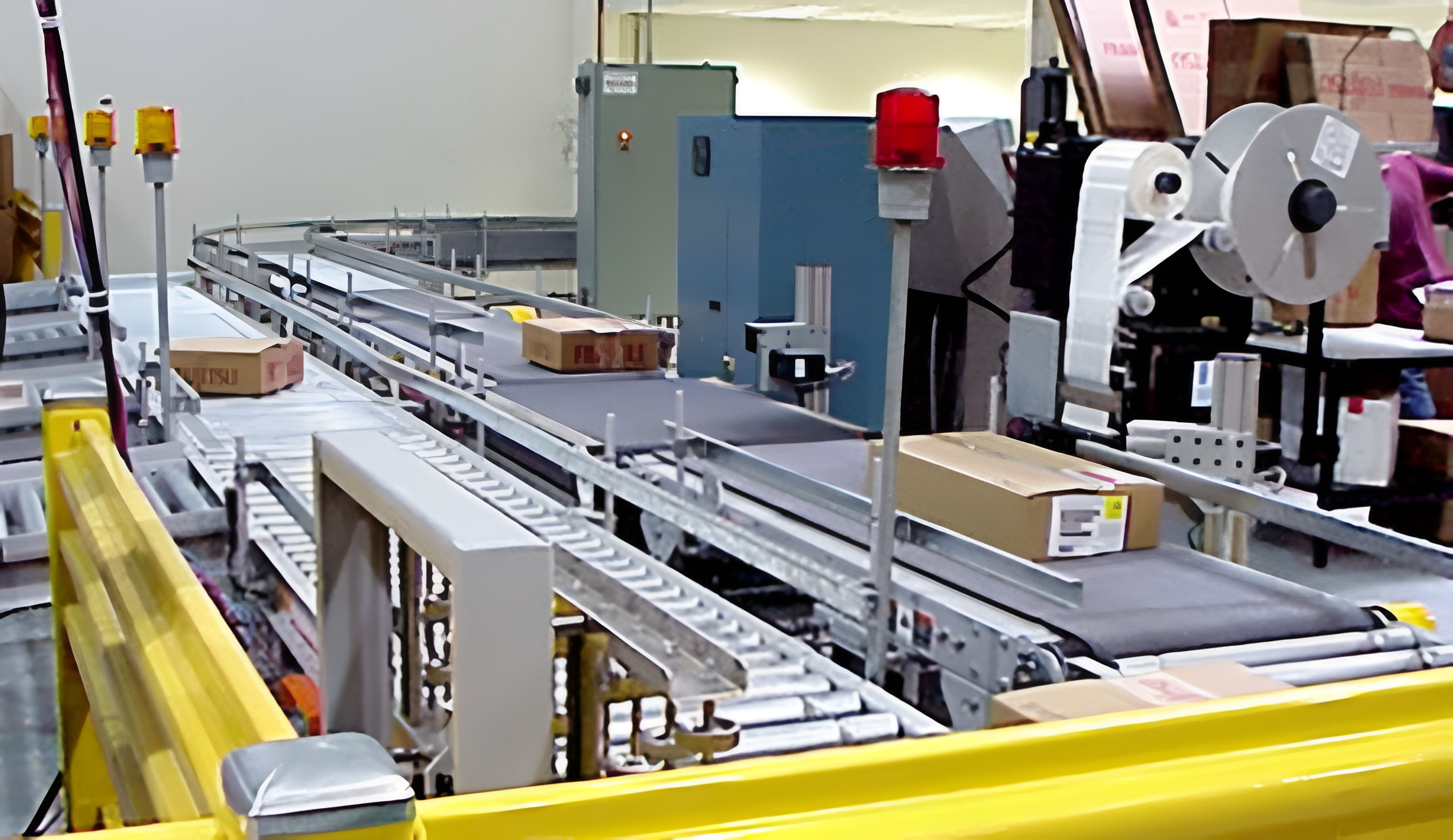
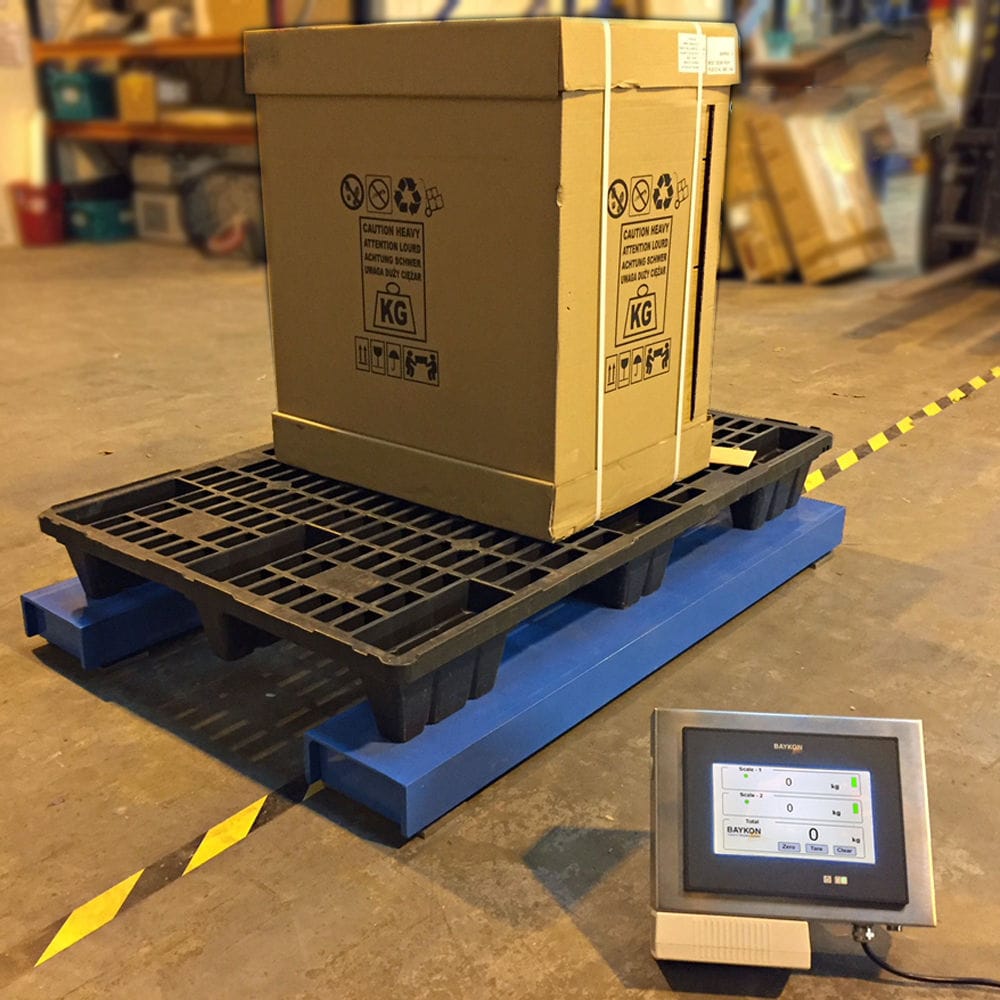


Weighing Explosion-proof filling machines are controlled by weight filling with self-adjusting filling nozzles that are adapted to the filling container by means of an adjustable gate or an optional feed screw drive. By setting the gate size through the container, the filling can be set for double dosage, bottom-up filling, facilitating quick changeover.

 020-34563445
The weighing explosion-proof Filling machine integrates formula management, filling and weighing, personnel management, report generation, interface provision, and data management. The most critical aspect of the software is to solve the data communication between the computer and the Electronic scale. Use a display divider to connect the display at the filling site to the computer display in the office. Connect the two electronic scales at the filling site to the two serial ports of the computer host in the office using two serial communication lines. Use a keyboard tap changer to connect the small keyboard at the filling site to the computer in the office (workers at the filling site operate the office host through the small keyboard). The distance between the administrator's office and the filling site should be 5-8m. Explosion proof filling machines have better openness, scalability, and compatibility, improving the efficiency of user interface configuration and bringing new creative concepts of equipment level automation. In SIMATIC products, it can be used to configure all Windows CE based operation panels, from the smallest panel to touch control panels and multifunctional panels. The quantitative filling machine is combined with the control core of PLC, and the CPU 313C from SIMATIC S7-300 series is used to design the touch screen configuration for industrial filling. It has some good functions, including manual operation, fault alarm, formula management, trend chart (display and analysis), and printing results. The automatic filling machine automatically transports the empty barrel forward on the conveyor belt. A filling valve is installed above the conveying path, and the filling valve fills the empty barrel with liquid one by one. After the barrel is filled, it continues to be transported forward to the next process. Among them, the filling valve is connected to the liquid storage tank, and the filling valve adopts an electronic scale to control the amount of liquid poured into the barrel. For the correspondence between the position of the barrel mouth and the filling valve, it is achieved by installing position sensors to sense the position of the barrel body, and controlling the intermittent conveying of the conveyor belt through the position signal of the barrel body. It includes a conveyor belt for conveying the barrel body and a frame set on one side of the conveyor belt. The frame is rotatably connected to a filling turntable, and the filling turntable is equipped with multiple electronic scales in the interval ring. The detection scale is connected to a filling platform, and a storage tank driven by a middle power device is installed above the filling turntable on the frame. The storage tank is surrounded by multiple filling valves corresponding to the filling platform, and the frame is equipped with inlet and outlet pulleys. The filling valve includes a valve body and a sliding valve stem installed inside the valve body. The bottom of the valve body is equipped with a filling nozzle, and the gap between the bottom of the valve stem and the filling nozzle is the filling port, The top of the valve body is equipped with a double stroke cylinder, and the top of the valve stem is connected to the double stroke cylinder.
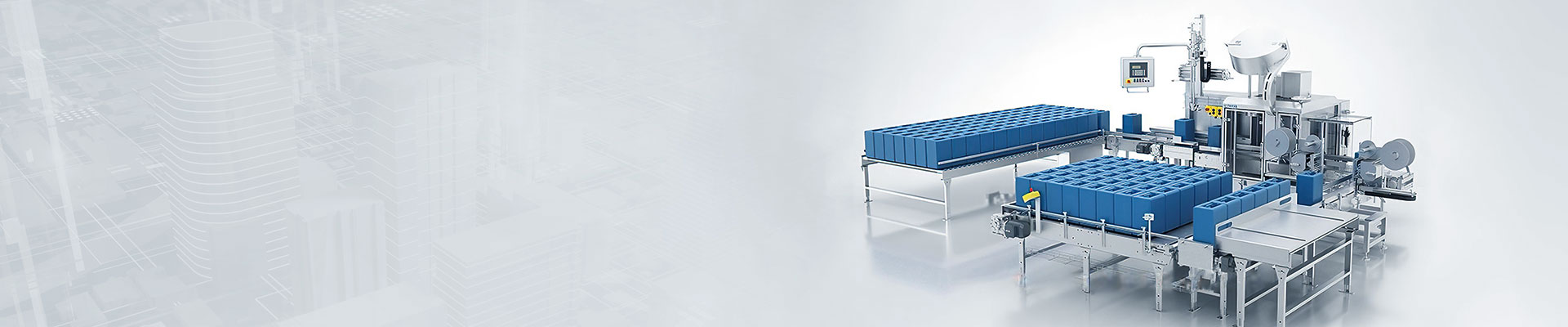
The weighing and filling machine includes a conveyor for empty buckets to be filled, a main filling area, a bucket transition conveyor, a weighing and filling area, and a conveyor for filled buckets. A bucket support plate is set up in the main filling area to match the conveyor for empty buckets to be filled, and a main filling machine is set up above the bucket support plate. The buckets filled by the main filling machine are sent to the bucket transition conveyor. A feeding scale corresponding to the bucket transition conveyor is set up in the weighing and filling area, and an automatic filling machine is set up above the double-layer scale. The automatic filling machine replenishes the buckets in real time according to the weighing situation of the filling scale. The buckets filled by the automatic filling machine are sent to the conveyor for filled buckets. The sentence is:. The automatic filling machine is arranged parallel to the empty material bucket conveyor and the material bucket transition conveyor. The main filling area is set between the empty material bucket conveyor and the material bucket transition conveyor. The filled material conveyor is arranged parallel to the material bucket transition conveyor. The weighing and replenishment filling area is set between the filled material bucket conveyor and the material bucket transition conveyor. A first pushing mechanism is set on one side of the corresponding empty material conveyor in the main filling area. The first pushing mechanism is used to push the material buckets on the empty material bucket conveyor to the material bucket support plate in the main filling area, and at the same time, push the completed filled material buckets on the material bucket support plate out of the main filling area and onto the material bucket transition conveyor; A second bucket pushing mechanism is installed on one side of the bucket transition conveyor corresponding to the weighing and replenishing filling area. The second bucket pushing mechanism is used to push the buckets to be replenished on the bucket transition conveyor to the weighing and replenishing filling area, and at the same time, extrude the buckets that have been replenished and filled on the weighing scale from the weighing and replenishing filling area to the filled bucket conveyor. The conveyor for empty material buckets to be filled and the conveyor for already filled material buckets are a single conveyor structure. The corresponding part of the main filling area and the previous conveying part are the conveyor for empty material buckets to be filled. The corresponding part of the weighing and replenishment filling area and the subsequent conveying part are the conveyor for already filled material buckets. Multiple leakage holes are set on the support plate of the material bucket, and each leakage hole corresponds to the discharge port of the filling head set above it. A material collection groove is set below the support plate of the material bucket.
The empty material buckets on the conveyor for filling are transported to the position corresponding to the main filling area under the push of the first bucket pushing mechanism. The empty material buckets on the conveyor for filling are pushed onto the bucket support plate, and at the same time, the buckets that have completed the initial filling on the bucket support plate are squeezed out onto the transition conveyor. The main filling machine performs material filling on the empty material buckets, and the buckets that have completed the initial filling are sent by the transition conveyor to the position corresponding to the weight replenishment filling area. Under the push of the second bucket pushing mechanism, the material bucket on the transition conveyor is pushed onto the explosion-proof weighing scale, and at the same time, the material bucket that has completed the replenishment filling on the electronic weighing scale is extruded onto the filled material bucket conveyor. The material bucket that has been squeezed onto the filled material bucket conveyor is the product that has completed two filling processes. Under the action of the weighing seat moving mechanism, the various filling scales are pulled apart to ensure that the material buckets do not interfere with each other during weighing. The materials that have completed the initial filling will be independently weighed after the anti-corrosion scales are separated. After weighing, the sun proof weighing scale will transmit the data to the PLC for processing and backup. After the PLC data processing is completed, the automatic filling machine will fill and replenish each barrel according to the PLC requirements. The automatic filling machine will fill the material to ensure the accuracy of replenishment; The automatic filling machine automatically adds materials to each corresponding material bucket according to the compensation instructions issued by the PLC for each electric cylinder suction component. The amount of material added is calculated by weighing and the actual weight is processed by the PLC. After compensation is completed, under the action of the weighing seat moving mechanism, the stainless steel weighing scale is driven to close for subsequent extrusion. There is a longitudinal separation protrusion between the material bucket support plate and the material bucket transition conveyor in the main filling area. The longitudinal separation protrusion is higher than the conveying surface of the material bucket transition conveyor. Through the longitudinal separation protrusion, the material bucket on the material bucket support plate is tilted in a lower position on the material bucket transition conveyor and higher on the longitudinal separation protrusion during the process of being pushed out. Finally, relying on the self weight of the material bucket pushed to the material bucket transition conveyor, it completely separates from the material bucket on the material bucket support plate and falls onto the material bucket transition conveyor. There are multiple adjacent to each other to be filled buckets on the conveyor for empty buckets to be filled. The bucket support plate is equipped with the same number of filled buckets as on the conveyor for empty buckets to be filled. The driving rod of the first bucket pushing mechanism is connected to the pushing plate, and the length of the pushing plate is greater than the arrangement length of the multiple to be filled buckets arranged side by side on the conveyor for empty buckets to be filled. That is, the pushing plate can simultaneously push multiple to be filled buckets arranged side by side on the conveyor for empty buckets to be filled.
The quantitative filling machine is equipped with an edge that extends outward at the upper opening of the material bucket. During the process of pushing out the already filled material bucket on the support plate of the empty material bucket conveyor, the edge of the material bucket to be filled is closely adjacent or overlapped with the edge of the already filled material bucket. The longitudinal separation protrusion is used to make the end of the material bucket support plate close to the transition conveyor of the material bucket higher than the conveying surface of the transition conveyor of the material bucket, forming a certain drop. When the edge of the material bucket to be filled is overlapped with the edge of the already filled material bucket, the edge of the already filled material bucket overlaps above the edge of the material bucket to be filled. During the process of squeezing and pushing out the material buckets, Under the action of the longitudinal separation protrusion of the material bucket and combined with the gravity of the filled material bucket, The material buckets that are closely or overlapped with each other have been completely separated from each other. In addition, there is a longitudinal separation protrusion between the filling weighbridge in the weighing and filling area and the filled material bucket conveyor. The longitudinal separation protrusion is higher than the conveying surface of the filled material bucket conveyor. Through the longitudinal separation protrusion, the material buckets on the filling weighbridge are tilted in a lower position on the filled material bucket conveyor and higher on the longitudinal separation protrusion during the process of being pushed out. Finally, relying on the self weight of the material buckets pushed onto the filled material bucket conveyor, they completely separate from the material buckets on the stainless steel weighbridge and fall onto the filled material bucket conveyor.
Technical Specifications
Maximum weighing: 300kg
Quantitative range: 100kg~300kg
Division value: 100g
Canned precision: OIMLR61 × (0.2)
Filling speed: 10-20 cans/hour
Power supply: AC220V50Hz
Usage pressure: 0.5MPa
Control mode: 2-speed control
Transportation method: The tank adopts manual transportation method. Valve material: SUS-304 (optional: SUS-316)