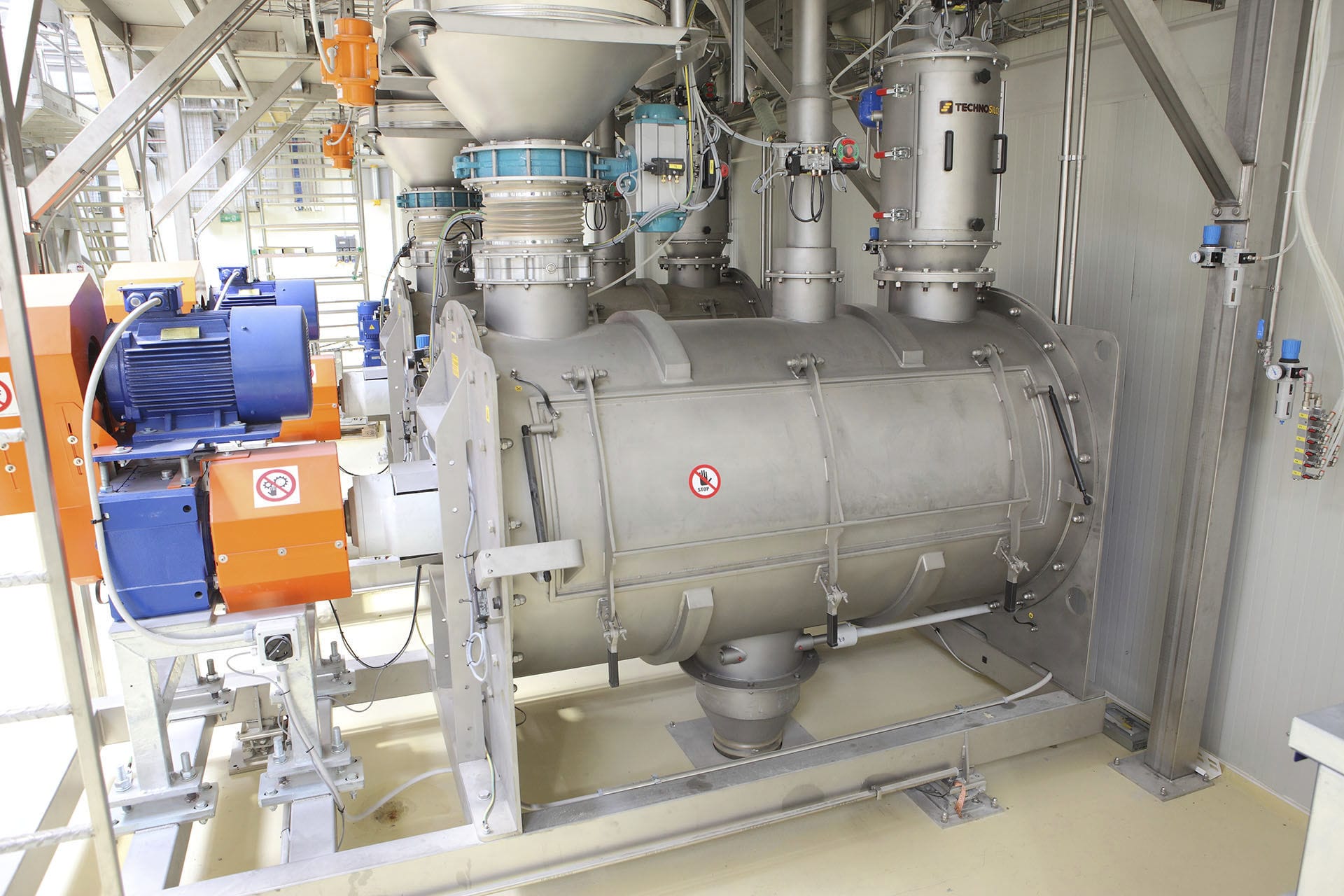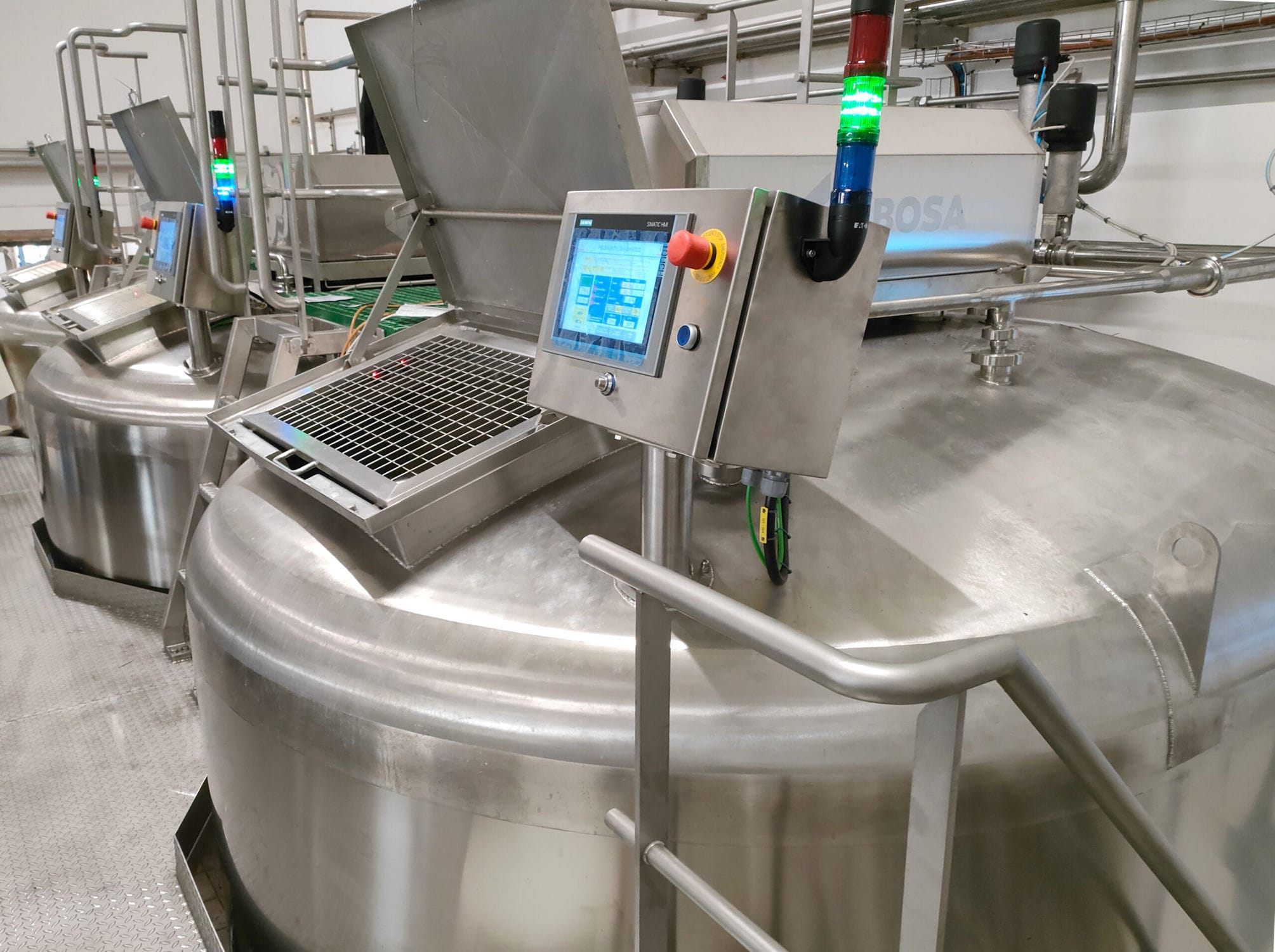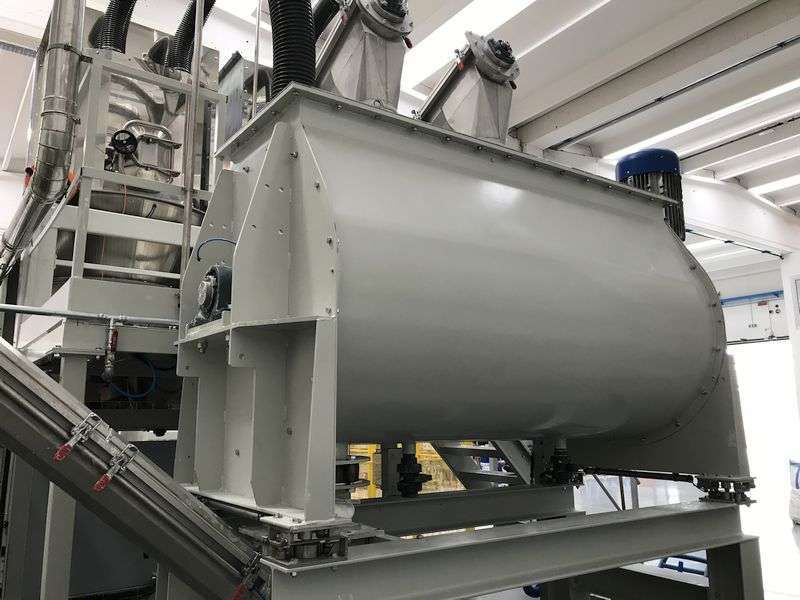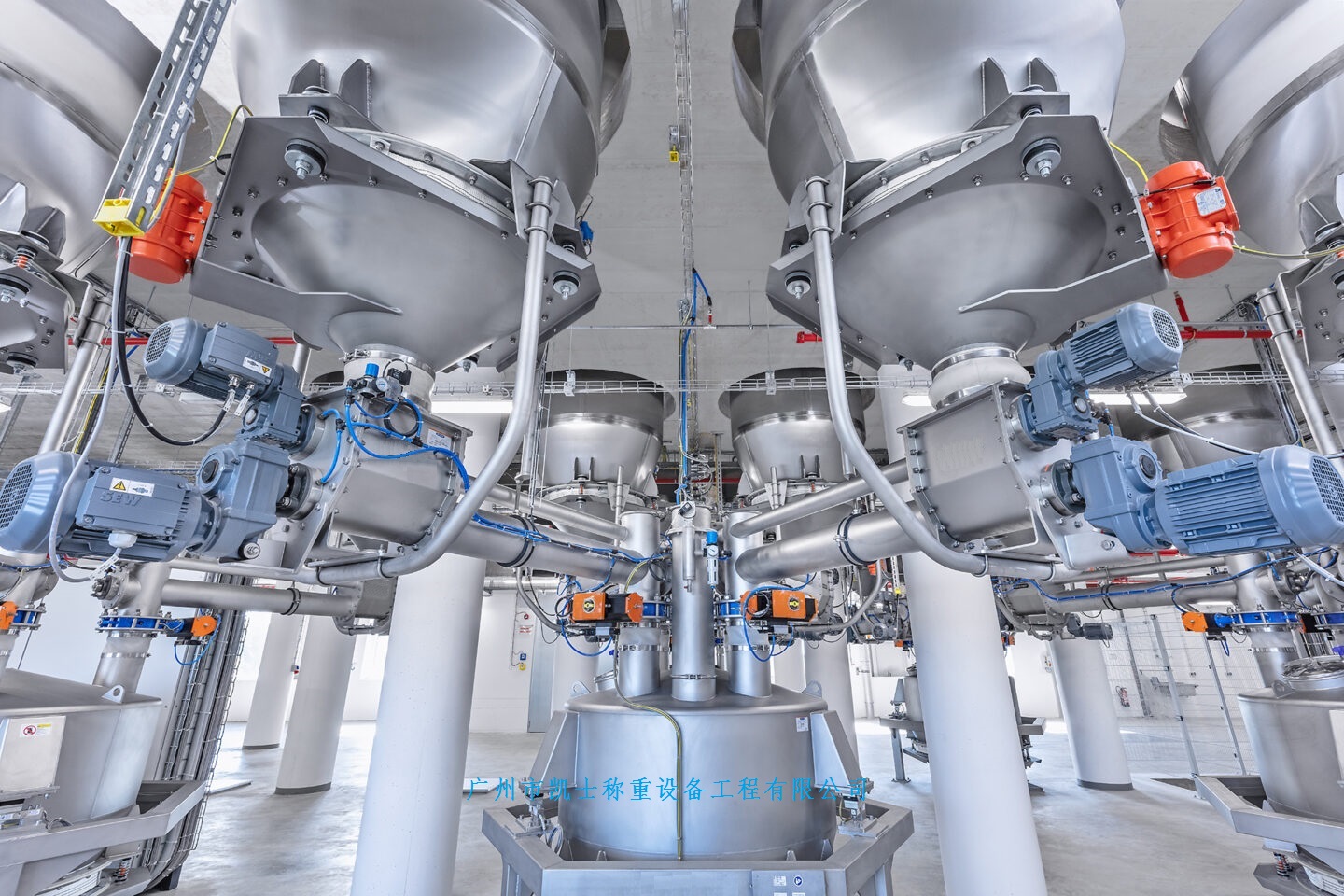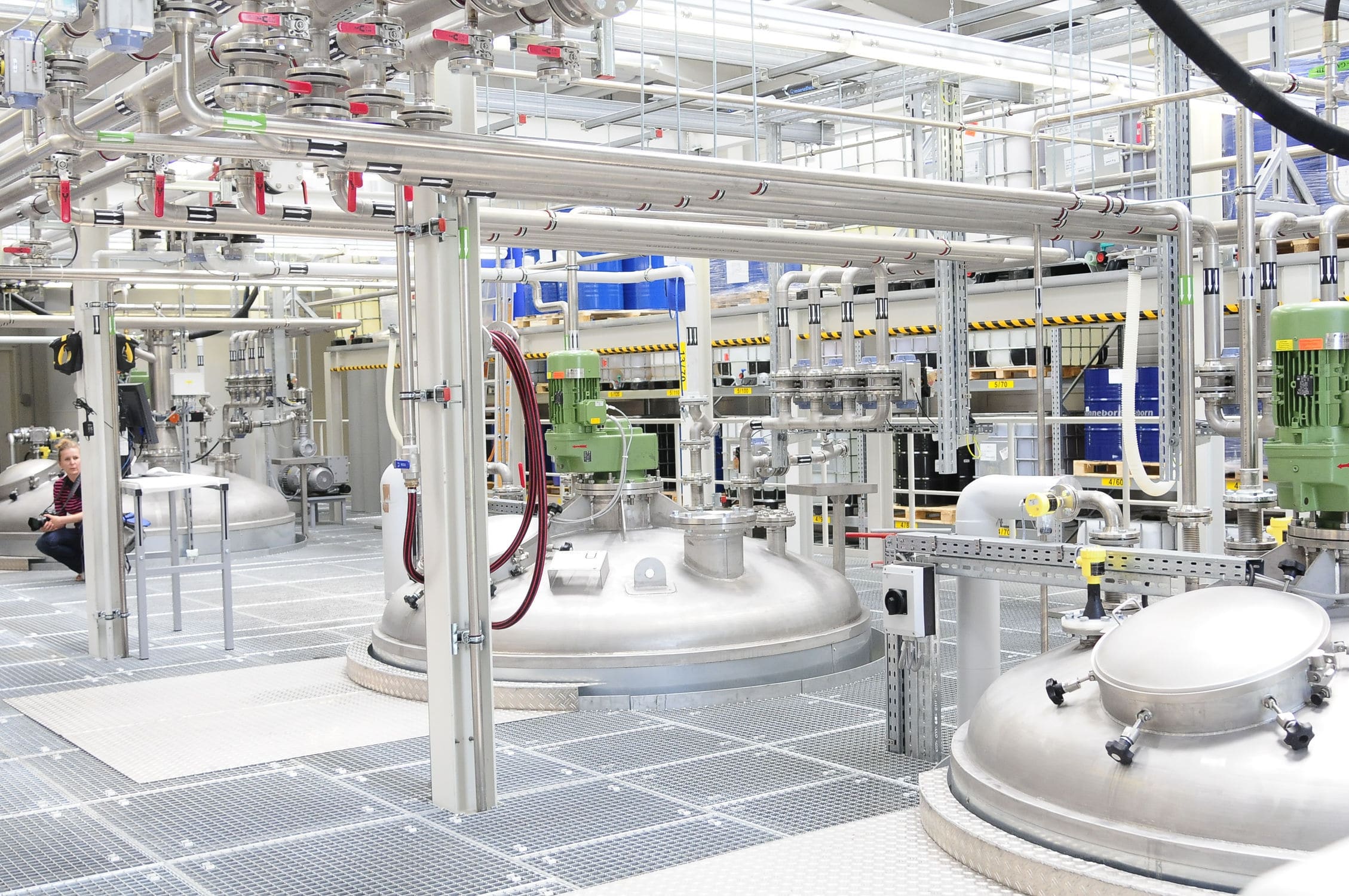




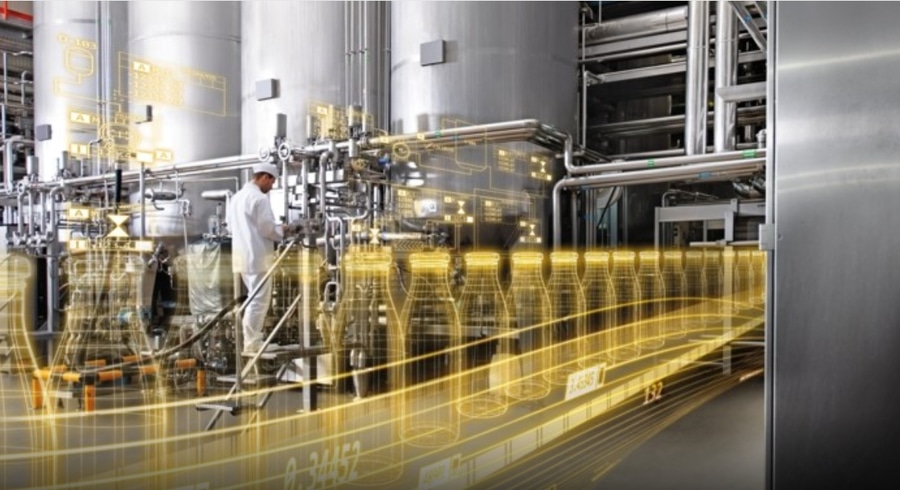
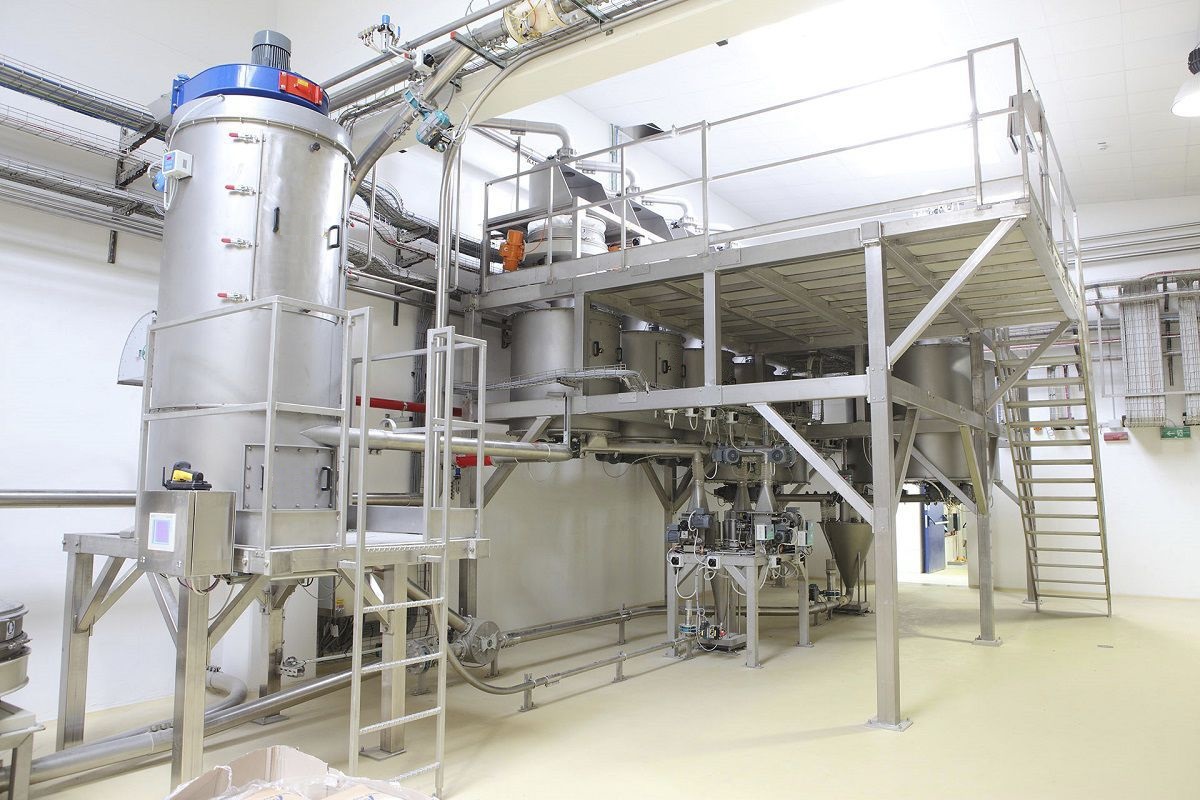
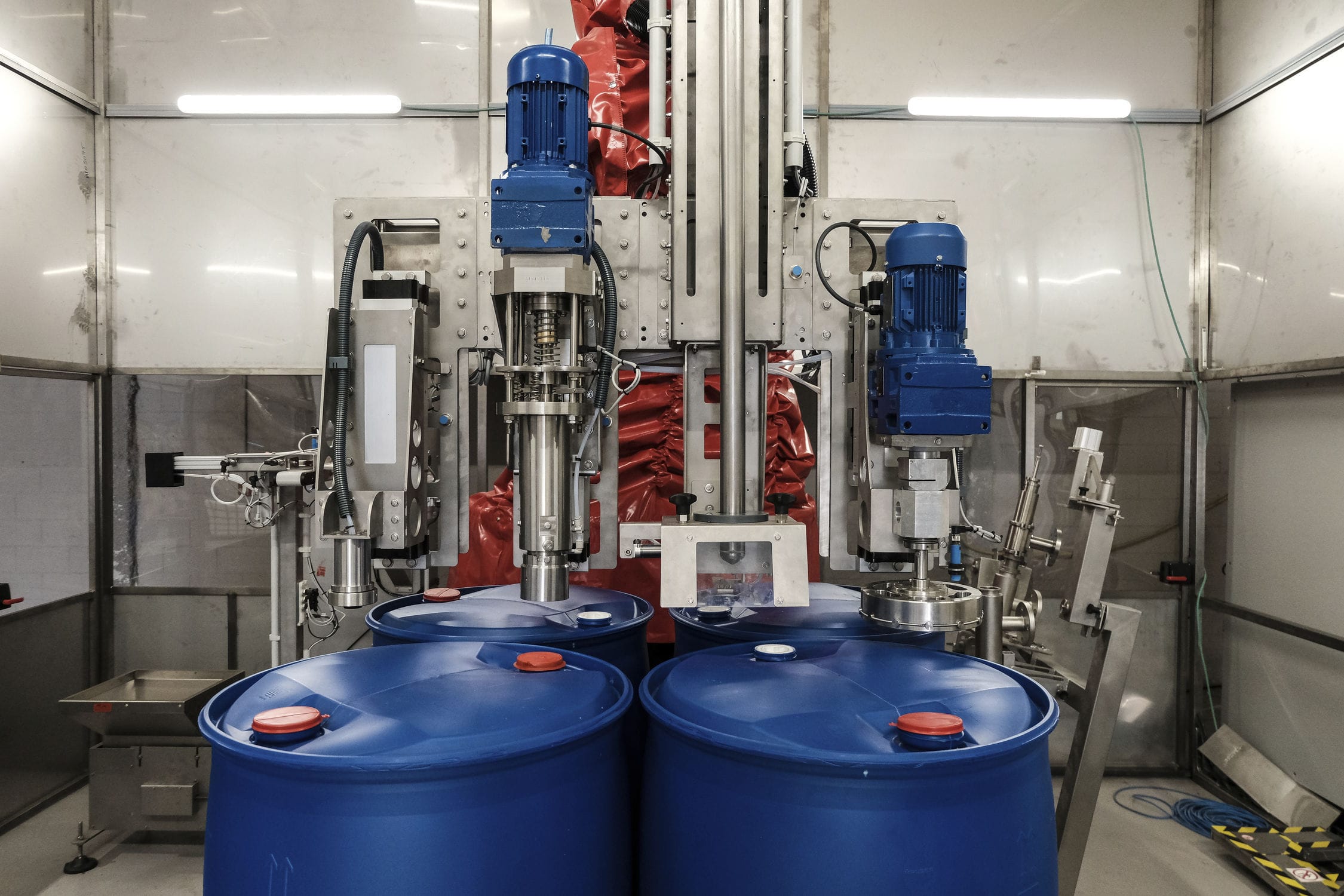
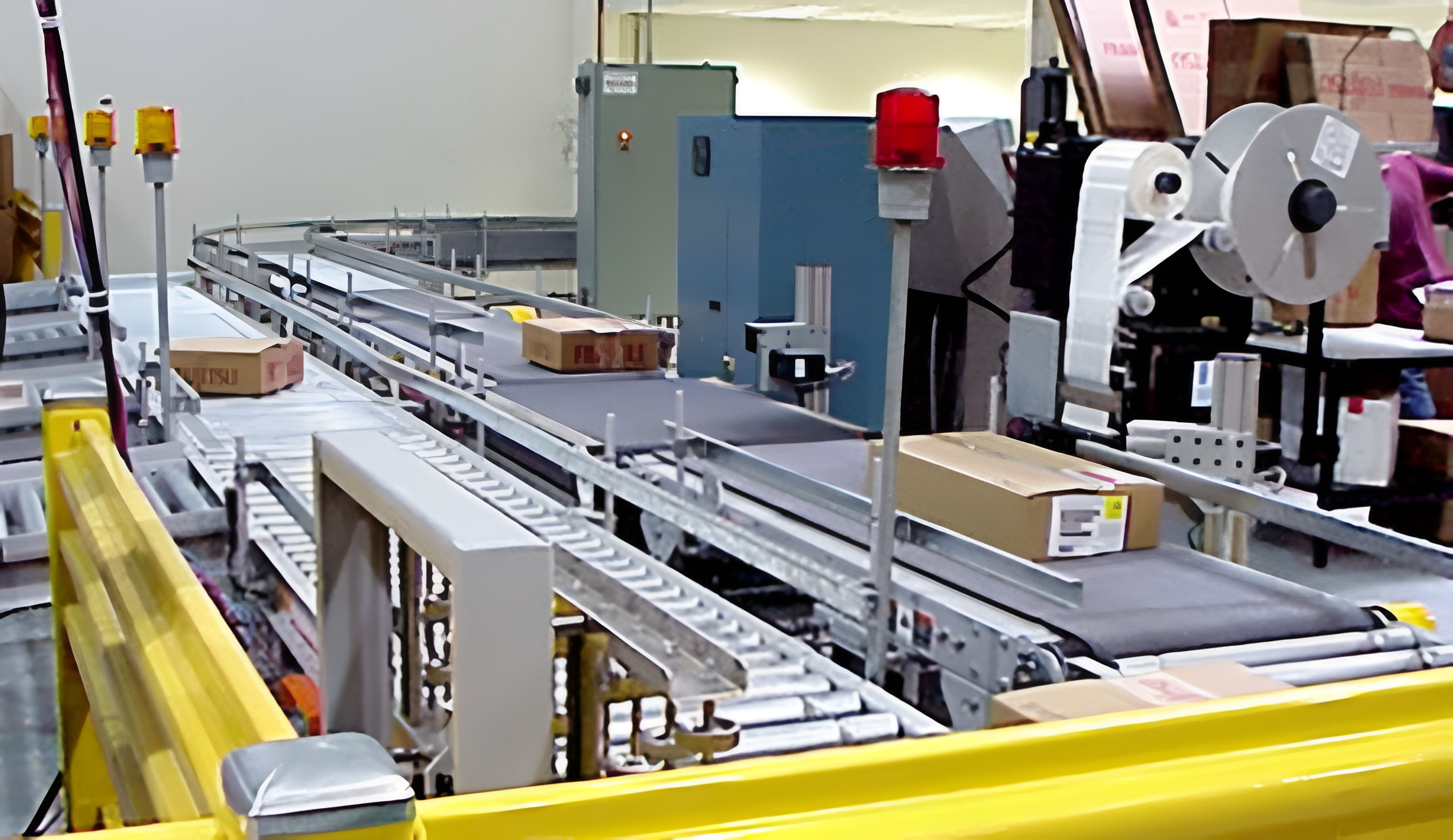
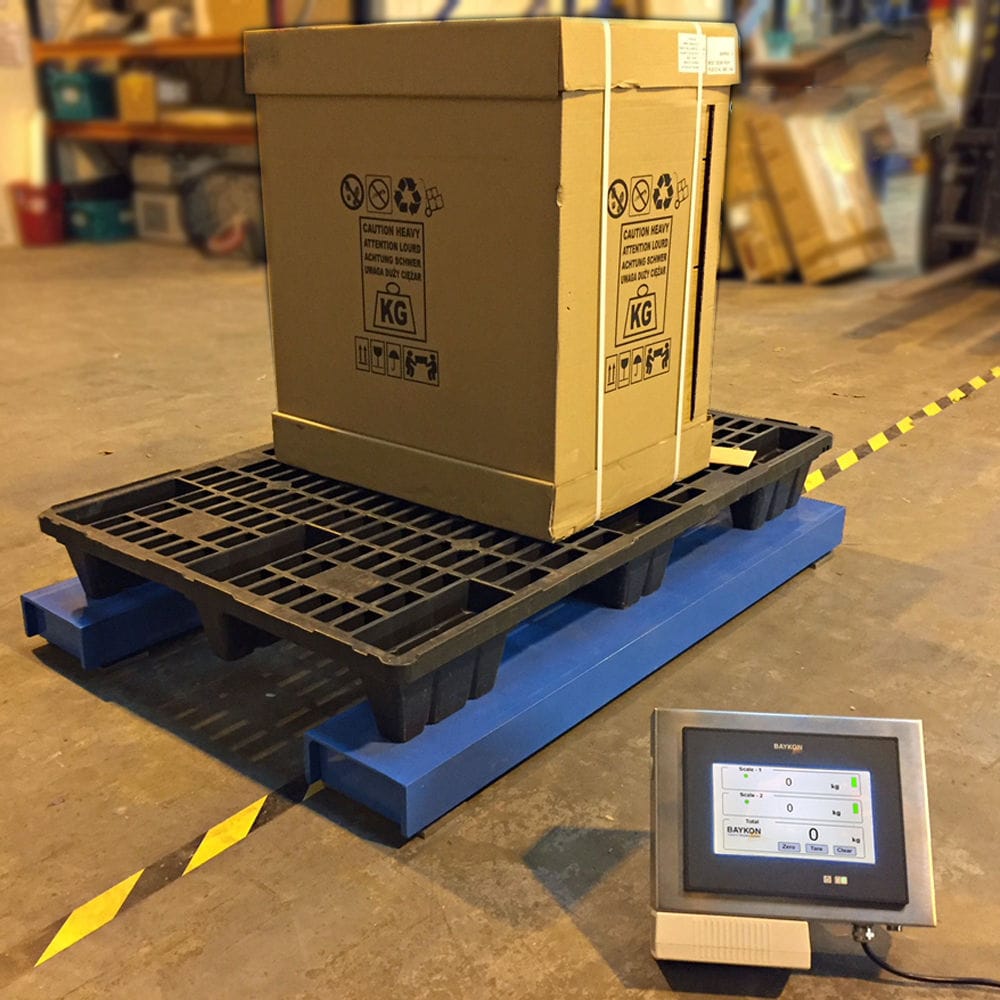


TheSaw shaft weighing feeder adopts automatic control to realize the automatic control and supervision of raw material feeding, weighing and metering, vacuum feeding, dispersion and mixing, etc. The dispersion time and cylinder number can be selected and adjusted on the computer according to the production requirements.

 020-34563445
After the materials in the weighing and feeding system of the saw shaft Feeder are weighed and measured, they are added in sequence according to the formula displayed by the weighing instrument. The weight of each powder material is recorded by PLC. After the high-speed dispersion is completed, the PLC automatically opens the bottom valve of the reactor, the sand mill, and the transfer pump, and transmits the materials to the paint mixing tank. After the sand grinding is completed, the PLC controls the automatic addition of additives, and after the inspection is qualified, the filtration and weighing packaging are carried out. The PLC records the total amount of all materials added and the production volume of the product. The automatic feeding system mainly consists of the reactor, the coarse feeding mechanism, the fine feeding mechanism, the weighing cylinder, the weighing module, the screw mechanism, the PLC control system, and the pneumatic system. When the automatic feeding system is working, the coarse and fine feeding mechanisms add materials simultaneously. According to the output signal of the weighing module, the PLC control system controls them respectively according to the set value of weighing. When the weighing sensor weighs to a certain value, the coarse feeding mechanism stops adding materials, and the fine feeding mechanism continues to add materials until it reaches the system set value and stops. The screw mechanism controls the weighing cylinder to pour the materials into the qualified receiving tank for a qualified weighing process. If the feeding mechanism adds materials out of tolerance, the screw mechanism automatically pours the weighed materials into the unqualified receiving tank, and the system gives a prompt message. When the material level in the storage bin decreases to a certain amount, the alarm will sound an audible and visual alarm to prompt the operator to add materials to ensure the continuous operation of the automatic feeding system.
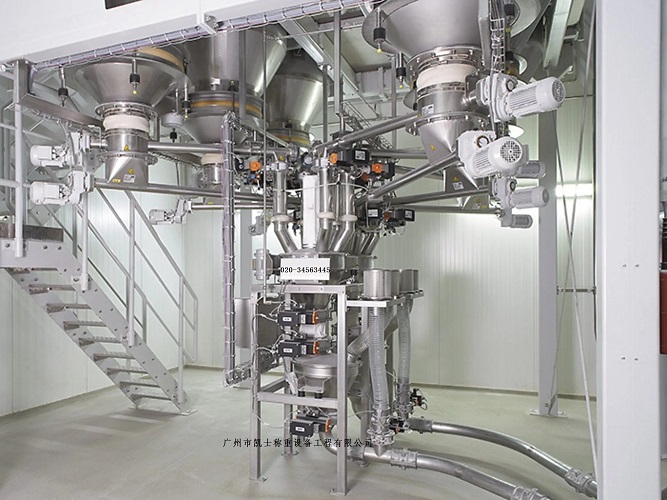
The weighing Feeding machine can control the batching and weighing of 4 types of materials through the weighing instrument and PLC controller, and store 4 sets of batching formulas. The contact output of the weighing instrument is controlled by PLC to control the slow and fast feeding, discharging of materials, and manual addition of materials. RS-232 communication can be connected to an external printer to output data for quality control, raw material lifting, material distribution, storage bin, hopper scale, mixer, etc. The Weighing system mainly starts from the storage bin to the mixer, and the material is set by the weighing instrument according to the formula and measures the materials entering the hopper scale. After comparing with the respective formula set values through the comparator, various signals are output to the PLC controller. The material transportation, discharging, stirring, material level detection, alarm, zero return detection and other processes are controlled by the PLC. The set value of the material can be input on the keyboard on site and adjusted at any time; or it can be controlled through communication (RS-232) by the upper computer according to the batching relationship.
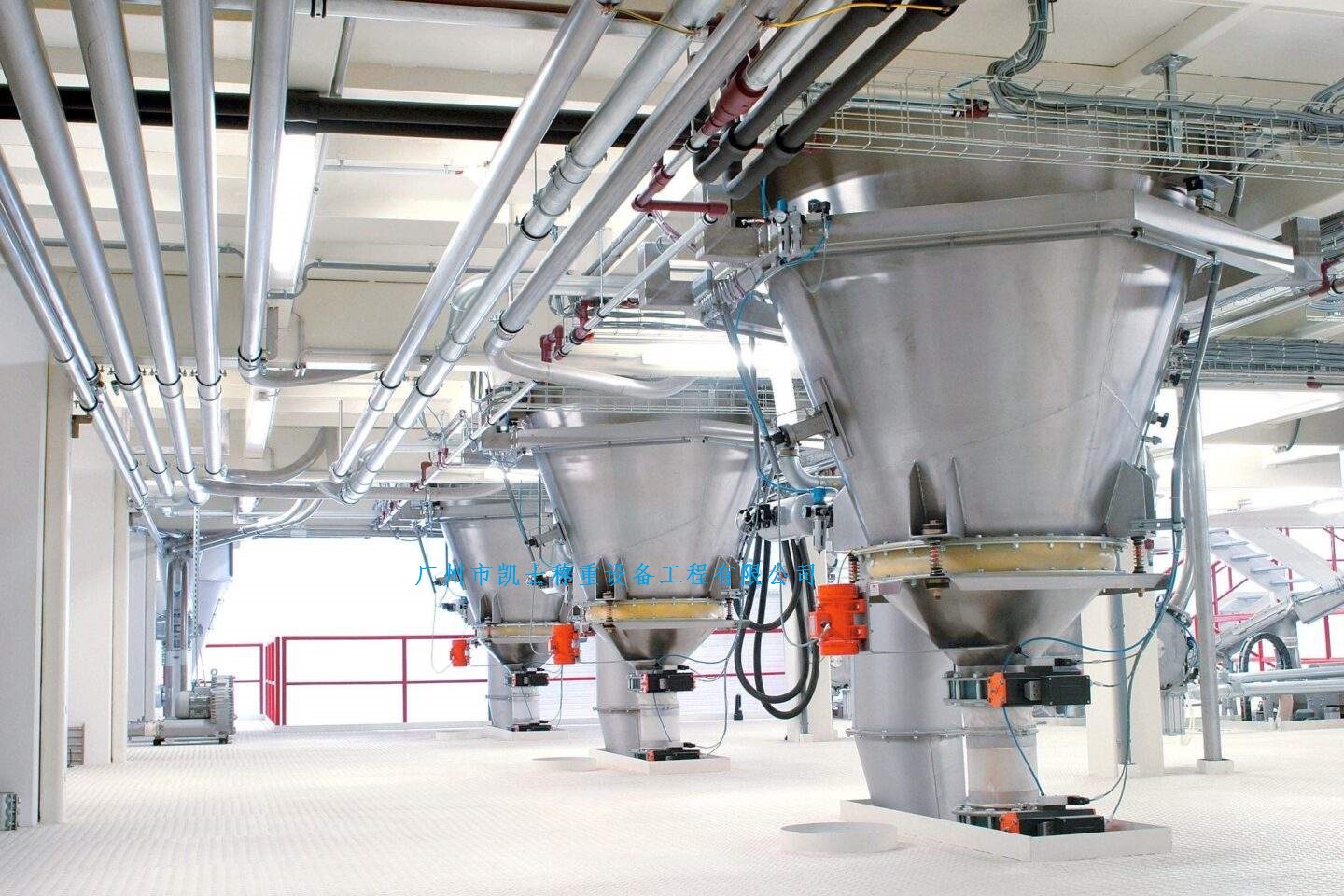
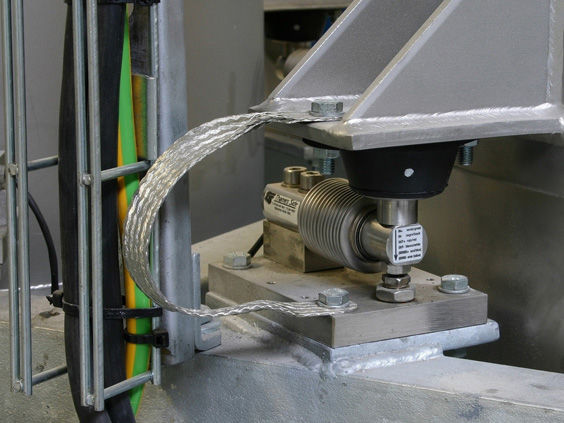
The weighing control system mainly includes the material level of the storage bin, slow and fast discharging, discharging of the hopper scale and electro-vibration, mixing and stirring functions. The material weight is converted into a voltage signal by the weighing module and sent to the weighing controller. Various signals such as slow and fast feeding of the 4 types of materials, the opening and closing of the discharge gate of the hopper scale, and over-limit alarm are output according to the formula program for use by the PLC controller. The functions of manual addition of raw materials, delay control, etc. are directly completed by the PLC. The task of the batching control system is to obtain the batching formula based on the composition of the product, and control the feeding amount of various raw materials according to the batching formula. The material level of the hopper scale adopts an inverted cone structure and uses a pull-type weighing module to prevent the hopper scale from swinging when the material is discharged. Universal joint bearings are installed at both ends and horizontal pull rods are installed to reduce the accumulation angle and discharge angle to less than 60°. If the material is hygroscopic and affects the accuracy of measurement and feeding speed, a vibrator can be installed on the outer wall to achieve rapid and accurate discharging.