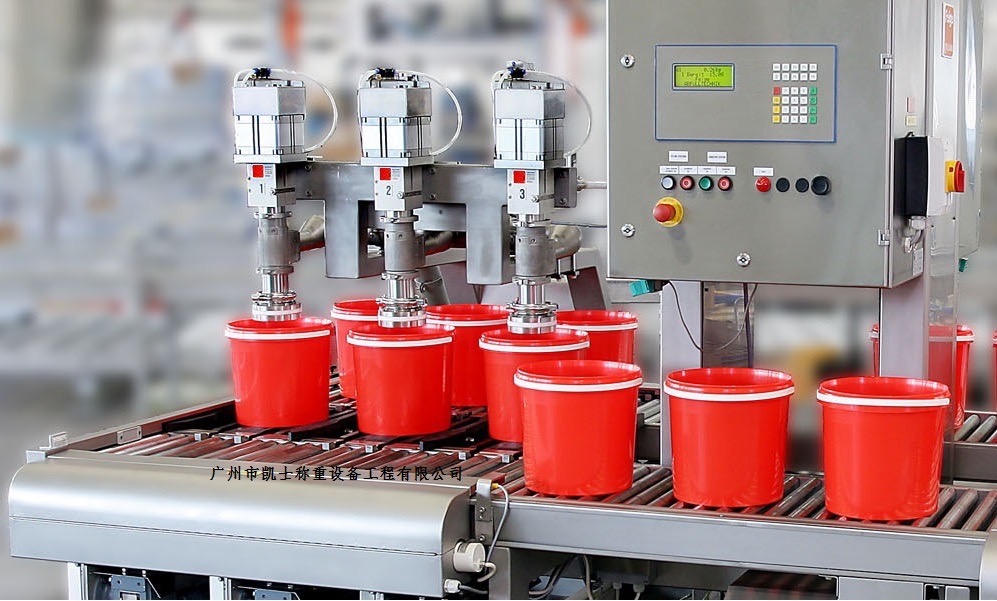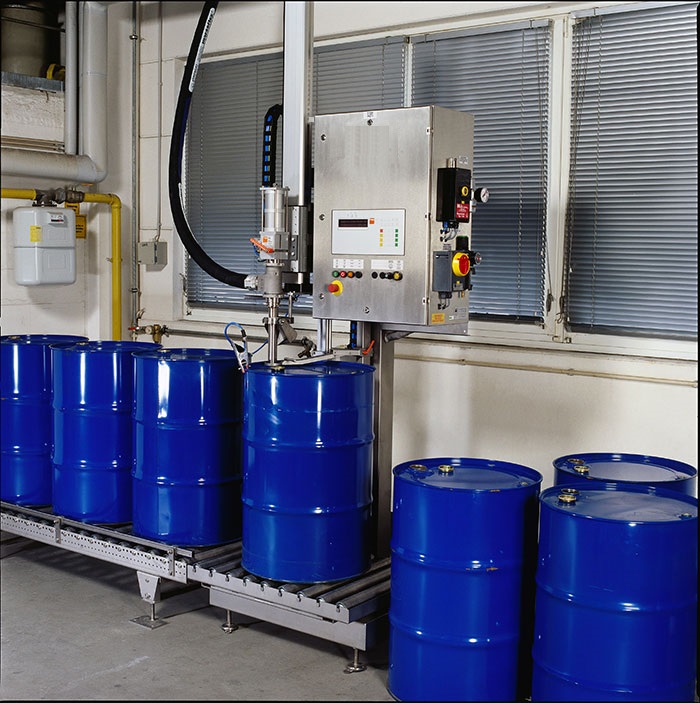


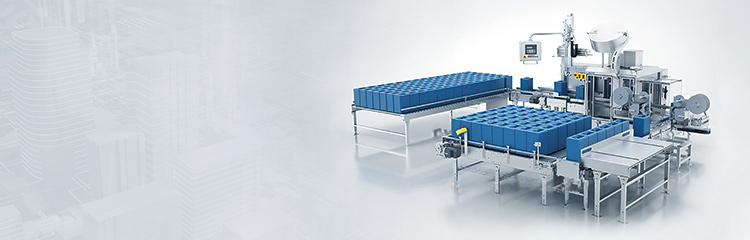


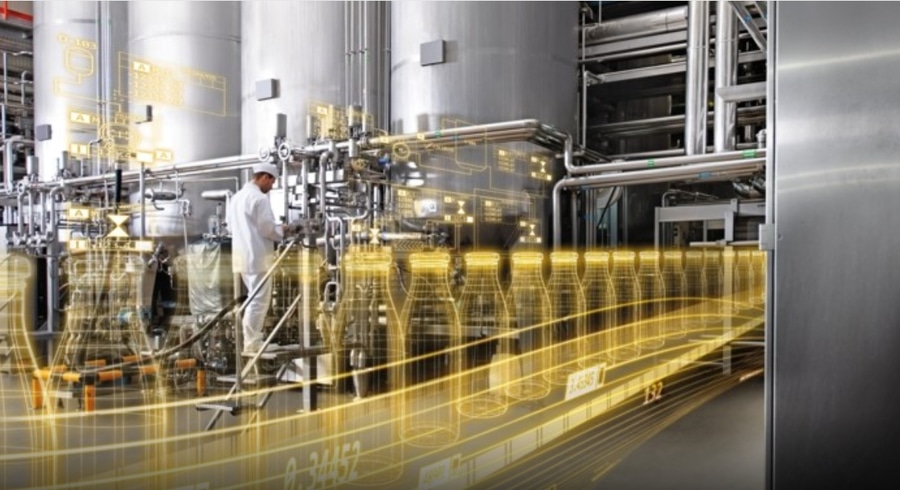
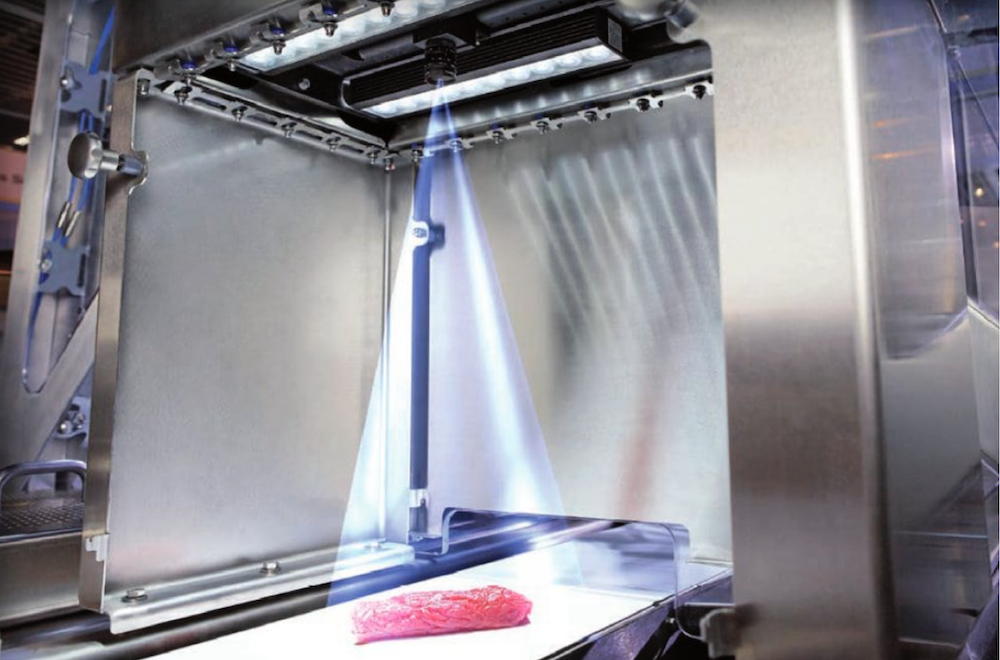


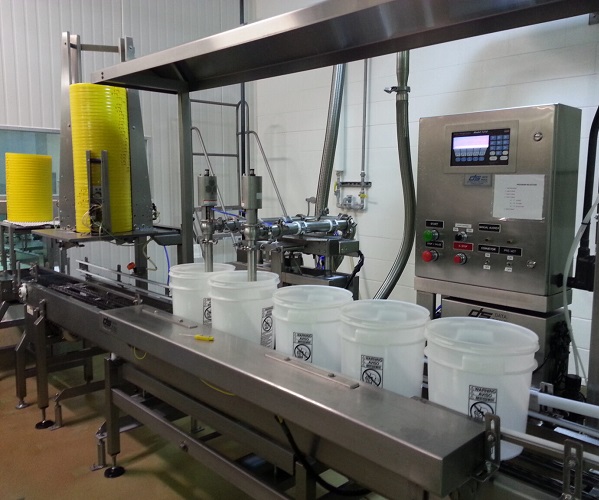
The variable-frequency automatic filling machine can achieve real-time detection of the filling weight and real-time opening and closing of the solenoid valves during the filling process. It adopts a three-stage feeding method, with raw materials fed in at different speeds in sequence. One variable-frequency drive controls the motor, and the PLC controls the variable-frequency drive to adjust the speed through different combinations of output switch quantities, achieving rapid feeding, slow feeding, and precise feeding. When the weighing starts, rapid feeding is carried out. When the rapid feeding predicted value is reached, slow feeding begins; when the slow feeding predicted value is reached, precise feeding begins; when the total filling weight reaches "target weight - pipe material weight - allowable error", feeding stops. Among them, the pipe material weight is the weight of the material remaining in the pipe after the motor stops rotating and continuing to flow into the weighing bucket.

 020-34563445
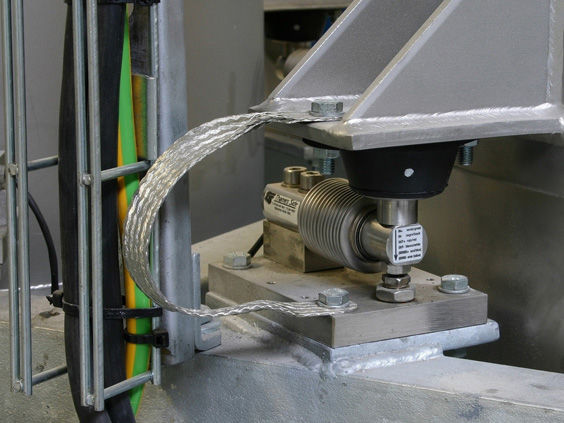
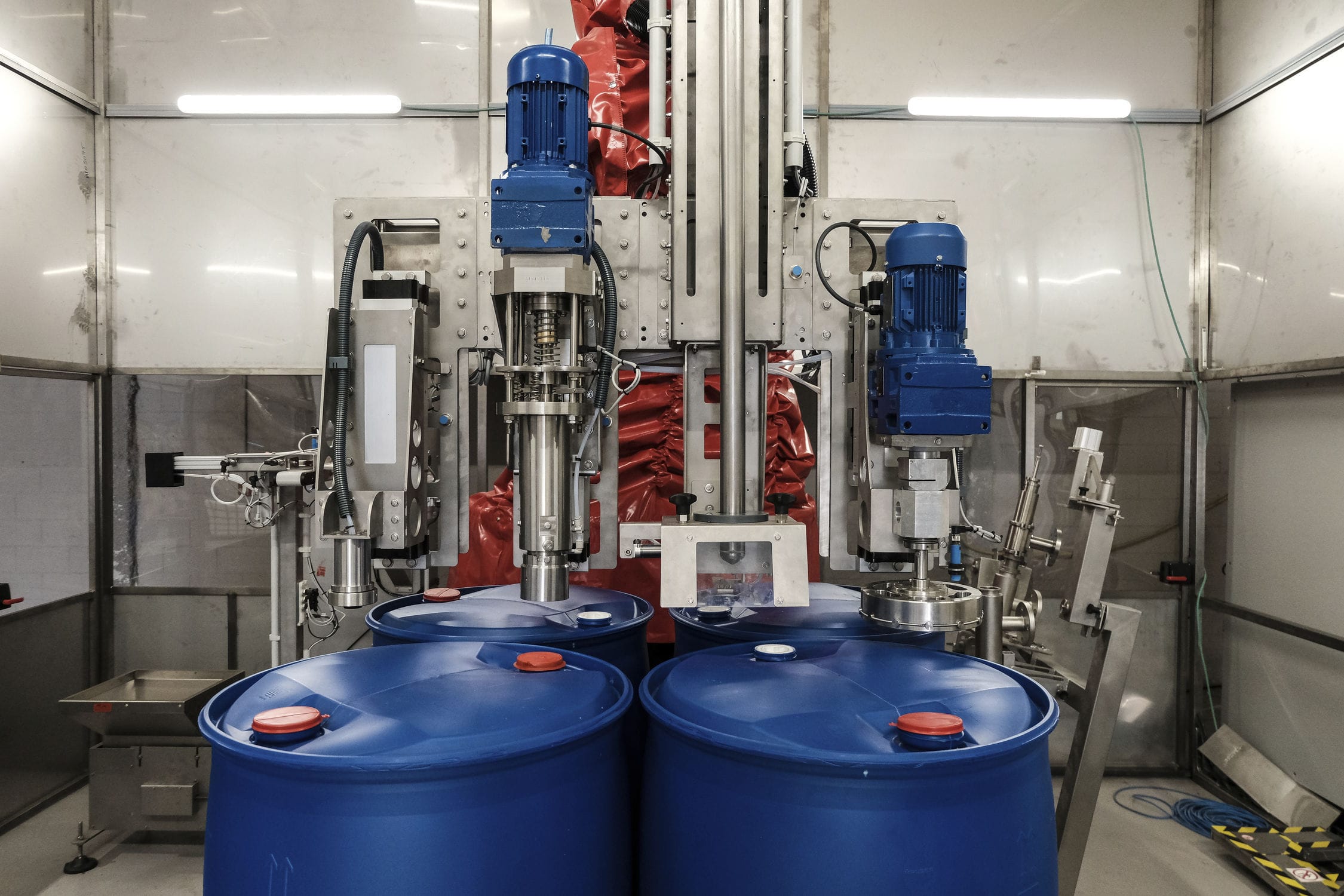
The liquid Filling machine uses a weighing container, which is connected to at least one liquid supply solenoid valve, and the liquid supply solenoid valve is connected to the liquid tank; the load cell is set at the bottom of the weighing container; the weighing instrument can convert the electrical signals from the electronic load cell into digital signals and transmit them to the host; the weighing module is connected to the weighing container; the diaphragm pump is connected to the weighing container through the first solenoid valve, and the diaphragm pump is connected to the liquid delivery end or the diaphragm pump is connected to at least one liquid discharge solenoid valve, and the liquid discharge solenoid valve is connected to the liquid delivery end. The first filling valve is connected to the weighing container; the host can receive the digital signals transmitted by the weighing transmitter and control the liquid supply solenoid valve, the liquid discharge solenoid valve, the diaphragm pump, and the first filling valve to open. The automatic filling machine adopts a three-stage feeding method. The raw materials are fed in a fast-slow sequence. One frequency converter is used to control the motor, and the PLC controls the frequency converter to perform variable speed regulation through different combinations of output switch quantities, achieving rapid feeding, slow feeding, and precise feeding. When the weighing starts, rapid feeding is carried out. When the predicted value of rapid feeding is reached, slow feeding begins; when the predicted value of slow feeding is reached, precise feeding begins; when the total weight of the feed reaches "target weight - pipe material weight - allowable error", feeding stops. The pipe material weight is the weight of the material remaining in the pipe after the motor stops rotating and continues to flow into the weighing barrel.
The automatic filling machine collects the weight data of the barrel's identity information, which is provided to the upper computer database for identification of the barrel's identity and specifications. It is composed of passive weighing instruments, inductive coils, etc. It receives signals from the reader/writer through an external circuit, and the power circuit inside the weighing instrument processes the signals to provide power to the weighing instrument. The data in the damping load inside the weighing instrument is read into the reader/writer and the RF field is interrupted in a special way, allowing the reader/writer to write the data into the weighing instrument. The reader/writer data is uploaded to the server. The appropriate part of the barrel is attached with an electronic tag. When the barrel is placed on the scale, the RF reader is aligned with the electronic tag area, and the reader/writer is started to read the electronic tag ID code. Then the bottle ID number is taken out from the reader/writer and uploaded to the PLC. The PLC then uploads this data to the upper PC for entry into the container barrel information database. The ID number is queried and compared in the database, and a code is returned to the PLC. On one hand, the PLC returns a signal to the reader/writer to turn it off. On the other hand, PLC performs relevant control operations for filling gas according to the program settings. The Liquid filling machine is based on PLC, network integration technology for on-site management and control system, which can conduct real-time and effective control of material filling. It realizes real-time detection of filling weight and real-time opening and closing of the solenoid valve in the filling process, and the data upload is effectively managed through microcomputerization. It mainly includes the PLC control part, the reader/writer part, the keyboard, display control circuit part, serial port expansion circuit part of the weighing instrument, LED display circuit part, solenoid valve execution circuit part, upper PC database processing part. The RF reader reads the electronic tag on the barrel body from the site and uploads the tag code to the upper PC for identity determination. If the identity is legal, it will continue with the following operations of switching the solenoid valve and filling. During the filling process, the real-time weight data from the site is uploaded to the upper computer in real time, and it is classified and summarized together with the electronic tag code. The upper computer communicates with the server and sends data from each filling station. For a large Filling system, the data of multiple filling scales at the filling stations are connected in a serial bus manner, and data is transmitted or exchanged through a single line to reduce the laying of lines and achieve the purpose of resource conservation.
Basic Parameters:
Maximum weighing capacity: 30 kilograms
Minimum sensitivity: 0.01 kg
Filling error: ±0.01 - 0.02 kg
Filling speed: Approximately 150-180 barrels per hour for 20L capacity.
Control mode: 2-speed control
Filling method: Insertion type, above the liquid surface
Gun head tubing: Teflon gun head, valve + Teflon hose
Structural material: Main unit made of SUS304 stainless steel, conveying and stacking components coated with carbon steel anti-corrosion paint.
Scale platform size: 300×300mm (304 stainless steel powered track)
Empty barrel raceway: 300mm × 2500mm (304 stainless steel powered raceway) Additionally, there is a 1200mm inclined slope without power drive roller.
Heavy barrel raceway: 300mm × 2500mm (304 stainless steel power raceway, 2 sets)
Bucket assembly: Suitable for 10L buckets, with a carbon steel anti-corrosion paint structure and 304 stainless steel raceway.
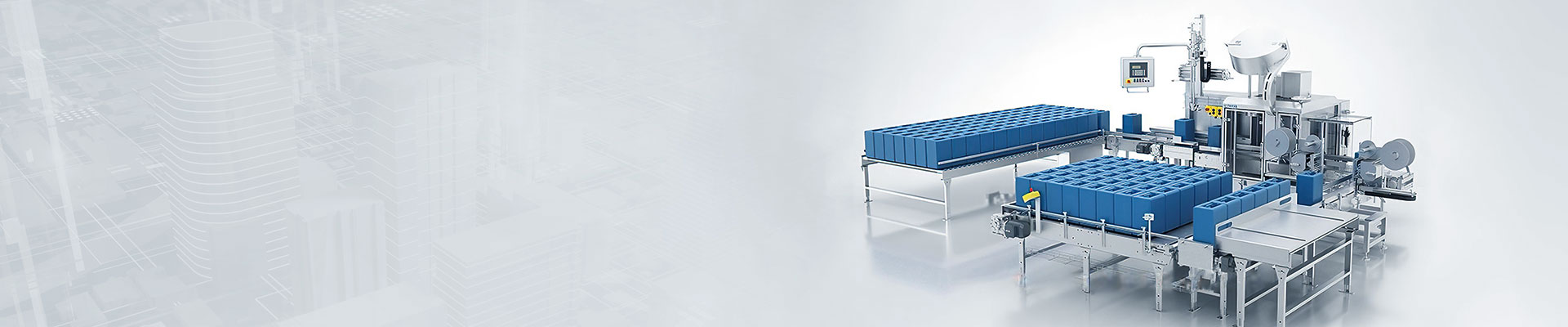
Packing equipment: Linear type, suitable for pallets of size 1200×1200×140mm, including pallet supply, packing, and lower pallet conveying.
Pipeline pressure: 0.2 - 0.6 MPa (dependent on material type).
Material interface: 4 DN40 flange joints, which can be customized according to the interface standards provided by the user.
Air source interface: The user is required to provide a 12mm air pipe connector for quick connection.
Power Supply: AC 220/50Hz (Supplied by the user to the machine side)
Air supply usage: 0.4 - 0.8 Mpa (provided by the user and delivered to the machine side)