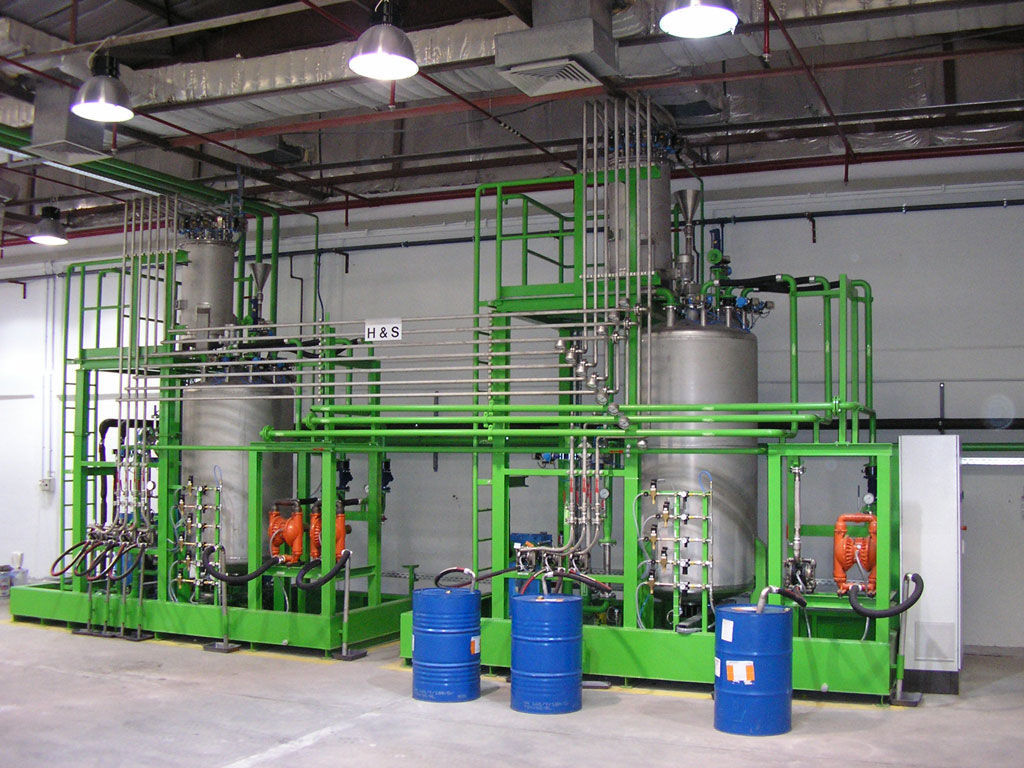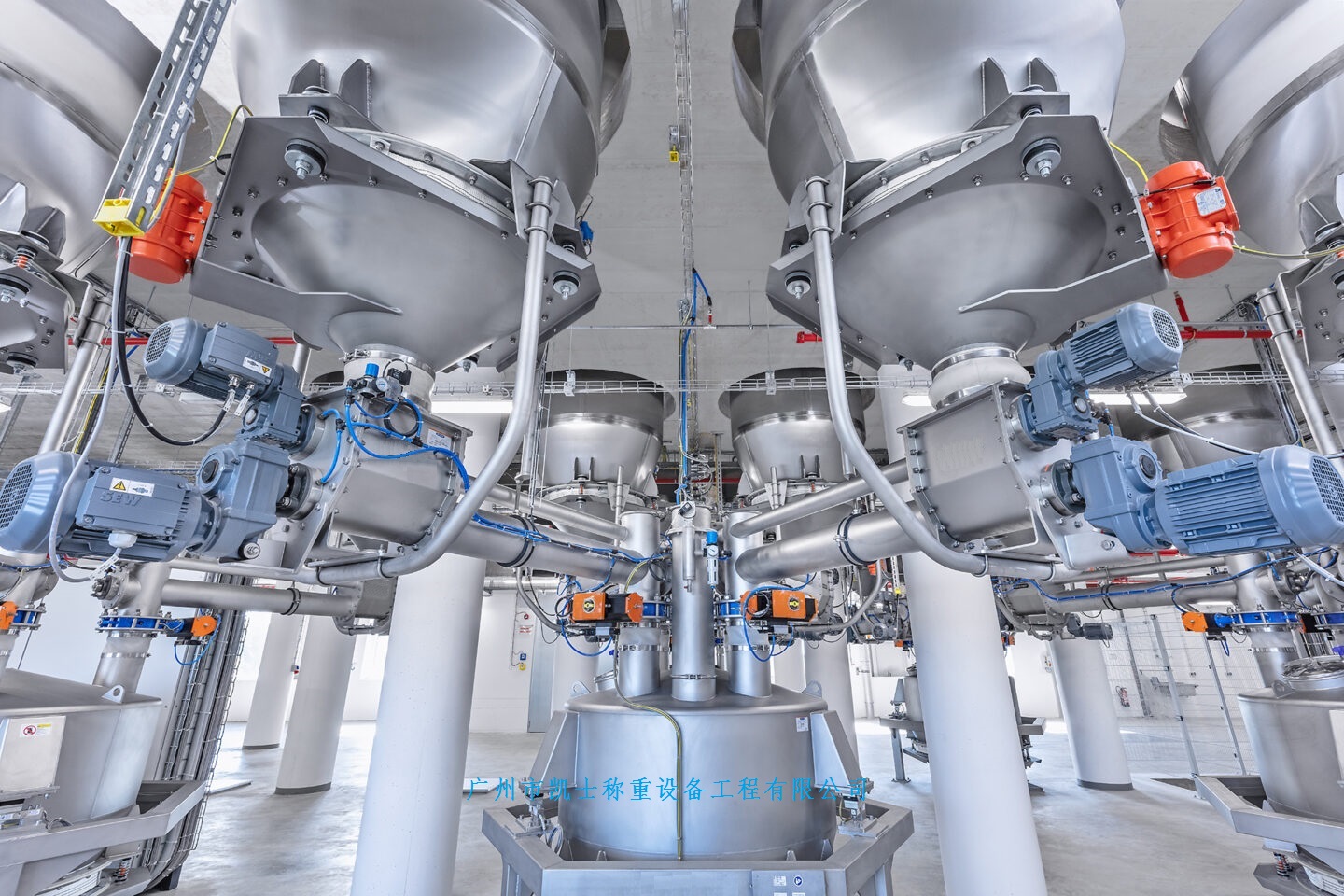


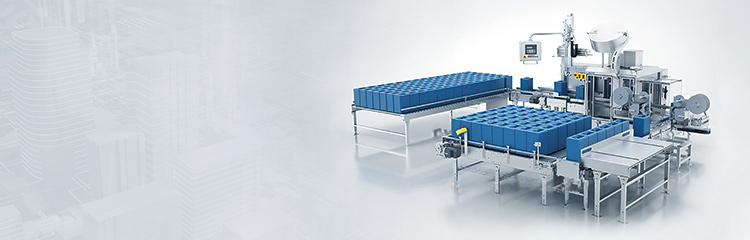


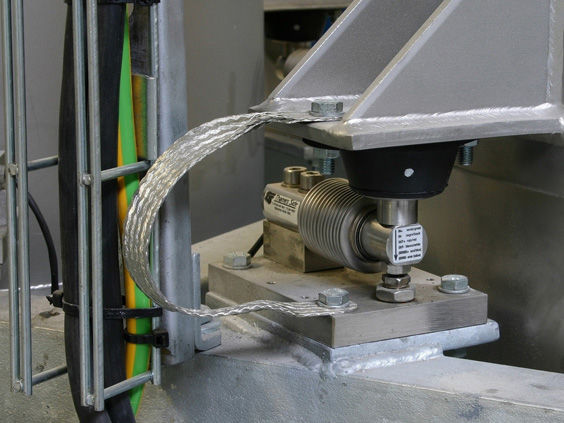
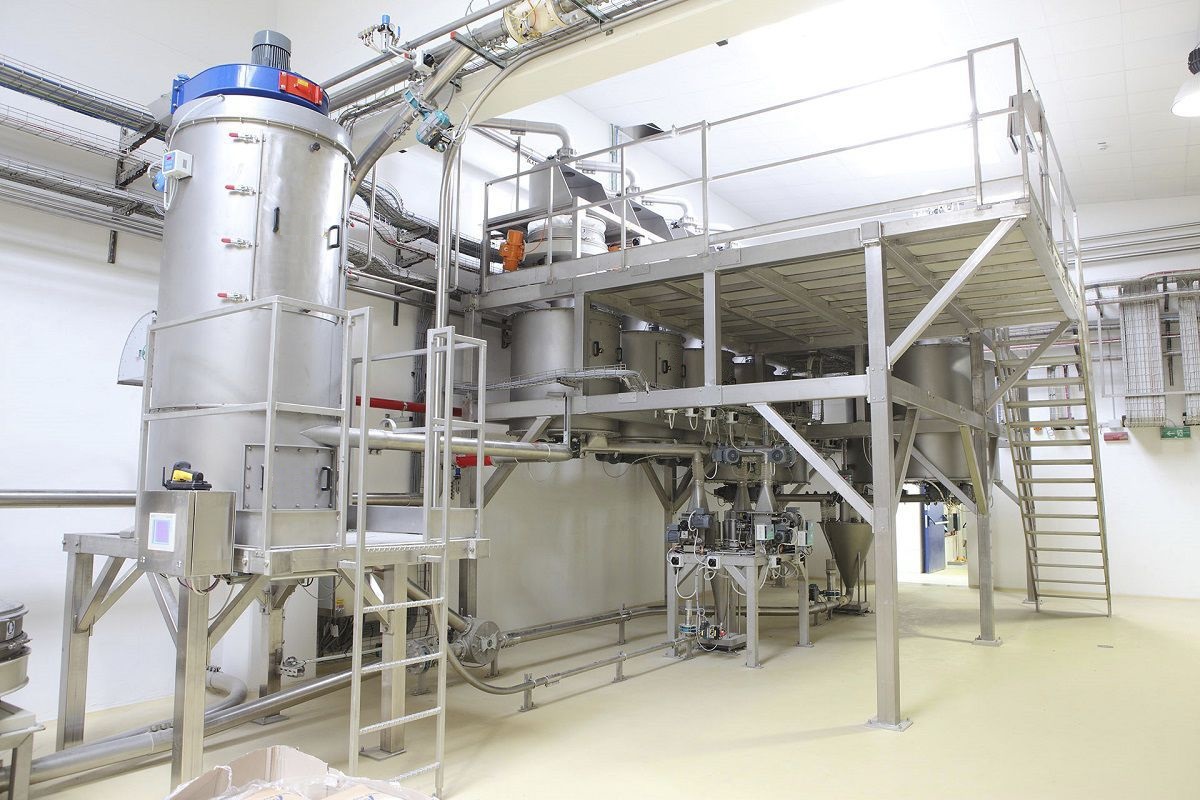
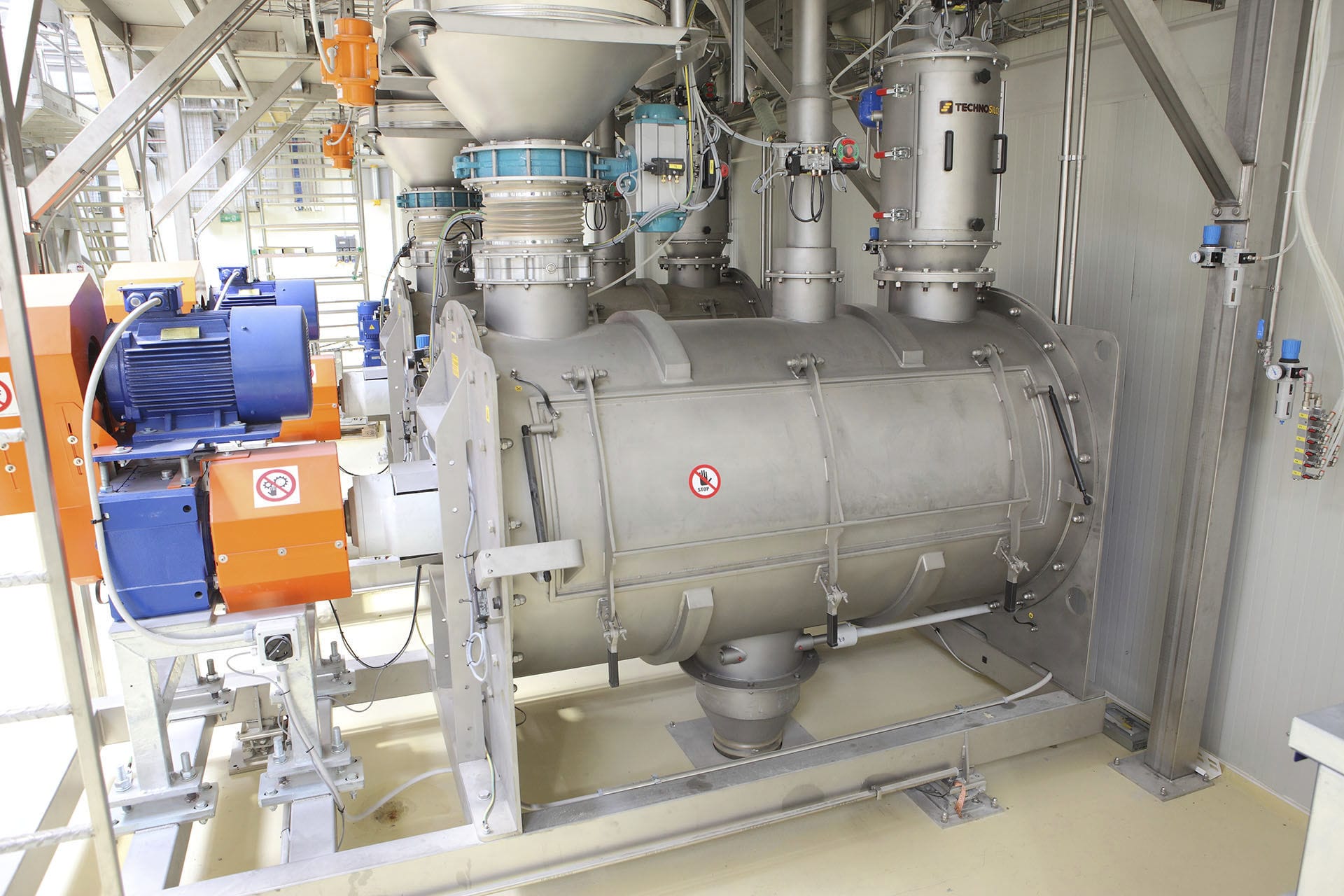


Homogenization weighing and feeding system is composed of mechanical weighing frame, feeding mechanism, stainless steel weighing module, speed sensor, weighing instrument, driving part, frequency converter, control cabinet and other main components, which is a production measurement equipment for manipulating feeding, dynamic measurement and continuous transportation of powdery materials. According to the pre-determined quality ratio, the weighing system is a balanced weighing system for dosage and measurement of several substances in the weighed material. Weighing system is divided into single tube single layer and double tube double layer, single tube single layer together with the completion of measurement and transportation, double tube double layer structure, the upper layer of the completion of flow stabilization and transportation, the grass-roots level of the completion of measurement and transportation, flow stabilization effect is better and save space.

 020-34563445
The weighing homogenization feeding system is a continuous weighing and control equipment for various solid silos, tanks, liquid tanks, etc. It adopts a comprehensive automation system integrating microcomputer control and data management, and is constructed with high-performance control platforms composed of Mitsubishi or Siemens series PLC and industrial microcomputers. For designing an automation system for production control, it must achieve stable and reliable operation, simple and practical operation, as well as superior cost performance.
The feeding system is composed of mechanical scale frame, feeding mechanism, stainless steel weighing module, speed sensor, weighing instrument, drive part, frequency converter, control cabinet, etc. It is a production measurement equipment for manipulating, dynamically measuring, and continuously transporting powder materials. It is an equalizing Weighing system for balancing and measuring several substances in the weighed object according to the pre-set quality ratio. The weighing system is divided into single tube single layer and double tube double layer. The single tube single layer can complete measurement and transportation together, while the double tube double layer structure can complete stable flow and transportation on the upper layer and measurement and transportation on the lower layer. The stable flow effect is better and the space is saved.
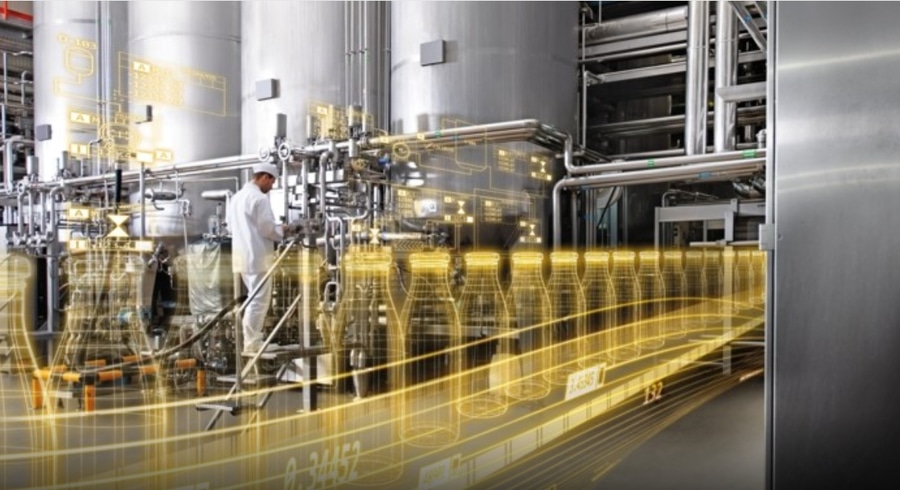
Using the DCS control system, the pneumatic, stopping, and operation of the entire system are controlled and monitored in the control room; the overall equipment is equipped with a fault detection system. When the rear-end equipment fails, the front-end equipment has its own stop function and displays the location and cause of the fault, and the alarm light shows the system operation status. It adopts a three-level control method, and the weight signal from the material in the silo is transmitted to the microprocessor controller to automatically calculate the actual weight or the height of the silo. The material weight or height is converted into a 4-20MA transducer signal. The upper limit and lower limit values of the material can be set, and the feeding equipment and discharging equipment can be controlled to keep the actual material within the set range.
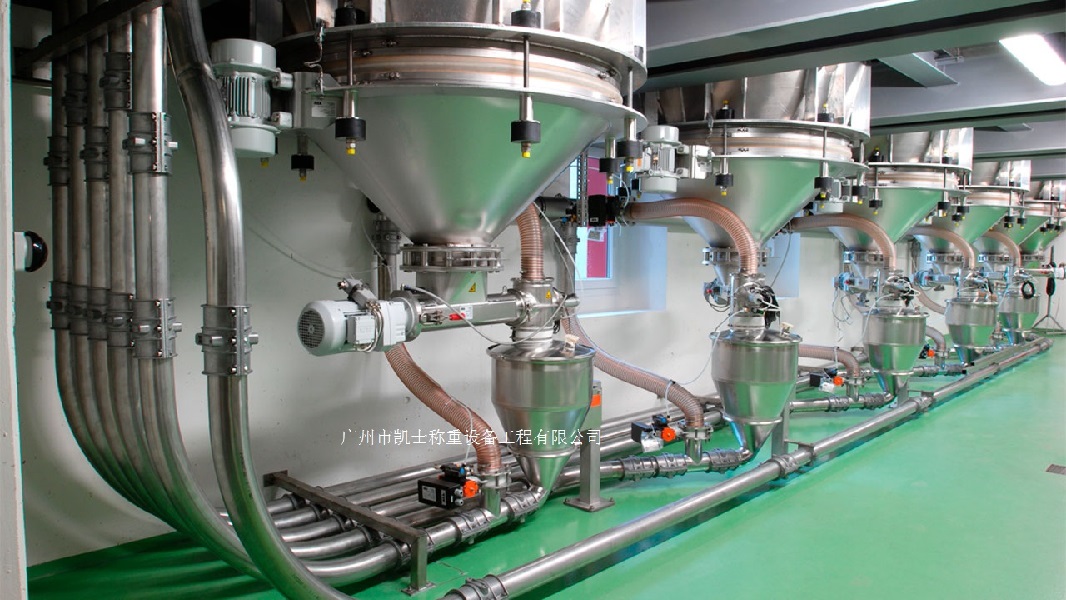
The batching and weighing system is divided into two layers. The first layer is the main Batching system, which is mainly responsible for mixing and blending various materials, and the mixed materials through the suction channel reach the second layer. The second layer has four identical weighing systems, which are mainly responsible for detecting and controlling the flow of the materials from the first layer. When batching is needed, the 1# batching scale, according to the set weight of each material in the formula, first opens the gate of the 1# silo. When the predetermined weight is reached, it closes the gate of the 1# silo and opens the gate of the 2# silo, and so on, until all materials are discharged. Then, the 1# batching scale determines whether the material is qualified. At this point, 1# scale completes one batching, and 1# batching scale performs the next batching. When the batching batch is completed, the 1# Electronic scale stops batching. Due to the fast batching speed in the first layer, the materials from the first layer are divided into four groups for分流 (diversion) and distribution. In the four groups of the second layer, if there is no material in any group, materials can be fed from the buffer silo of the first layer. After feeding, the material is inspected again to determine if it is qualified. Qualified products are transported to the next process flow at a certain flow rate by the reducing scale.