








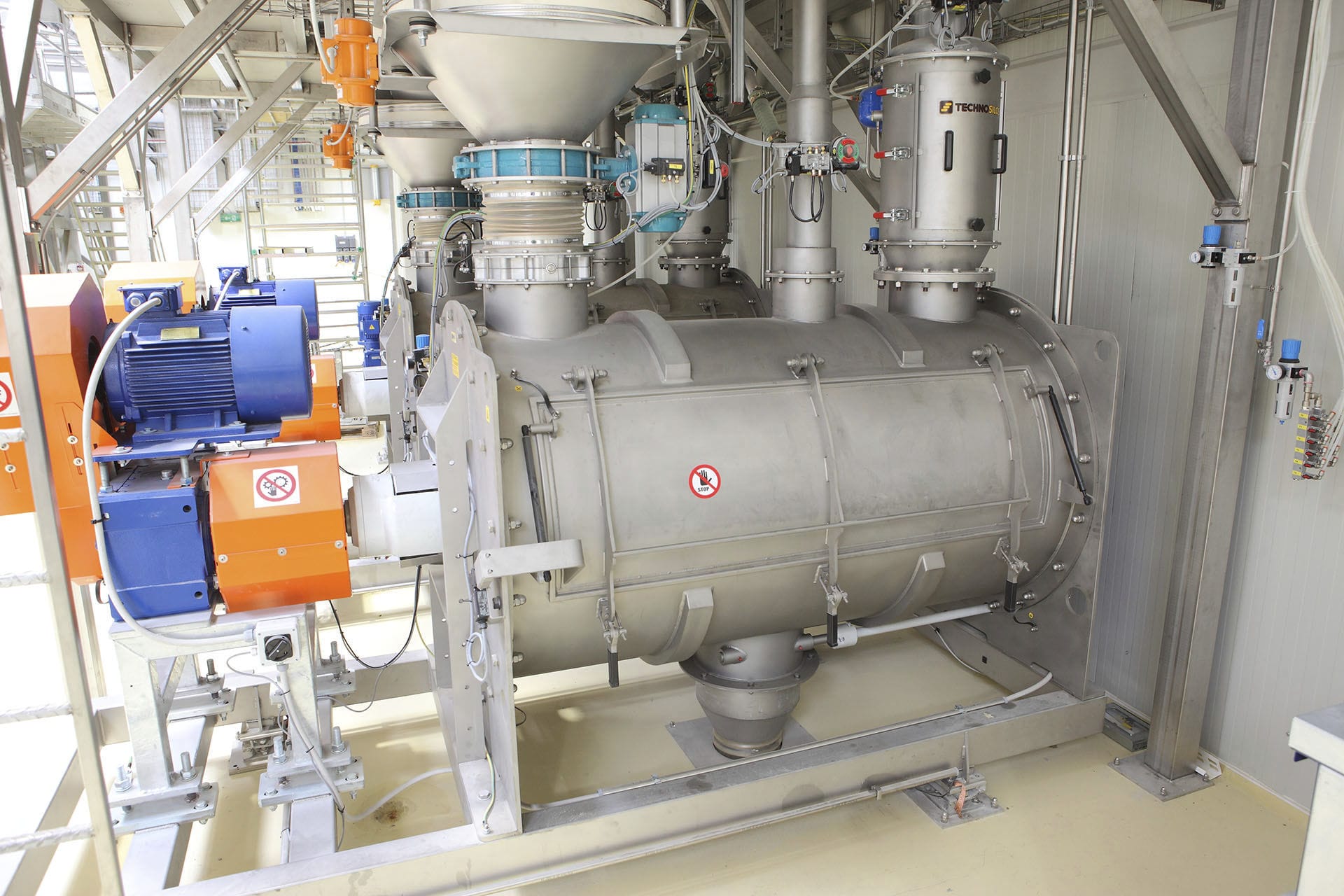
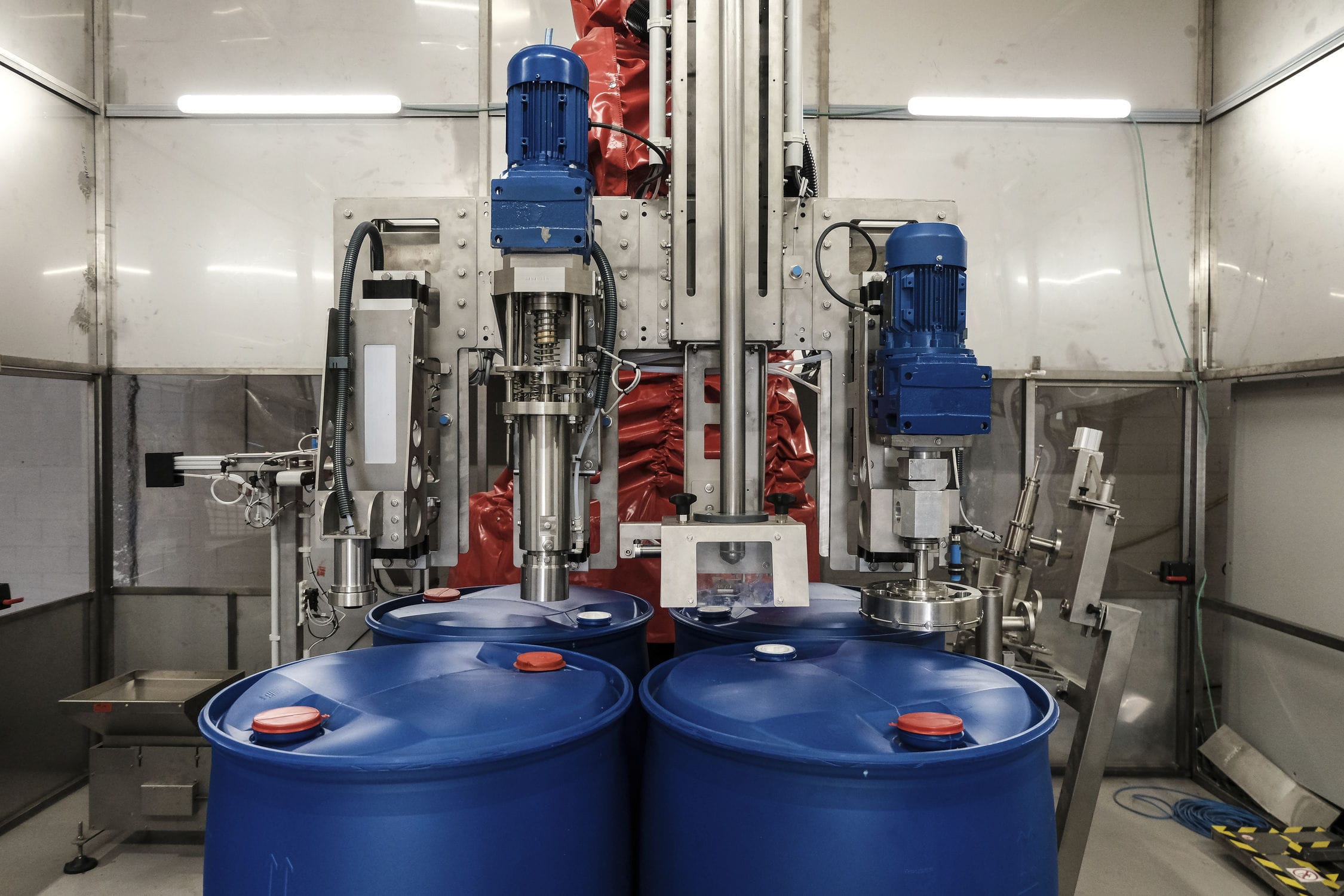
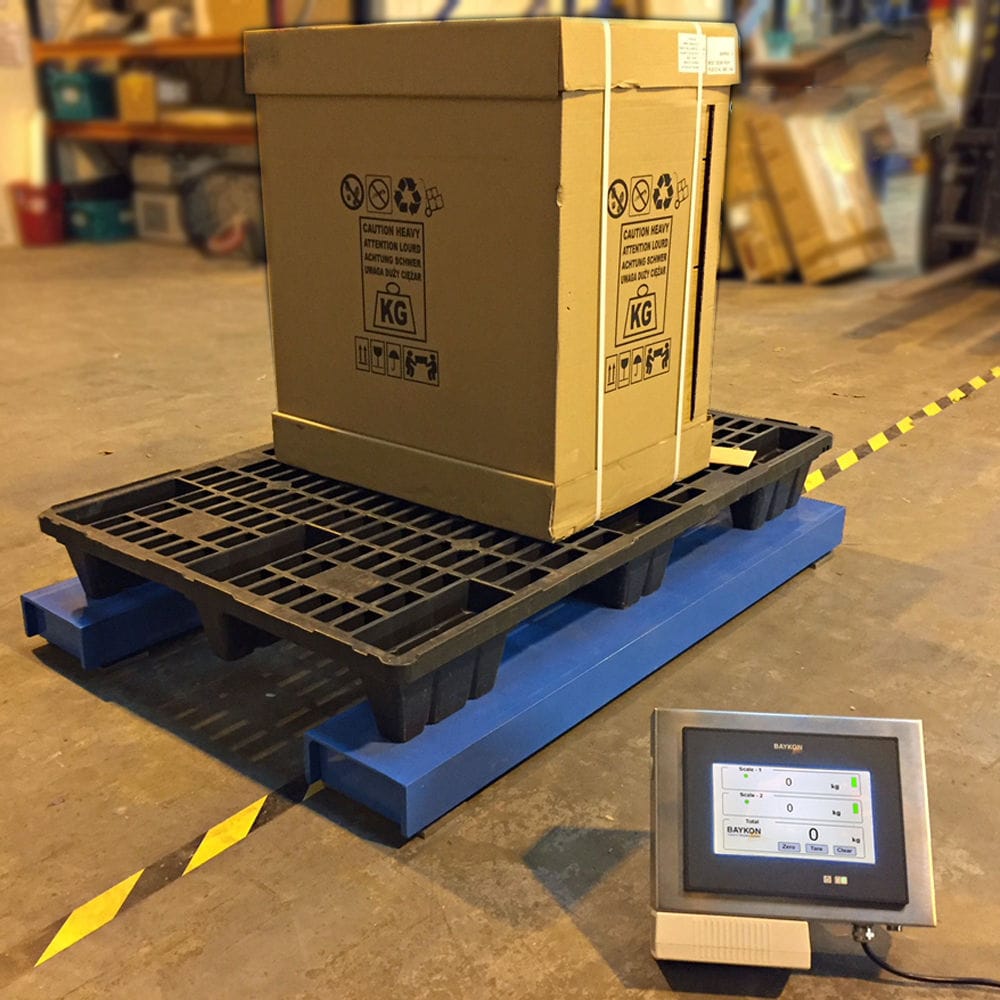


The standard weighing verification instrument is used for the verification of large hopper scales. Firstly, all the verification weighing instruments are placed on the scale to be verified, and the verification is conducted until the required replacement scale value is reached. The scale value error and the pre-rounding error (flash point) of the used quantity are recorded. Then, the load of the weighing verification instrument's jack is released, and be careful not to leave the scale empty. The loading hopper scale's carrier is placed on it, and the actual error of the scale value is restored by applying pressure. The weighing verification instrument applies pressure to the hopper scale to conduct the verification of a larger scale value.

 020-34563445
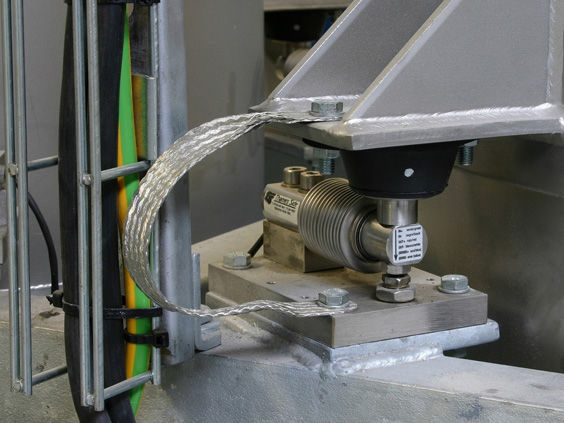
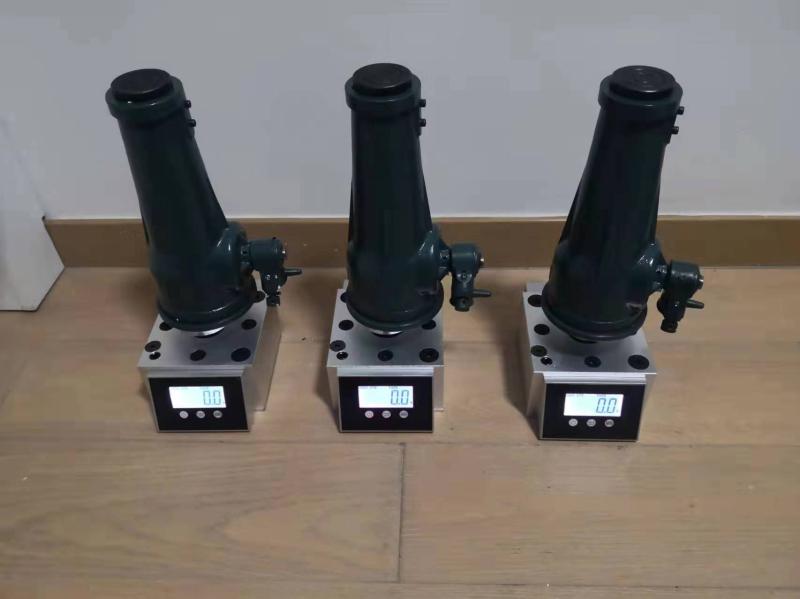
The standard weighing calibration instrument uses a hydraulic calibration device for on-line calibration of the hopper scale. The hydraulic calibration device consists of a set (containing 3-4 heads) of hydraulic jacks, a set (containing 3-4 pressure heads) of Weighing modules, and a digital weighing instrument. A small platform capable of holding the weighing module and the hydraulic jack is welded above the vertical axis frame of the weighing module. The lower part of the platform bracket is directly welded to the weighing module frame of the hopper scale. Three (or four) weighing modules are connected to the display, and the upper part of the jack gently touches the upper part of the platform bracket. The display shows zero, and the hydraulic jack pressure device simultaneously applies weighing force to three (or four) sides (or sides). The load is uniformly applied to the weighing module and the scale body. The load value read by the display of the hydraulic calibration device for the weighing module is taken as the effective load value applied to the scale body. The weighing module of the hopper scale converts the load force it receives into an electrical signal and outputs it through the weighing display.
When calibrating large hopper scales, all the calibration weighing calibration instruments are placed on the scale to be calibrated, and the calibration is carried out until the required replacement scale measurement is reached. The scale measurement error and the pre-rounded error (flash point) are recorded. Then, the hydraulic jack of the weighing calibration instrument is loosened, and care should be taken not to leave the scale empty. The loading hopper scale carrier is placed, and the actual error of the scale measurement is restored by applying pressure. The weighing calibration instrument applies pressure to the hopper scale and conducts further calibration at a larger scale measurement until all the weighing calibration instruments are again placed on the hopper scale. Then, the pressure is released, and this process is repeated several times until the maximum scale measurement of the hopper scale is reached. During the pressure replacement process, certain errors are bound to occur. This can be easily calculated. When using standard weights, the weighing module senses the corresponding gravitational value of the weights. When using the hydraulic calibration device, the weighing module senses the force value corresponding to the standard weight. There is only a multiple relationship in the middle. The location of the force value traceability of the hydraulic calibration device and the gravitational acceleration at the installation location of the hopper scale are very small, and can be approximately regarded as equal. Therefore, the accuracy of the calibration results of these two calibration methods is consistent.
The weighing calibration instrument uses the hydraulic calibration device as a standard equipment for on-line calibration of the hopper scale. It is a laboratory calibration method approved by the client and is increasingly used in the first calibration and periodic calibration of hopper scales in industrial production processes. However, for the calibration of high-accuracy hopper scales, when conducting discrimination tests and using the flash method to calibrate the weighing indication error, the current calibration device structure needs to be further improved. The hydraulic jack device should be equipped with fine-tuning components.


