









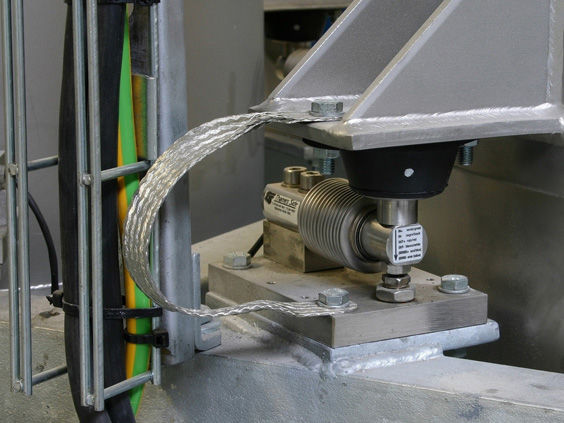

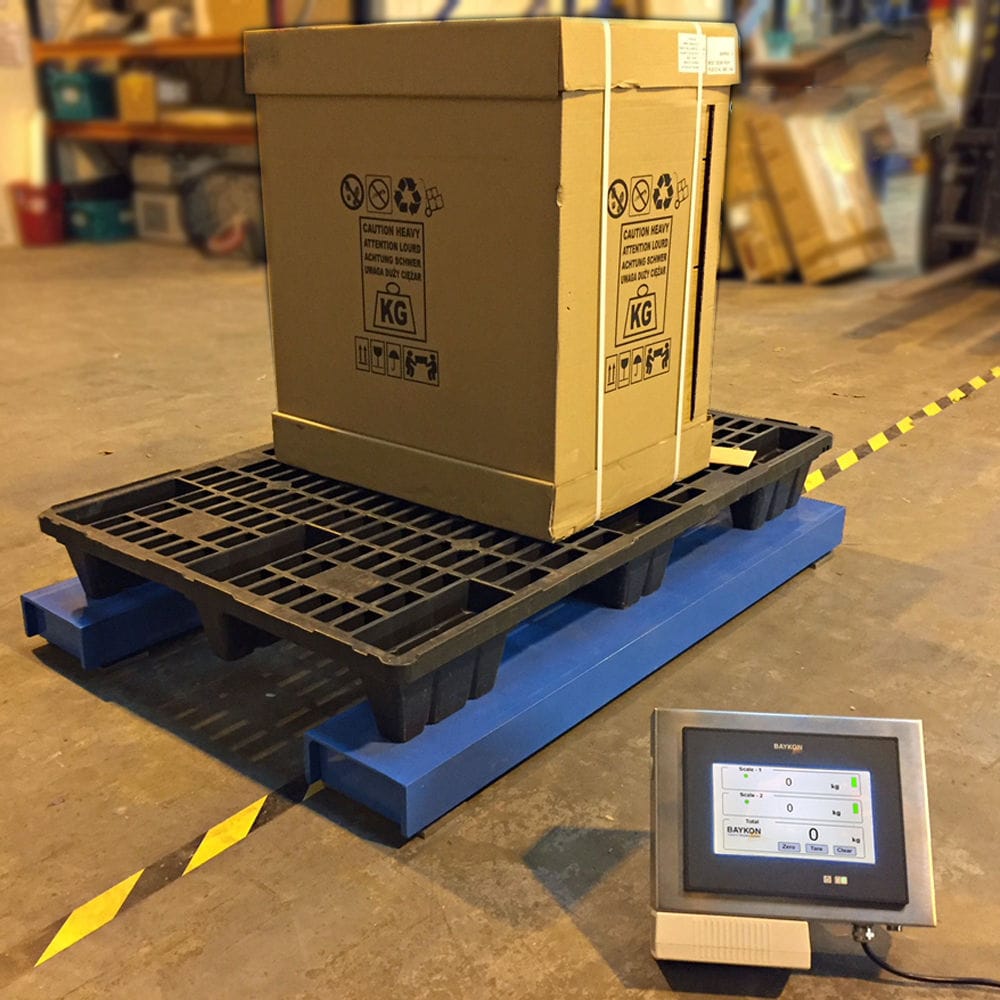


Lower blood pressure Explosion-proof weighbridge will weigh objects placed on the load-bearing scales, there will be a certain gravity on top of the load-bearing scales, by the scales will be subjected to the distribution of force transmission to the various load cells, in the sensors, the original gravity signal through the deformation of the strain gauges of the force is transformed into an electronic signal, and then drive the electronic signals to the junction box for the organization of the convergence of the weighing instrument through the collection and processing of specific weighing information, after which the weighing value can be displayed. The weighing information is collected and processed by the weighing instrument, after which the weighing value can be displayed. In addition, the weight indicator can be connected with the computer, and the data information can be sorted out by the tool software, which is convenient for users to analyze the data and store the relevant work.

 020-34563445
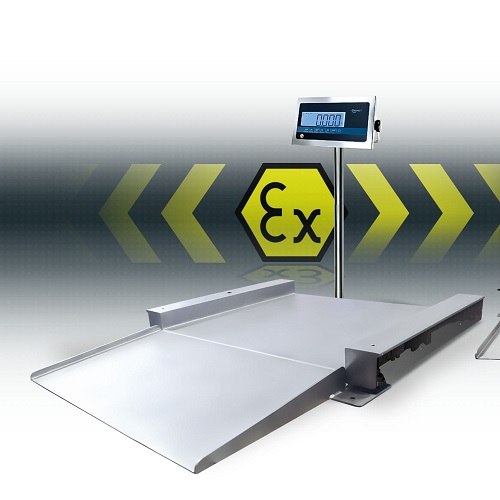
The pressure-reducing and explosion-proof scale is used in sites where there are explosive gases or explosive dust. It can be classified into different hazardous level areas according to the frequency, duration and danger level of the explosive substances. Various technical measures such as pressure reduction, current limitation, isolation, sealing and optical communication are adopted to eliminate or block the potential ignition sources (electrical sparks, static sparks, high temperature...) in the electrical circuits of the scale, thus enabling the truck scale to work safely in the corresponding hazardous areas. The scale is a large-scale weighing instrument placed on the ground, usually used to weigh the cargo weight of vehicles. When the goods enter the weighing platform, the elastic body of the weighing sensor undergoes elastic deformation under the action of the gravitational force of the goods, causing the impedance of the strain gauge bridge on the elastic body to lose balance and output an electrical signal proportional to the weight value. This signal is processed by electronic components such as the amplifier, A/D converter, and microprocessor inside the sensor and then converted into a digital signal, which is transmitted through the repeater to the weighing display instrument to directly display the weight and other data. If the display instrument is connected to a computer or a printer, the instrument can simultaneously output the weight signal to the computer and other devices, forming a complete weighing management system.
The scale platform is connected on both sides of the weighing platform through installation components with the loading ramp and the discharging ramp respectively. The inner wall of the weighing platform is slidably connected with the weighing platform, and below the weighing platform are several weighing components. On both sides of the weighing platform, there are guard plates one. Both guard plates one are connected to the weighing platform through buffer components, and there are also two sets of adjustment components respectively set on both sides of the weighing platform and respectively connected to the two buffer components for transmission. The buffer components include a buffer spring group and an extension rod group. The end of the buffer spring group is fixedly connected to the surface of the guard plate one, and the end of the extension rod group is fixedly connected to the surface of the guard plate one. The surface of the guard plate one is in contact with the inner wall of the loading ramp. It has the effect of alleviating the impact force during the transportation of loading and weighing, stabilizing the weighing platform without displacement, ensuring the accuracy of weighing, and increasing the service life of the weighing platform. The scale unit and the combinable unit have connection pieces that can be spliced on the side wall of the panel. The bottom of the panel is symmetrically provided with several weighing plates and several weighing sensors. Each weighing plate is connected one-to-one with a weighing sensor. The scale is made by welding a U-shaped plate, a top plate, and a side plate. The bottom of the top plate is welded with multiple U-shaped plates arranged side by side and opening outward on the side. The same end surface of the multiple U-shaped plates is welded with a side plate. One end of the side plate is welded with the side wall of the outermost U-shaped plate and a reinforcing plate is welded between them. The length of the side plate of the scale is longer than the width of the arrangement of the U-shaped plates. When the side plate is subjected to an external force impact at the end or the outermost U-shaped plate is under top pressure and is pressed down, the side edge of the U-shaped plate expands outward, and it presses against the reinforcing plate, which provides a counterforce and maintains the shape of the U-shaped plate. Moreover, it can prevent the extra part of the side plate from being bent, thereby improving the stability of the scale.
The scale platform is equipped with a dual ramp structure, which facilitates the movement of the vehicle onto and off the load-bearing platform, while also enabling the lifting of the scale platform without moving any of the scale components. The scale platform also includes ramps on both the horizontal sides of the scale body, and the lifting device consists of a fixed base and a frame-shaped structure. The scale body is mounted on a U-shaped frame, which has two longitudinal arms that connect to the two longitudinal sides of the scale body and a transverse arm that connects the two longitudinal arms. The transverse arm is adjacent to one of the ramps, and this ramp is defined as an adjacent ramp. The longitudinal arms have an extension part that extends towards the adjacent ramp and protrudes from the transverse arm, and this extension part is connected to the fixed base through a hinge axis. The transverse arm has a ramp-complementary edge opposite to the adjacent ramp, and the ramp-complementary edge includes upper and lower spaced wing plates. The setting height of the hinge axis is not less than half of the highest height of the adjacent ramp, and it is not less than half of the highest height of the adjacent ramp. The hydraulic platform scale platform can increase the top area of the Electronic scale platform body using the hydraulic platform, facilitating the stacking of more bulk materials, reducing the number of weighings, and facilitating rapid weighing of bulk materials. When the hydraulic platform is rotated outward to the outside of the electronic scale platform, the support plate subsequently supports the hydraulic platform, avoiding the situation of the hydraulic platform landing, eliminating the need for resetting or zeroing, and facilitating rapid weighing work, which is suitable for weighing work on objects.


