







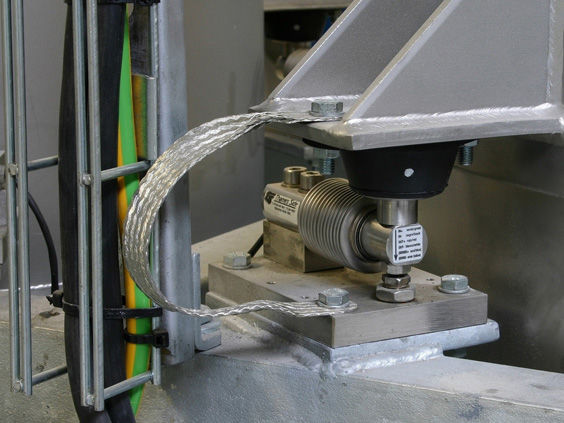
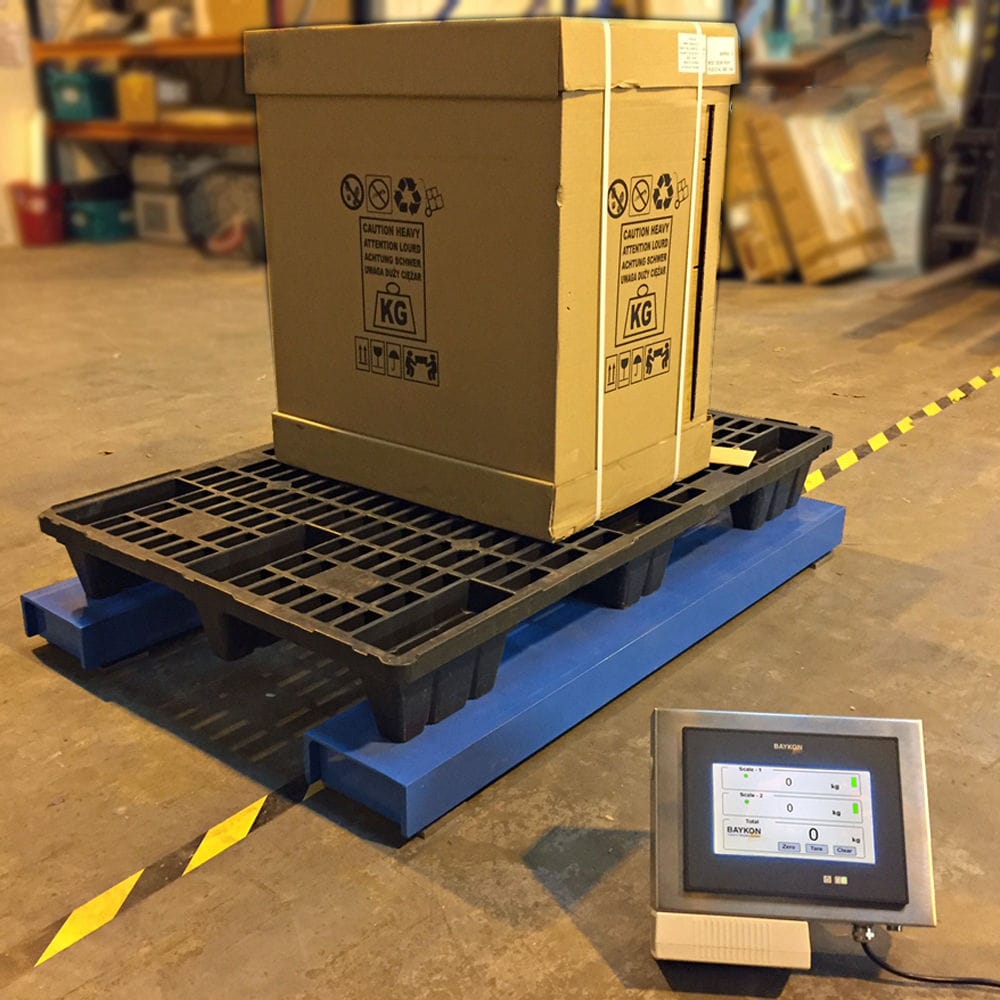


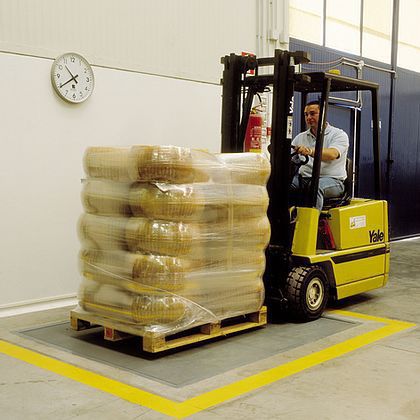
Touch screen Explosion-proof floor scale is weighed or loaded on the scale platform, under the action of gravity, the scale platform will gravity transfer to the load cell, resulting in deformation of the elastomer attached to the load cell, then the elastomer strain beam on the strain resistor and the bridge circuit to lose equilibrium, the output is proportional to the weight value of the electrical signals, the linear amplifier will amplify the signals, and then converted to digital signals by the A/D conversion of the weight instrumentation within the microprocessor to process the weight signal and directly display the number of weight. The microprocessor in the weighing instrument processes the weight signal and displays the weight directly. With the configuration of a printer, the weighing data can be printed; with the configuration of a computer, the weighing data can be directly input into the weighing management system for comprehensive management.

 020-34563445
The explosion-proof touch screen scale is operated in a certain procedure. By controlling the pneumatic valves, the materials are introduced into the corresponding control and transportation in a sequential manner. A combination of manual valves and electromagnetic valves is used to achieve fully automatic control. According to the pre-determined time sequence, a series of operations such as transportation, control, and re-transportation are automatically completed. By placing the weighed object or the load on the scale, under the action of gravity, the scale platform transmits the gravity to the weighing sensor, causing the elastic body attached to the weighing sensor to deform. Then, the strain resistors and bridge circuits on the elastic strain beam lose balance, outputting an electrical signal proportional to the weight value. This signal is amplified by the linear amplifier and then converted into a digital signal by A/D conversion. The microprocessor inside the weighing instrument processes the weight signal and directly displays the weight value. After being equipped with a printer, the weighing data can be printed; if a computer is configured, the measurement data can be directly input into the weighing management system for comprehensive management.
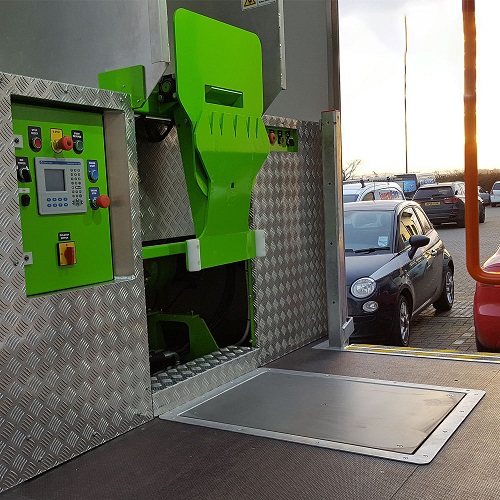
The explosion-proof scale is composed of a mechanical transmission system, namely the Electronic scale frame, hydraulic drive, PLC automatic control, weighing Measurement system, namely the weighing module and the weighing instrument. The PLC automatic control device controls the reciprocating motion of the hydraulic cylinder piston rod by switching the power supply to the electro-hydraulic directional valve in the hydraulic system, thereby achieving the ascent and descent of the electronic scale frame. When the electronic scale frame lifts the material box above the roller track plane, the piezoresistive weighing module installed under the electronic scale frame gives a changed voltage signal, which is sent to the weighing instrument for data processing and obtains the required material weight value. The electronic scale frame of the explosion-proof scale consists of the lower frame, upper frame, support frame and piston rod drive wheel. The support frame is fixed on the upper frame, the piezoresistive weighing module is installed at the four corners of the lower frame of the electronic scale frame, and the piston rod drive wheel is between the upper and lower frames of the electronic scale. During weighing, the drive wheel is pushed by the hydraulic cylinder piston rod, and along the slope, it lifts the upper frame of the electronic scale, so that the support frame of the explosion-proof scale can be from a position lower than the roller track plane.
The explosion-proof scale is driven by hydraulic power and uses a resistive pressure-sensitive module. It is installed at the bottom corners of the electronic scale frame. The strain gauge is basically a resistor, which is made into a certain shape by metal foil and then adhered to the surface of the steel elastic body. When subjected to pressure, the very slight change on the surface of the elastic body will cause a corresponding change in the resistance value. The change in this resistance is proportional to the force applied on the elastic body. The resistors are connected in a single-arm bridge circuit and powered by a constant voltage source. Then, the bridge circuit generates an unbalanced voltage output. The unbalanced signal output by the weighing module is transmitted to the weighing instrument, which is amplified by an amplification circuit, undergoes A/D conversion by an A/D conversion circuit, and is sent to the microprocessor unit for data processing, obtaining the desired weighing value. This value can be displayed numerically on the display. When the electric contact thermometer indicates that the oil temperature is below 20℃, a switch signal is given, and the PLC controls the electric heater to heat the pressure oil. After reaching the required level, the motor starts to operate, the pump begins to supply oil to the oil circuit system, and the electromagnetic overflow valve is adjusted to the required oil pressure. Then, the pressure oil flows through the check valve and stop valve to the electro-hydraulic directional valve when it is energized. The pressure oil then passes through the hydraulic control check valve and the one-way throttle valve to the hydraulic cylinder, pushing the hydraulic cylinder piston to rise, achieving the lifting of the explosion-proof electronic scale frame. The electro-hydraulic directional valve blocks the oil circuit, under the action of the balance valve, a constant oil pressure is maintained, keeping the hydraulic cylinder piston stationary, and the electronic scale frame is in a stationary state. When the hydraulic cylinder is energized, the pressure oil passes through the stop valve and the balance valve, through the electro-hydraulic directional valve back to the oil tank. An cooler is added to the return oil path. When the temperature is too high, an electric contact thermometer gives a switch signal, which is automatically controlled by the PLC to control the electromagnetic water valve to achieve oil cooling. Finally, the oil is filtered by a filter and returned to the oil tank.
The lifting of the explosion-proof electronic scale refers to the operation where the electronic scale frame is raised and lowered by pressing buttons on the control cabinet of the instrument. This means that the electronic scale lock is opened, the roller conveyor stops, and the hydraulic system operates normally. Only when the roller conveyor stops can the electronic scale frame start to rise. To prevent the material box on the roller conveyor from damaging the electronic scale frame, the roller conveyor can only rotate when the electronic scale's support frame is at the lower limit position. During the actual operation on site, when the material box is transported to the roller conveyor, a position signal is given by the cold metal detector, which is sent to the automatic position control system of the roller conveyor, causing it to slow down. When the material completely enters the upper position of the material electronic scale, the roller conveyor stops. At this point, the material can be weighed. The external operation refers to being controlled by the on-site operation console or process machine. When choosing this method, the operator operates the buttons on the instrument control cabinet to control the lifting of the explosion-proof weighbridge. This method is generally used during the initial calibration of the instrument and during instrument maintenance. During normal operation, the external operation mode is selected, and the operator can control the lifting of the electronic scale frame on the on-site operation console by operating the buttons, to implement the weighing of the materials. It can also be set to the automatic weighing state, where the upper computer gives the start weighing signal, and then implements automatic weighing. During the on-site operation, the latter working mode is mainly used, that is, under the condition that the electronic scale lock is open, the roller conveyor stops, and the hydraulic system operates normally, the upper computer gives the start weighing signal. At this point, the electronic scale frame is driven by the hydraulic cylinder piston rod to rise automatically, stops at the upper limit position, and then stops after the electronic scale frame stabilizes. The entire process takes less than 20 seconds. At the same time, to ensure the normal operation of the hydraulic system, according to the pressure of the hydraulic oil, the temperature, and through PLC, the heater is timely controlled to heat, the cooling water valve is opened to cool, and the motor is powered to increase pressure.


