










When the elastic body of digital weighing for forklift truck is subjected to a force from the direction of force (such as the gravity of goods), the elastic body produces a corresponding slight deformation, which is transmitted to the digital weighing instrument through the force transmission mechanism. The gravity signal output by the sensor is amplified and filtered, and then transmitted to the A/D converter to be converted into a digital signal. The weight value is calculated by the microprocessor according to the mechanical mathematical model, and the weighing data is prompted to be read when the forklift truck mast is in a vertical state. The digital weighing LED displays the results, and the real-time data is uploaded to the computer control room by the weighing instrument through wireless.


 020-34563445
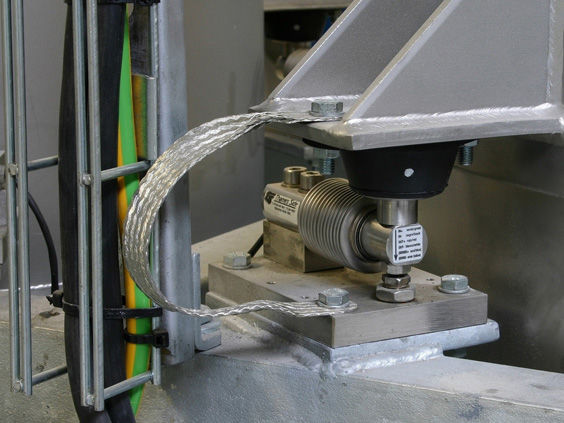
Forklift scale is a new type of dynamic weighing instrument developed and produced for electric forklifts. Users can automatically weigh, accumulate weight and print for storage while lifting goods. It is widely used in logistics, warehouses, yards, docks, factories and other occasions. In addition, the C20 series forklift Electronic scale also has good expansion functions. For some special enterprises, it can provide data docking services, such as data access to designated ERP, activity range control, automated management of multiple forklifts, permanent storage of weighing data, remote management of mobile phones and computers, etc. The forklift scale adopts a spoke type sensor, which is installed at the end of the forklift lifting chain and fixed on the door frame. When the fork lifts the material, the force data is transmitted to the sensor by lifting the chain. The sensor converts the weight into an electric current signal and transmits it to the instrument. The instrument receives the electric current signal and converts it into weighing data through a unique algorithm, which is displayed on the instrument. Sensors receive different pressure data at different heights, so we have installed position sensors on forklifts. Only when the lifted goods reach the position sensor, the weighing data is automatically collected and transmitted to the instrument. In addition, we have added compensation methods for external factors in the algorithm, such as temperature compensation, angle compensation, and throttle compensation, to ensure the accuracy of forklift scale weighing.
Forklift weighing uses hanging teeth, fork frame, and weighing sensors. The hanging teeth are used to connect with the door frame, and the fork frame is used to connect with the fork. The weighing sensor is set between the hanging teeth and the fork frame. The hanging teeth use a backrest frame, which is a rectangular frame composed of side bars on both sides, an upper hook base plate, and a lower bar below. The upper part of the backrest frame is fixed with a hook, which is integrated with the hook base plate. The lower part of the backrest frame is welded with a flat clamp lower hook, which is fixed on the lower end surface of the lower side bar of the backrest frame. The side of the flat clamp lower hook is fixed with a west fixing block. The hanging teeth are fixed to the forklift door through the hook and fixing block. On the rack, there are symmetrical installation frames for weighing sensors on both ends of the inner side of the backrest frame. The weighing sensor installation frames consist of one mounting base plate and two side plates, During installation, hang the hook on the door frame, and then install the fixed block and the hook with the flat clamp. Buckle the hanging teeth onto the forklift door frame for easy installation. The hook and hook bottom plate are integrated and have high connection strength. The weighing sensor is symmetrically distributed, the force is uniform, and the weighing accuracy is high.
The weighing forklift adopts a fork frame, which consists of an upper support plate, a lower support plate, and two backrest weighing sensor fixing frames fixed between the upper and lower support plates. The backrest weighing sensor fixing frame adopts a backrest weighing sensor bottom plate and two weighing sensor side plates. The weighing sensor is fixed on the backrest weighing sensor bottom plate. During installation, the other end of the weighing sensor is installed on the backrest weighing sensor bottom plate of the backrest weighing sensor fixing frame. After the device is assembled, the fork is fixed on the upper support plate to weigh the goods. A backrest fixing plate is fixedly connected between the outer end faces of the upper and lower backrests. The backrest fixing plate is used to connect the upper and lower backrests, enhancing the connection strength and rigidity of the fork frame. One end of the side strip is equipped with a battery box, and one end of the weighing sensor mounting frame is fixed with a junction box. By installing the battery box connected to the weighing sensor, the weighing module of the vehicle can operate for a long time. By connecting the junction box to the display screen, the weighing number of the weighing module can be displayed in real time. When using a weighing forklift, hang the hook above the hanging teeth on the door frame of the forklift, install the fixing block below the hanging teeth, and use the connection between the fixing block and the hook of the flat clamp to lock the hanging teeth on the door frame. In this way, the weighing module is completely fixed on the door frame. Then, install the fork on the upper plate of the fork frame, and use the goods to transport the goods, so that the weight of the goods is transmitted to the weighing sensor through the fork and fork frame, enabling the weighing sensor to weigh the goods.
Technical parameters
Range: 2000 x 1kg, 3000 x 2kg, 5000 x 2kg
Accuracy: 0.1%
Power supply: 1.2V 220mAh 6EA, DC 12V (car battery)
Instrument: (ATW-200) 5-digit LCD (IP65)
Working hours: 10 hours
Function: Backlight, zeroing, peeling, counting, kg/lb


