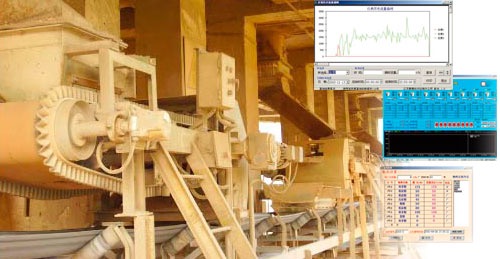









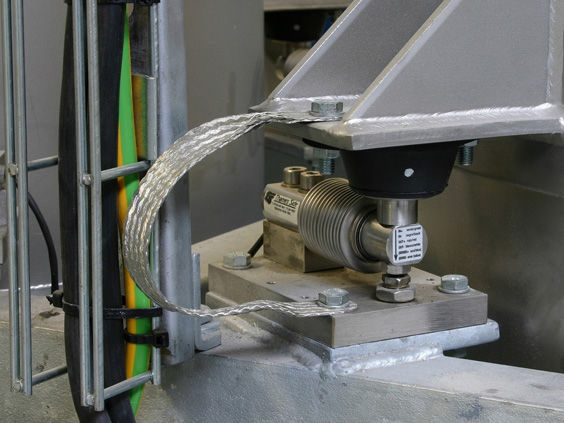
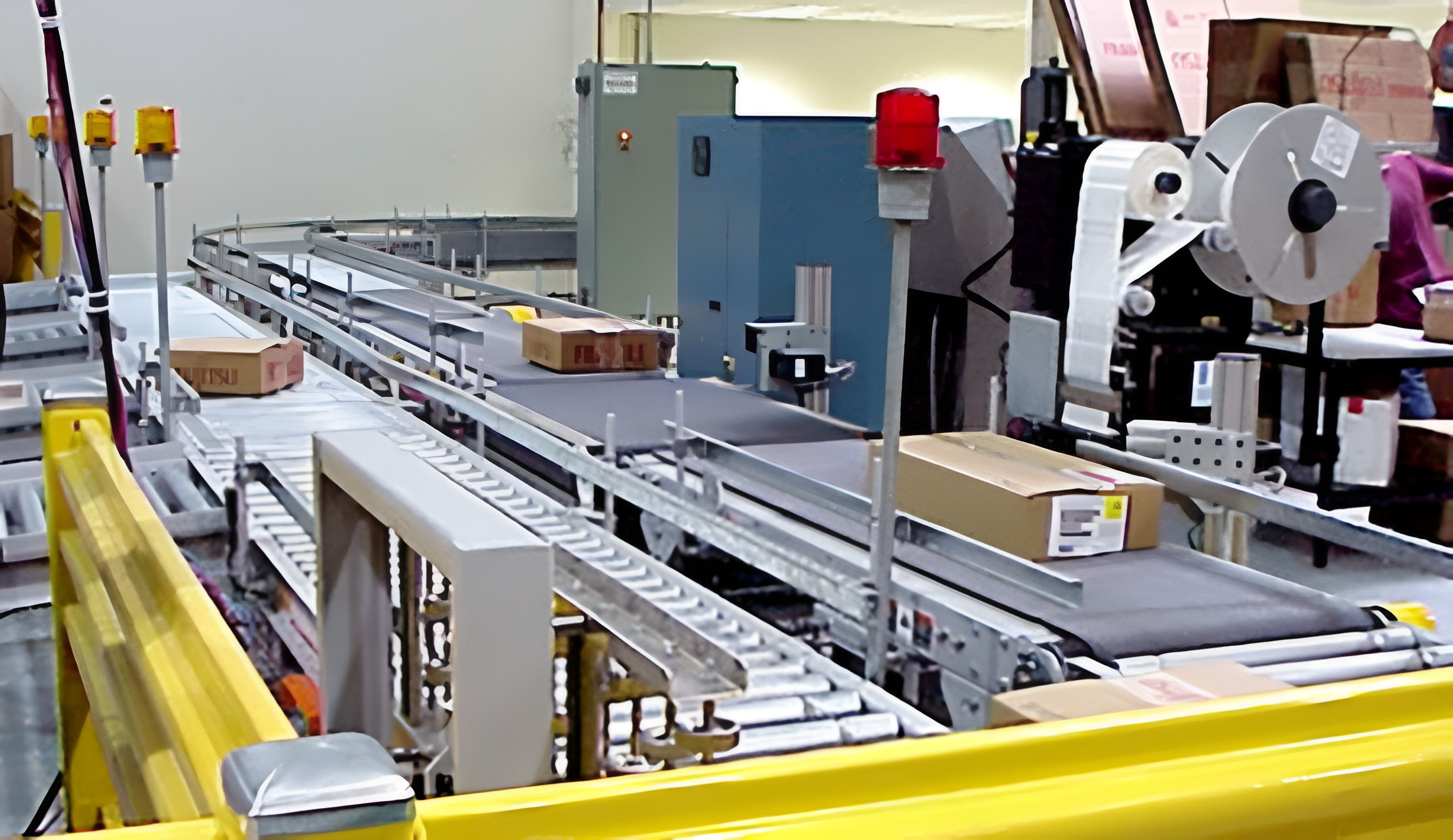


The Speed Regulation Belt Weigher transmits the material weight signal and belt running speed signal to the field integrator through the front channel weighing device and the back channel weighing device installed on the belt conveyor. In the field integrator, the weight signal is converted into a digital quantity after AD, and the weight value is scaled by the built-in monolithic computer. The speed pulse is scaled by the built-in monolithic computer to the speed value and multiplied by the weight value to obtain the instantaneous flow rate. The two channels simultaneously accumulate the instantaneous flow rate to obtain the accumulated material amount of the two channels respectively. Stored in internal non-volatile memory. When the two channels are normal, the remote display adopts the average value of the cumulative amount of the two channels. If one party is faulty, the normal party is displayed.


 020-34563445
The Speed Regulation Belt Weigher adopts a system structure with the weighing instrument as the control core, forming the belt scale controller BWF. The hardware part mainly consists of weighing instruments, Weighing modules, amplification circuits, latches, etc. Batching is to control the feeding amount of raw materials by adjusting the speed of the belt conveyor to complete the proportioning of various raw materials. The belt scale is a real-time controller used to measure and control the speed of the belt conveyor and the material flow rate. There is a hopper above the belt structure. When the belt moves, the materials are conveyed out along with the belt. The conveyor belt is driven by a slip motor (electromagnetic speed-regulating asynchronous motor). The frequency of the output signal from the speed sensor is proportional to the belt speed. A weighing module is installed below the conveyor belt, which outputs a voltage signal proportional to the material on the belt. The belt batching scale controller receives the speed signal and weight signal, calculates the instantaneous flow rate of the material on the belt and displays it. The actual flow rate value is compared with the set flow rate value. The output current control signal is regulated by PID, amplified by the preamplifier and power amplifier to control the conduction Angle of the thyristor, thereby adjusting the speed of the slip motor and stabilizing the material flow rate at the expected set value.
Before the belt conveyor is put into operation, the set value of the material flow rate on the conveyor belt is set by the operator on the keyboard. After the system is put into normal operation, the weighing instrument samples the belt load signal and the running speed signal. By multiplying the belt running speed signal by the instantaneous weight per unit length of the belt, the instantaneous flow rate of the material on the belt can be calculated. The instantaneous flow rate can be displayed through six seven-segment digital tubes, providing process data references for operators. The weighing instrument system then compares the actual flow value with its set value. After incremental PID regulation operation, the control quantity is calculated and output as a current signal (4~20mA) through the weighing instrument. Then, it is amplified to control the conduction Angle of the thyristor, achieving the function of regulating the excitation current of the electromagnetic clutch of the slip motor, thereby adjusting the speed of the slip motor of the actuator. Keep the material flow on the conveyor belt as stable as possible near the set value and ensure good static indicators and dynamic performance.