


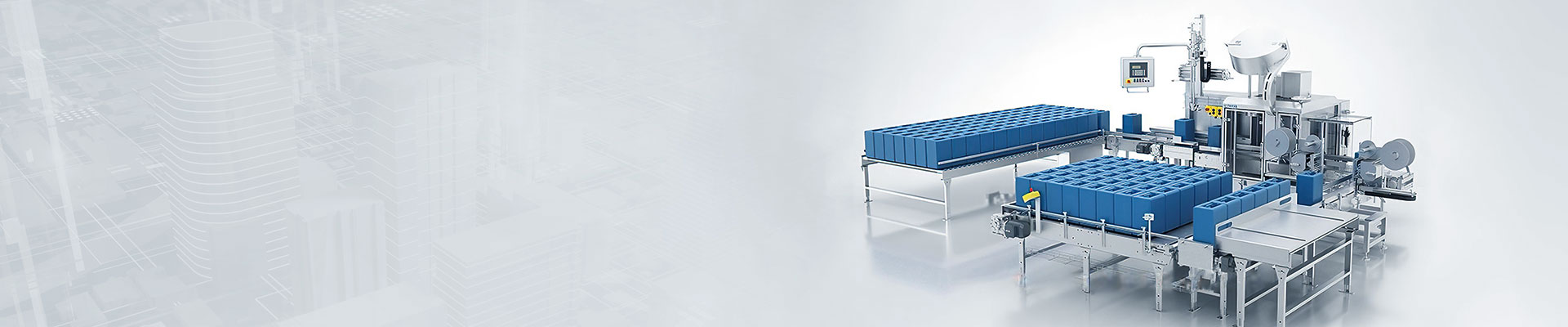

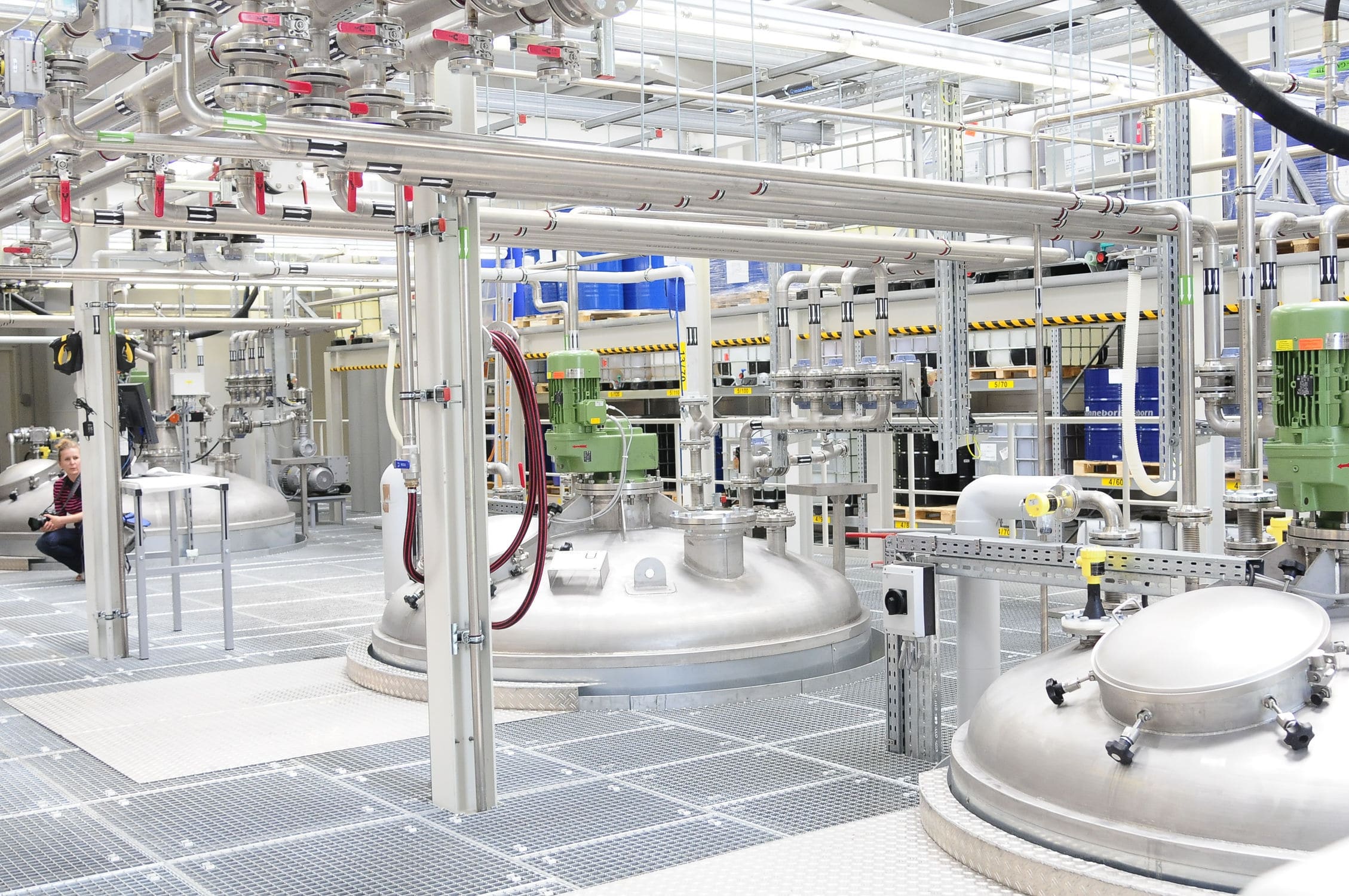


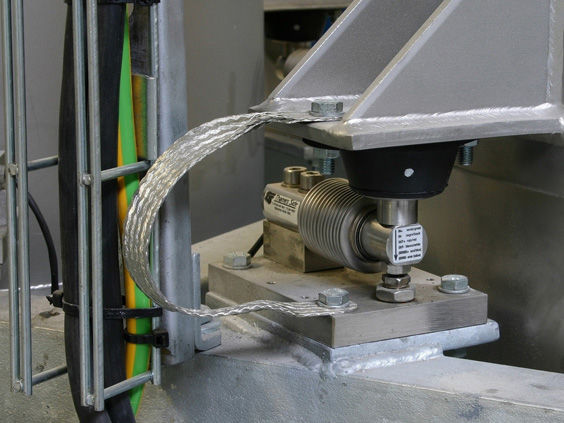
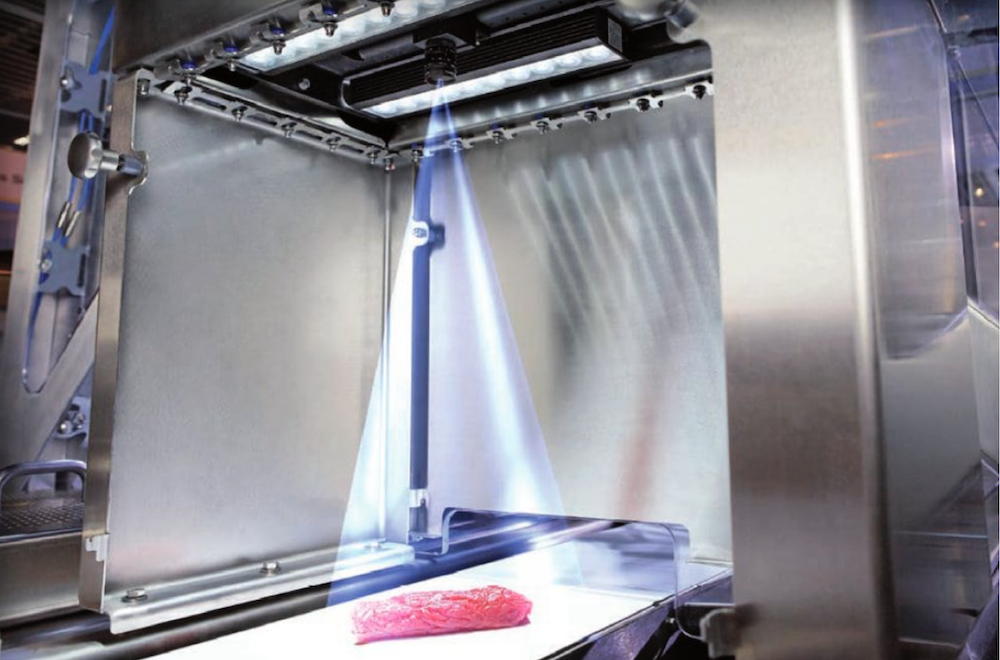
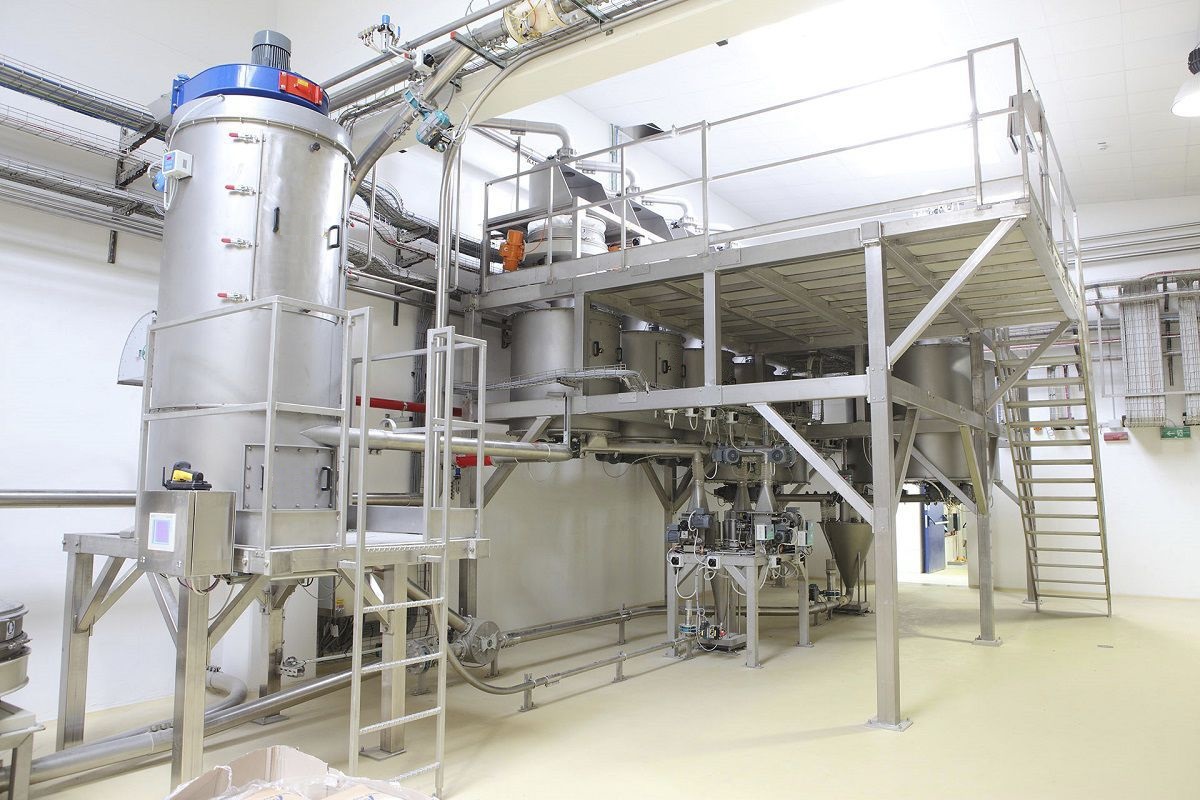
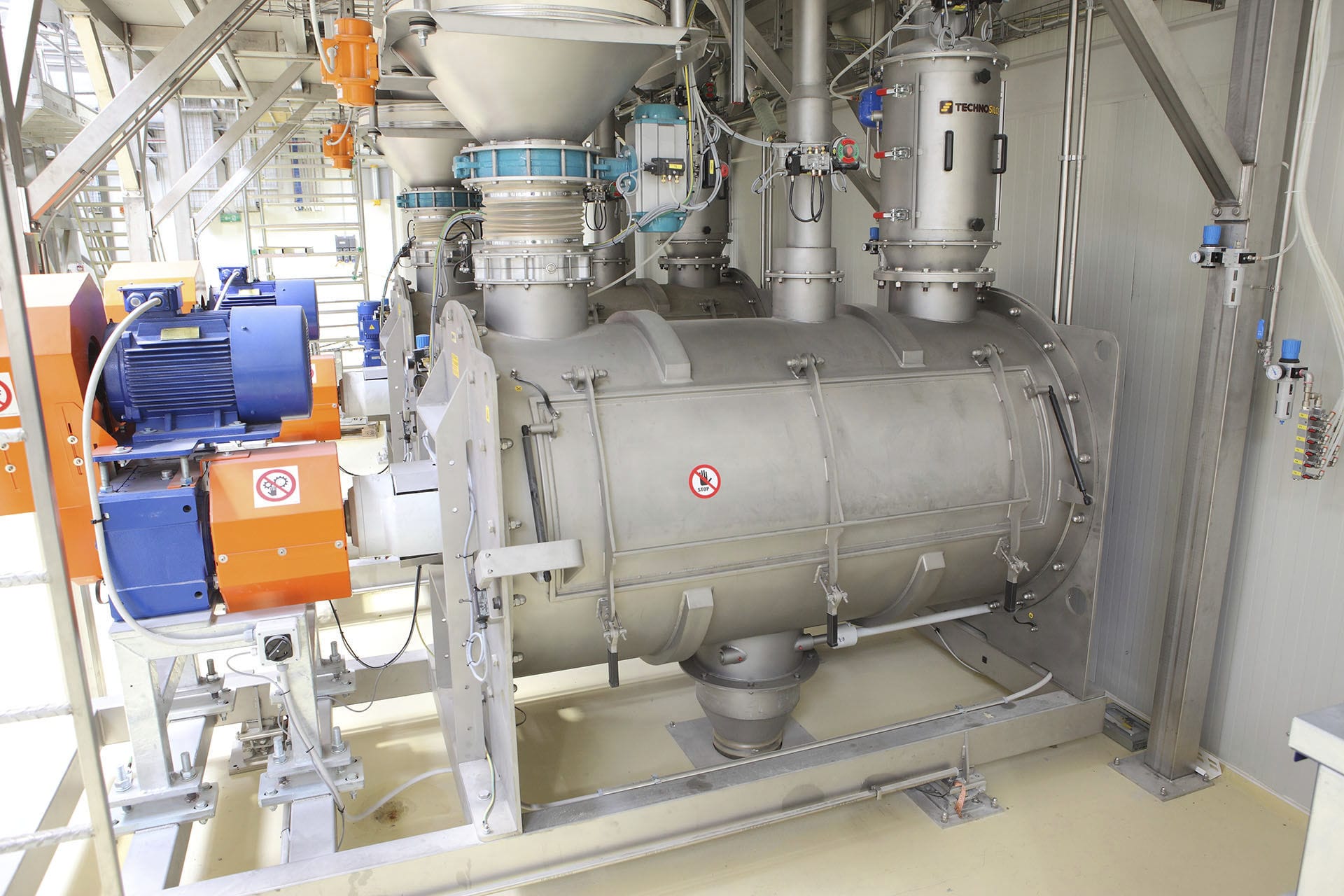
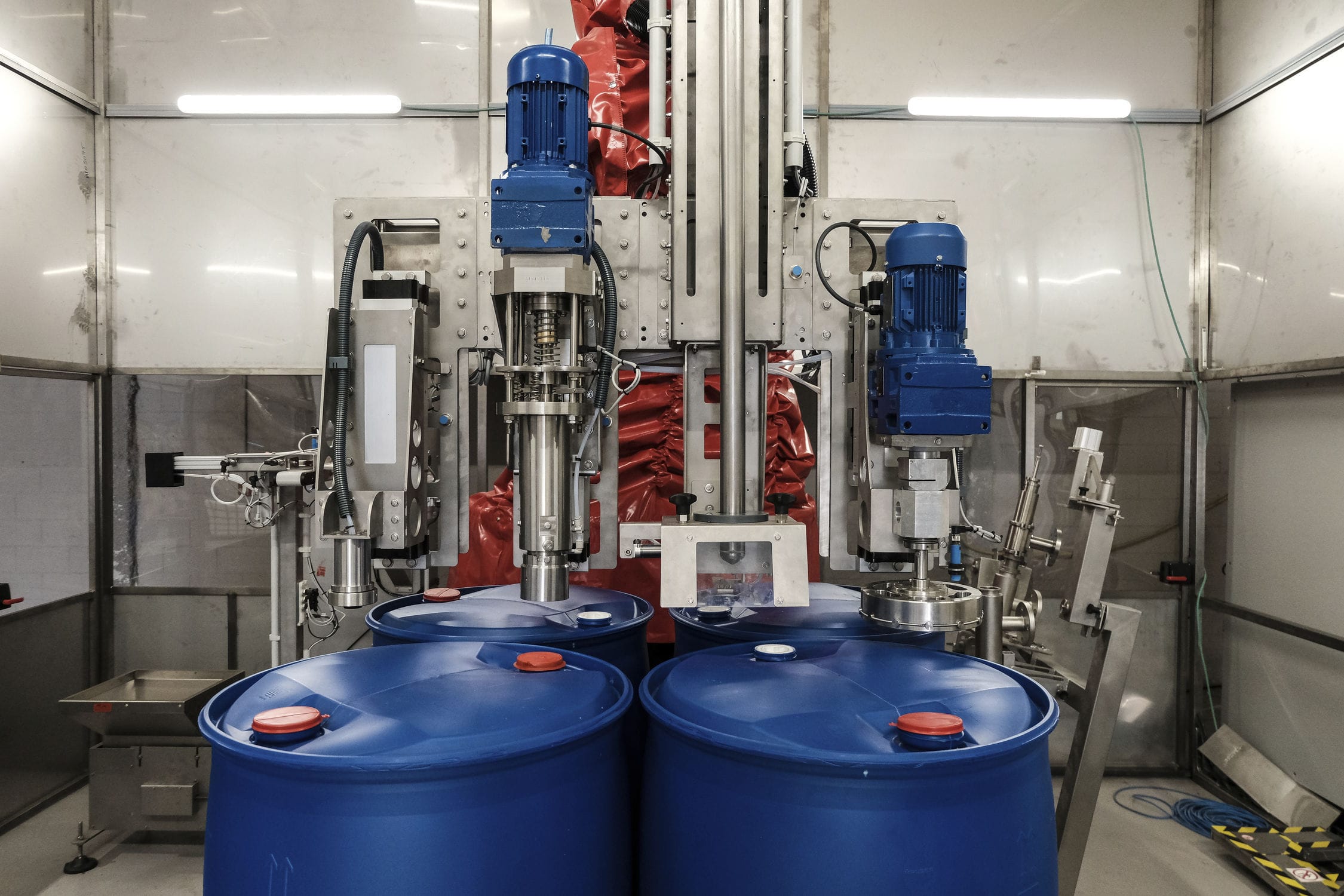
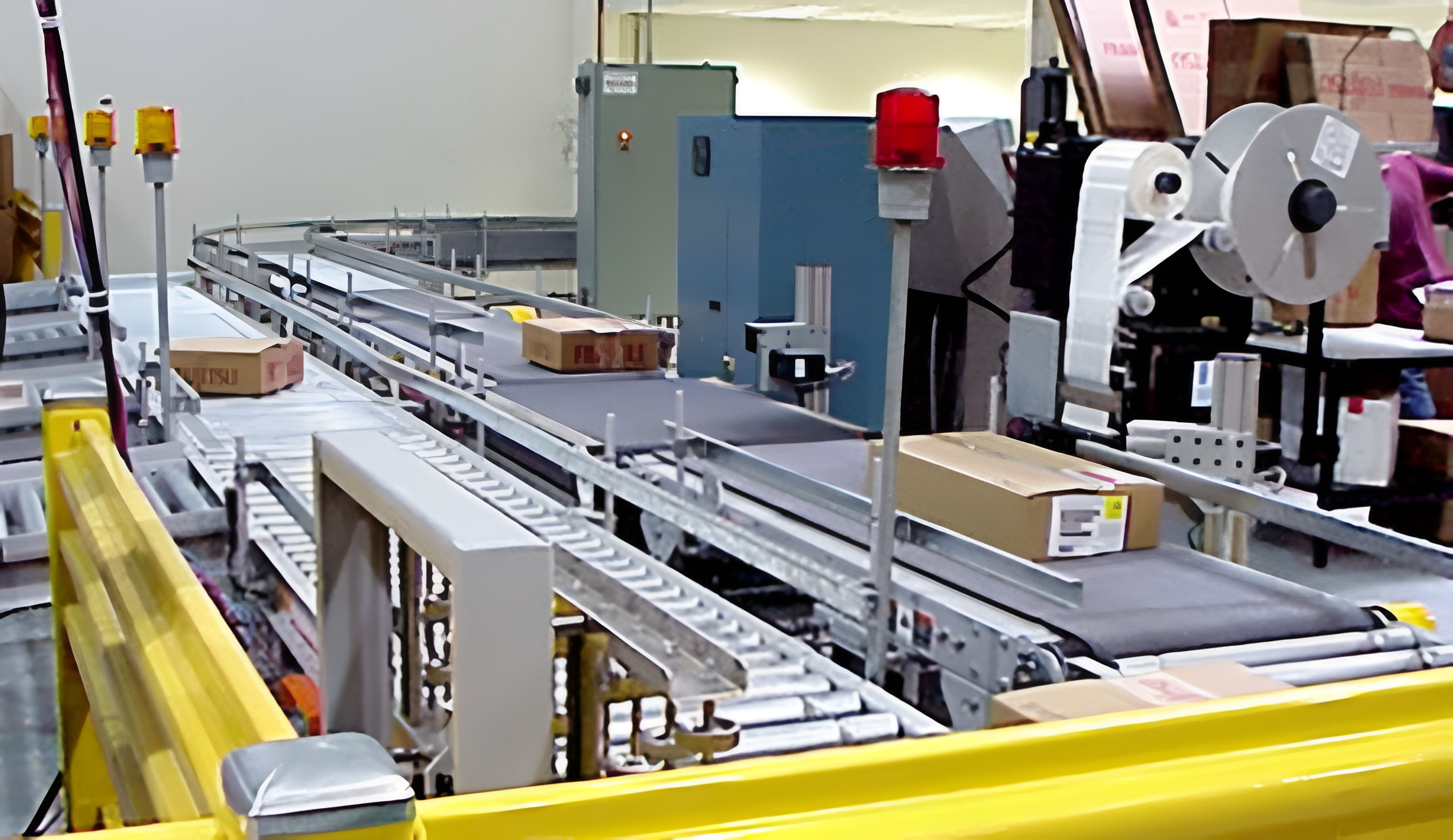
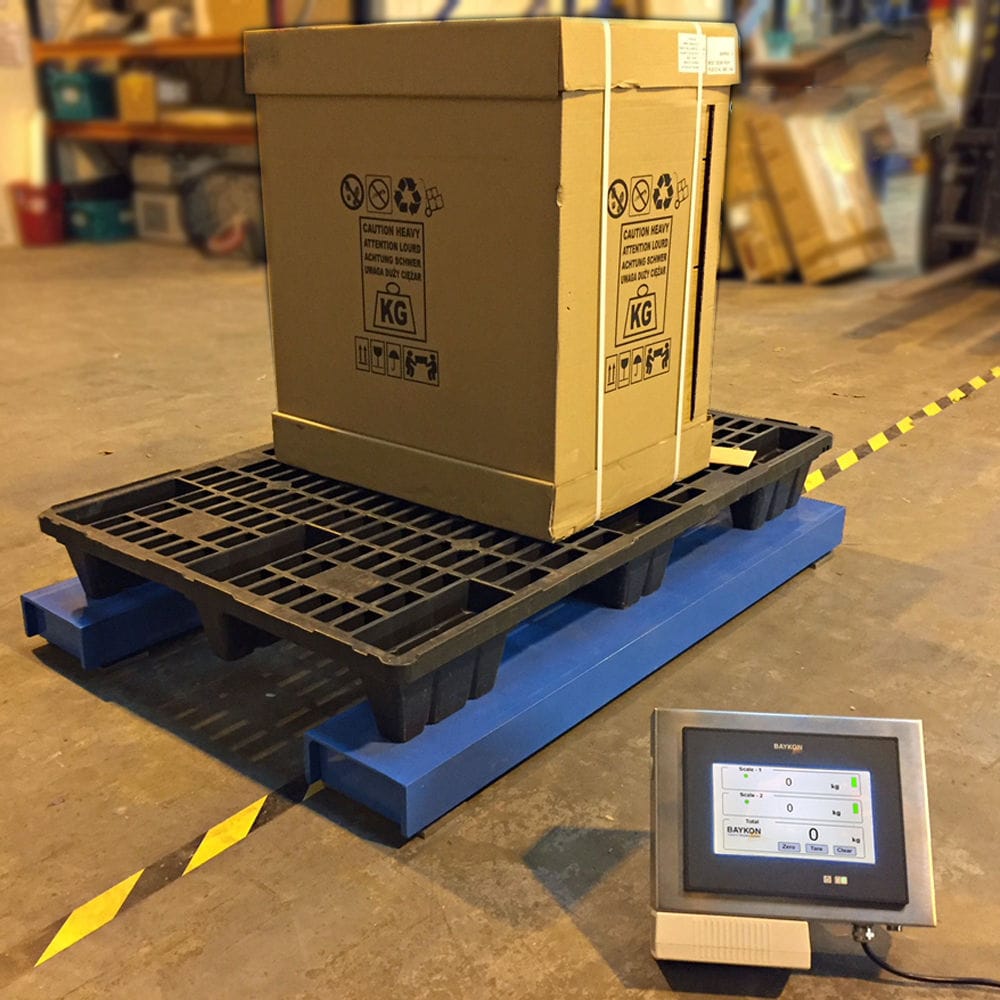


The hazardous waste weighing and packaging machine is composed of an input mechanism, a weighing platform mechanism, a weighing sensor, a wiring box, a weighing instrument to process the analog signals from the sensor, a PLC to control the entire weighing process, a touch screen and other electrical components. The original input mechanism of the weighing system of the packaging machine includes a hopper, a double-stroke cylinder, a support, and a discharge door. Its feature is that the opening and closing of the discharge door of the input mechanism is driven by a double-stroke cylinder, and different electrical outputs can achieve three states of "semi-closed", "fully closed", and "fully open" for the discharge door.

 020-34563445
The hazardous waste weighing and packaging machine is a weighing device used to compress scattered waste paper into compact blocks. Through the hydraulic system and mechanical structure design, the waste paper is compressed and shaped into a form, thereby reducing volume, saving transportation costs, and improving processing efficiency. Implementing the management of hazardous waste as "generate immediately, package immediately, weigh immediately, code immediately, and store immediately", the fibers entering the packaging machine first go through the Weighing system, where the weighing system completes the batch weighing and summary of the fibers, ensuring the accuracy of the packaging quality. The weighing system mainly consists of the feeding mechanism, weighing mechanism, weighing sensor, junction box, weighing instrument processing analog signals, PLC controlling the entire weighing process, touch screen and other electrical components. The original feeding mechanism of the packaging machine's weighing system includes the hopper, double-stroke cylinder, support, discharge door, etc. Its characteristic is that the discharge door of the feeding mechanism is driven by a double-stroke cylinder, and different electrical outputs can achieve three states of "semi-closed", "fully closed", and "fully open" for the discharge door. When the discharge door is in the "semi-closed" state, it can reduce the fiber quality entering the weighing mechanism within a certain period of time, prevent large pieces of fibers from impacting the weighing mechanism, which has a certain positive effect on improving the accuracy of packaging quality of small output packaging machines; the incoming material speed increases exponentially, and the non-uniformity also increases. The "semi-closed" state cannot control the amount of fibers entering the weighing mechanism, and thus cannot meet the user's requirements for the accuracy of packaging quality.
The feeding mechanism of the scale is driven by a six-stage variable-frequency motor through a belt buffer. The hollow shaft worm gear reducer reduces the speed and drives the rollers to rotate. On the other side of this roller, another roller is driven to rotate at the same speed and in the opposite direction through a chain. Through the rotating shaft fixed on the box, under the tension of the spring, a certain compaction effect is exerted on the fibers, improving the quality of the single-scale measurement. The two rollers separate the incoming material from the scale mechanism, eliminating the influence of the incoming material on the accuracy of the scale. A single-stroke cylinder drives the frequency converter to control the motor, and the motor speed can be set arbitrarily according to needs, thereby effectively controlling the speed and uniformity of the fibers entering the scale mechanism.
The complete packaging quality is usually controlled by weighing and checking 5 to 7 times as needed. Each weighing session involves two processes: weighing and discharging. The main set value is the ideal value set for each weighing session; the pre-set value is an advance amount relative to the main set value, serving as the switching point for coarse and fine adjustments; the overshoot amount is the advance time for stopping the feeding. The numerical values are input by the operator through the touch screen into the PLC. During the weighing process, in order to obtain the net weight, the weighing must start from zero, and it can also effectively eliminate the influence of the zero drift and cumulative error of the instrument on the accuracy of the weighing platform.
During the coarse adjustment stage, the motor is controlled to rotate rapidly, and the fibers fall rapidly from the storage hopper above the two rollers into the weighing mechanism. The net weight increases rapidly from zero until it equals the difference between the main and preset values. During the fine adjustment stage, the motor rotates slowly in proportion. When the net weight gradually reaches the main preset value minus the overshoot amount, the motor stops rotating, and the two rollers will block the incoming material in the storage hopper above. After the overshoot amount stops rotating, the suspended fibers in the air will continue to fall into the weighing mechanism, and the net weight continues to increase. If the overshoot amount is set appropriately, it will fall on the main preset value line, matching the ideal value set for each weighing. The suitability of the overshoot amount will directly affect the accuracy of the weighing. The size of the overshoot amount is related to many factors and changes at any time. Therefore, after each weighing, the overshoot amount needs to be corrected based on the current weighing error for the next weighing, and the overshoot amount for the next weighing is set. Through the existing staged "process" control of the packaging machine weighing system, the speed and uniformity of the fibers entering the weighing mechanism have been effectively controlled, thereby greatly improving the accuracy of the packaging machine's packaging quality. According to user feedback, the improved weighing system can fully meet the requirement of an accuracy of 0.5% for packaging quality, and can meet the requirements of packaging machines with a daily output of more than 100 tons.


