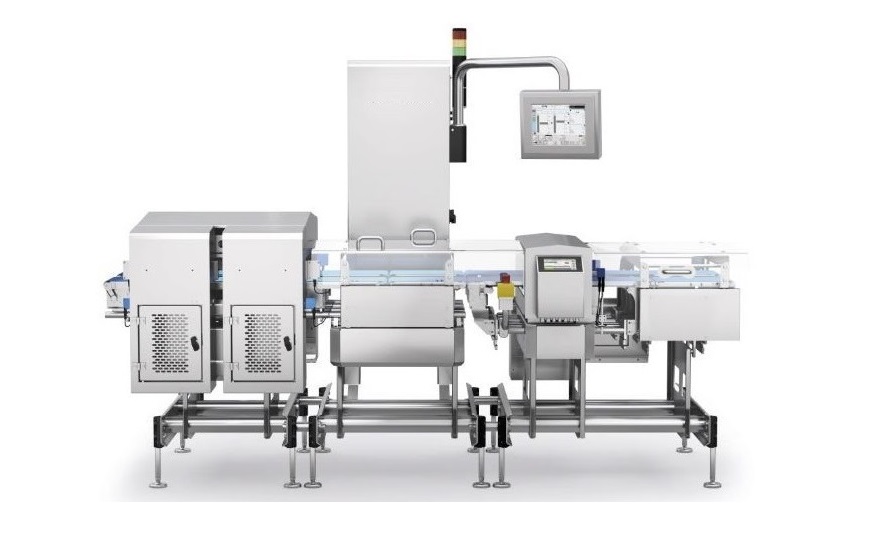





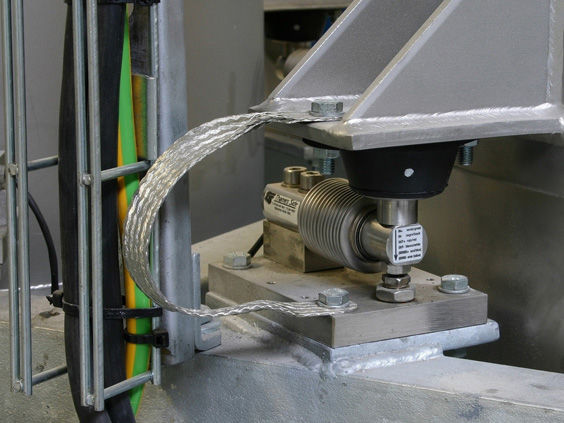
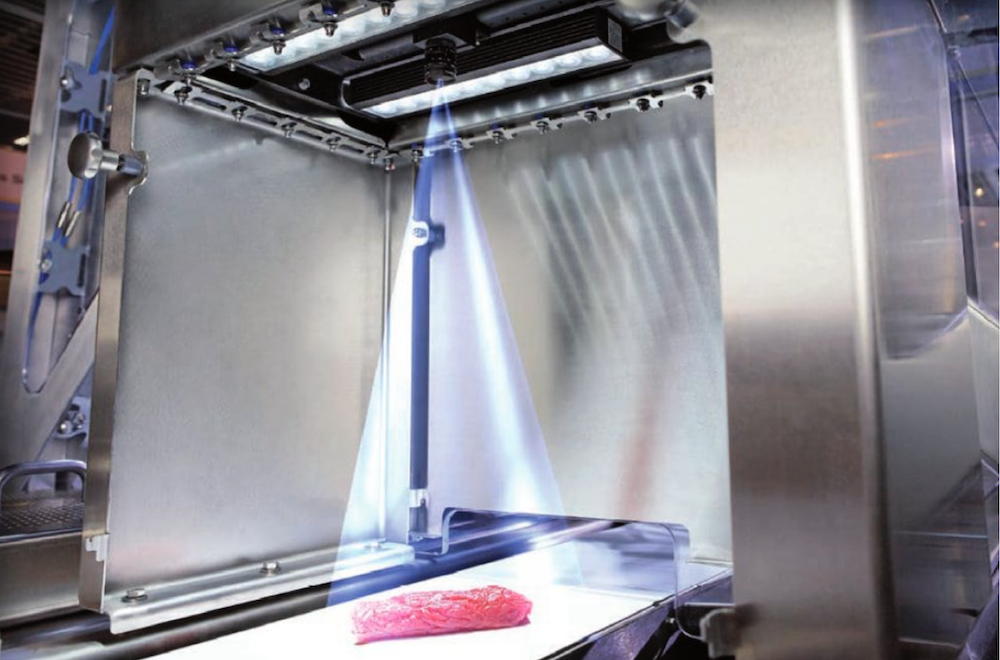
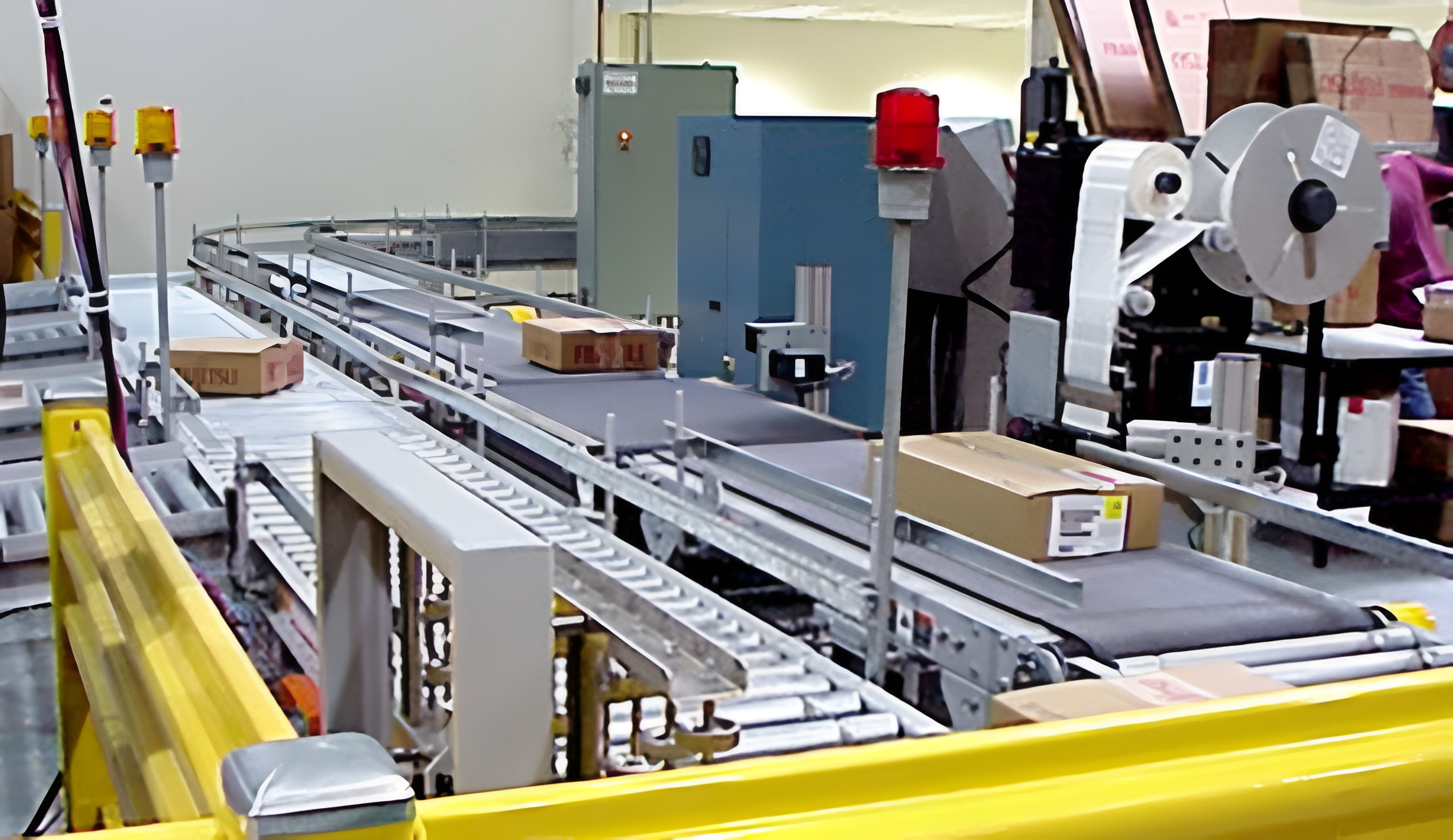
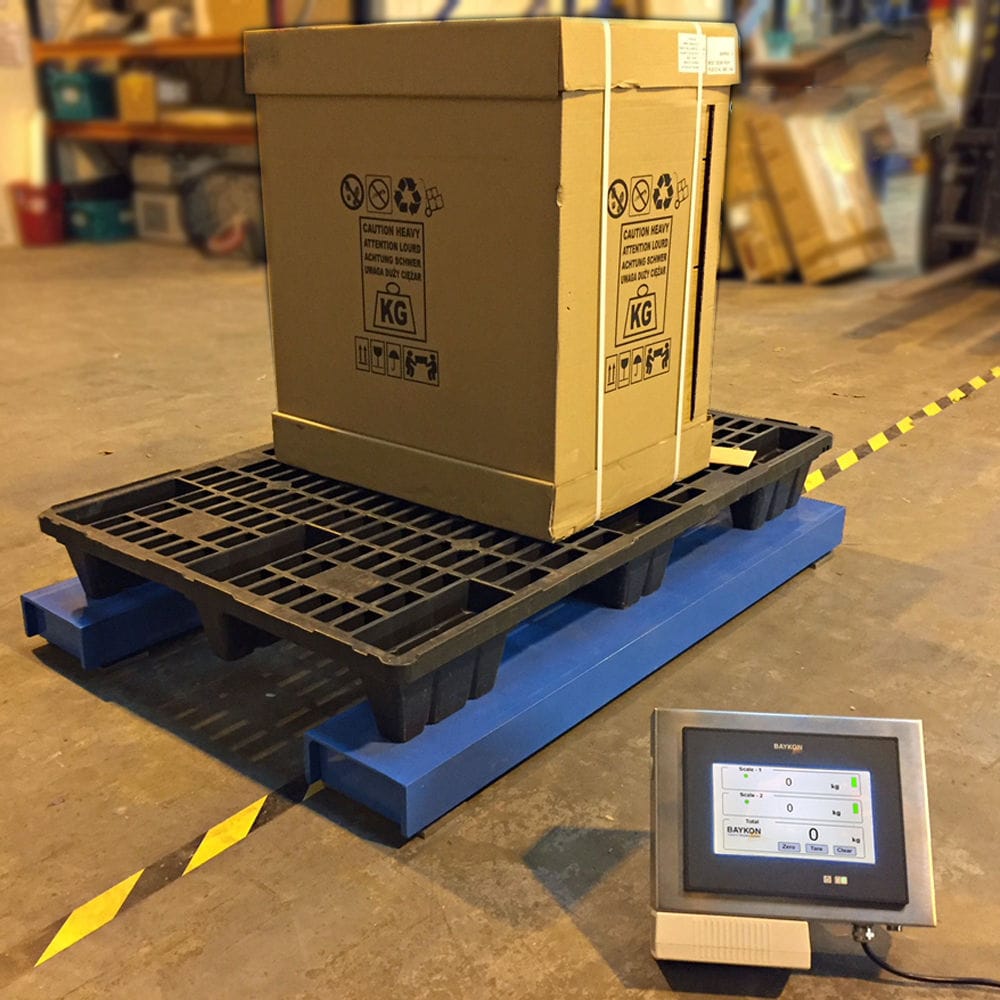


The weighing and checking machine mainly accomplishes the acquisition of signals and sends the weight signal to the controller for processing. In order to make sure that only one product passes through the weighing table during the working process, so the speed of the feeding conveyor is jointly decided according to the spacing of the products and the required speed. During the weighing process, when the product to be inspected passed by the assembly line enters the weighing conveyor, the system recognizes the product to be inspected as entering the weighing zone according to the external signal. By means of the running speed of the weighing conveyor and the length of the conveyor, or the level signal, the system determines the time when the product leaves the weighing conveyor. From the time the product enters the weighing platform to the time it leaves the platform, the load cell transmits the detected weight signal to the controller, which selects the signal from the signal stabilization area for processing to obtain the weight of the product.

 020-34563445
The weighing inspection machine is composed of a weighing sensor, a conveyor, and an elimination device. Combined with microprocessing technology, it can count the number of products and the conveying flow. It is a modern intelligent device with an intelligent display interface. It is mainly used as an automated equipment for online dynamic weighing of products passing through an automated packaging production line. It can detect products with weight deviations during continuous operation and can automatically classify and count the products. It detects the weight of products on the production line through a high-speed dynamic weight reading method, can detect products with weight deviations in the continuous production line, and can perform online judgment or automatic weight sorting control based on this, especially suitable for checking missing parts in packaged products. The packaged products are weighed by the weighing scale, qualified ones are sent back to the original conveyor belt, and unqualified ones are eliminated (or an alarm is triggered and the machine stops). It also has functions such as classifying and counting products based on settings.
The goods are placed on the weighing conveyor belt at the front speed-matching section of the automatic sorting scale and then conveyed to the weighing scale platform of the equipment for weighing. After the goods successively enter the weighing section, the control system quickly identifies that the items have entered the weighing belt based on the optical signal. According to the running speed of the weighing section and the length of the conveyor, the control system can determine the time when the items leave the weighing section. From the time the product enters the scale platform to leaving it, the weighing module detects the signal, the controller selects the stable signal area for processing, and thus obtains the weight of the product. Using a continuous dynamic automatic weighing method to detect the weight of the items and combined with an automatic elimination mechanism, it realizes high-speed and high-precision weight detection and sorting on the production line. It is suitable for checking the shortage of filling in the finished products of the small packaging industry. The unique mechanical structure and operation interface are designed to be very convenient for users to operate and manage and count data. When using, the operator only needs to simply set the upper and lower limit deviation values of the inspected items and press the [Start] button, and the system will enter the fully automatic working state. Qualified products pass through, and unqualified products are automatically eliminated (or an alarm is triggered and the machine stops). At the same time, all information such as quantity, speed, weight, and product information is fully displayed on the human-machine interface. This machine is used for packaging inspection to achieve full inspection of products before leaving the factory and also achieves the effect of saving labor.
An online automatic weighing and online automatic detection system that completes online weighing, online bidirectional sorting. The automatic weighing adopts sensors installed at the front and back of the materials, and the weight signal is directly displayed through a weighing instrument with a communication interface, including weight calibration, and then the signal is sent to the PLC, which is transmitted to the touch screen for display. The bidirectional sorting is done through a projection method, using photoelectric conversion, to send the required information through the Modbus communication interface to the PLC, and then sent to the touch screen for display. An identification device is introduced, and the two systems are combined, open-loop control, and automatic production counting. Automatic identification mainly identifies the weight and size of the materials as well as their qualification and non-qualification. In terms of quality, these two parameters are given particular attention. If the weight or size of the materials exceeds the allowable error range, it is judged as unqualified through the PLC program, and directly commands the identification of the goods for distinction. Conversely, if within the allowable error range, it is judged as qualified, also through the PLC program to identify the goods for distinction. Qualified and unqualified products exit from the two sides of the goods.
Open-loop control, integration, automatic identification, controlling from the aspect of quality monitoring, and distinguishing qualified and unqualified products from the produced products. Qualified products can be packaged online or offline, and unqualified products need to be re-inspected by the quality inspector. The entire process mainly ensures the qualification rate of the products leaving the factory. The weight, size, and length of the goods are qualified to be excellent products. After the second inspection, the products are positioned separately. From the production perspective, control is carried out to reduce production costs. Continuous weighing, automatic production counting, including the total output of the machine, the total output of each shift, the output of qualified products and unqualified products. It can be randomly checked at any time and can be connected with REP.