

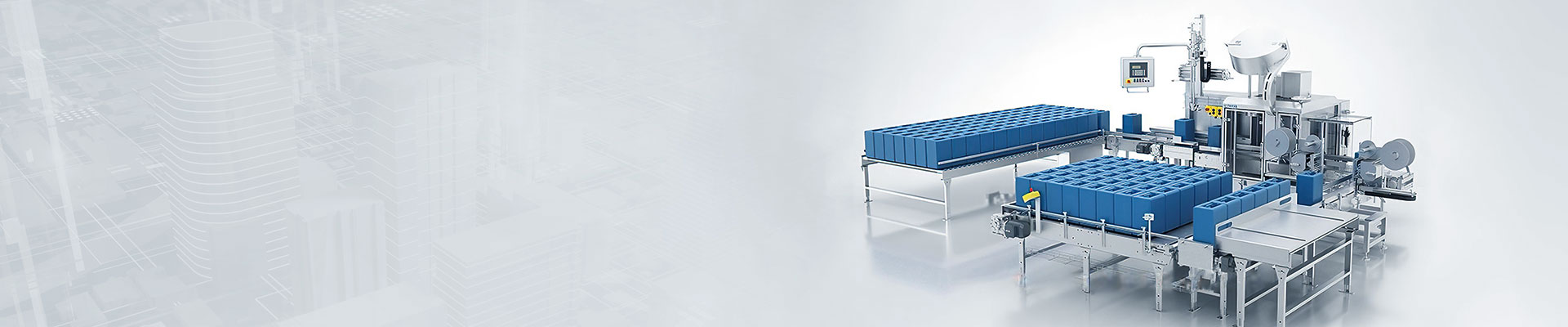


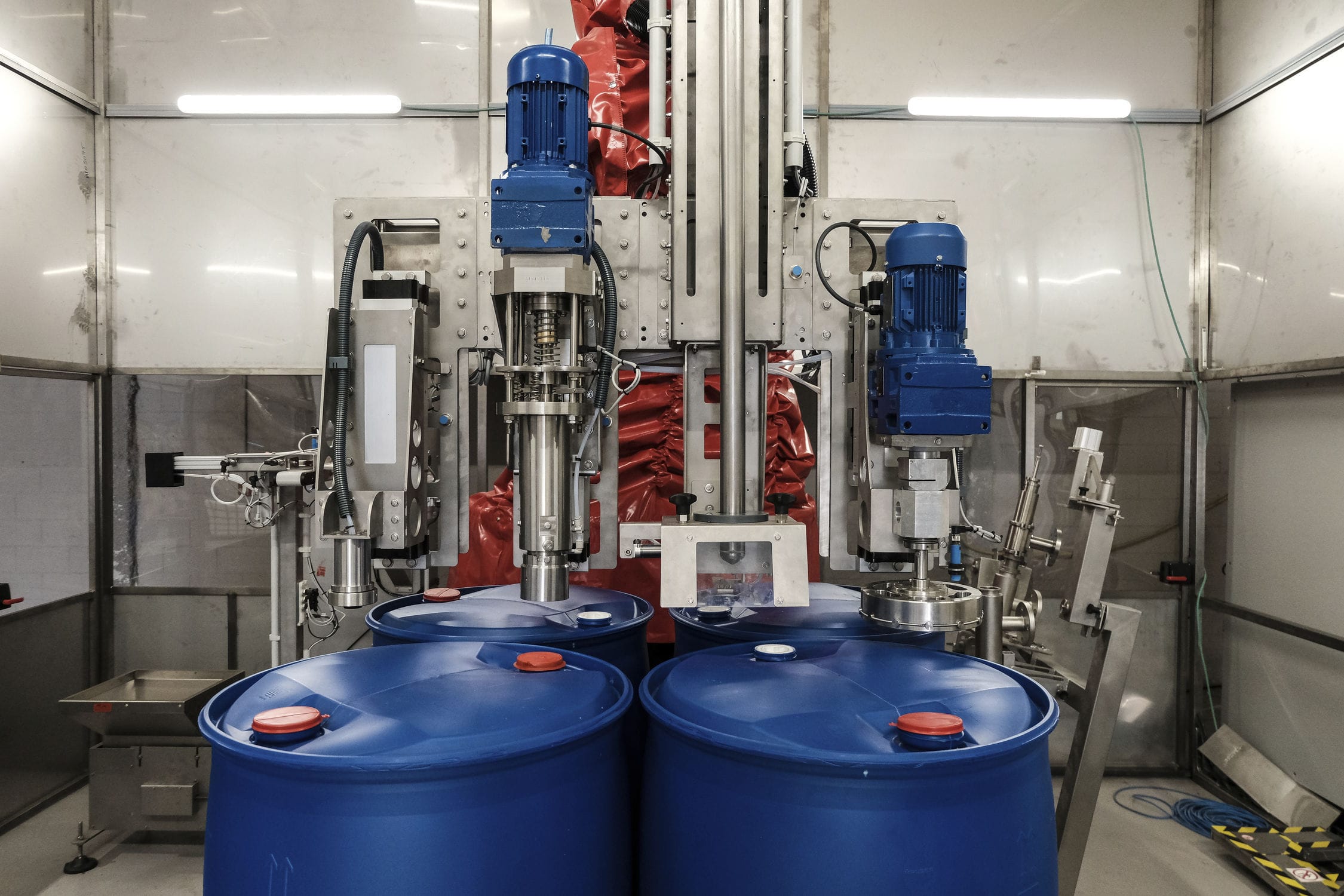


The automatic explosion-proof filling machine precisely controls the movement of the cylinder through programming. In the early stage of weighing, when the deviation between the actual material quantity and the set target value is less than 90%, the system feeds and weighs the material at the maximum feeding speed. The maximum speed in the early stage is constant, and the main purpose of this constant speed is to shorten the entire weighing cycle as much as possible and reduce the weighing time. When the deviation between the actual material quantity and the set value is greater than or equal to 90%, the system automatically switches to the quantitative control mode and adjusts the feeding speed to gradually decrease it until the weighing value reaches the set target value.

 020-34563445
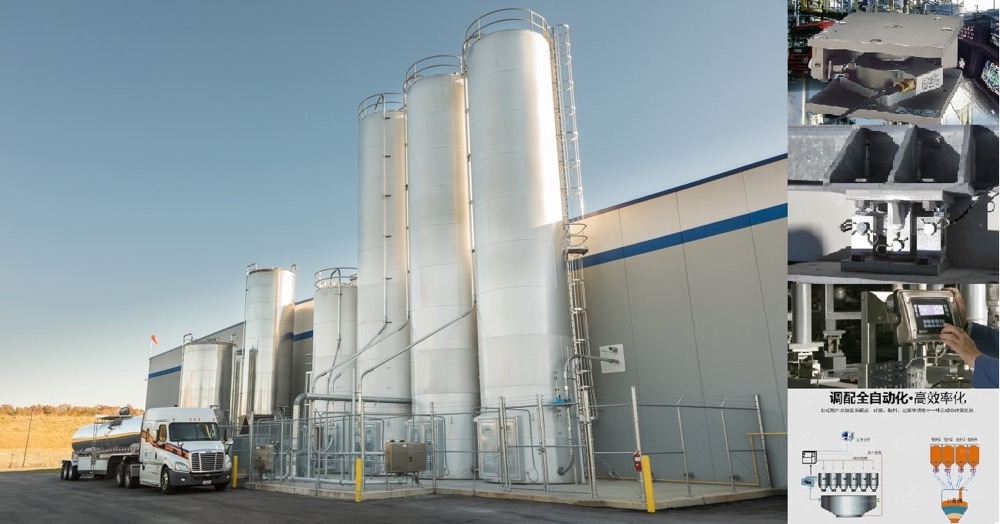
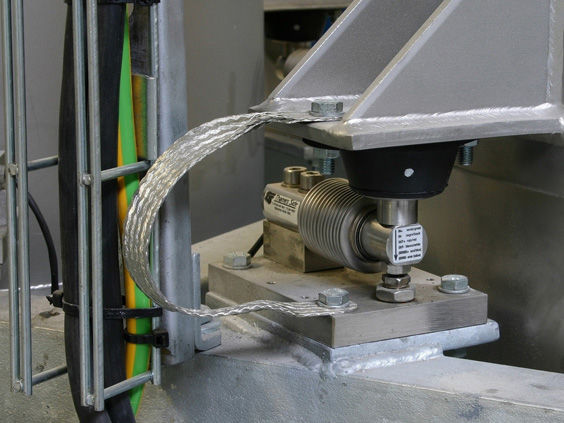
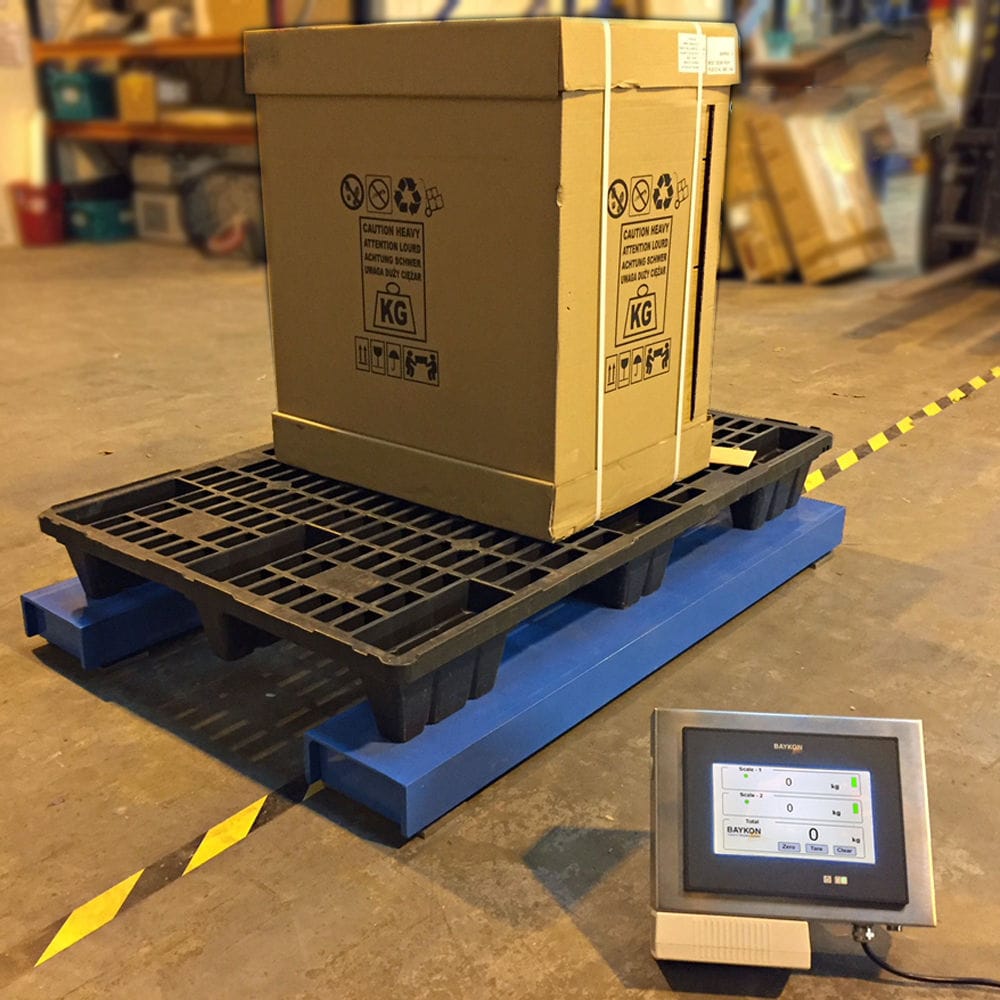
The conveying and metering section of the automatic explosion-proof Filling machine is equipped with an Electronic scale, and a frequency converter is installed at the rotor pump motor. The millivolt signal output by the force on the electronic scale and the pulse signal proportional to the speed of the rotor pump are regulated by the signal PLC, and then sent to the control system for calculation and quantification, thereby obtaining the target amount of the filled material and displaying it. At the same time, the weighing instrument will compare the target amount with the set value to obtain the deviation value. Based on this deviation, the appropriate change value of the control output is automatically adjusted to control the frequency converter, and then the frequency converter controls the motor speed to change the filling flow rate, so that the actual flow rate approaches the set value, thereby achieving the purpose of quantitative feeding.
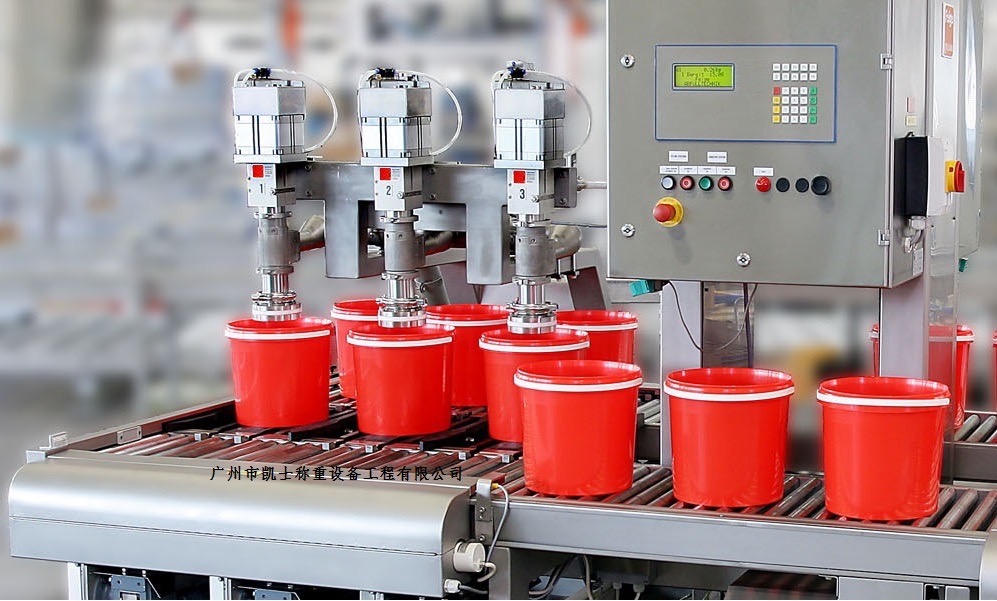
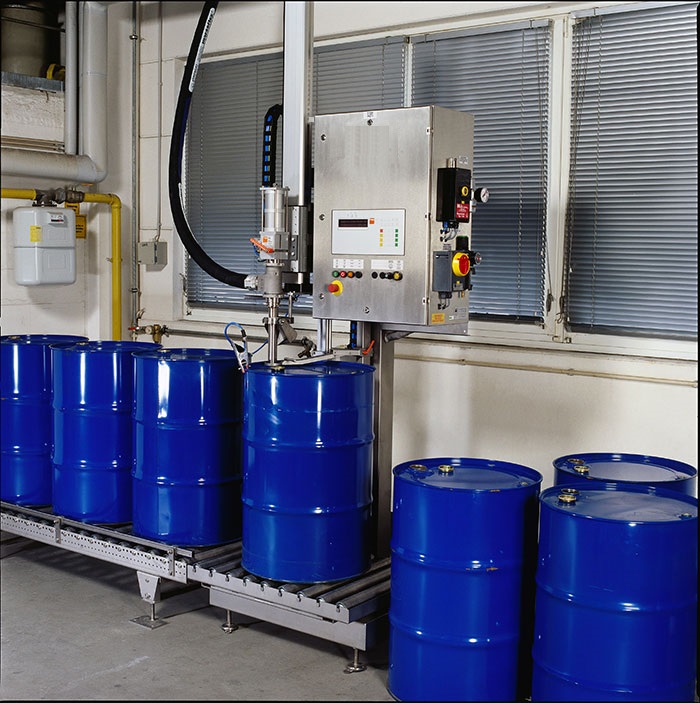
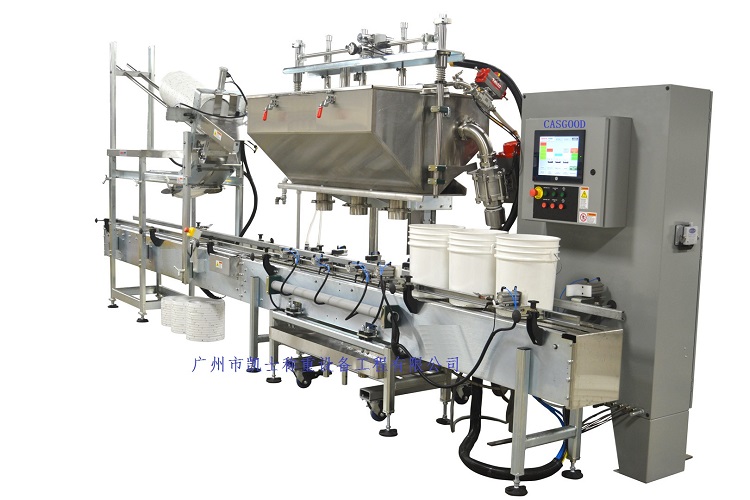
The automatic filling machine uses an integrated embedded touch screen to realize status display, adopts a programmable PLC controller, and provides functions such as input of set values and monitoring of the operation process. One-click operation, multi-window display of filling volume, bucket number, cumulative volume, etc.; by collecting data from the weighing module to achieve quantitative filling of liquids; the filling gun is made by an overall process, eliminating dripping and splashing, and the quick disassembly joint is convenient for cleaning; the target value of the Filling system can be freely set, the height of the filling gun can be adjusted, suitable for rapid filling of various specifications of packaging buckets; it is equipped with a large, medium, small and traceable four-stage filling design, and the filling is more accurate; the scale platform prohibits filling when there is no bucket, and the differential pressure type zero-time difference bucket protection is adopted; the net weight/gross weight (each bucket automatically derates) are two filling methods that can be automatically selected.
The Liquid filling machine only needs to place the container on the conveying chain, and then the container is conveyed to the filling station by the conveying chain, and can automatically derate and fill. When the filling reaches the set weight, the valve is automatically closed. It has an automatic derating function, reducing the workload of workers and improving work efficiency. The buffer filling method (i.e., first fast then slow) is adopted to solve the problem of overflow of filling materials due to too full filling. The anti-dripping optimization design for the filling head is made to make the filling volume more accurate. The design of this equipment is advanced, the cleaning is simple, the appearance is simple and elegant, and it uses clean, energy-saving, and environmentally friendly compressed air as the main power. The filling volume can be freely adjusted within the applicable range, and the performance is more stable and reliable. The filling volume is accurate.
Each filling head of the quantitative filling machine is driven by a separate cylinder, and the cylinder drives a piston and a three-way valve to extract and discharge high-concentration materials. A special three-way filling valve is used, and the liquid filling is realized through the reciprocating motion of the cylinder, and the filling volume is controlled by the electromagnetic valve to adjust the stroke of the cylinder. The piston filling gun of the cylinder uses compressed air to drive the cylinder piston to move, and the air path direction is controlled by the electromagnetic valve to achieve the extraction function. The main components convert the pressure energy of the cylinder into mechanical energy; the electromagnetic valve controls the direction of the airflow; it coordinates the work of each component; the sensor detects the position signal. The control system controls the electromagnetic valve to switch according to the sensor signal, so that the cylinder piston moves reciprocally to complete the extraction operation.
The filling system consists of a feeding valve plug, an piston, and a support ring. When the piston rod drives the feeding valve plug to move upward, due to the friction between the piston seal ring and the cylinder wall, its movement lags, causing the feeding port to open; continue to move upward, the limit block (nut) pushes the component upward, and the lower chamber of the material cylinder forms a vacuum, only the periphery of the support ring is open, the material will flow along the arrow direction indicated in the figure into the material cylinder until the filling action is completed. When the piston rod and the feeding valve plug move downward, the movement lags, the feeding port is closed (i.e., the feeding valve plug contacts the piston and seals), and continues to push the component downward, discharging the material to complete the discharge action. The specific connection structure between the piston and the piston rod adopts a certain connection method, such as a snap ring connection or a threaded connection. The threaded connection is stable and can withstand the axial force according to different specifications, ranging from 500 to 2000N. Under the control of the PLC, the motor of the rotor pump is started first. Then the relay gets energized, the pneumatic valve for discharging the material operates, the material filling gun is opened, and the material starts to be discharged. The material is then transferred to the bucket on the material feeding electronic scale. After the material is discharged, the relay for discharging the material gets de-energized, the pneumatic valve for discharging the material closes the material filling gun, and the automatic quantitative weighing is completed. The PLC control precisely controls the action of the cylinder by writing programs. In the early stage of weighing, when the deviation between the actual weighing amount and the set target value is less than 90%, the material is fed and weighed at the maximum feeding speed. The maximum speed in the early stage is constant, and the constant maximum speed is mainly to minimize the entire weighing cycle and reduce the weighing time. When the deviation between the actual weighing amount and the set value is greater than or equal to 90%, the system automatically enters the quantitative control mode and adjusts the feeding speed to gradually reduce the feeding speed until the weighing value reaches the set target value.