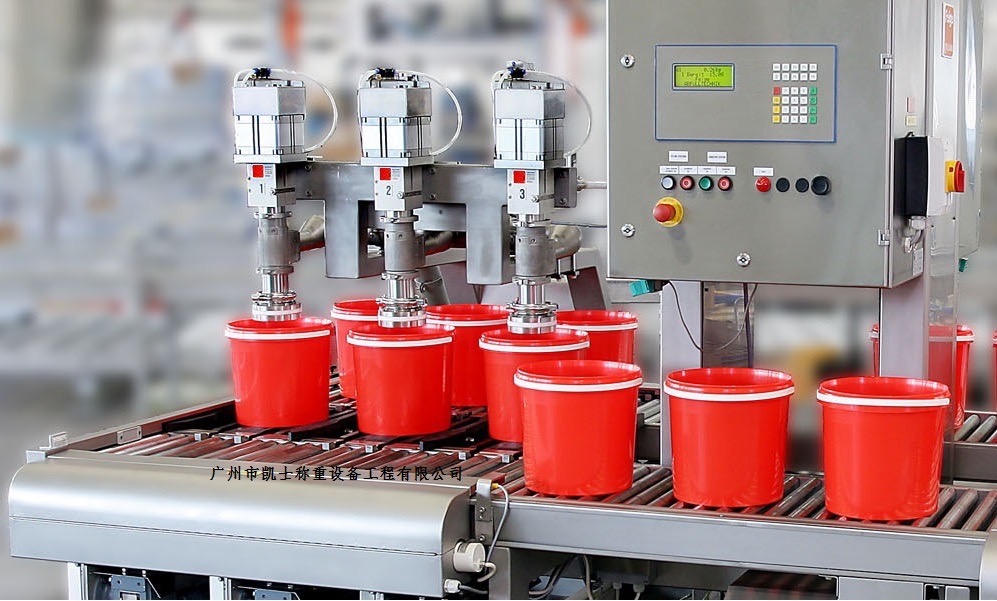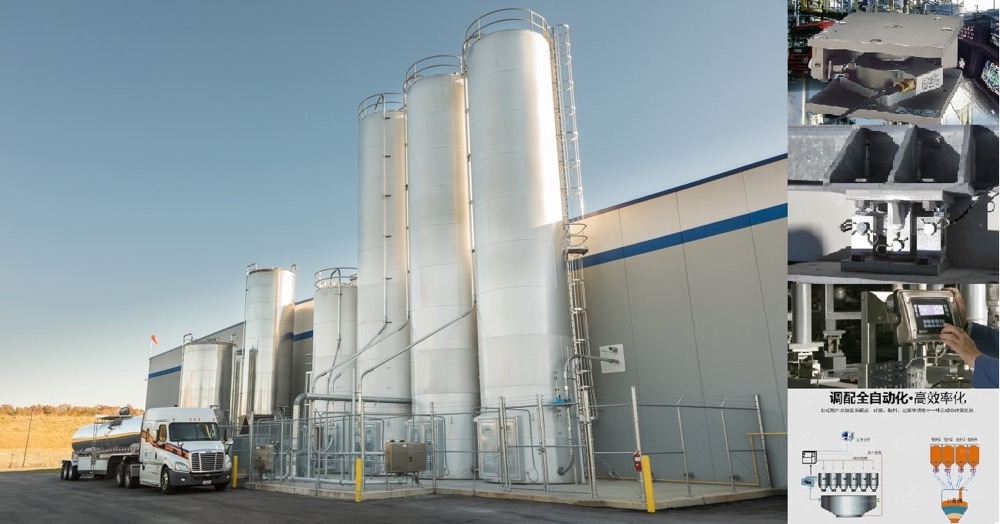


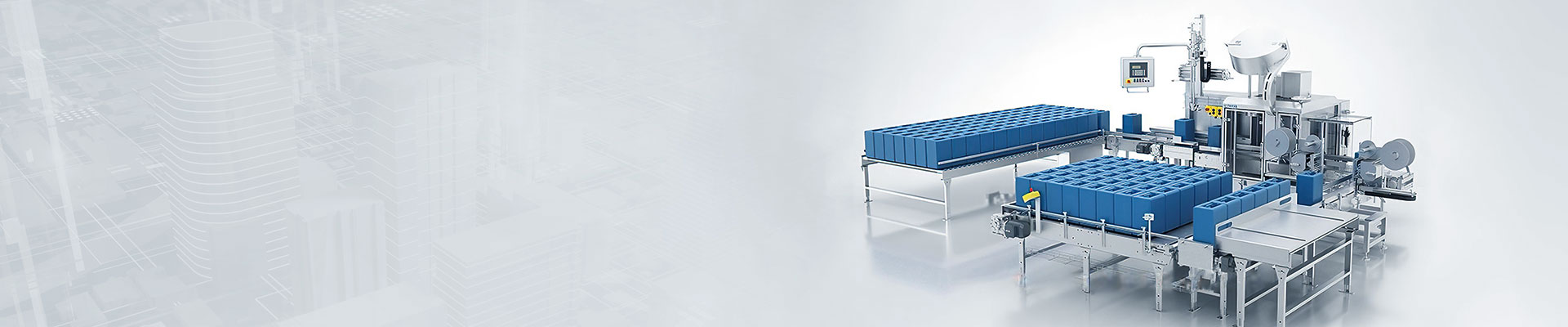






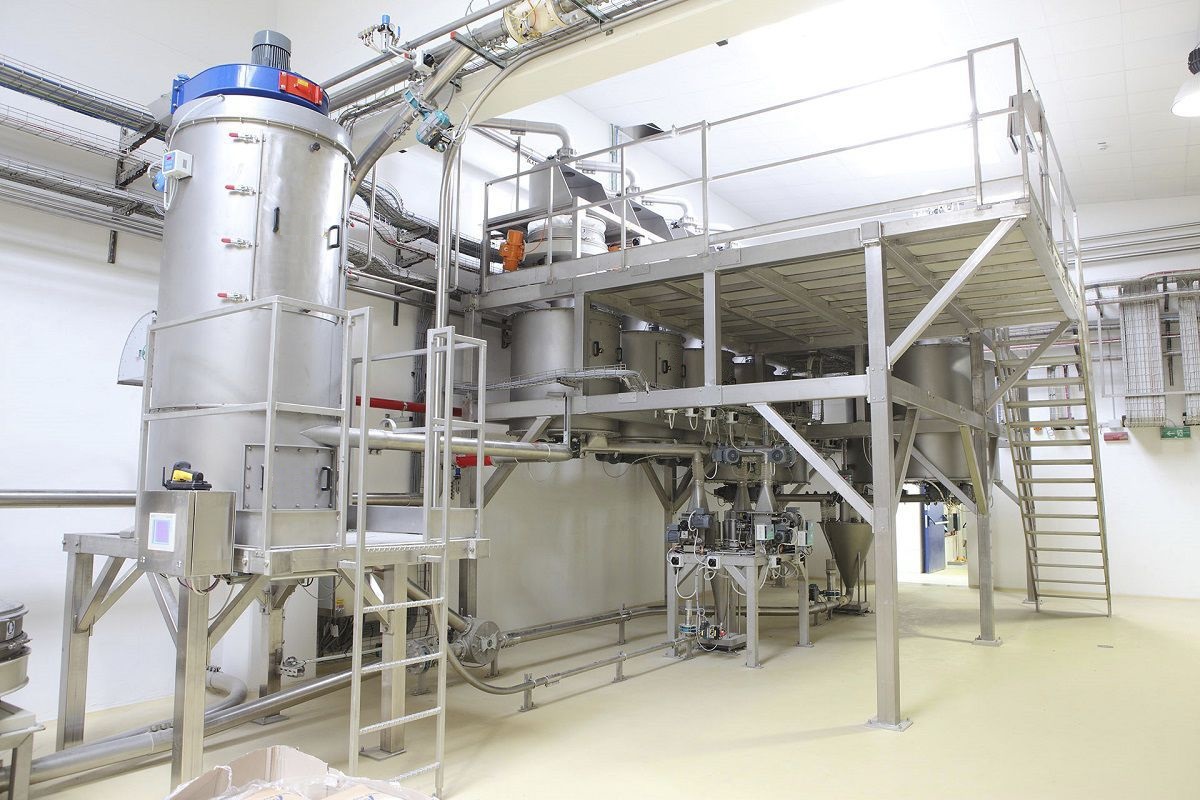
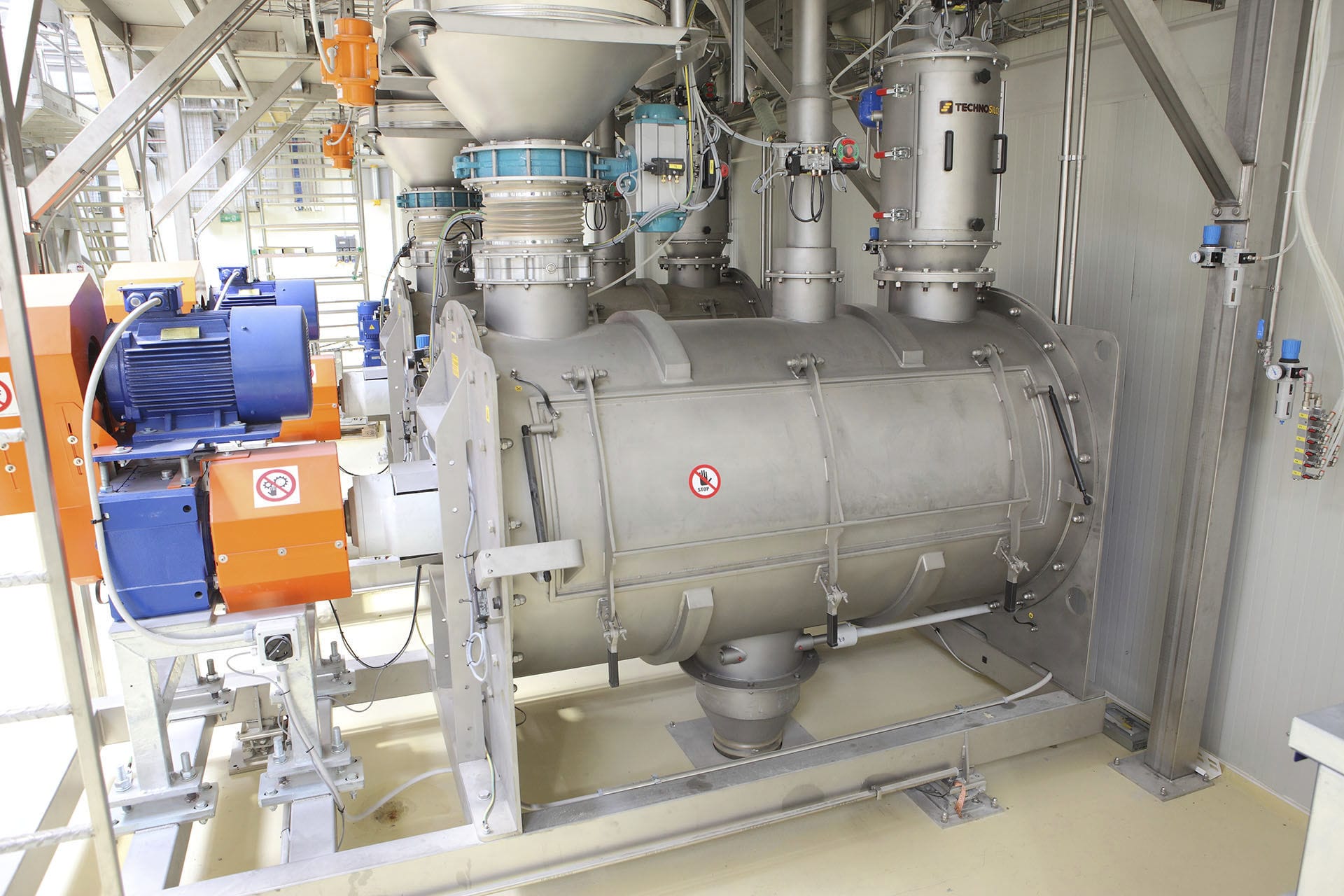
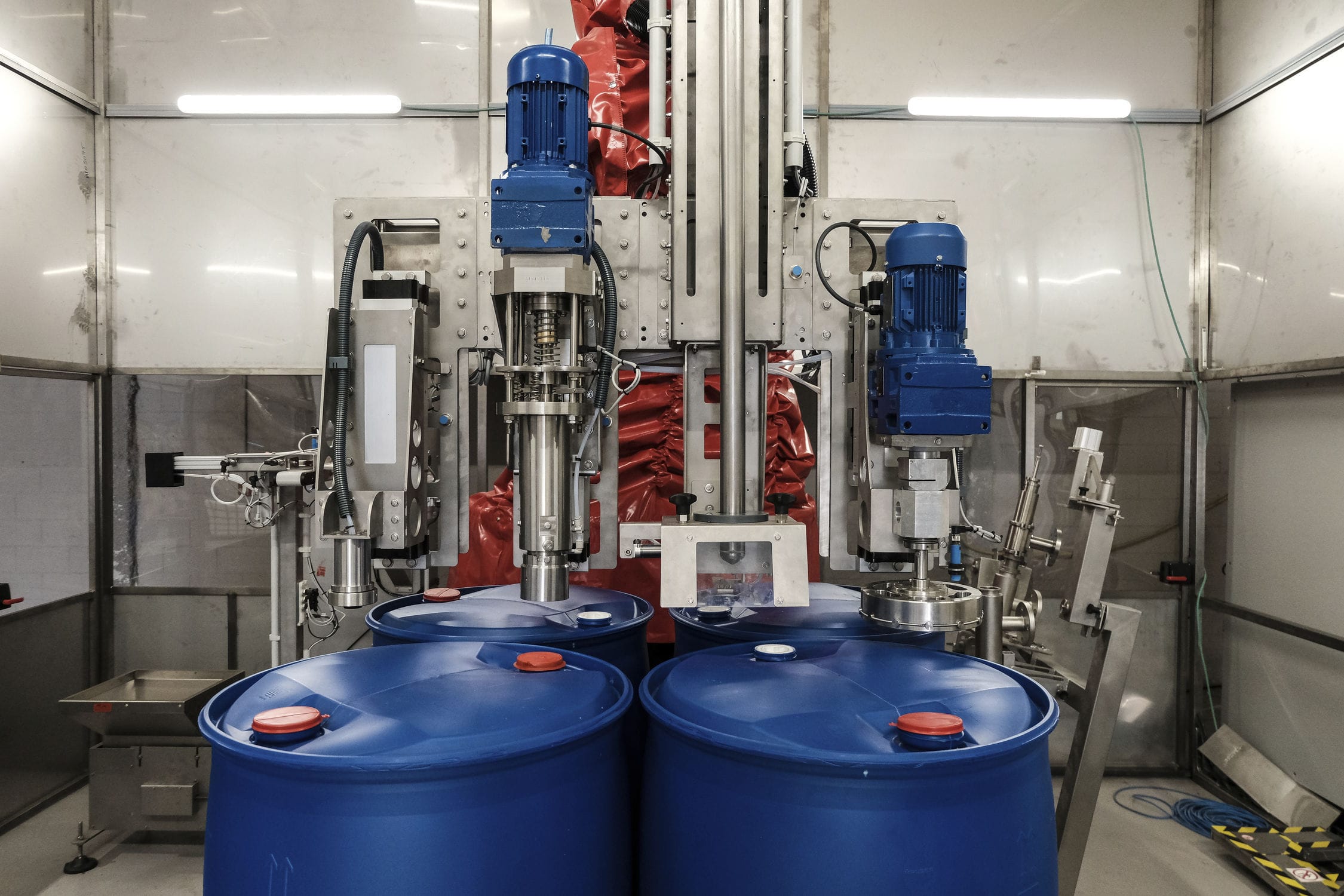
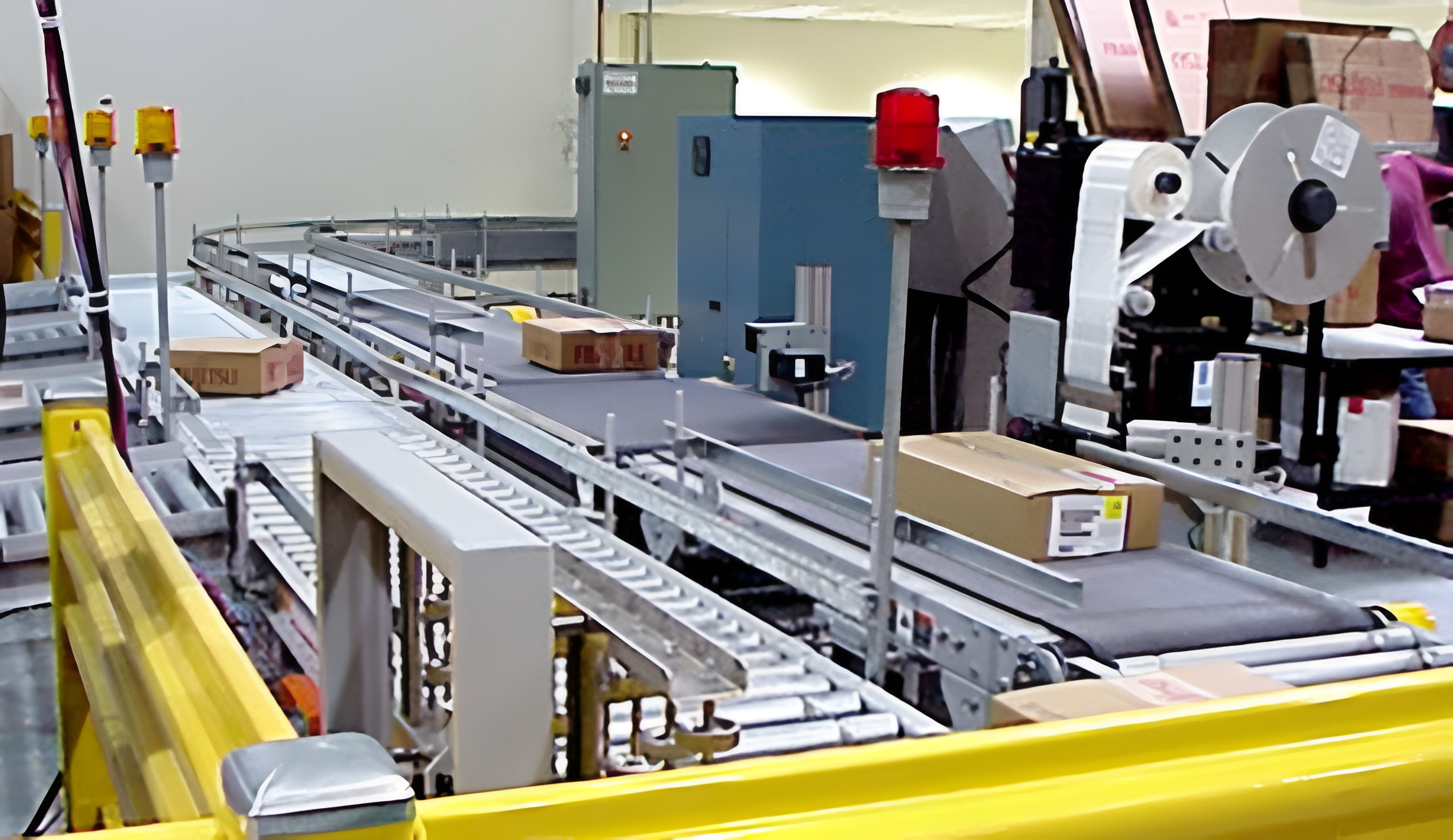


The can material scale is composed of filling, sealing, boxing, palletizing, weighing equipment, as well as corresponding conveyor belts, supplemented by automatic control and automatic adjustment systems. When the four-liter buckets reach the feeding conveyor belt, the filling bucket separator separates the buckets and sends them to the fixed scale platform. Quantitative filling involves symmetrically configuring the pistons of the cylinder around the rotating material bucket. Each piston is connected to an axle through a connecting rod, and the 180-degree forward circular motion causes the piston to rise, while the 180-degree backward circular motion causes the piston to descend. When the piston rises, the material is controlled by the valve to be sucked into the bucket from the upper cylinder. When the valve connecting the piston cylinder and the filling gun is opened, the material is injected into the lower bucket.

 020-34563445
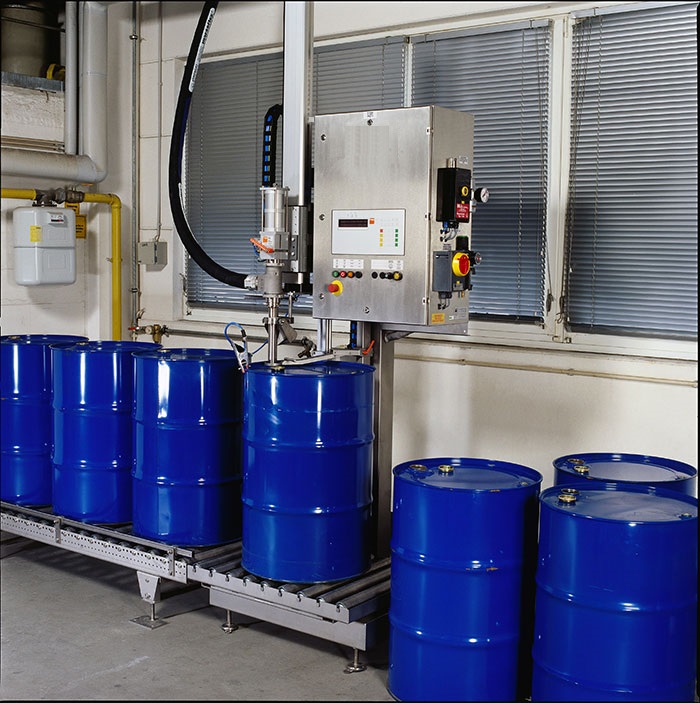
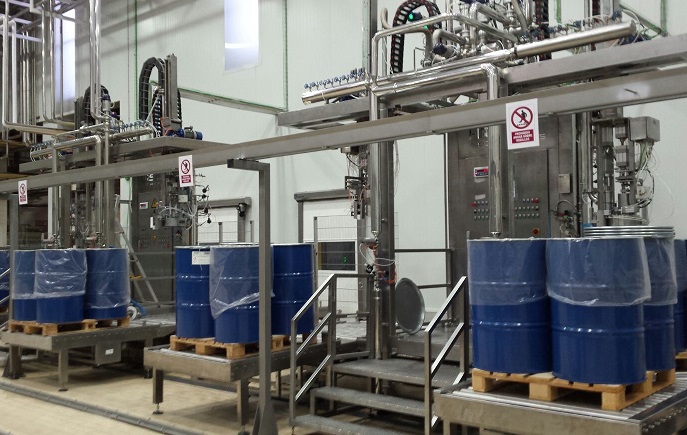
The tank material scale is a filling equipment used for filling liquid products. It uses a cylinder to push a piston, combined with weighing measurement and pneumatic components, to achieve quantitative filling. The machine with a counter can accurately measure the filling volume, is easy to adjust, and will not perform filling work without a container. By taking advantage of the high accuracy of the Electronic scale, the weighing module and the weighing instrument are connected via a data line. During the weighing process, the pressure signal from the electronic scale is continuously transmitted to the weighing instrument. When the preset quantitative weight is reached, the instrument controls to stop the pump and close the pneumatic valve. It is connected to the tank through a pipeline and uses a self-pressurized filling method. The precise weighing is carried out by the high-precision Weighing system of the equipment itself. The connections of each pipeline are achieved through a quick-installation method.
The quantitative scale is composed of filling, sealing, boxing, palletizing, weighing equipment, as well as corresponding conveyor belts, along with automatic control and automatic adjustment systems. When the four-liter barrels reach the feeding conveyor belt, the filling into barrel device separates the barrels and sends them to the fixed scale platform. Quantitative filling involves symmetrically configuring the pistons around the rotating barrel. Each piston is connected to an axle through a connecting rod. The 180-degree forward circular motion causes the piston to rise, and the 180-degree backward circular motion causes the piston to descend. When the piston rises, the material is controlled by the valve to be sucked into the barrel from the upper cylinder. When the valve connecting the piston cylinder and the filling gun is opened, the material is injected into the lower barrel.
The working principle of the filling scale is as follows: a specific filling specification needs to be given, and the filling weight value is compared with the set weighing value to perform the filling process. The tank material scale uses the output signal of the weighing module as the judgment basis and realizes the control of the Filling machine using PLC to achieve the automatic quantitative filling of the materials. The weighing instrument is used to display the weight value of the materials and uses the output signal of the weighing module as the judgment basis. The weighing instrument and the weighing module cooperate to complete the quantitative weighing of the materials, and at the same time, PLC is used to control the sequence of the filling action and is equipped with related driving devices to achieve the control of the electrical system for the material feeding, quantitative weighing, and automatic filling processes. The weighing system is controlled by PLC to open and close the feeding solenoid valve, discharging solenoid valve, and cylinder filling gun solenoid valve, thereby using the pneumatic system to drive the opening and closing of the filling gun valve and the clamping and releasing of the material bucket. During the material filling process, automatic processing operations such as bucket clamping, material supply, and weighing need to be completed.
The packaging scale divides the weighing process into two stages in terms of electrical control and mechanical structure, namely the rapid feeding stage and the fine feeding stage. The rapid feeding stage ensures the speed of weighing, while the fine feeding stage ensures the accuracy of weighing. A two-feed supply method is adopted to ensure the stability and accuracy of the filling process. On the main control panel of the filling scale, there are operation start buttons, stop buttons, and manual discharge buttons. After starting the operation with the start button, the automatic feeding, weighing, and bucket discharge processing operations can be carried out. The operator only needs to press the bucket button. If there is a need to discharge the bucket separately due to inaccurate weighing or other reasons, press the "Manual Discharge" button or the stop button.
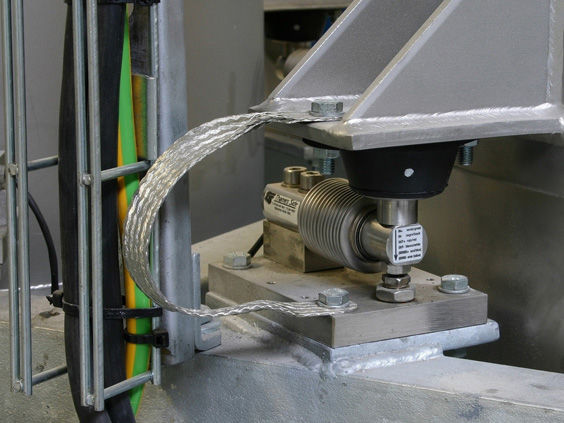
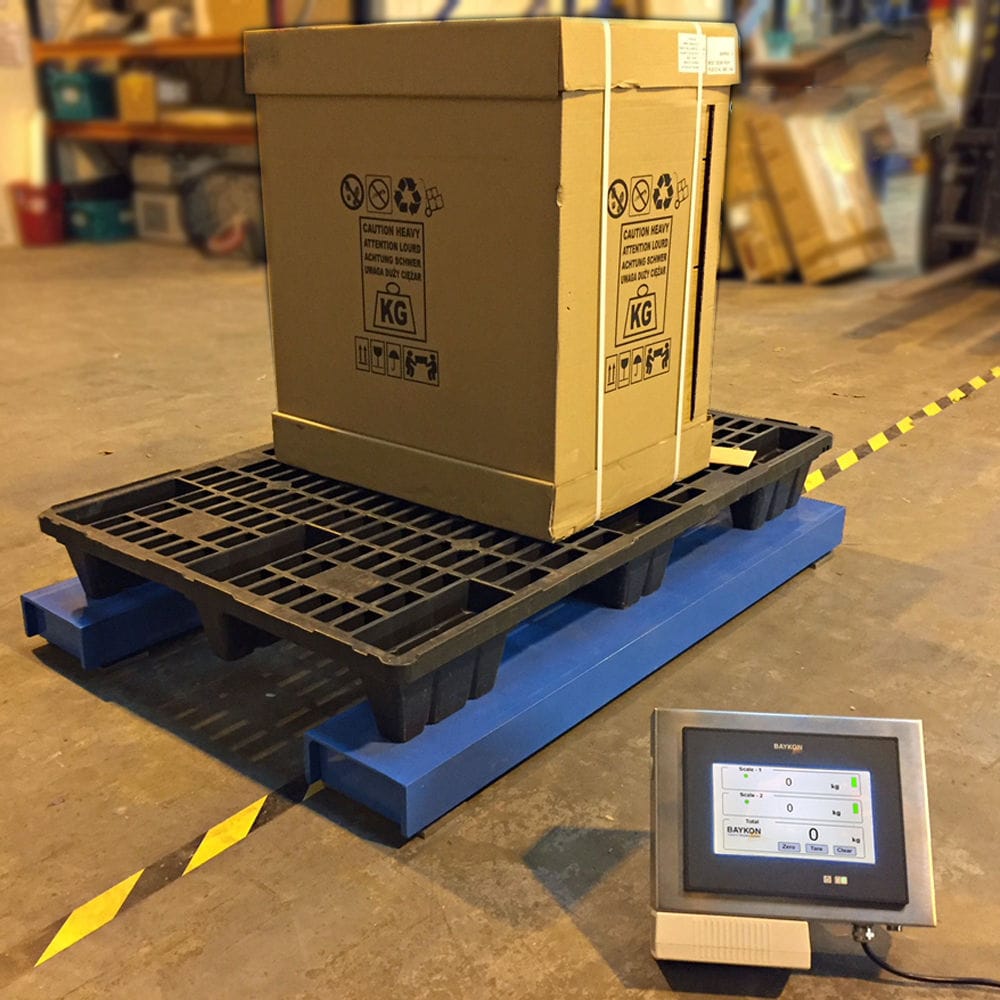
The electrical control of the scale is mainly controlled by PLC. Four Weighing modules are installed at the four ends of the scale platform. The output signals from the weighing modules are sent to the PLC. The PLC controls the on-off of the solenoid valves, and the coarse feeding valve and the fine feeding valve are controlled by the solenoid valves through the pneumatic system. They open under the action of the cylinder to discharge the material and close to receive the material. In addition, on the filling gun, the electronic scale weighing module is used to detect and control the weight of the material flowing out from the filling gun. That is, when the material level is equal to the set value of the target weight, the filling stops automatically.
The feeding scale has display functions such as setting, zeroing, removing weight, net weight/ gross weight, input, exit, emergency stop, zero reset, weight reset, cumulative reset, etc., ensuring high measurement accuracy during filling. After receiving the operation signal, the weighing instrument starts working. The PLC sends a discharge start signal to the weighing instrument to request discharge. After receiving the signal, the weighing instrument sends a discharge signal, and the system discharges. The weighing instrument sends a discharge completion signal to the PLC, and after receiving the signal, the system sends a release bucket signal to the PLC and simultaneously sends a next bucket weighing operation signal to the weighing instrument to start the automatic weighing process for the next bucket. After receiving the stop signal, the PLC interrupts the program's operation and sends a stop operation instruction to the weighing instrument to make it stop working.