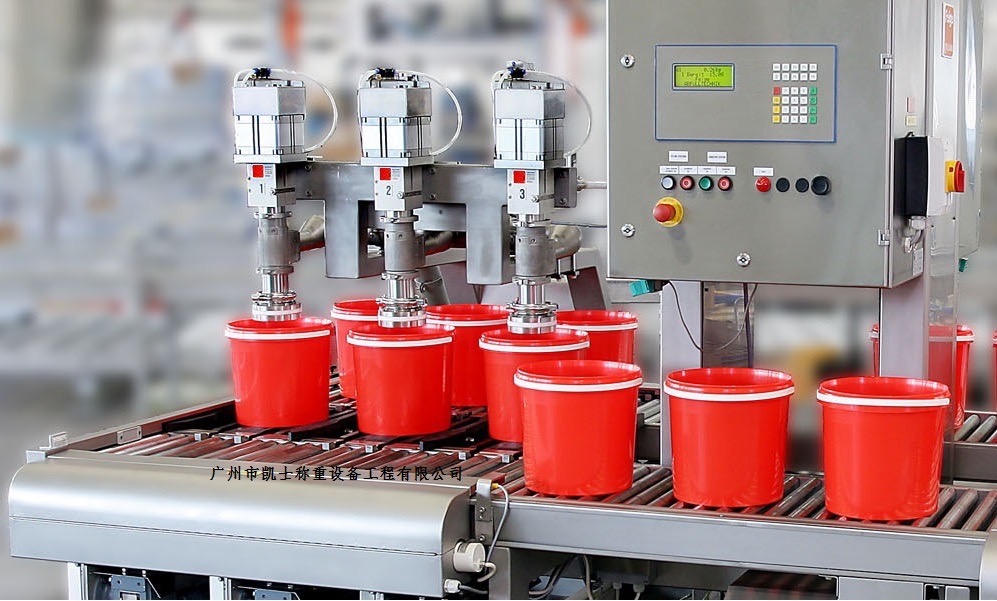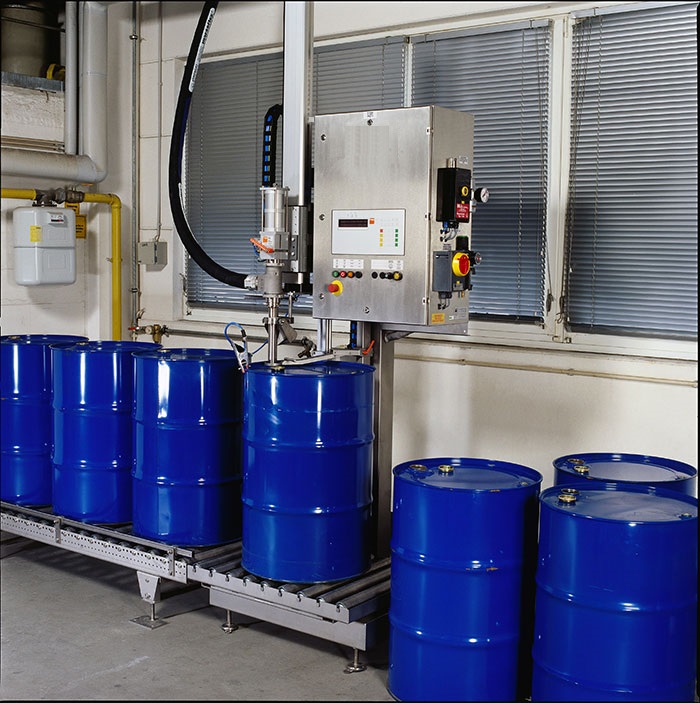









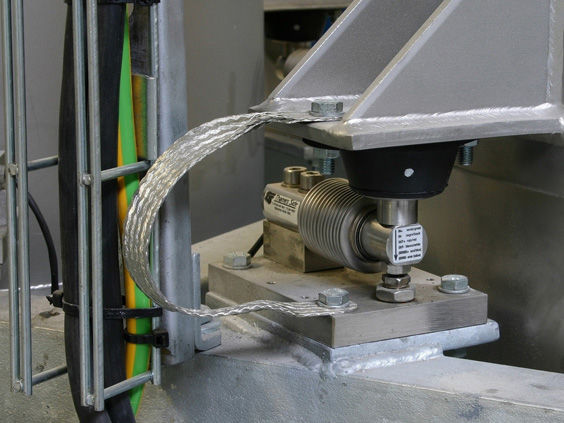
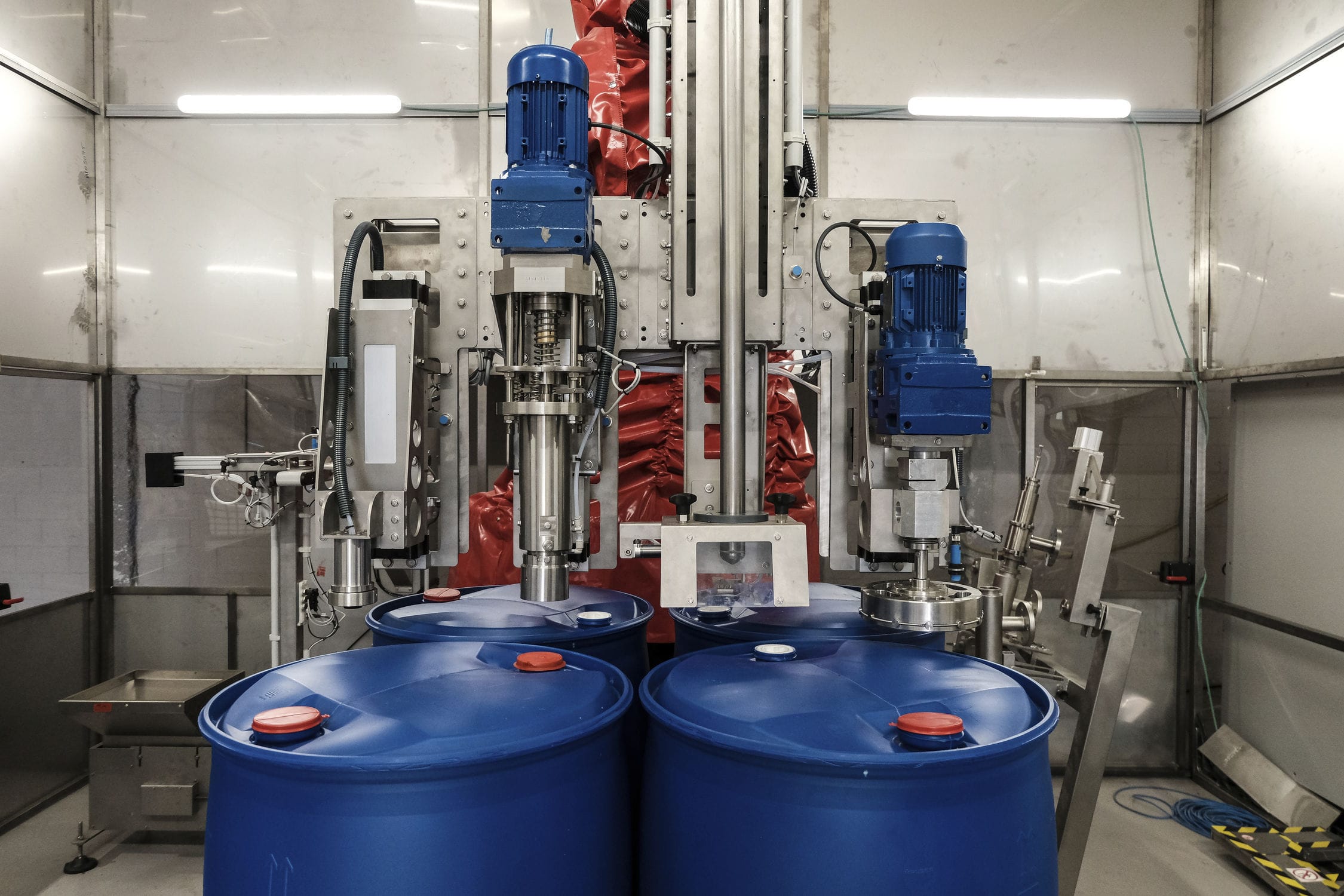
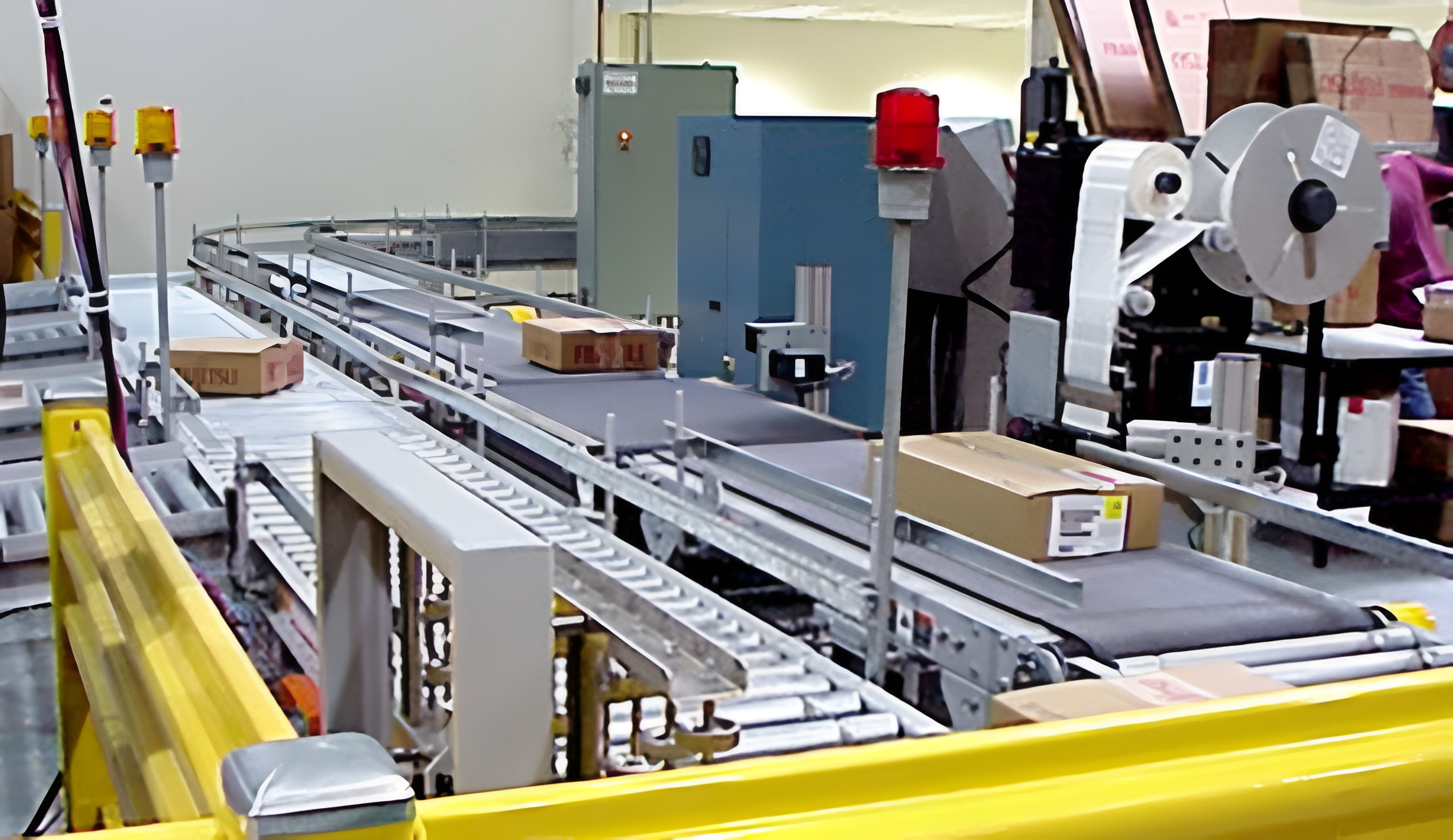
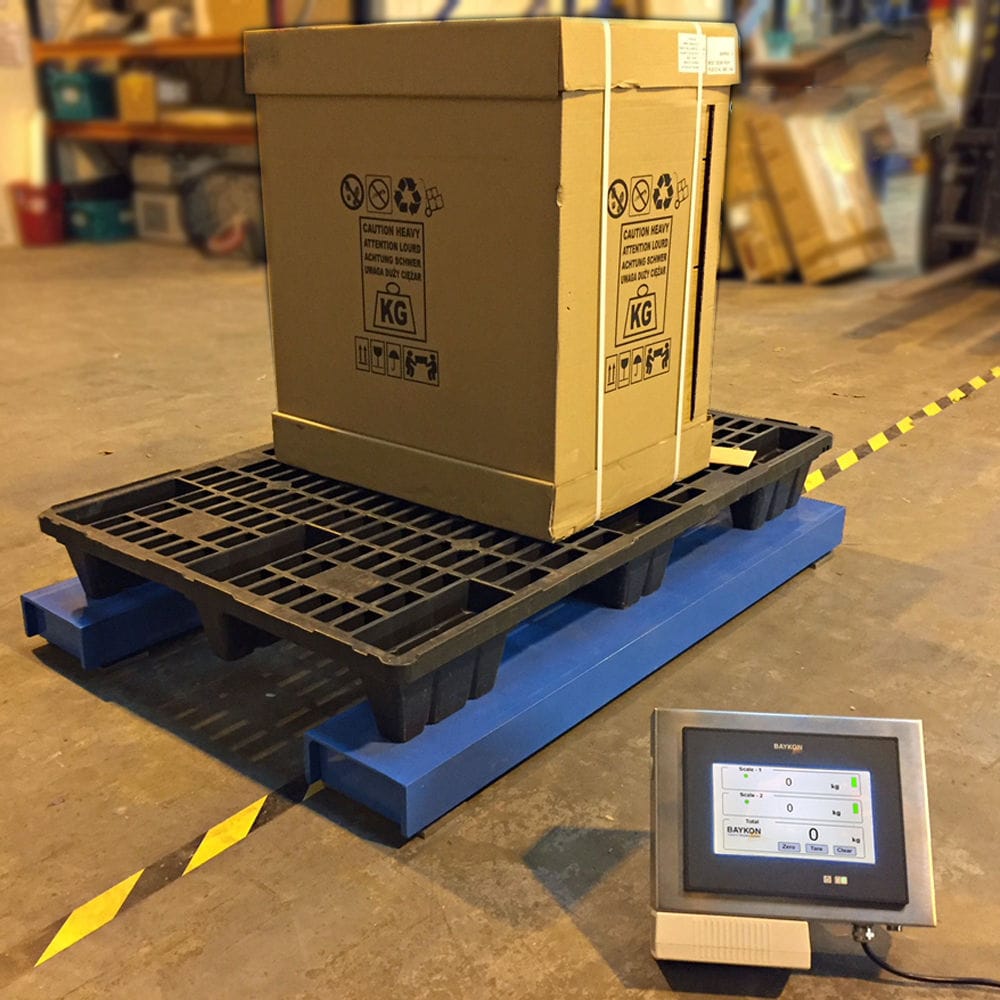


The canned weighing system uses the weighing platform to control the filling weight of the materials and automatically achieves precise filling of the materials. When an empty bucket enters the filling area, the front and rear bucket stoppers are pushed out. The front bucket stopper blocks the subsequent empty bucket and maintains a certain distance from the empty bucket in the filling area. The rear bucket stopper positions the empty bucket in the filling area. After a few seconds, the roller conveyor stops running. The pallet lifts the empty bucket, and the weighing controller takes the weight of the empty bucket and performs weight removal processing. The pneumatic gate valve opens, and the empty bucket is quickly filled with the required amount.

 020-34563445
The canned weighing device has an automatic zeroing function, automatically detects the weight, and automatically lowers for filling. The filling weight can be set arbitrarily within the design range. At the end of the filling process, a variable frequency deceleration system is used, which automatically slows down when approaching the quantitative value to prevent overflow and ensure accuracy. A vacuum suction anti-drip and anti-leak filling nozzle is adopted to prevent material leakage. Double-row or triple-row conveyor belts and push rod type bucket entry are used. The main components include the filling gun discharge part, the bucket blocking part, the electronic weighing platform weighing part and the PLC control part.
The quantitative Weighing system uses Electronic scales to control the filling weight of the materials, achieving automatic and precise filling of the materials. When an empty bucket enters the filling area, the front and rear bucket stoppers are pushed out. The front bucket stopper blocks the subsequent empty bucket and maintains a certain distance from the empty bucket in the filling area. The rear bucket stopper positions the empty bucket in the filling area. After a few seconds, the roller conveyor stops running. The tray lifts the empty bucket, and the weighing controller takes the weight of the empty bucket and performs descaling. The pneumatic gate valve opens, and the empty bucket is quickly filled with the correct amount. When the weight reaches the target value set by the weighing controller, the pneumatic gate valve closes, and the pneumatic filling gun valve continues to perform slow filling. When the value reaches the set net volume value, the pneumatic filling gun valve closes, and the weighing controller counts the actual net volume filled. Then the tray descends to fill the bucket to the full level and lands on the roller conveyor. The roller conveyor starts and transports the filled full bucket to the heavy bucket area. When the full bucket leaves the filling area, the front bucket stopper opens, and the subsequent empty bucket enters the filling area. A new filling process begins. The working process of the system is described as follows:
1) Press the start button, the relay coil is energized and self-protected. The start indicator light comes on. After the contactor coil is connected to its main circuit and the normally open contact is energized, the roller conveyor motor starts. The time relay starts, and after the preset delay time, its normally open contact is energized. At the bucket discharge point on the conveyor line, the empty bucket will move towards the filling area.
2) When the empty bucket reaches the position detected by the photoelectric switch, the normally open contact of the photoelectric switch closes, the relay coil is energized, the normally open contact of the relay closes, and the relay coil is energized. The time relay coil is also energized, respectively driving the two-way five-way solenoid valve to open, the front bucket stopper and the rear bucket stopper are pushed out. The front bucket stopper restricts the entry of the next bucket. When the empty bucket reaches the rear bucket stopper and is positioned at the set delay time, the normally open contact of the time relay closes, the relay coil is energized and the weighing indicator light is illuminated, driving the two-way five-way solenoid valve to open, the lifting platform is lifted, while the normally closed contact is disconnected, the rear bucket stopper is retracted, the proximity switch normally open contact closes, the relay coil is energized, the normally open contact closes, the normally closed contact opens, and the roller conveyor motor stops the transportation of the subsequent empty buckets. At the same time, the time relay coil is activated, and when the power is cut off, it is disconnected (the opening time of the normally closed contact after the time relay coil is energized must be longer than the process of judging the range of the empty bucket after the lifting platform is lifted).
When the empty bucket is lifted, the quantitative electronic scale determines the weight of the empty bucket. When the weight of the empty bucket is between 10 kg and 20 kg, the automatic zeroing is performed. The normally open contact of the weighing controller is connected, and at the same time, the relay coil is energized and attracted. The normally open contact of the coil is attracted and controls the valve to open for discharging. At the same time, the normally closed contact is disconnected, and the time relay coil loses power. Before the normally closed contact is disconnected, it remains closed (to prevent the lifting platform from falling), and the normally open contact of the coil is connected to attract and control the valve to open. The filling process begins.
3) After the local scale weighs and fills the product to a weight of (1000 - 2) kg, the normally open contact of the controller is disconnected, and at the same time, the relay loses power, causing the solenoid valve to close and the valve to shut off. The valve continues to fill the product. When the weight reaches (1000 - 0.5) kg, the normally open contact of the controller is disconnected, and at the same time, the relay loses power, causing the solenoid valve to close and the valve to shut off. At this time, the normally closed contact of the relay returns to its default state. The time relay coil is activated and delays for a certain period of time (this delay also allows the heavy barrel after filling to stay on the weighing sensor for a longer time to accumulate its actual filling weight). When the normally closed contact of the time relay is disconnected, and the relay loses power, the lifting platform drops.
4) When the rear limit switch on the lifting platform is activated and its normally open contact opens, the relay loses power, causing all its contacts to return to their default state, thereby starting the conveyor. The time relay coil starts to delay for a certain period of time (after the heavy bucket leaves the range blocked by the bucket stopper and detaches from it). Then, the normally open contact closes, and the rear bucket stopper extends. When the heavy bucket leaves the control range of the photoelectric switch, the normally open contact of the photoelectric switch returns to its default state, and the relay coil loses power, causing its normally open contact to open. Subsequently, the relay coil and the time relay lose power and return to their default state. At this point, the second empty bucket enters the filling area for the cycle filling process.