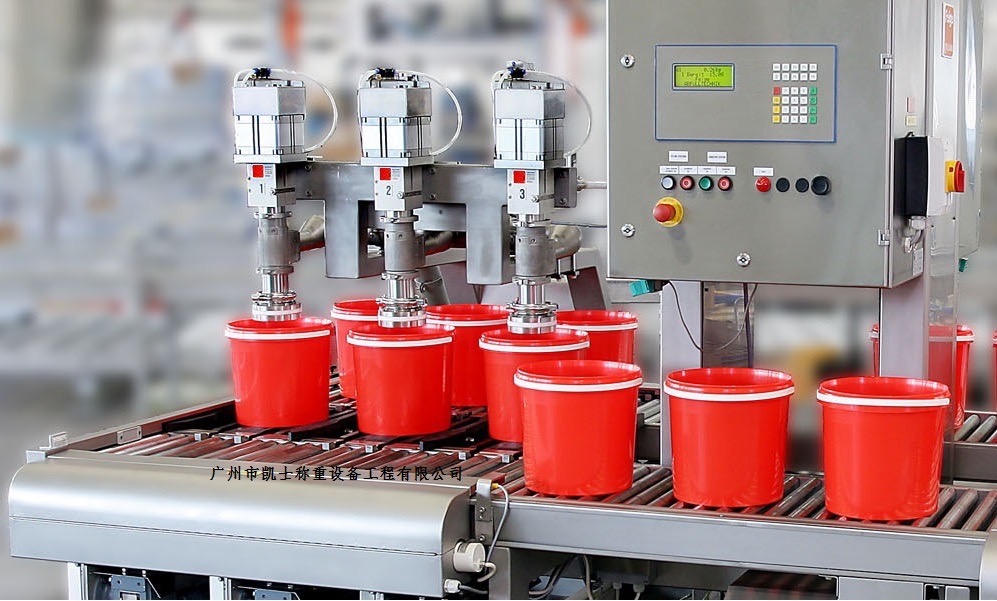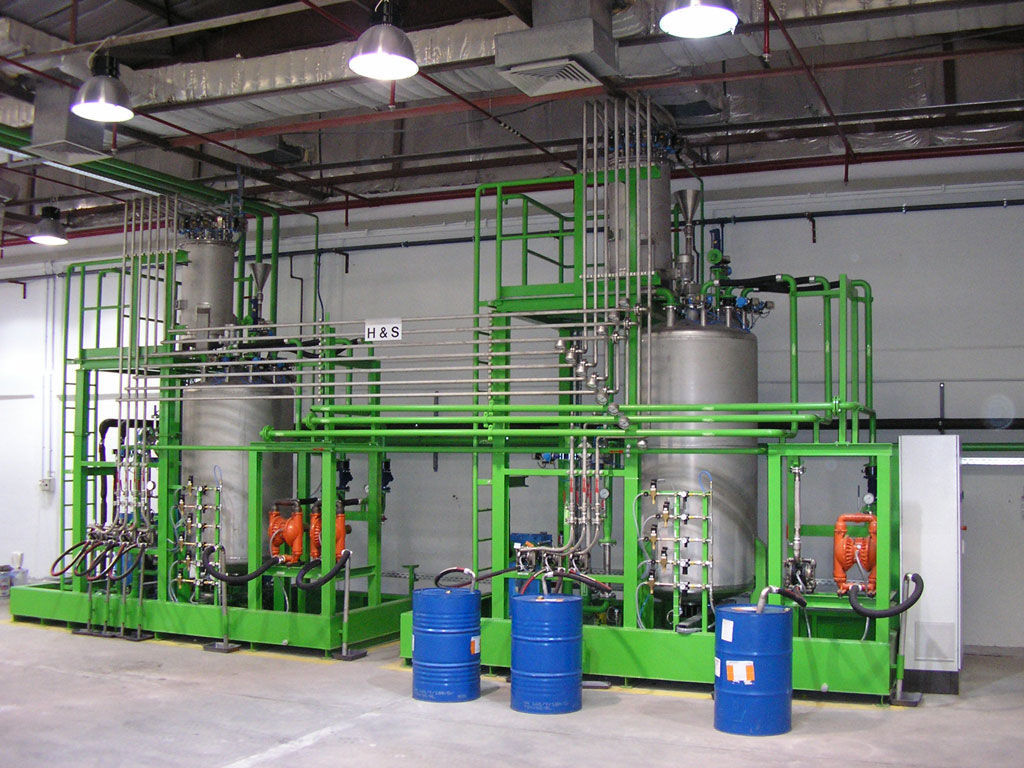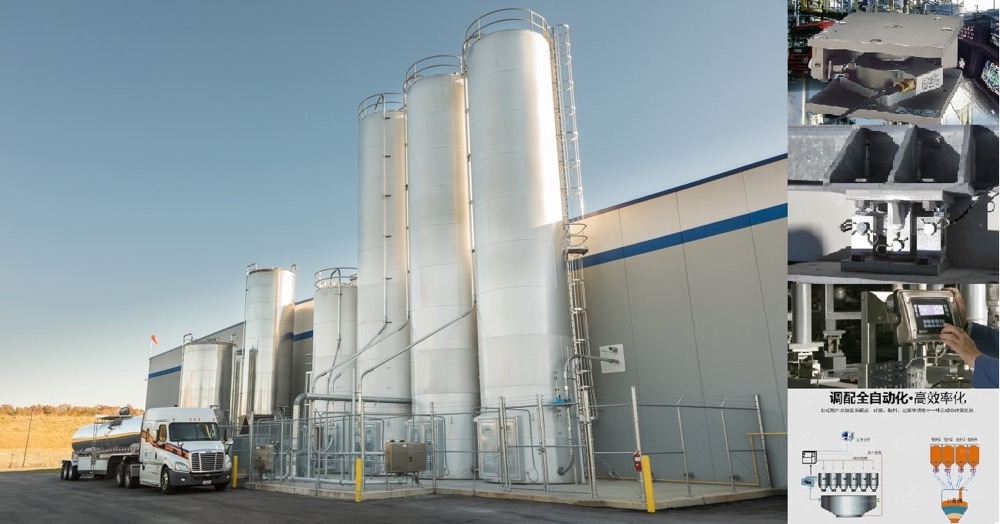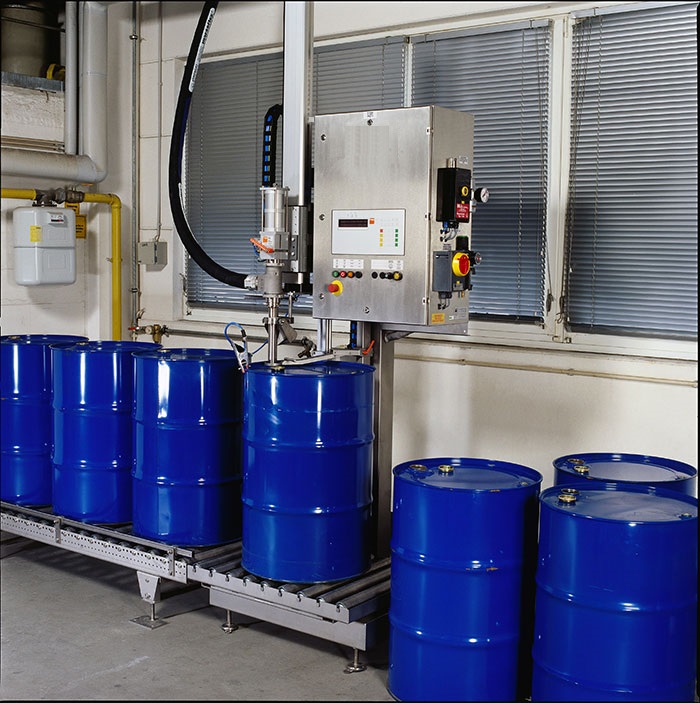


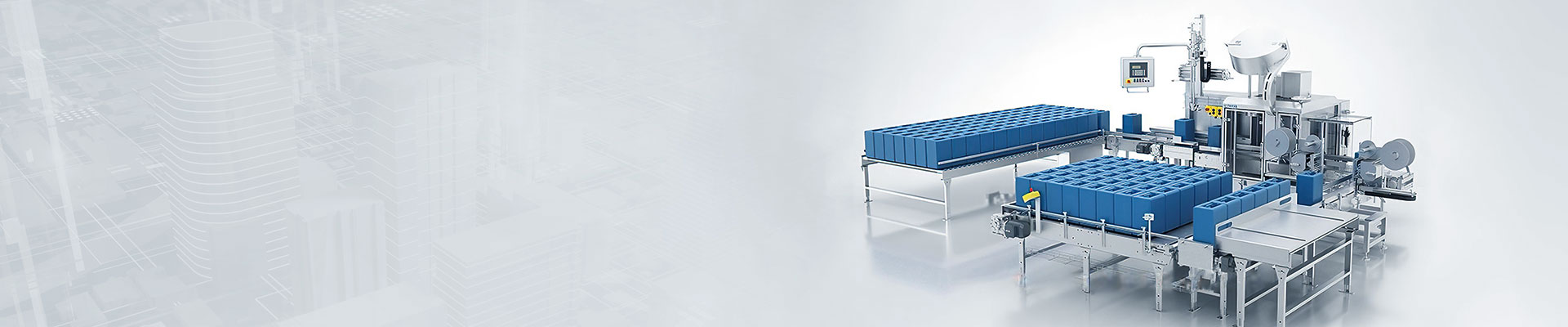



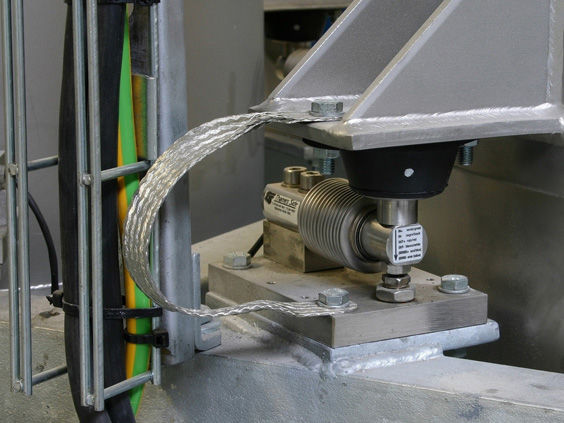
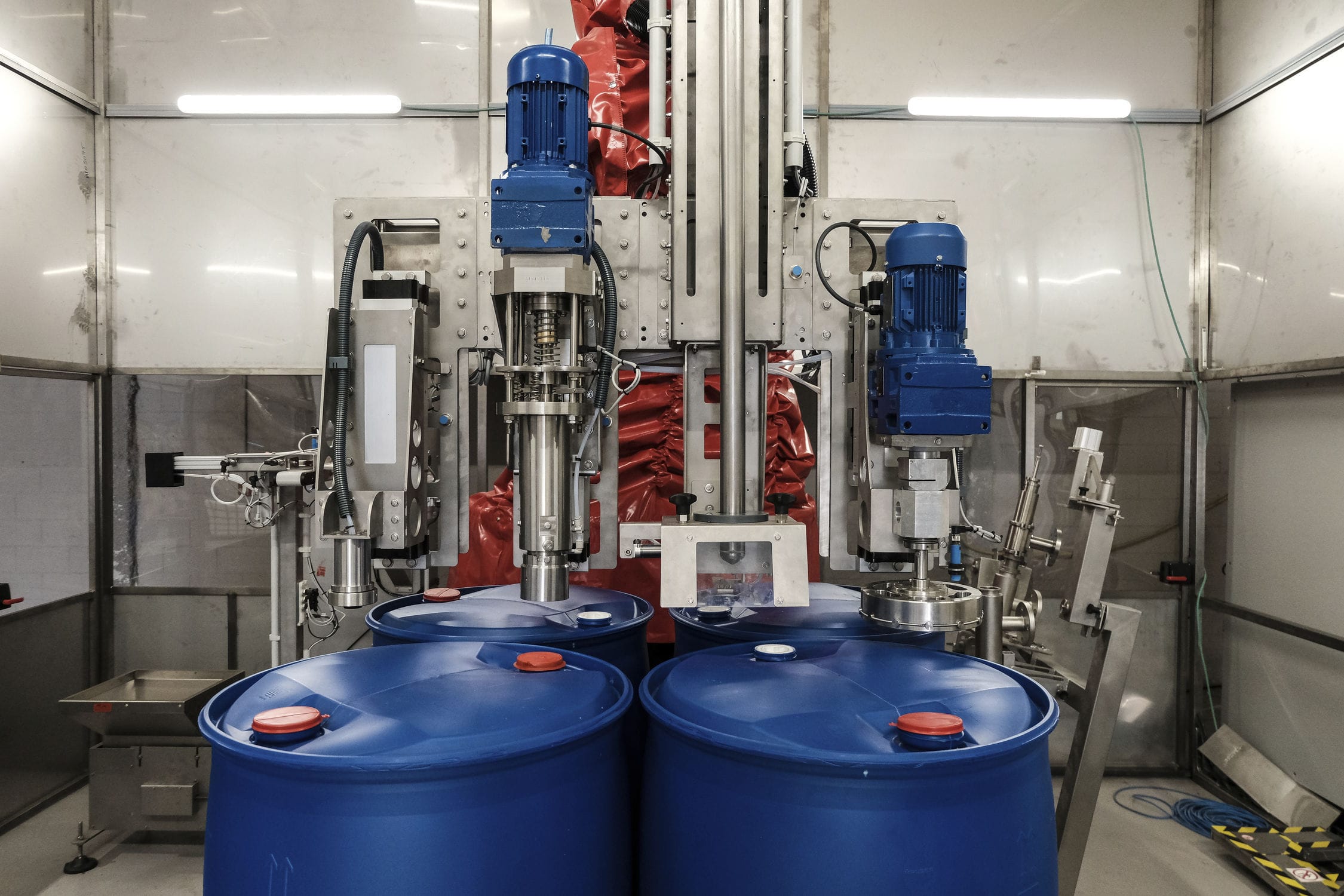


The weighing platform with added materials adopts electronic scale for quantitative filling through a filling valve. The valve operates in a switch mode. The filling valve is driven by a dual-position cylinder. When the filling starts, all the filling valves are fully opened for rapid filling. When the set value is reached, the dual-position cylinder operates, and the filling valves are partially opened for slow filling to ensure the filling accuracy. When the set value is reached again, the dual-position cylinder operates, and the filling valves are closed.

 020-34563445
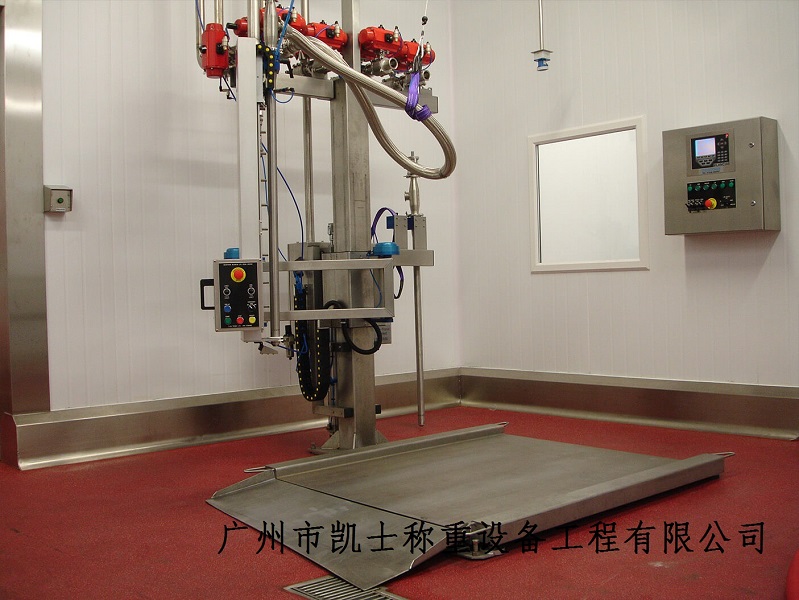
The auxiliary weighing platform usually adopts two forms: liquid level top filling and liquid level bottom filling. For liquids that do not produce foam and are non-toxic gases during the filling process, liquid level top filling is generally used; for liquids that produce foam during filling or liquids with toxic gases overflowing, liquid level bottom filling is generally adopted. The term "liquid top filling" means that the filling gun nozzle remains above the liquid plane throughout the filling process and does not come into contact with the liquid. While "liquid bottom filling" means that the filling gun nozzle remains below the liquid level plane during the filling process and to reduce the weight error of the filling gun in the liquid, the filling gun will automatically rise with the liquid level rise. The filling gun is made of stainless steel, and the gun nozzle is equipped with a valve. Closing the valve can cut off the flow of the liquid. To improve the filling accuracy, the Filling machine has two filling speed controls. When approaching the set weight, it will automatically switch the liquid flow to a slow speed to ensure that the set weight is accurately reached at the end of the filling.
The quantitative Weighing system adopts a single-head operation mode. The containers are fed individually. The entire production process is of intermittent cyclic type. Two detection photoelectric switches are configured, one is set on the roller conveyor at the entrance to the electronic weighing platform, and the other is on the roller of the weighing platform. The filling is carried out using an Electronic scale quantitative filling valve. The valve operates in a switch form. The filling valve is driven by a double-position cylinder. When filling begins, all the filling valves are fully opened for rapid filling. When reaching the set value, the double-position cylinder operates, and the filling valves are partially opened for slow filling to ensure filling accuracy. When reaching the set value, the double-position cylinder operates, and the filling valves close. During the entire filling process, the filling valve is controlled by PLC to drive the filling valve upward by the stepping motor. The movement of the filling valve always maintains a certain distance between the bottom of the filling valve and the liquid surface in the filling container. This can reduce the foaming of the filled liquid and prevent the liquid from adhering to the outer wall of the filling valve and dripping onto the floor of the filling workshop to pollute the environment.
The filling scale is controlled by a PLC programmable controller. When the container is fed in, the electric scale's electric roller simultaneously starts running. The photoelectric sensor detects the signal emitted when a container passes through and controls the motor to stop. When the photoelectric sensor detects the signal emitted when the container reaches the filling position, the PLC controls the electric scale's electric roller to stop and automatically reset the scale. The filling valve is driven down by the stepper motor and reaches the lower limit position. A signal is sent by the travel switch. The PLC controls the filling valve to fully open for filling. When the set value is reached, the solenoid valve acts, and the filling valve is semi-opened for filling. While filling, the stepper motor drives the filling valve to rise at a pre-set speed through the screw. When the filling requirements are met, the filling valve closes, and the filling valve reaches the upper limit position of the travel switch K4, stopping and sending a signal. The PLC simultaneously controls the motor and the scale body's electric roller to run simultaneously, outputting the finished product, feeding the empty container in, and completing one filling process.