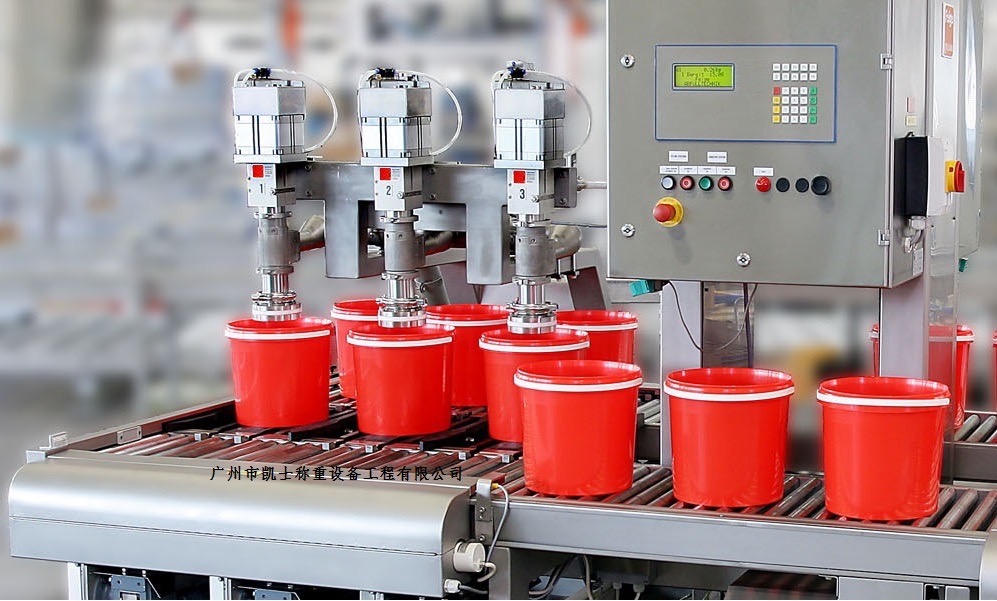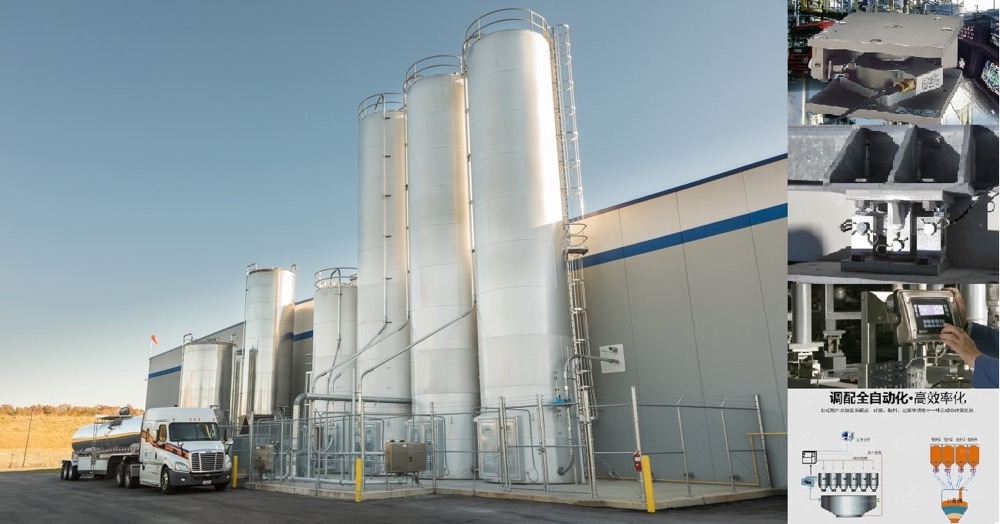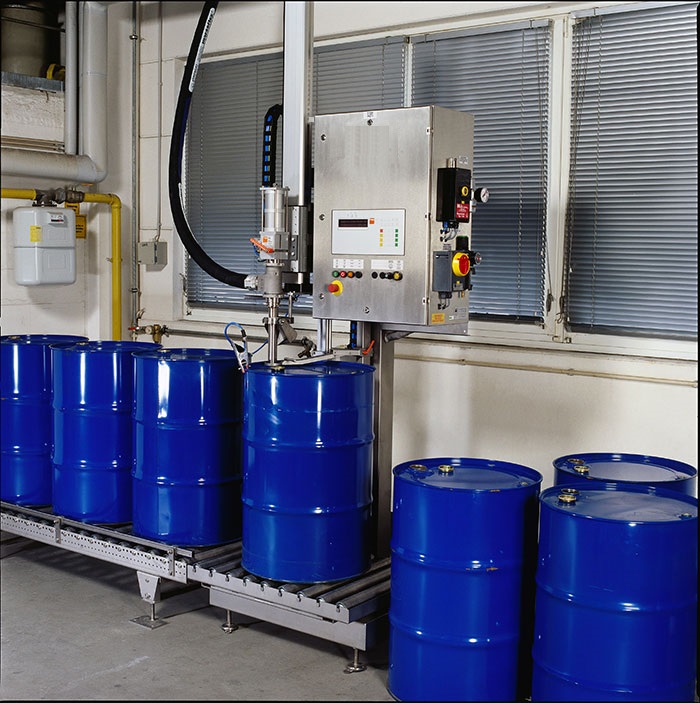









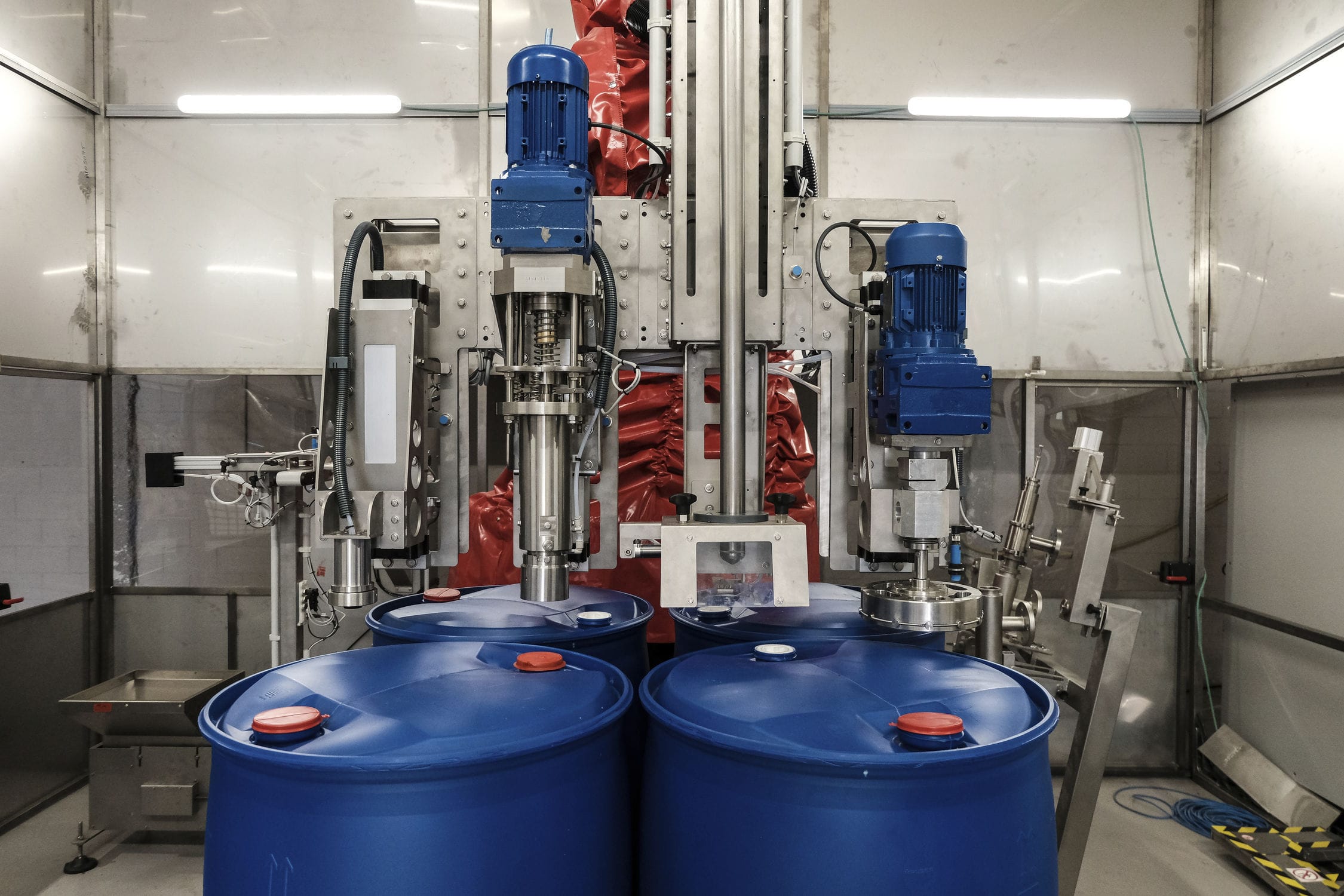
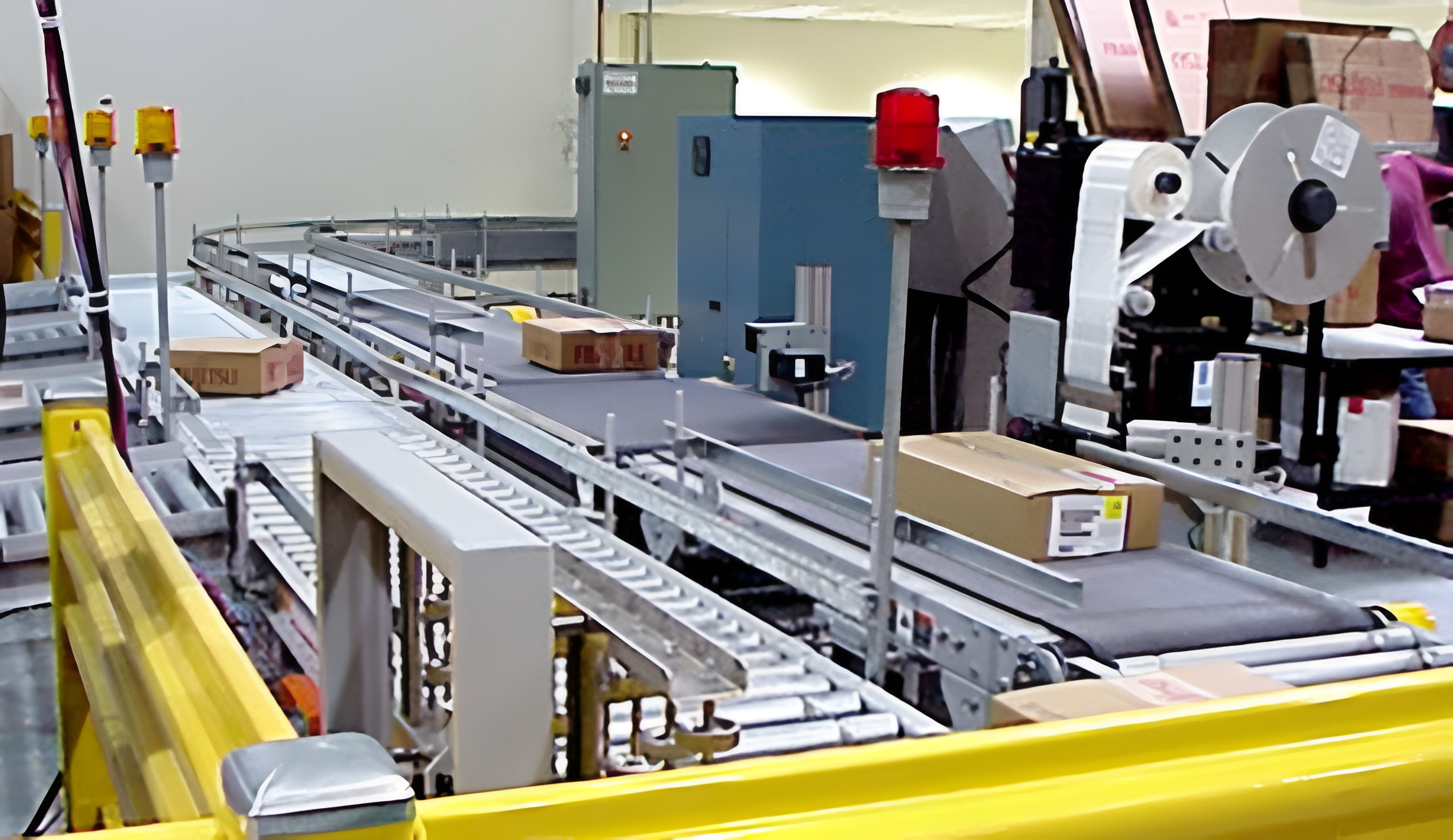
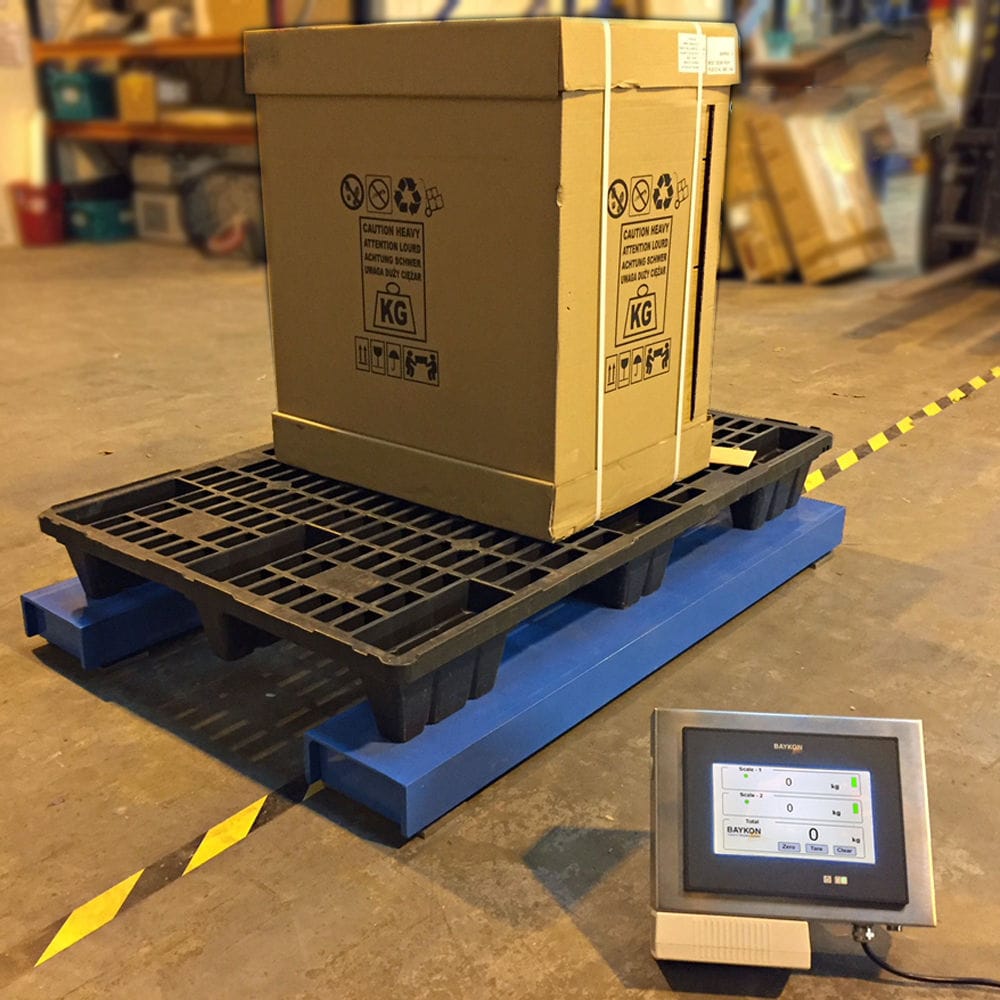


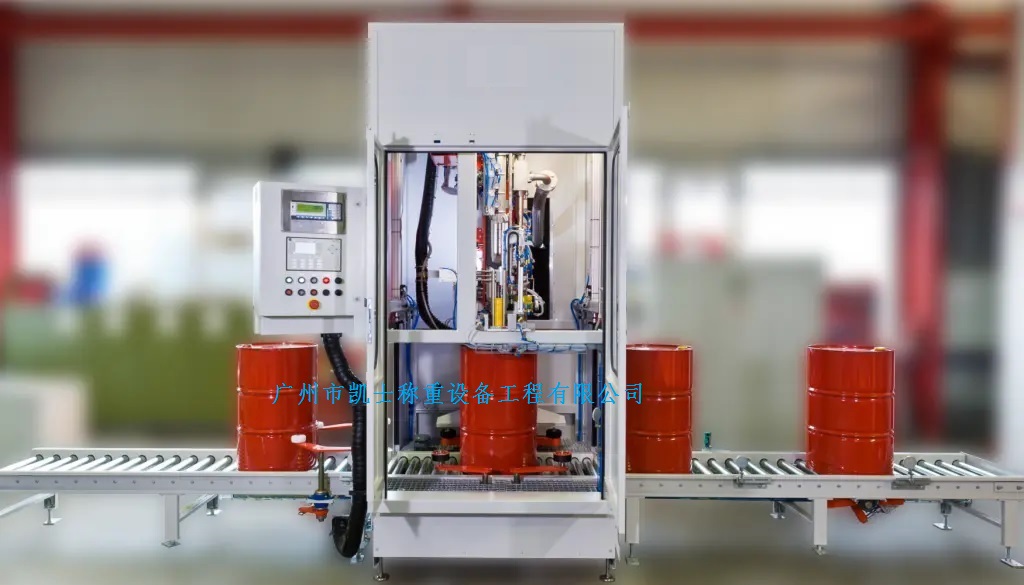
The drum-type filling scale is an automatic filling machine that automatically and precisely fills liquid main materials and auxiliary materials. It is usually composed of an electronic scale, weighing instrument, PLC system and filling machinery. It enables manual assistance in opening and closing the bucket covers, while all the remaining operations such as supplying, positioning, filling and weighing and measuring are fully automated. By taking advantage of the high accuracy of the electronic scale, the weight signal sensor is connected to the weighing instrument via a data line. During the weighing process, the pressure signal from the electronic scale is continuously transmitted to the control instrument.

 020-34563445
The filling scale has functions such as composite explosion-proof, safety protection, no gas pollution, no leakage (leakage, dripping), clean and environmentally friendly sealed filling. The entire line has a high degree of automation, adopting a fixed-weight measurement method, which is fast and precise in measurement. Manual assistance for opening and closing the bucket lid is provided, while all other operations such as supply, positioning, filling, and weighing and measuring of the filled barrels are automatically completed. The working principle of the weighing Filling machine is to utilize the high measurement accuracy of the Electronic scale, connecting the electronic weight signal sensor with our company's weighing control instrument through a data line. During the measurement process, the pressure signal of the electronic scale is continuously transmitted to the control instrument, and the measurement accuracy is not affected by factors such as density, temperature, impurities, and bubbles. Even semi-solid liquids can be accurately measured.
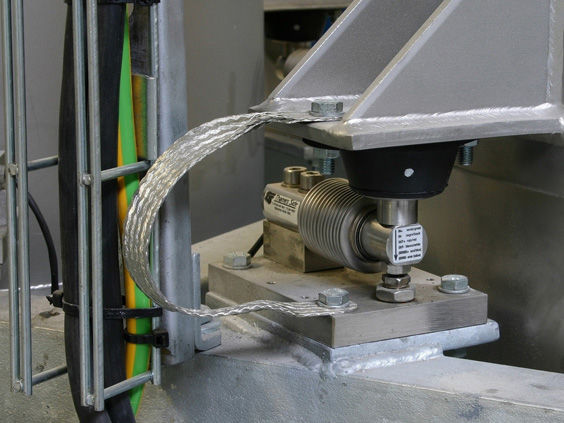
The feeding scale is a type of weighing scale that automatically and precisely fills liquid main materials and auxiliary materials. It is usually composed of an electronic scale, weighing instrument, PLC system and filling machinery. The four Weighing modules installed at the bottom of the electronic scale transmit the weight signals of the material bucket and the scale body to the junction box. The junction box combines the weight signals output by the weighing modules and connects them in parallel to the weighing terminal or weighing controller. The weighing terminal or weight transmitter converts the weight signals into corresponding weight data. The weighing terminal generally provides certain input and output control functions for the on-site actuators, while the weighing controller generally provides the weight data and other information to the Filling system in a specific form.
After the filling barrels are placed on the conveyor belt by the quantitative scale, the conveyor motor transports them to the filling scale position. At this time, the proximity switch arranged at the filling position automatically senses the situation and transmits the sensing signal to the PLC control system. The PLC controls the conveyor motor to stop rotating, and at the same time controls the lifting cylinder to drive the roller arm to rise, moving the filling barrel to the filling gun position. At this point, the photoelectric sensor at the filling gun port automatically senses the position of the filling barrel and transmits the signal to the PLC control system. When the filling barrel reaches the predetermined position, the PLC controls the synchronous motor to stop rotating, and at the same time, the cap suction device starts to suck the cap away. Then the filling gun begins to fill liquid into the filling barrel, and the electronic scale transmits the weight signal of the liquid in the barrel to the PLC control system. When the predetermined weight is reached, the PLC controls the suspension agent filling mechanical filling gun to stop filling, the cap suction device automatically seals the cap, and the conveyor motor is started to transport the filling barrel away.