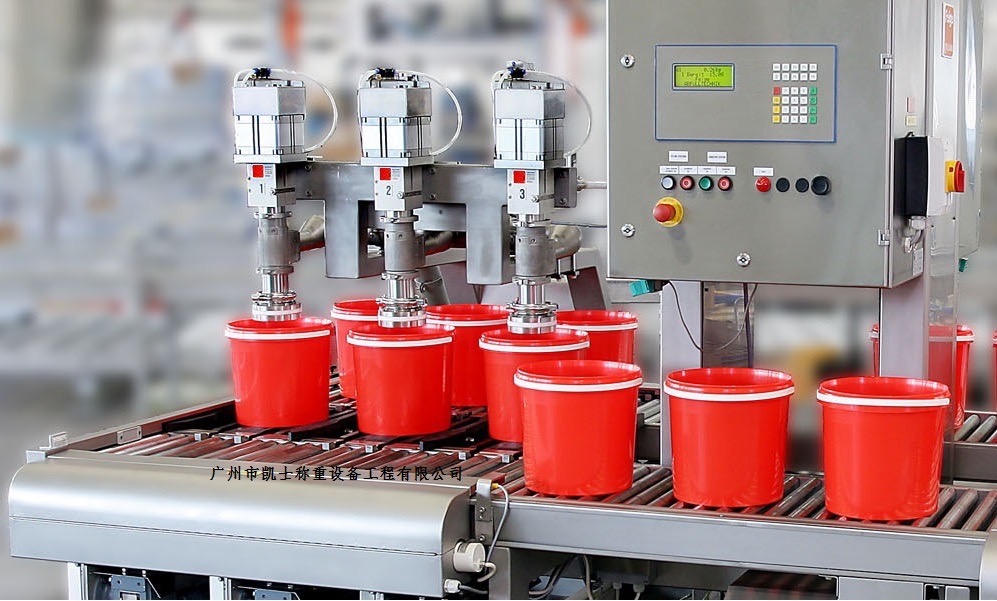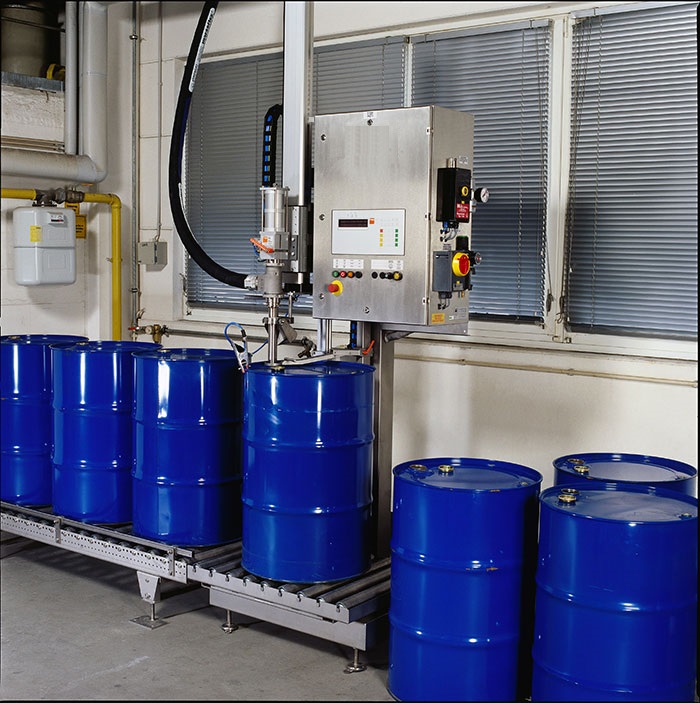







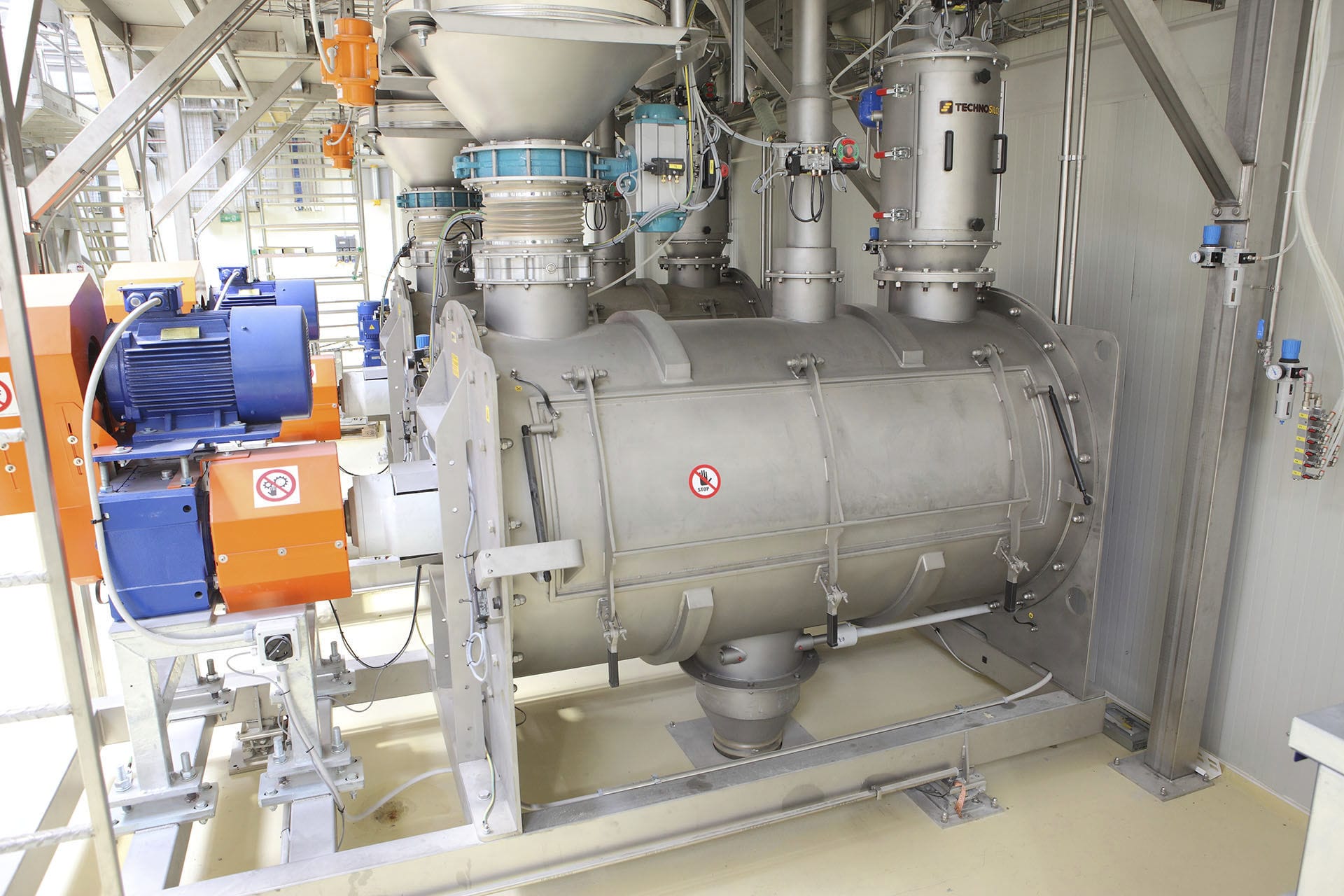
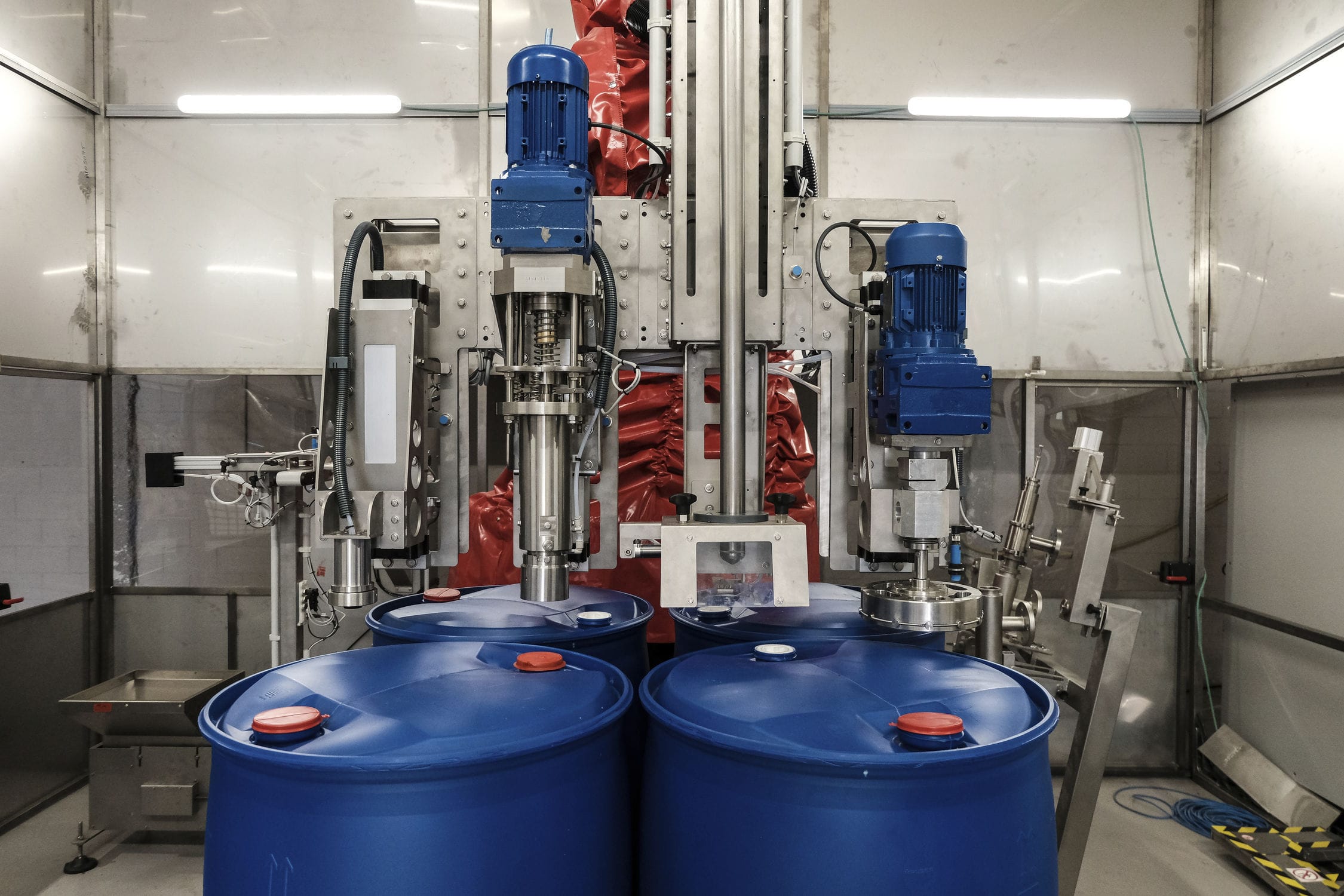
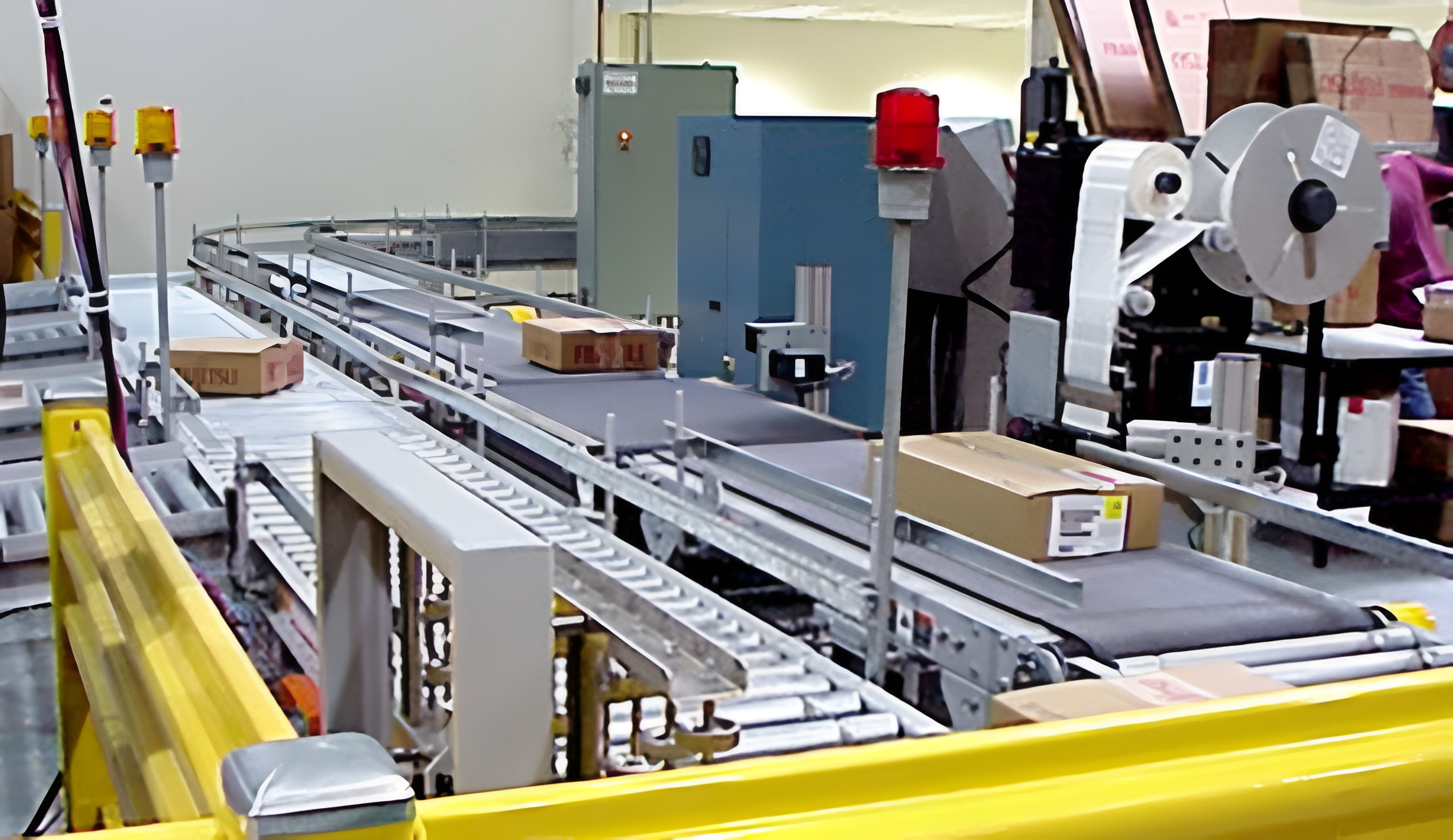
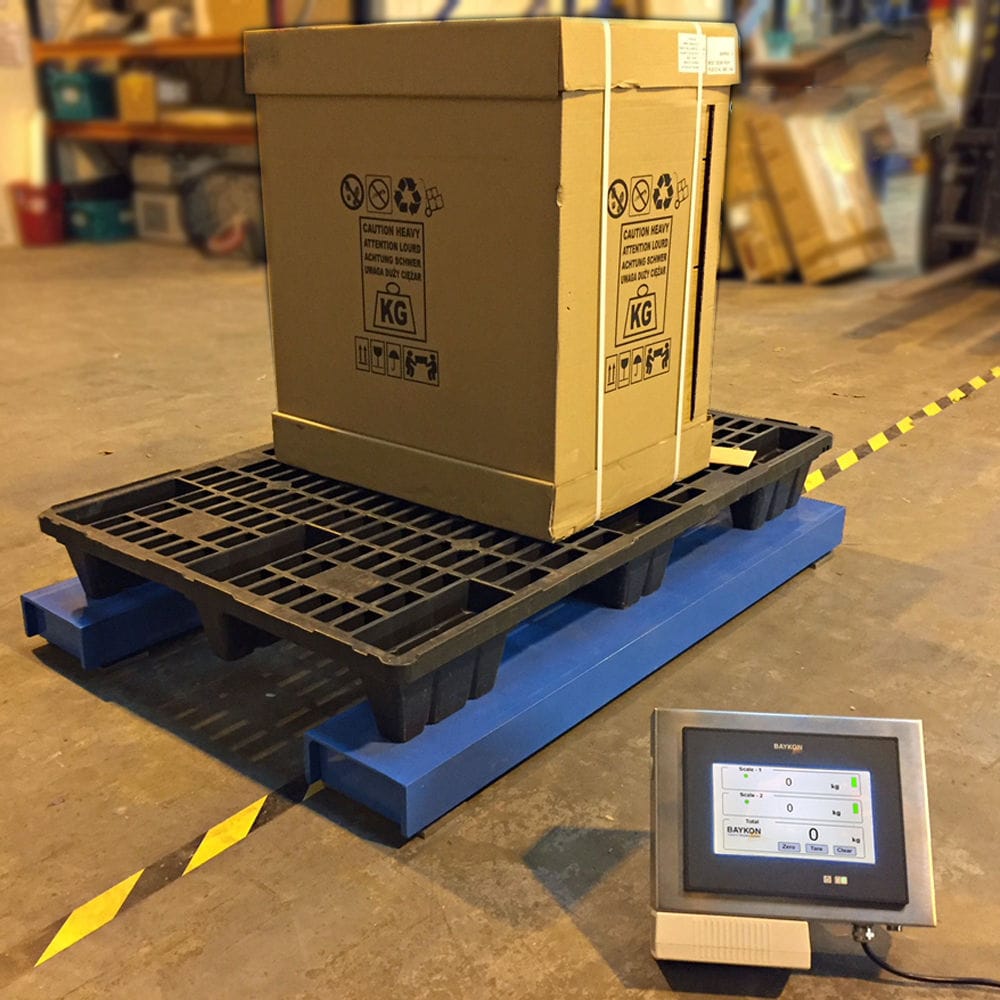


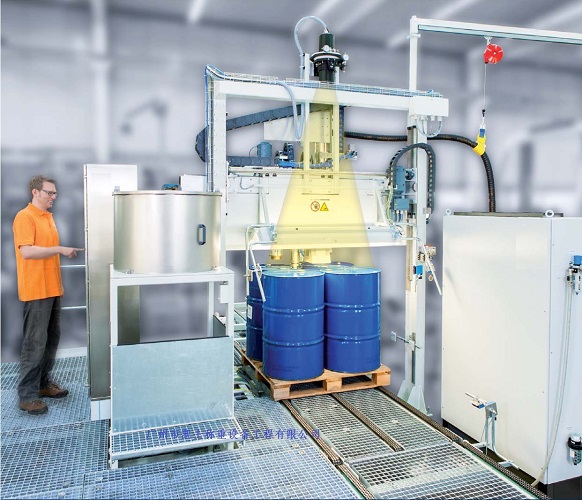
When the bucket reaches the filling position in the horizontal filling scale, the proximity switch detects the filling bucket and transmits the detection signal to the PLC. The PLC then controls the conveying motor to stop, and the lifting cylinder starts to rise under the control of the PLC. At the same time, the roller arm structure rises to the maximum position within the cylinder's stroke. The lifting cylinder stops rising, and the synchronous motor starts to operate to drive the roller arm to move. Under the control of the roller arm, the filling bucket can rotate.

 020-34563445
The working principle of the filling platform is to utilize the high-accuracy measurement feature of the Electronic scale. The electronic scale is connected to the weighing instrument via a data line. During the measurement process, the pressure signal from the electronic scale is continuously transmitted to the control instrument. When the preset quantitative weight is reached, the control instrument will control the pump to stop and close the pneumatic valve. The bottle mouth is guided by the positioning device and tightly presses the discharge port of the filling valve to form a seal. It automatically fills into the bottle along the bottle wall and is then displaced back into the liquid storage cylinder through the return gas pipe. When the object rises to a certain height and closes the return gas pipe opening, the material automatically stops flowing when it reaches the designated weight. Then, the liquid valve and the air valve are closed, and the pressure gas at the bottleneck position is discharged to prevent the gaseous objects from spilling out when the glass bottle descends. Thus, the entire filling process is completed.
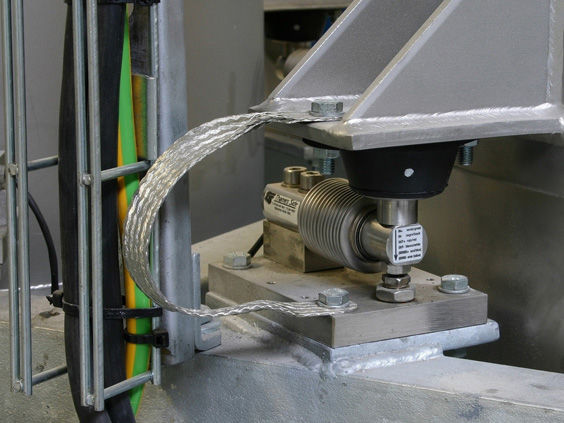
After the quantitative scale is powered on, the motor drives the rotor pump to operate. The PLC controls the motor speed. The filling process involves the falling of the filling gun from the filling gun to the weighing area of the scale on the material bucket, and then it is transmitted through the material bin to the electronic scale area. The material flowing into the filling gun will conduct weighing control on the materials on the electronic scale. The weighing sensor outputs a voltage signal based on the pressure of the material, which is amplified and converted into a measurement level signal. This signal is proportional to the weight of the material. Then, the signal is sent to the PLC and converted into a flow signal. The flow value is displayed on the current PLC and sent to the weighing instrument. The PLC compares and calculates with the set filling value of the weighing instrument and transmits this control quantity to the frequency converter. The output value of the frequency converter is changed to complete the control of the speed. Adjust the given quantity to be the same as the set value to complete the filling process.
When the container reaches the filling position, the dispensing scale's proximity switch detects the filling container and transmits the detection signal to the PLC. The PLC then controls the conveying motor to stop, and the lifting cylinder starts to rise under the control of the PLC. At the same time, the roller arm structure rises to the maximum position within the cylinder's stroke. The lifting cylinder stops rising, and the synchronous motor starts to operate to drive the roller arm to move. The filling container can rotate under the drive of the roller arm. The photoelectric sensor above the container's opening and the filling head are both on the circular trajectory of the container's rotation. When the filling container rotates to the position directly below the photoelectric sensor, the photoelectric sensor senses the edge of the filling container's opening and transmits the signal to the PLC. The PLC, based on the signal from the photoelectric sensor, stops the operation of the synchronous motor. When the container opening is detected, the cap suction device rotates to the position directly above the filling container's opening under the drive of the cylinder, and sucks the filling container's cap. After completing the cap suction action, it returns to its original position. When the cap is sucked, the quantitative filling process begins. The PLC controls the rodless cylinder to drive the filling gun into the filling container for liquid filling, and the electronic scale can sense the weight change in the filling container to achieve quantitative filling of the liquid. After the liquid filling is completed, the instrument transmits the filling completion signal to the PLC, and the PLC stops the quantitative filling process based on this signal. The PLC controls the rodless cylinder to drive the filling gun to rise to the initial position, and the cap suction device rotates to the position directly above the filling container's opening to place the cap on the filling container's opening. The conveying motor starts, and the filled filling container is conveyed to the designated position.