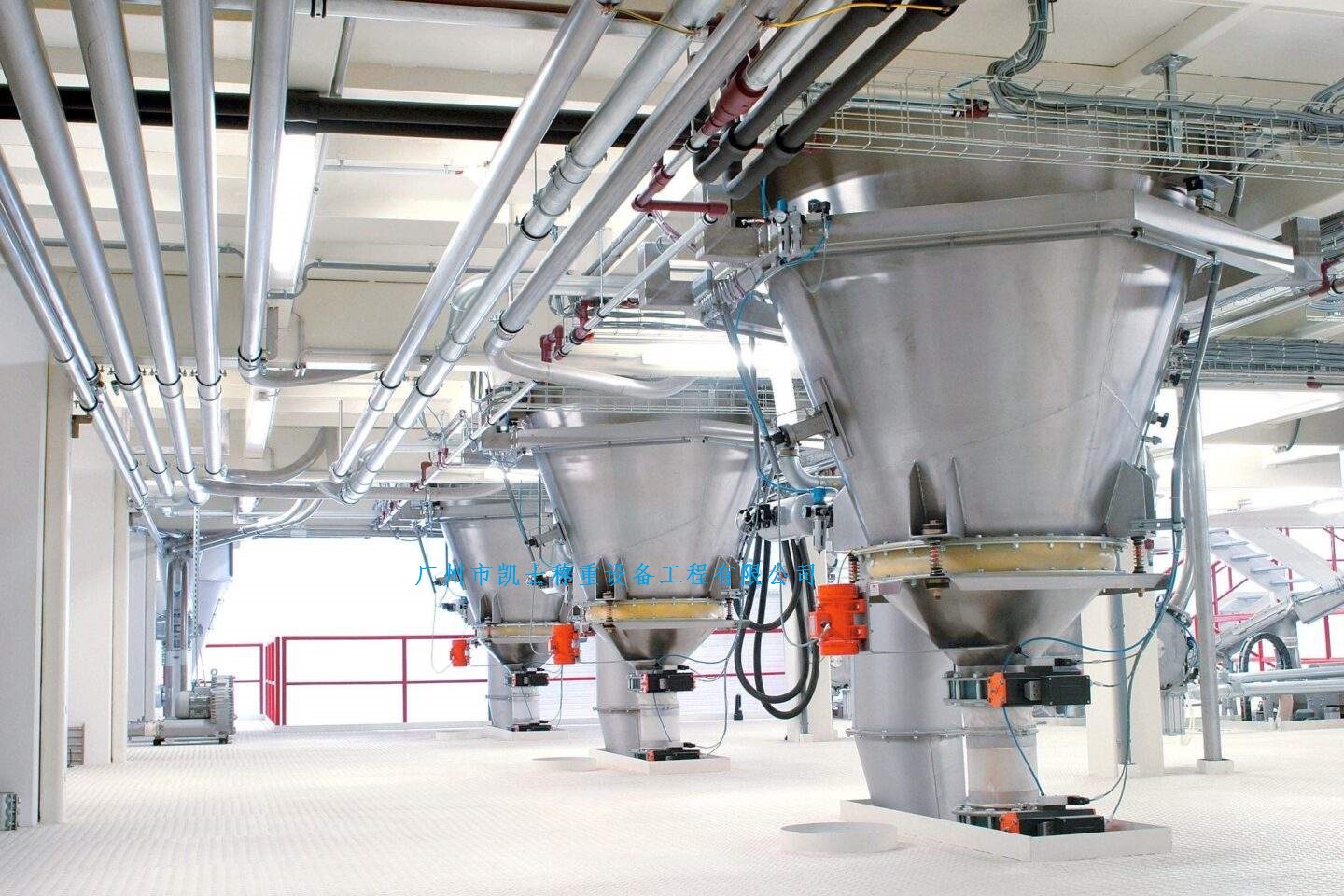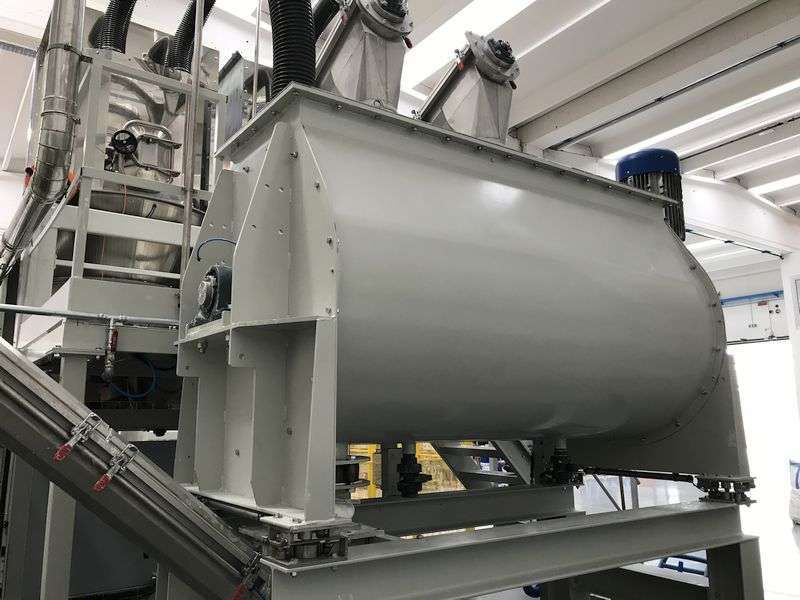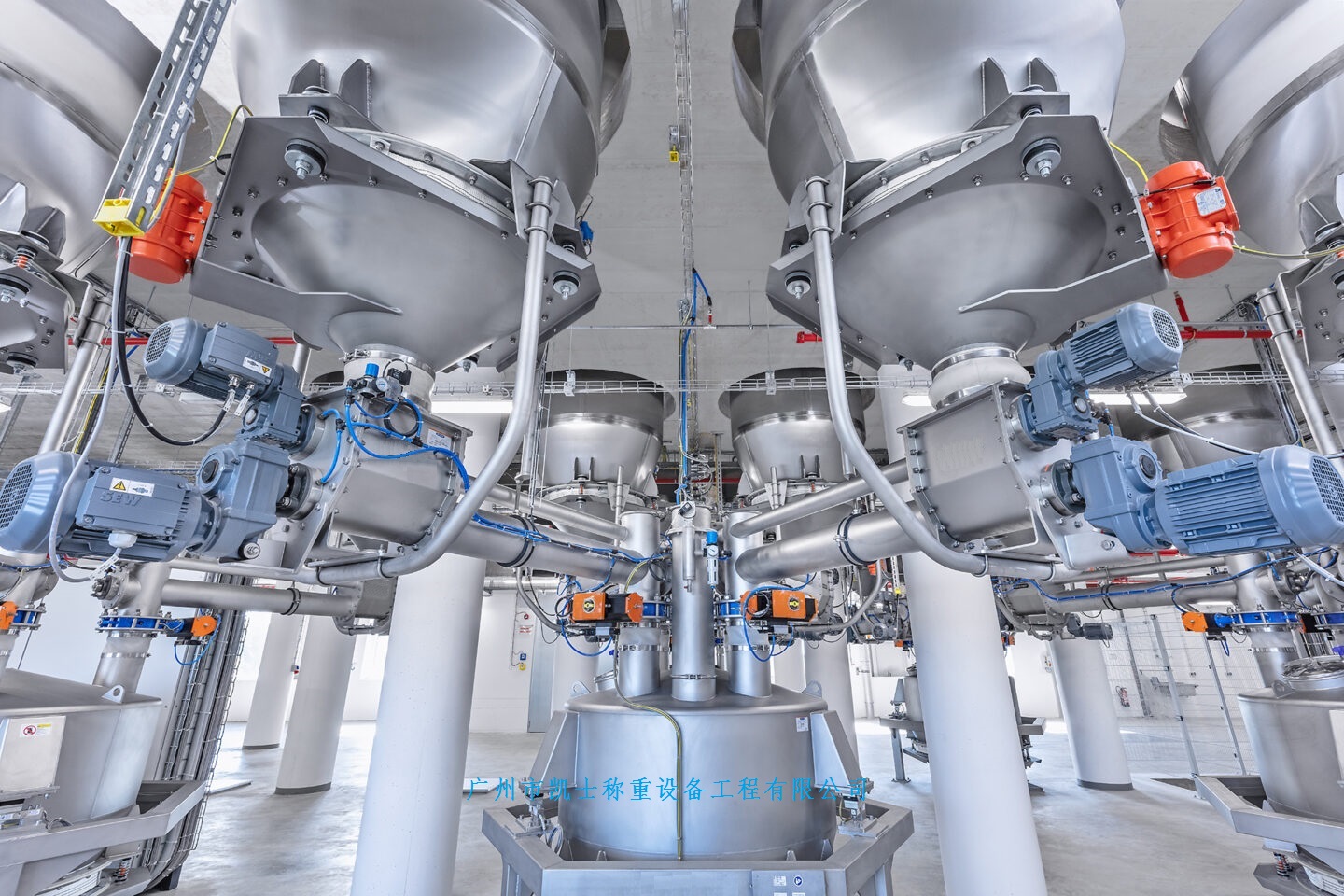


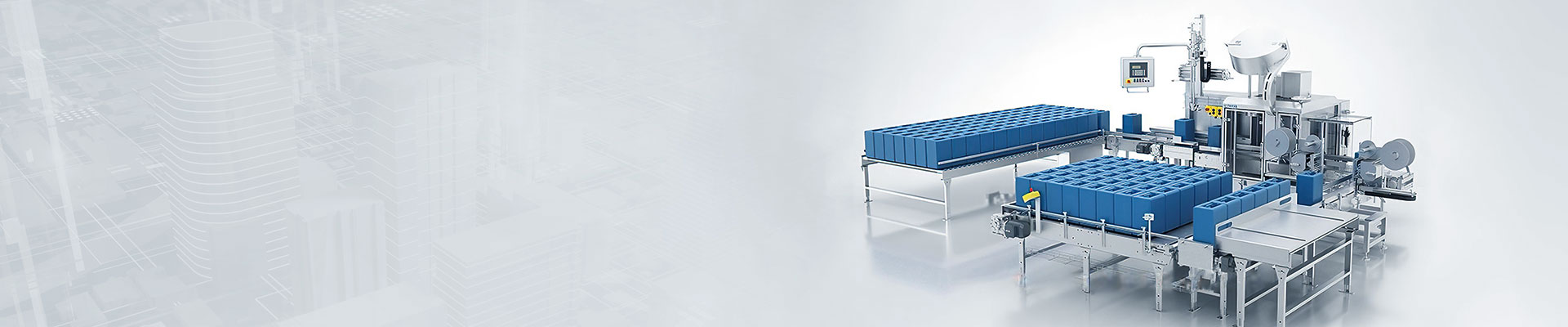
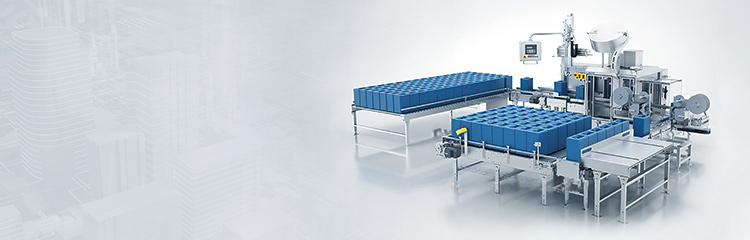

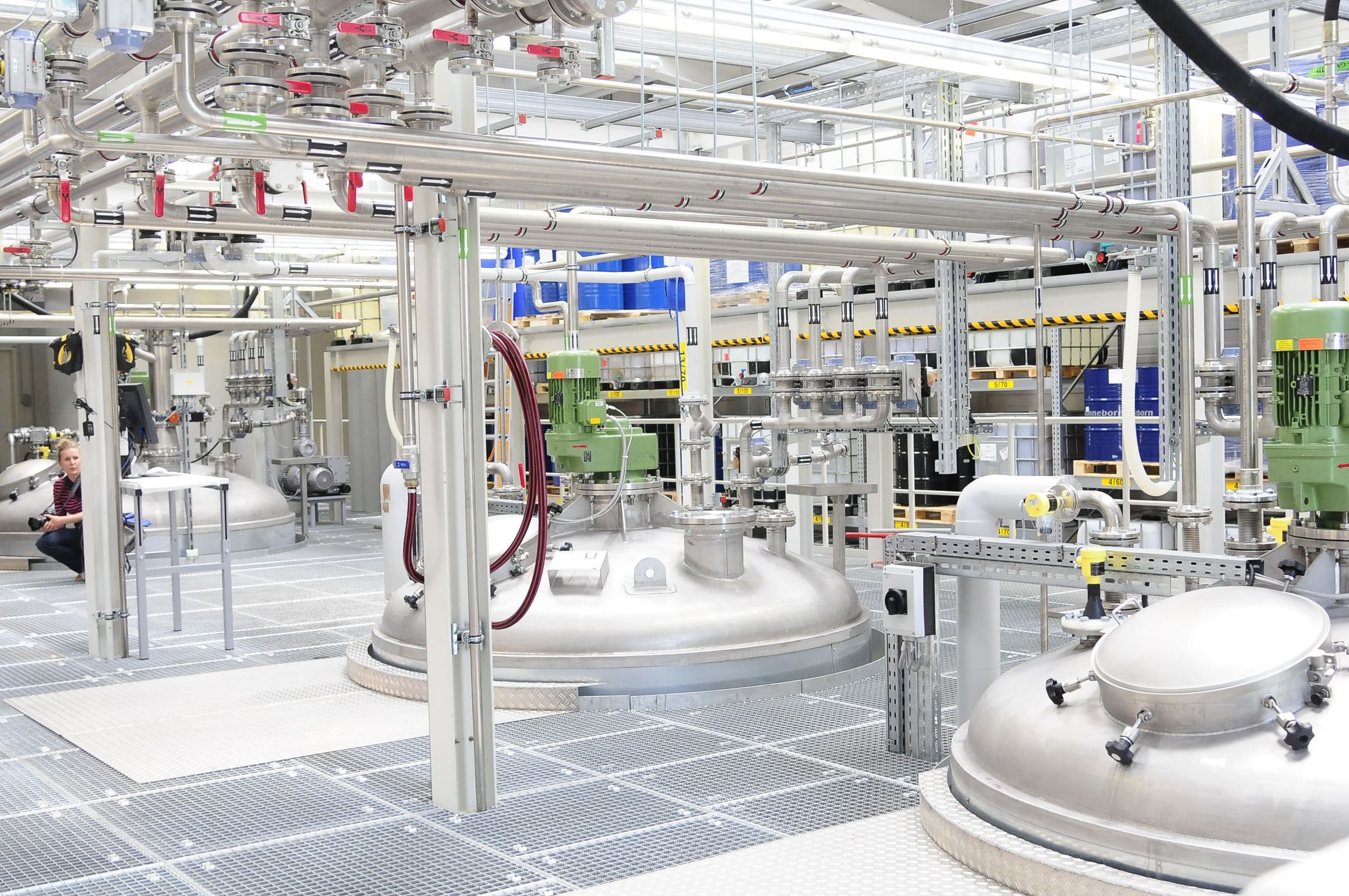


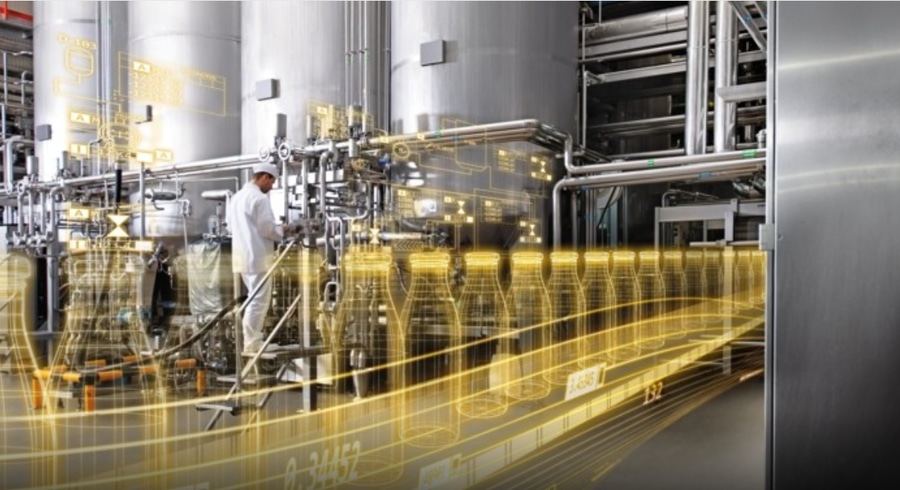
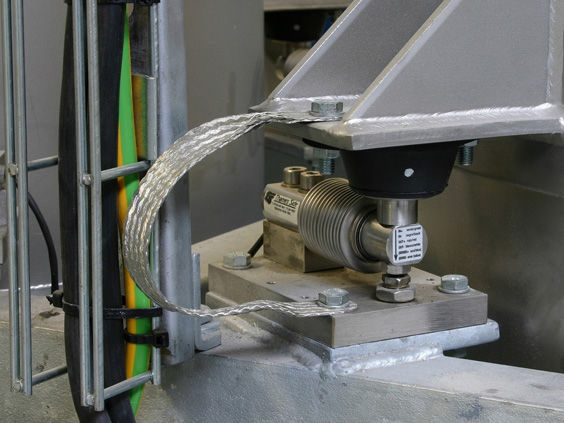
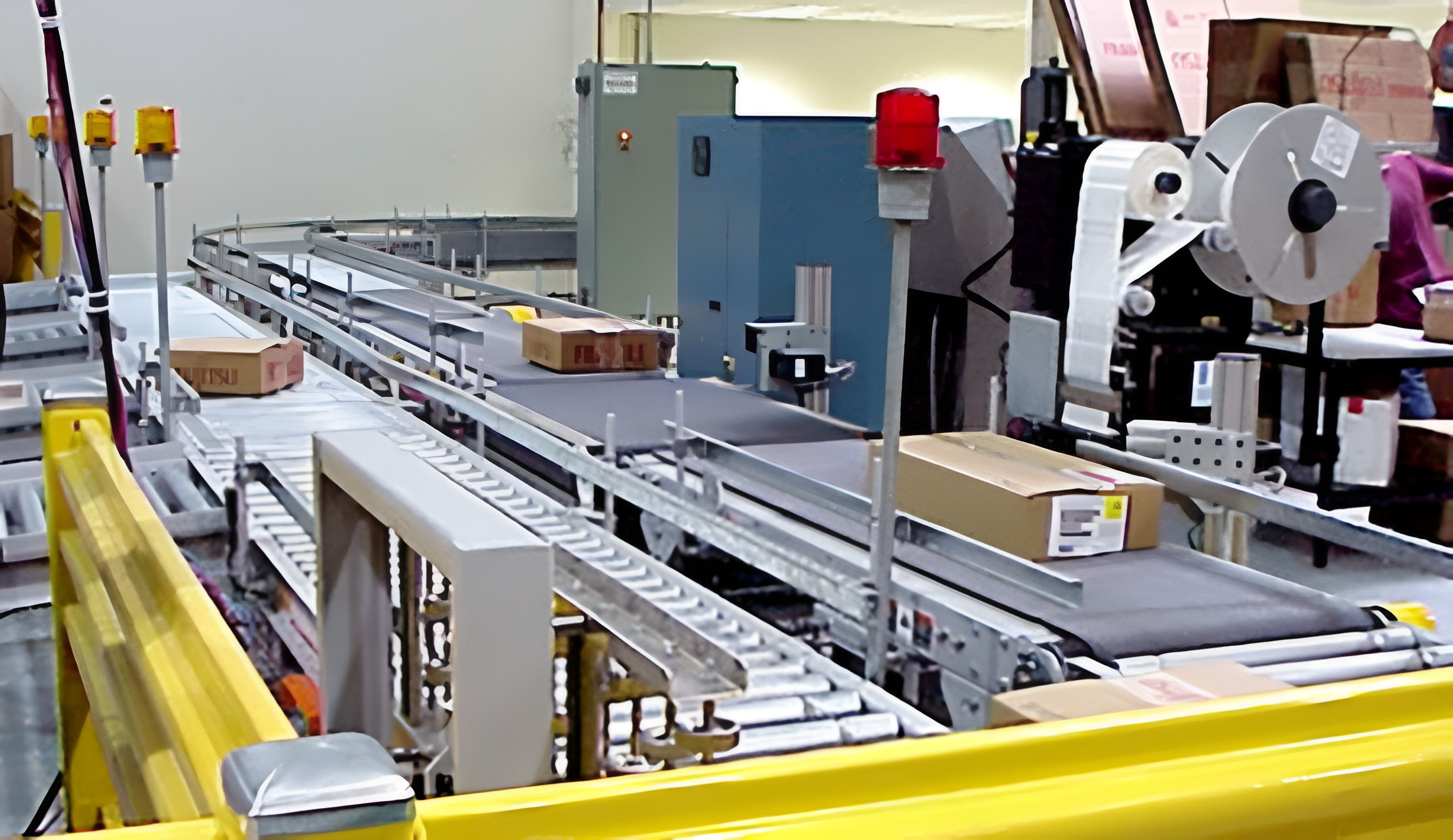
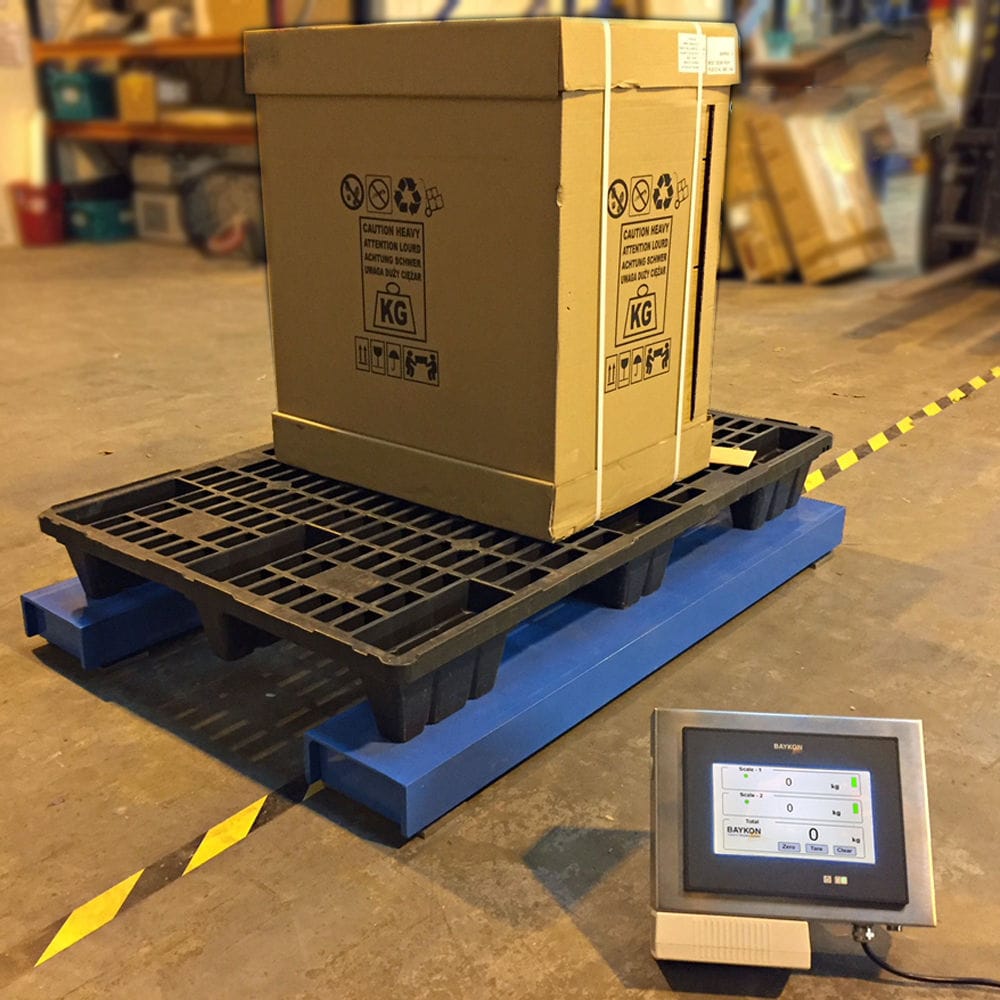


The dilute phase conveyor adopts Roots blower for conveying, with weight separation that does not affect each other. The feeding metering conveyor and the metering silo are an integrated whole, supported by three weighing modules. During operation, the feeding metering conveyor conveys the material into the metering silo. When the upper limit value given by the silo is reached, the feeding stops, allowing the computer to measure the actual weight of the material when it is stationary. Then, the feeding metering conveyor starts to handle the material. When the material in the metering bin reaches the given lower limit value, the material feeding stops. This repetitive action completes the continuity of the batching and metering work.

 020-34563445
The dilute phase conveyor utilizes the dynamic and static pressure of air to suspend material particles in the airflow and convey them along the pipeline. Unlike single-phase flow conveying such as water, gas and oil, in pneumatic conveying, the mixed medium is gas and powder and granular materials. Generally, air is used as the gas. When the conveyed material is required not to be oxidized, nitrogen or inert gas is used. It belongs to gas-solid two-phase flow technology.
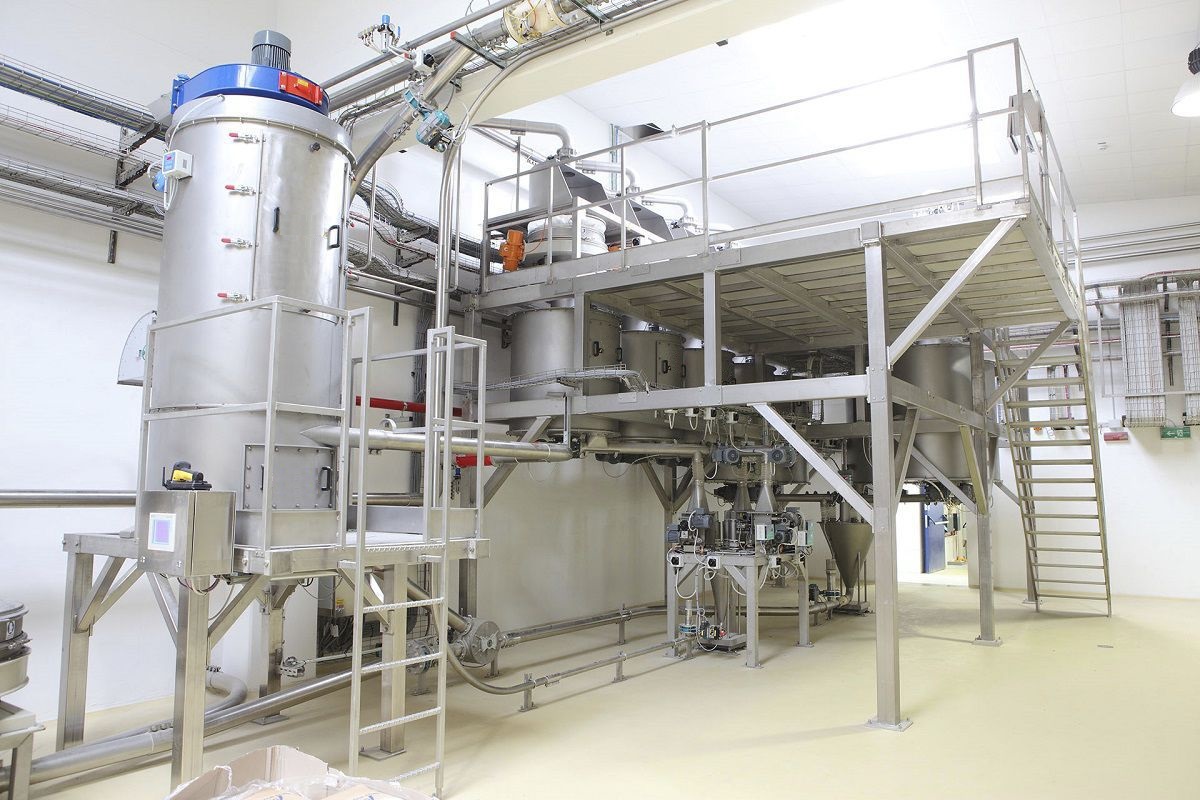
The powder material enters the silo of the pneumatic conveying system through the chute from the standby silo. Under the action of the rotary valve Feeder, it is quantitatively fed. With the Roots blower as the air source, pressurized gas is generated and the powder material is conveyed from the pipeline to the usage silo at a certain speed.
According to the characteristics of the conveyed materials, the conveying capacity and the pipe diameter, medium and high-pressure pressure conveying is adopted for material conveying. The larger the solid-gas ratio is, the more conducive it is to increasing the conveying capacity. Under the specified conveying capacity conditions, a larger solid-gas ratio requires less air volume. This allows for the use of smaller pipelines and separation and dust removal equipment with smaller capacity, and also results in lower unit energy consumption. However, if the solid-gas ratio is too large, when conveying materials in a suspended state, the conveyed materials are prone to blockage, and the pressure loss in the pipeline also increases. Therefore, a high-pressure fan is required. Therefore, the value of the solid-gas ratio is restricted by factors such as the performance of the fan, the physical properties of the material, the conveying method, and the conveying conditions.
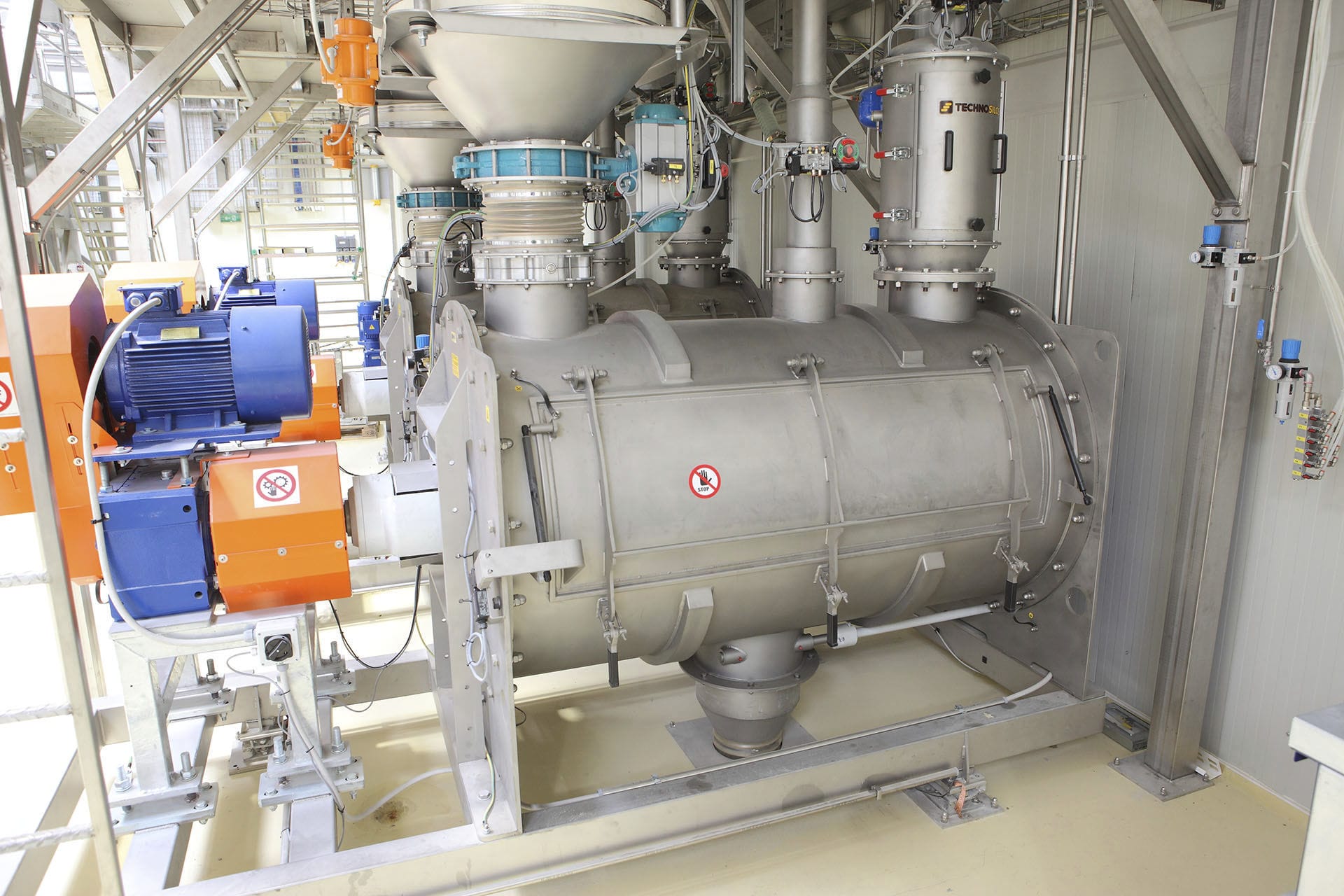
The metering conveyor and the metering silo are flexibly connected and conveyed by a Roots blower. The weight is separated and does not affect each other. The feeding metering conveyor and the metering silo are an integrated whole, supported by three Weighing modules. During operation, the feeding metering conveyor conveys the material into the metering silo. When the upper limit value given by the silo is reached, the feeding stops, allowing the computer to measure the actual weight of the material when it is stationary. Then, the feeding metering conveyor starts to collect materials. When the material in the metering bin reaches the given lower limit value, it stops collecting materials. This repetitive action completes the continuity of the batching and metering work. The batching weight is calculated based on the amount of material lost in the metering bin. The weight measurement is carried out under static conditions without zero-point drift. Both the metering conveyor and the feeding trough metering bin are made of iron plates, which are not afraid of heat and do not leak materials.
The dilute phase conveyor is conveyed by three Roots blowers, one for cement, one for fly ash and one as a backup. Due to the parallel design, they can be switched between each other. The conveying design capacity is 50t/h, which is automatically and centrally controlled by a computer. It features easy operation, full-process monitoring, and a comfortable working environment. (If a silo pump is used, only one silo and one pump can be controlled at a single station, and in addition, a dedicated person is required to manage the air compressor station.) The installation of the continuous feeding system equipment only requires a clear height of 2 meters. Therefore, the height of the ring beam of the cementitious material tank has been optimized from the original 11 meters to 4 meters, significantly reducing the equipment cost.
The jet device of the pneumatic conveyor uses uniquely designed nozzles to form a high-speed jet, uniformly mixing the materials and the conveyed gas, and then sending the materials into the conveying pipe. The materials are transported along the pipe to the receiving destination by the pressure difference of pneumatic force. The overall structure is simple, with only the Roots blower and the conveyor as rotating parts, thus ensuring extremely reliable operation. Due to the continuous conveying, the flow velocity inside the pipe is low and constant, resulting in less wear and a longer service life of the entire system equipment and pipelines. Due to the continuous conveying of powder and the adoption of dilute phase design, the powder conveying is more stable, and there is basically no clogging problem by itself.
The Weighing system only requires "start" and "stop" operations, without the need for manual supervision. It only needs to be inspected. The control system is installed in the microcomputer operation room of the mixing plant. The entire system only needs to be monitored by one operator. The feeding process is intelligently controlled. When the material bin is at a low position, the air conveying device automatically stops when it is at a high position. The conveying process only needs to be monitored, and the logical relationship of the configured control system is also simple. The operating system is fully controlled by industrial control computers to achieve fully automatic operation. Continuous conveyors can be arranged horizontally, vertically or at an Angle according to the specific conditions of the system, meeting the ever-changing layout requirements of the project. Due to the adoption of continuous conveying form and the fact that the power air source for conveying is generally a Roots blower, a purification system is generally not required for the power air source. Only certain requirements are placed on the air volume and pressure.