










The particle weighing system, based on the batching process, starts weighing after the asynchronous motor is activated. The flow rate of the mixed particles at the upper end of the discharge pipe is controlled by the input in the system, which is equivalent to a delayed step. By introducing PID into the system, the true output (i.e., the actual measured value) is obtained, which is the output of the weighing system's estimated compensator.

 020-34563445
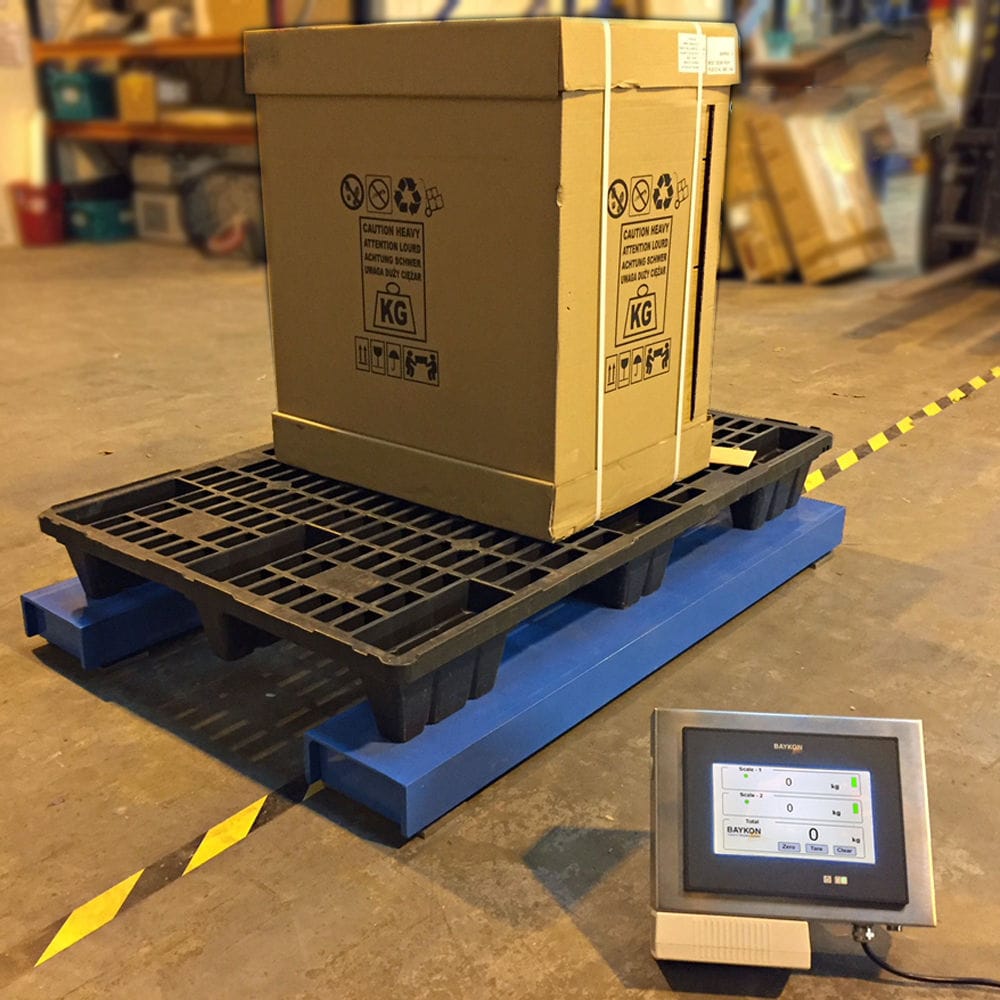
The particle Weighing system controls the asynchronous motor and the conveyor belt based on the weight signal converted by the strain gauge weighing module of the weighing system. When the conveyor belt mixes various raw materials and sends them to an empty particle bag, the weighing system starts to work. The asynchronous motor starts, driving the coarse screw conveyor to rotate and pushing the particles to fall from the discharge pipe through the mixer in proportion. When the falling particles approach the set weight (slightly less than the set weight), stop the coarse screw conveyor from feeding raw materials. Then start the control stepper motor screw propeller to add a small amount until the particle weight meets the given weight requirement. After a bag of granules meets the requirements, it is conveyed by the conveyor belt to the next process for packaging. Meanwhile, the empty bags behind are sent back for weighing, and materials are fed from the output port of the mixer. This process repeats continuously. Particle weighing is divided into two stages. In the first stage, the coarse screw conveyor is driven by an asynchronous motor to feed. This stage can be regarded as the coarse adjustment process, and the feeding weight must be less than the rated weight. The second stage is driven by a stepping motor to feed the fine screw conveyor, which is seen as a fine adjustment process to make the actual weight equal to the required rated weight.
According to the batching process, after the asynchronous motor starts, the weighing begins. The flow rate of the mixed particles at the upper end of the discharge pipe is controlled in the system as a delayed step response. By introducing PID in the system, it is the true output (i.e., the actual measured value), which is the output of the weighing system's estimated compensator. Since it is an actual measured value and an equivalent weight value, when the equivalent value equals the given weight, the weighing of the system ends and it is ready to proceed to the next process. The dynamic response curve shape of the actual measurement and the equivalent weight value is the same, only with a lag of time + flow rate. Adopting the weighing control prediction compensation method in this way can make up for the fact that PID control cannot adapt to control objects with large pure lag.
In fact, the entire weighing process is an irreversible one. Once the material input exceeds the given weight, it is impossible to extract the excess from the granular bag. During the weighing process, immediately stop the feeding of the asynchronous motor at the given estimated value, even after the rough adjustment stage is over. Next, using a stepper motor for a small amount of feeding to make up for the insufficient weight will result in excessive underweight (i.e., the working time of the asynchronous motor is relatively less), which will increase the number of steps during the working stage of the stepper motor and affect the overall packaging speed. If too few ingredients are obtained, it may cause the weight to exceed the given value during the continuous feeding stage. Therefore, the selection of ingredients is very important for improving the accuracy of weighing. Before starting up and working, in the initialization program, the risk coefficient batching is obtained through the self-optimization program to obtain the appropriate value. When estimating the value during the self-optimization process, the asynchronous motor stops working. After extending for a sufficient period of time, the actual weight in the granular bag is weighed, and the error is calculated. Based on the polarity of the error, it is decided whether to modify the ingredient value. If the error is greater than zero, the ingredient value needs to be increased. If the error is less than zero, then determine whether the upper limit is greater than the lower limit. If it is greater than the upper limit, reduce the material. If the proportion of ingredients is less than the upper limit, the proportion of ingredients remains unchanged. This is the self-optimization process of ingredients. Among them, the lower limit is set to ensure that too few ingredients are selected, to prevent the system from exceeding the given weight due to too few upper limits.