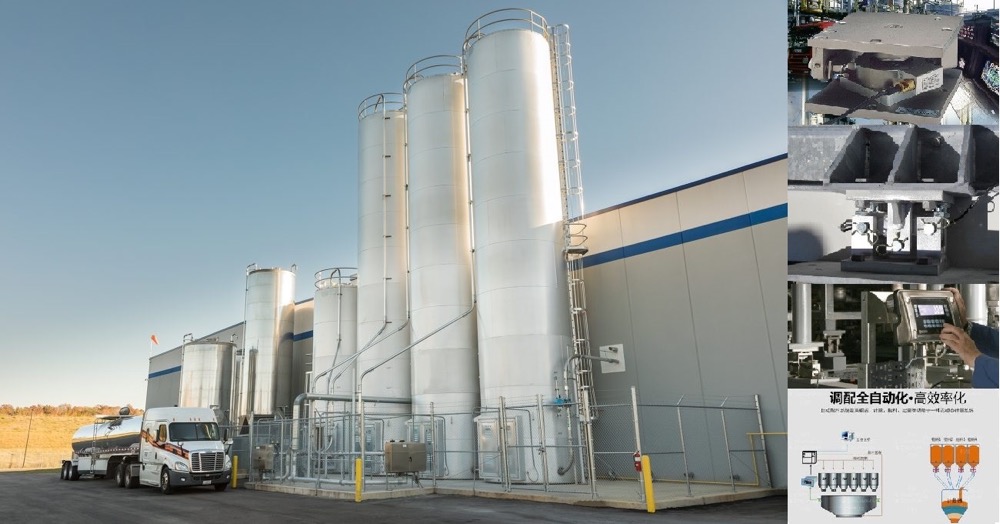






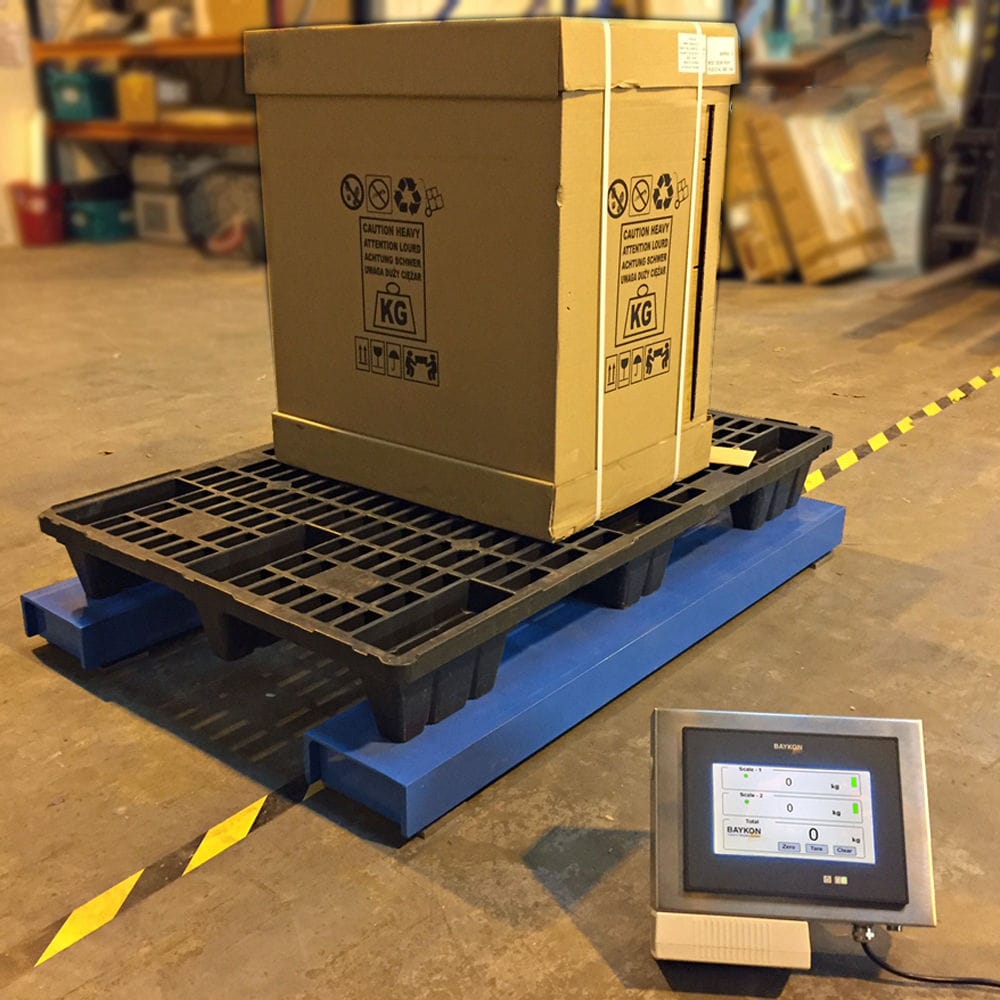


The cylinder scale adopts automatic height compensation, automatic zeroing, automatic zero-point tracking; manual/automatic switching; real-time monitoring of filling conditions; the software has safe operation features; it also has a database for filled bottles, which manages whether the filled bottles are qualified or registered based on the database, and stores the measurement results after the filling process. The human-machine interface is a three-dimensional dynamic simulation graphic, showing the real-time weight during filling; an alarm prompt is given upon the completion of filling, and an effective information is automatically formed and saved; the filling database information can be saved, backed up, restored, queried, printed, and statistically processed. The software implements hierarchical management; a data link function is reserved, which can link the data of the automatic control system according to the corresponding format of the safety supervision bureau database.


 020-34563445
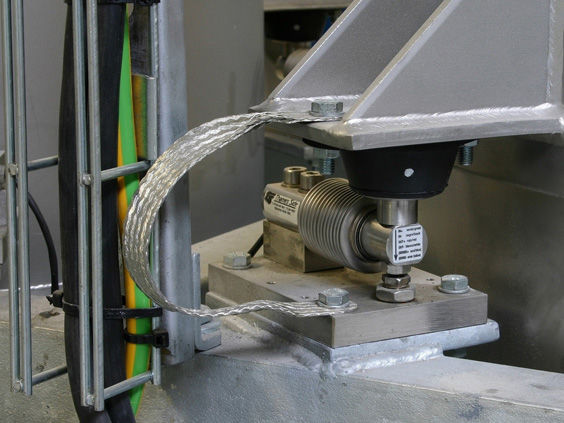
The technical solution of the cylinder scale for quantifying liquid chlorine is an Electronic scale. It uses a bearing wheel, which is connected to the weighing module of the weighbridge. The weighing module is placed below the bearing wheel. The weighing module is connected to the operation weighing instrument through shielded wires. The operation weighing instrument controls the opening and closing of the solenoid valve. The operation weighing instrument includes a microprocessor. The output signal of the weighing module is transmitted to the amplifier through the sampling circuit. After being processed by the amplifier, the output signal is input into the microprocessor through the AD conversion circuit. The microprocessor controls the opening and closing of the solenoid valve through the valve control circuit.
The cylinder scale adopts automatic height compensation, automatic zeroing, automatic zero-point tracking; manual/automatic switching; real-time monitoring of filling conditions; the software has safe operation features; it also has a database for filled bottles, which manages whether the filled bottles are qualified or registered based on the database, and stores the weighing results after the weighing is completed. The human-machine interface is a three-dimensional dynamic simulation graphic, showing the real-time weight during filling; an alarm prompt is given upon the completion of filling, and an effective information is automatically formed and saved; the filling database information can be saved, backed up, restored, queried, printed, and statistically processed. The software implements hierarchical management; a data link function is reserved, which can link the data of the automatic control system according to the corresponding format of the safety supervision bureau database.
The automatic control of liquid chlorine filling is achieved by the PLC controller comparing the detected electronic scale weight signal with the set weight, and controlling the opening and closing of the pneumatic valve to achieve the automatic control of liquid chlorine filling. The specific control process is as follows: Place the empty chlorine cylinder to be filled on the cylinder scale. The secondary instrument of the cylinder scale displays the weight of the empty cylinder and transmits the weight as a 4-20 mADC signal to the PLC controller. Through programming of the PLC and related LCD touch screen, the weight signal is read into the PLC controller for processing, and the signal is output to the LCD touch screen connected via the communication line for display. The operator inputs the required filling weight through the touch screen, and after verification, clicks "confirm" and the "open" command. The corresponding pneumatic shut-off valve of the filling pipeline opens, and the filling begins. When the weight of the empty cylinder plus the filling amount reaches the set value, the PLC automatically compares the set value with the measured value and calculates and outputs to make the filling pneumatic valve close to complete the entire filling process.
In an emergency situation, such as when the filling pressure of liquid chlorine rises abnormally or there is a severe leakage in the filling pipeline, the PLC controller will compare the pressure measurement, chlorine leakage detection signals with the set values of the safety control program. If there is any deviation, it will automatically activate the emergency procedure, cut off all filling pipeline valves, and open the emergency chlorine absorption pneumatic control valve to absorb the accident chlorine with sodium hypochlorite.
Operation steps:
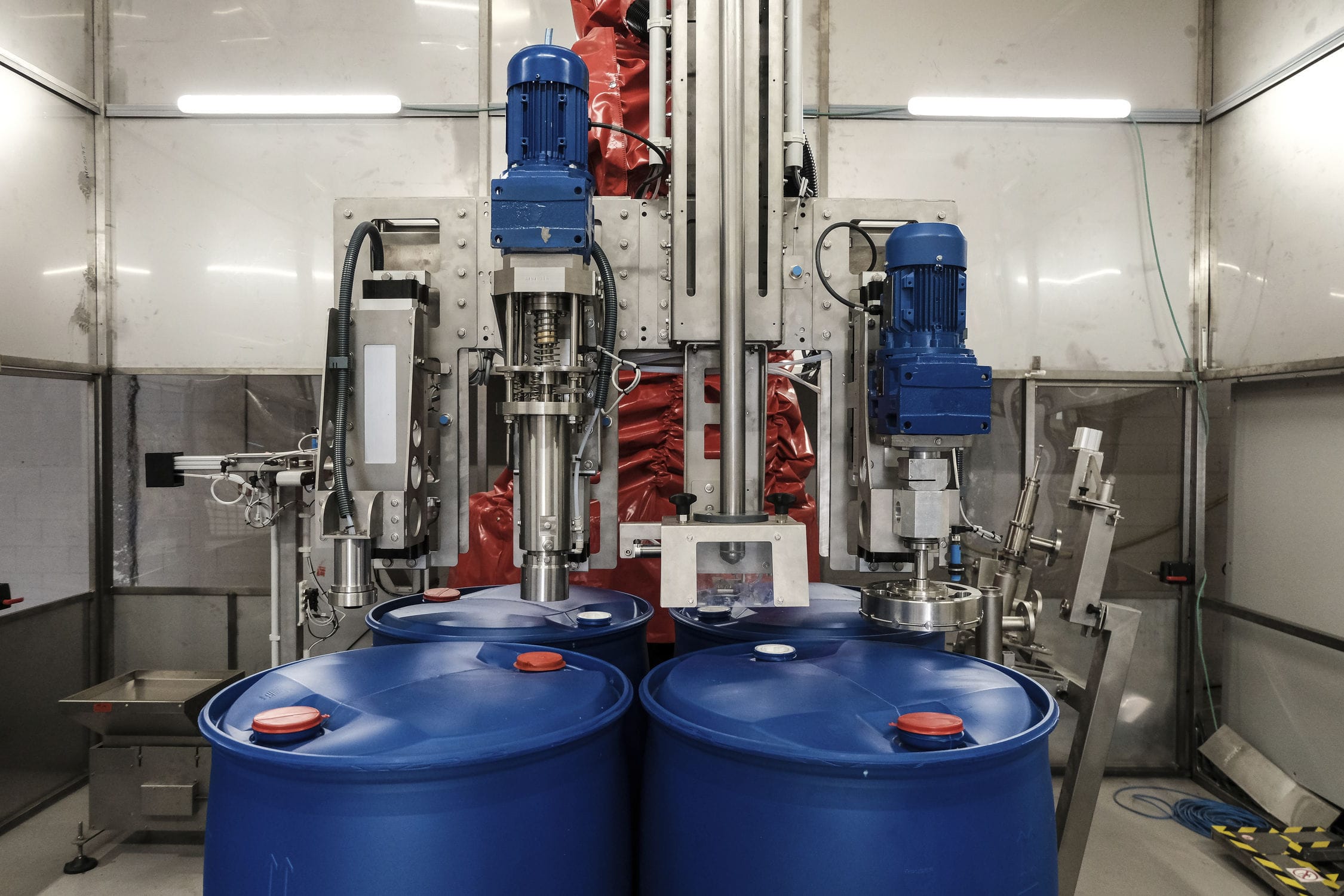
The operator lifted the gas cylinder onto the roller assembly on the scale and proceeded with the pipeline connection.
2. After confirming that the pipeline is securely connected, press the "Start" button (or the start button on the upper computer human-machine interface), and the system will first remove the outer skin.
3. The system outputs signals to control the feeding valve for material feeding.
4. Liquid chlorine is filled into the empty bottles through the filling valve under the force of gravity or mechanical pressure.
5. The instrument displays the net weight of the liquid chlorine filling in real time. When the filling weight of the liquid chlorine reaches the preset advance amount (filling value - drop value), the system sends a signal to close the feeding valve, completing one filling cycle.
6. The operator removes the connecting pipes of the gas cylinder, lifts the cylinder off the scale platform, and prepares for the next filling operation.
7. The upper computer in the control room monitors the information of eight on-site filling operations (rechecking scales, excluding control functions), and manages the data in the database as well as conducts real-time monitoring of the on-site filling situation.
8. In the event of a failure of the upper computer, the target value can be set through the instrument, and the output signal of the weighing instrument will automatically close the valve, thereby achieving semi-automatic filling. Note: On-site emergency stop buttons and manual control devices are provided. During the filling process, if any abnormal situation occurs, the total feeding valve can be manually tightly closed, and manual filling can also be achieved. The instrument has alarm output contacts, and users can set the alarm mode as needed.
Technical indicators
Tank scale specification: SCS-3 tank scale
Accuracy grade: Static: JJG555-96 level Dynamic: 0.5% of FS
Maximum capacity: 3000kg
Tolerance value: 1 kg (The tolerance value can be set to 0.5 kg)
Material: Liquid Chlorine
Table surface size: 1.4 meters by 0.9 meters
The filling pressure of liquid chlorine is 1 MPa.
Air source pressure: 0.4 - 0.6 Mpa
System explosion-proof rating: ExdIIBT6
Instrument housing explosion-proof rating: ExdIIBT4
Rated part sensor explosion-proof rating: ExibIBT6
Enclosure explosion-proof rating: ExiaIICT6
Alarm device: ExdIIBT6
Equipment configuration quantity: 8 units + 1 unit (receiving scale, excluding control unit)
Power Supply: Voltage 220V ± 10% - 15%, Frequency 50Hz ± 2%
Temperature: Instrument range 0℃ to 40℃, Scale body range -10℃ to 50℃
Humidity: 10% - 90% RH (No condensation)
Air source pressure: 0.6 to 1.0 MPa
Operating pressure: 0.4 to 0.6 MPa