








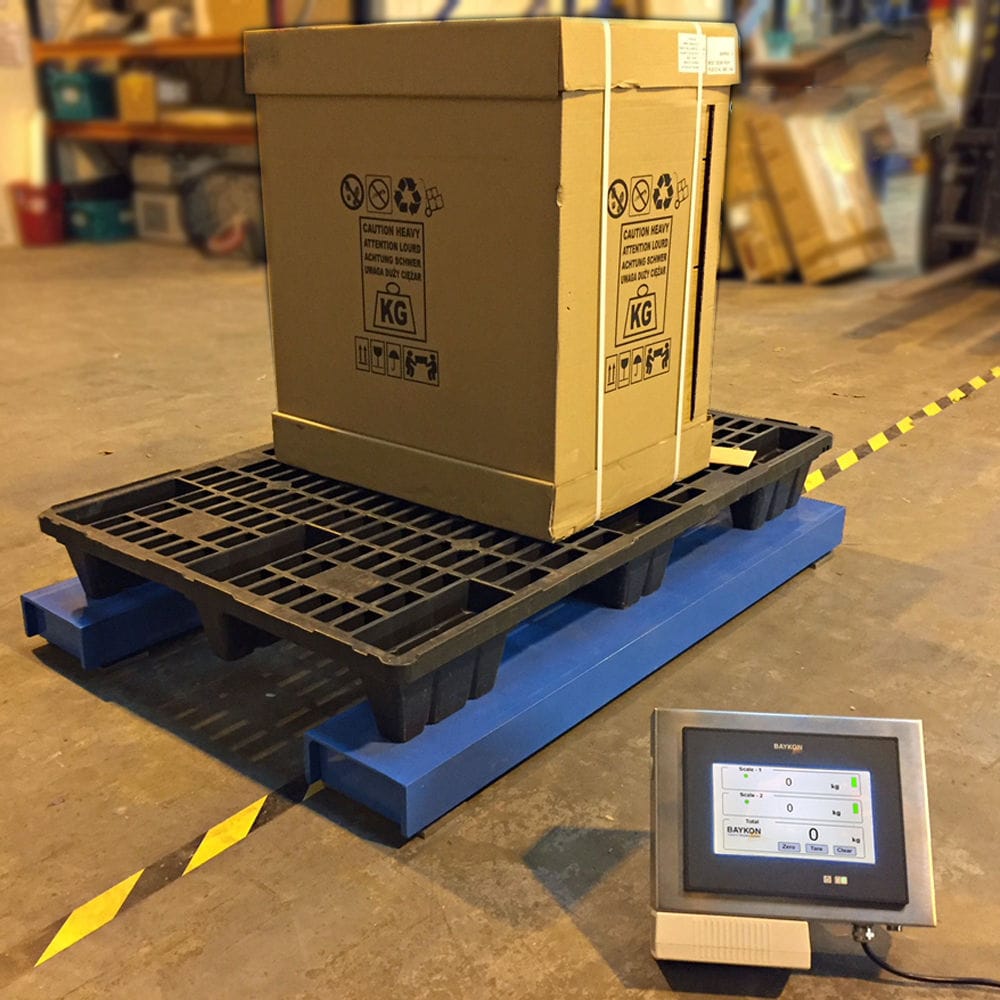


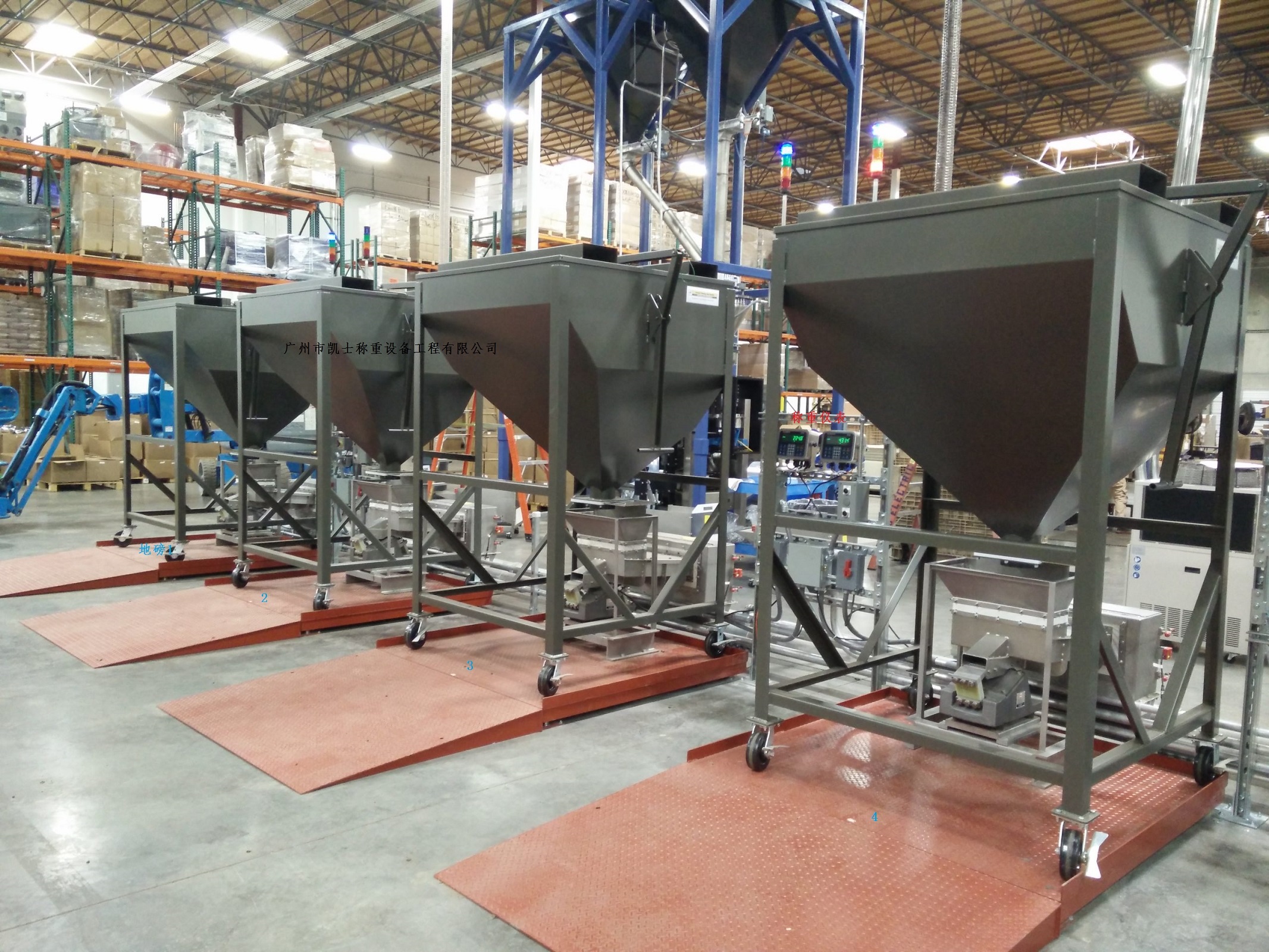
The structure of the hazardous waste electronic weighing platform consists of an upper platform, a supporting platform (i.e. the lower platform), four sets of levers, counterweight blocks, four weighing sensors, a wiring box and a digital instrument. The upper platform is supported by four floating columns below, and each of the four floating columns presses against one end of the four sets of levers. The floating columns are composed of rubber body ball-head columns and ball-head tops.

 020-34563445
The hazardous waste weighing platform adopts a double-layer scale platform, and a high-performance buffer shock-absorbing device is used to absorb the impact energy during loading. It is equipped with high-precision shear beam type weighing sensors and intelligent weighing instruments. The front-end hazardous waste data collection gateway, hazardous waste disposal operation management hazardous waste weighing terminal, hazardous waste warehouse large screen and mobile terminal are also used. The front-end hazardous waste data collection gateway is used to collect data during the hazardous waste disposal process in real time and send the data to each business module of the intelligent hazardous waste disposal operation management hazardous waste Weighing system for processing, generating reports and displaying them graphically on the hazardous waste warehouse large screen. The hazardous waste disposal method involves hazardous waste sample collection and initial inspection; hazardous waste material transportation and warehousing; material compatibility; waste treatment. The entire process of market, storage, transportation and disposal is unifiedly managed. From hazardous waste sample collection, sample initial inspection, assessment, to waste management with hazardous waste transportation units, and then to hazardous waste disposal production, all are completed on a hazardous waste weighing platform, achieving a standardized and standardized efficient operation management model.
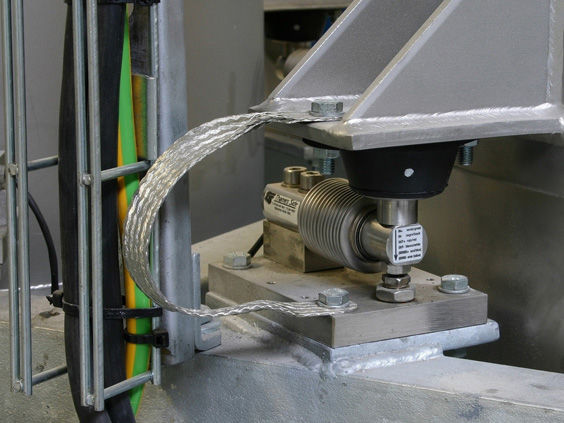
The Electronic scale is resistant to shock, fatigue, has high accuracy, operates stably and reliably, and is easy to operate with high precision. The scale can effectively absorb the impact force of the goods during weighing. The first scale platform and the second buffer scale platform are connected by bolts and springs. The limit is a screw collision limit. Four weighing sensors are installed at the four corners of the first scale platform. Since the original design used shear beam sensors, each sensor is tightly connected to the first scale platform through four bolts. This ensures that the load on the weighing platform can be accurately transmitted to the sensors. The pressure head supports the four-pole weighing platform. Since this scale frequently withstands the impact of heavy objects every day, the sensors and the pressure head often shift and get damaged. A 1-hole steel plate is used. The diameter of the hole on the steel plate is the same as the bottom diameter of the pressure head. The steel plate is connected to the base plate by bolts. By fixing the pressure head, the sensors and the pressure head do not shift. It can withstand large eccentric loads and lateral forces, and has a large overload capacity.
The structure of the hazardous waste electronic weighing platform consists of an upper platform, a supporting platform (i.e. the lower platform), four sets of levers, counterweight blocks, four weighing sensors, a wiring box, and a digital instrument. The upper platform is supported by four floating pillars that float on the lower platform. Each of the four floating pillars is pressed against one end of the four sets of levers. The floating pillars are composed of rubber body ball head pillars and ball head tops. The ball head tops are fixedly installed on the connection suspension beams at the short arms of the four levers. The ball head pillars are installed on the ball head tops, and the rubber body is integrated with the ball head pillars. One weighing platform requires four sets of floating supports. The four rubber bodies are respectively supported in the four flat-bottomed cavities at the lower part of the upper platform of the weighing platform. The upper platform of the weighing platform is floatingly connected to the four levers through the four sets of floating supports. This is similar to the structure of a common weighing platform with four sensor ball heads or "unstable pole" ball heads supporting one surface, to ensure that factors such as deformation of the upper platform of the weighing platform and the impact of the material tank will not affect the accuracy of the weighing platform. The four sensors and the counterweight blocks are connected and hung on the other end of the four sets of levers. To facilitate the installation, maintenance and debugging of the sensors and the weighing platform, the four sensors and the wiring box are installed on the outer side of the supporting platform (i.e. the lower platform), and the digital module is installed inside the wiring box. The wiring box and the digital instrument are connected to each other.
As with common weighing systems, the digital sensors in the digital weighing system also adopt highly integrated and intelligent processing units within the weighing sensor or in the wiring box to perform A/D conversion, filtering, and pre-processing of analog signals, and then carry out digital compensation before outputting digital signals. The digital weighing instrument or the computer used for real-time collection of data from each sensor and processing, followed by display; using the digital weighing system, each sensor within the system can be addressed individually, thereby enabling monitoring, fault identification of each sensor, and the ability to handle the weighing information of each sensor separately, significantly enhancing the control capability, flexibility, and intelligence of the weighing system. This feature creates conditions for adjusting and calibrating the load imbalance of the weighbridge within this scale; after the scale platform is calibrated, the zero point value and full load (net output) value of each sensor are stored in the instrument or computer software. When recalibrating the same scale, it can be compared with the previous calibration values. This feature makes the stability monitoring of the sensors in the weighing system simpler; the hazardous waste digital weighing system can directly process the raw weighing data provided by the digital processing unit of each sensor, enabling each sensor to be equivalent to providing a resolution higher than 20 bits, that is, equivalent to 1,000,000 counts. The four sensor system can provide 4x1,000,000 counts for analysis. For this weighing system, such high-resolution sensors, combined with high-precision compensation (such as: temperature compensation, linear compensation, etc.) of the sensors, fully meet the high-resolution requirements of the weighbridge.


