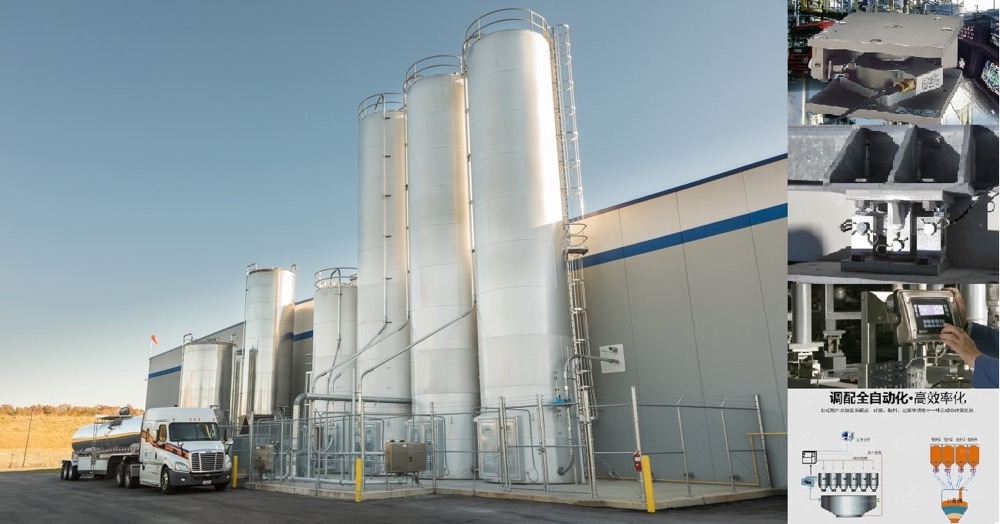


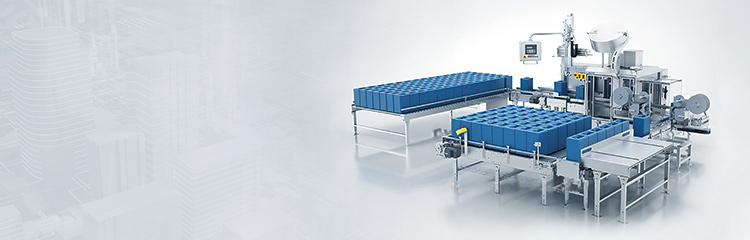


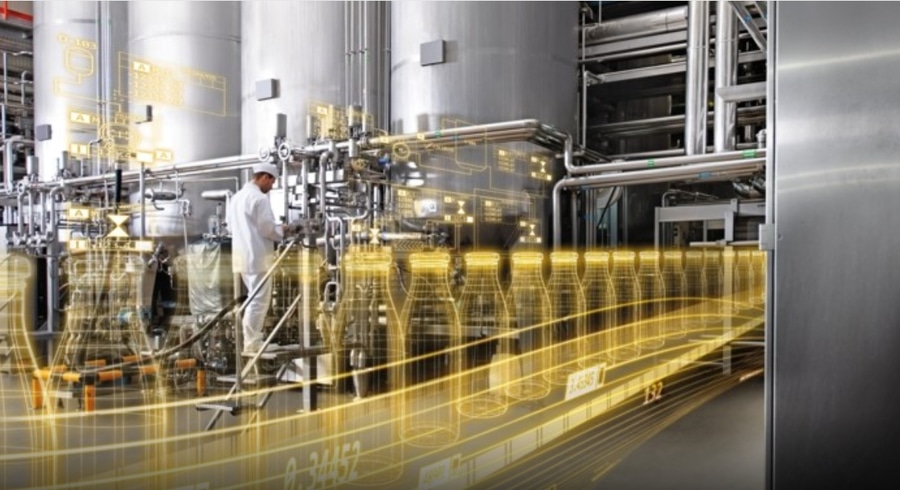
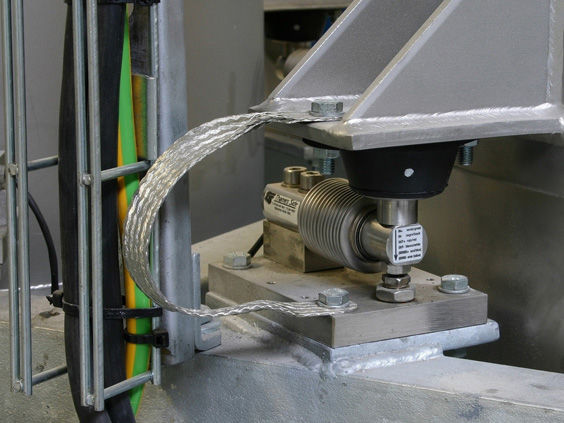
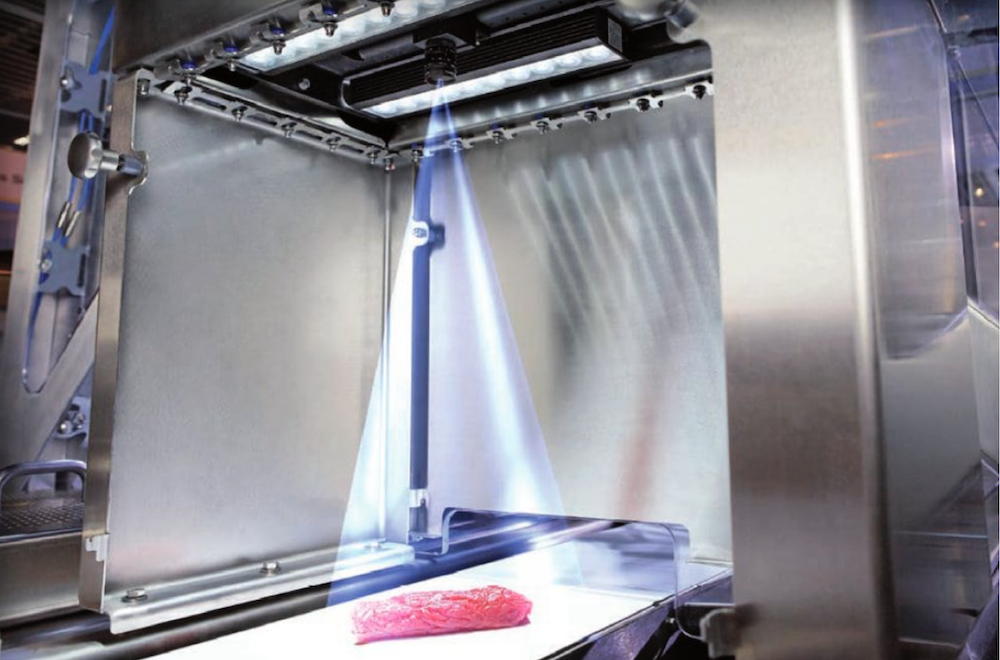
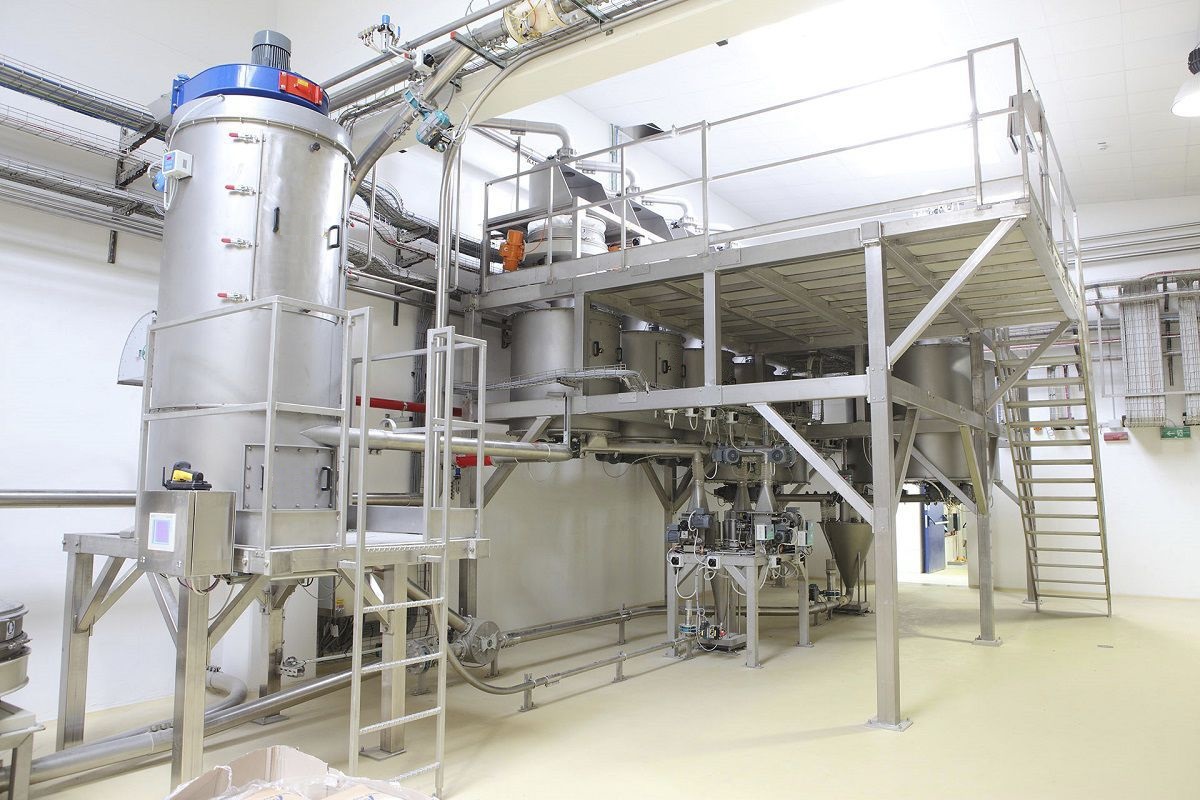
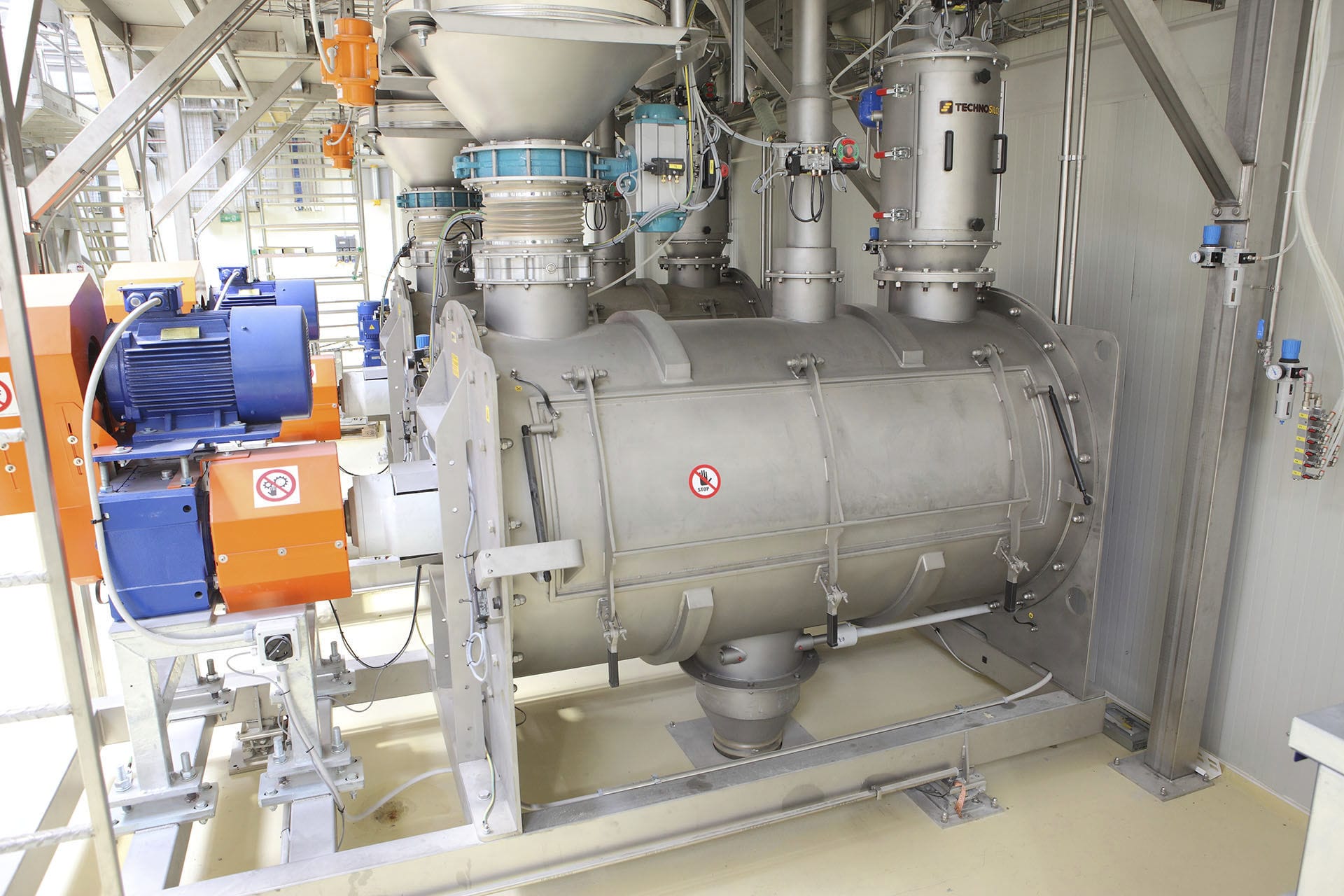
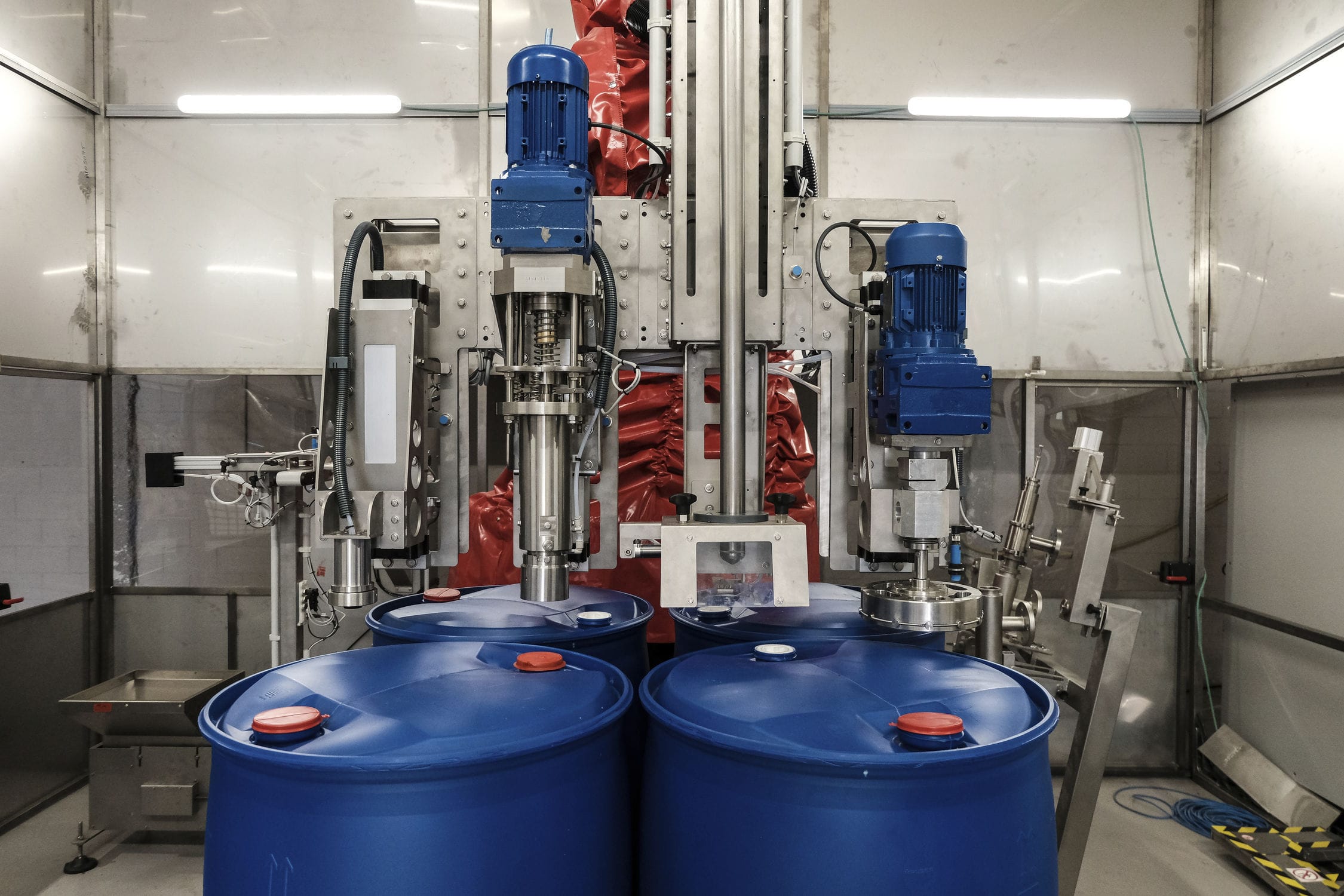


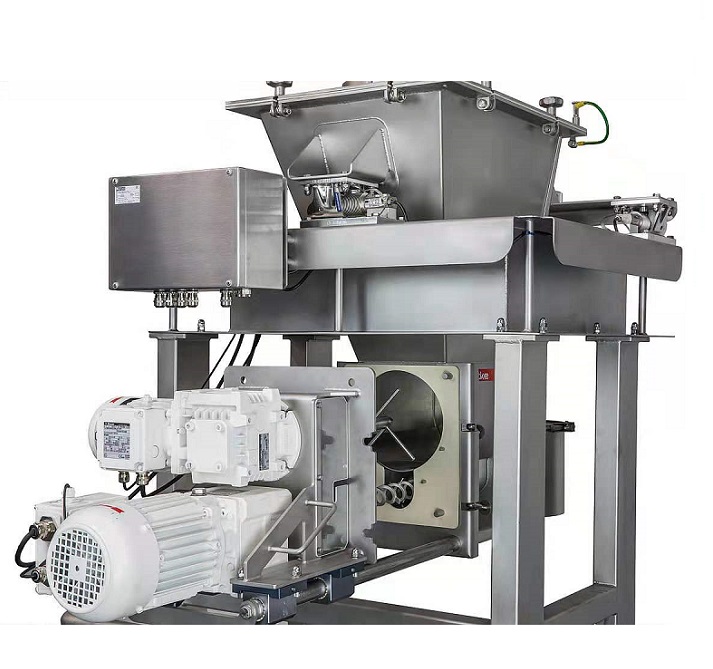
The mixing hopper scale transmits the measurement data from the weighing module to the weighing instrument. At the bottom of the storage bin, there is a feeding door. When the weighing process begins, the corresponding valves are activated through program control to start the feeding device. Once the feeding door is opened, the materials will fall from the storage bin onto the scale hopper. The scale hopper then transmits the weight of the measured materials to the weighing module. The weighing module sends the output signal to the weighing instrument for signal measurement and processing, and then controls the feeding device in return. When the actual weight of the materials detected by the sensor meets the weighing requirements (considering the height difference), the feeding door and the feeding device can be closed to stop the feeding, thus forming a closed-loop control system to achieve a complete measurement control system. When this type of batching is completed, the ratio of the next material is started.

 020-34563445
The mixing hopper scale is based on PLC as its core. The data obtained by weighing sensors for measuring the weight of the materials is transmitted through a high-precision A/D conversion system. The system compares the measured values with the set values and, based on the control algorithm, controls the opening and closing of the hopper door. Thus, the weight of the materials can be accurately measured. The weighing instrument is used to set and display various materials, and is also equipped with an RS232 circuit for communication with a computer, enabling data display, printing, and remote control. The hopper scale uses a single metering hopper to sequentially weigh multiple raw materials. The raw materials are lifted to the factory's high position by a bucket elevator and then conveyed by a spiral conveyor. They are distributed to various storage bins located at the factory's upper floors through an electrically controlled rotary distributor. Under the instructions of the batching controller, the screw conveyors in each storage bin sequentially discharge the materials to the metering hopper at the set quantity. When all the materials as per the formula are mixed, the metering hopper automatically opens the discharge door to deliver the mixed materials to the mixer for blending. Then, the required additives are injected, and the mixture is sent to the next processes such as pressing and forming.
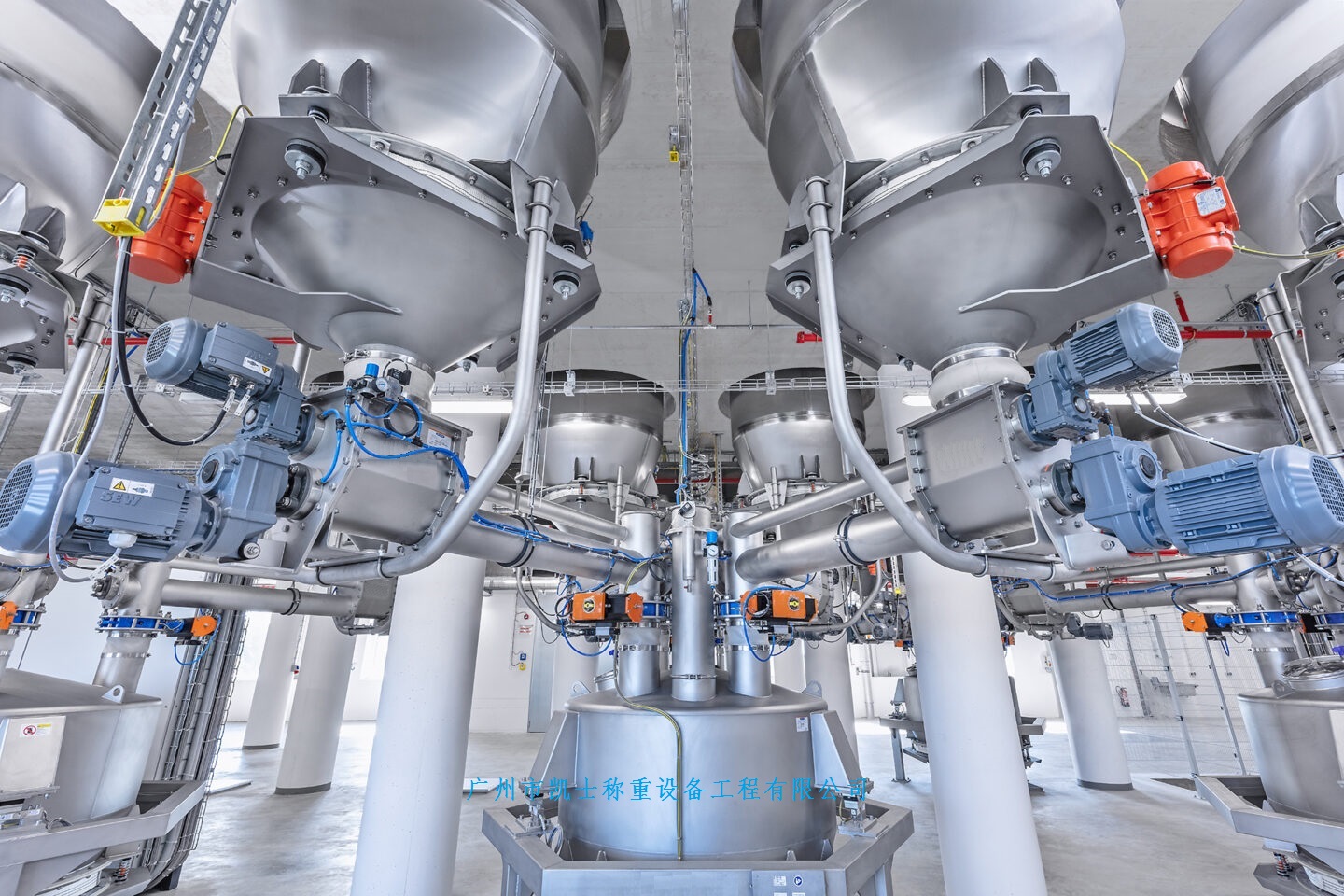
The discharge storage area stores the ingredients. According to the requirements of different materials, different feeding devices can be configured. The hopper is suspended by a weighing module, and the weight of the material inside the hopper is transmitted from the weighing module to the weighing instrument. At the bottom of the storage bin, there is a feeding door. When the weighing starts, the corresponding valve is controlled by the program to activate the feeding device, and the feeding door is opened. The material then falls from the storage bin into the hopper. The hopper transmits the weight of the material to be weighed to the weighing module, which then transmits the output signal to the weighing instrument for signal measurement and processing. This signal is then used to control the feeding device again. When the actual weight of the material detected by the sensor meets the weighing requirements (considering the height difference in the air), the feeding door and the feeding device can be closed to stop the feeding, thus forming a closed-loop control system to achieve a complete measurement control system. When this type of ingredient is weighed, the ratio of the next material is started.
The feeding and Weighing system adopts a weighing hopper supported by a weighing module, which can achieve the weighing of various materials for batching. It follows the commonly used cumulative batching principle and also has a storage hopper for the pre-filled materials. The newly developed system saves one set of equipment, one weighing hopper and one storage hopper. This significantly reduces the space occupancy in front of the silo and its reliability is several times higher than the original batch system. For this system, raw materials are first fed into the weighing hopper. The feeding process can be clearly seen on the panel of the weighing instrument. When the weight of the feed reaches the preset value (pre-set by the keyboard on the front panel), the weighing instrument automatically sends a stop signal to the weighing Feeder. At this point, feeding stops and the weighing feeder starts to add raw materials into the hopper. When the weight reaches the set value, the weighing feeder automatically stops adding materials. After all the materials of various types have been added to the preset value, the scale will clearly display the weight of various materials in the hopper. When the loading vehicle runs all the way to the bottom pit, it impacts the gate control mechanism of the hopper, causing the hopper gate to automatically close. The hopper's feeding gate then automatically closes, preparing for the next batching cycle. This process repeats, and various materials are continuously transported to the top of the silo in accordance with the prescribed ratio, maintaining continuous feeding operations.