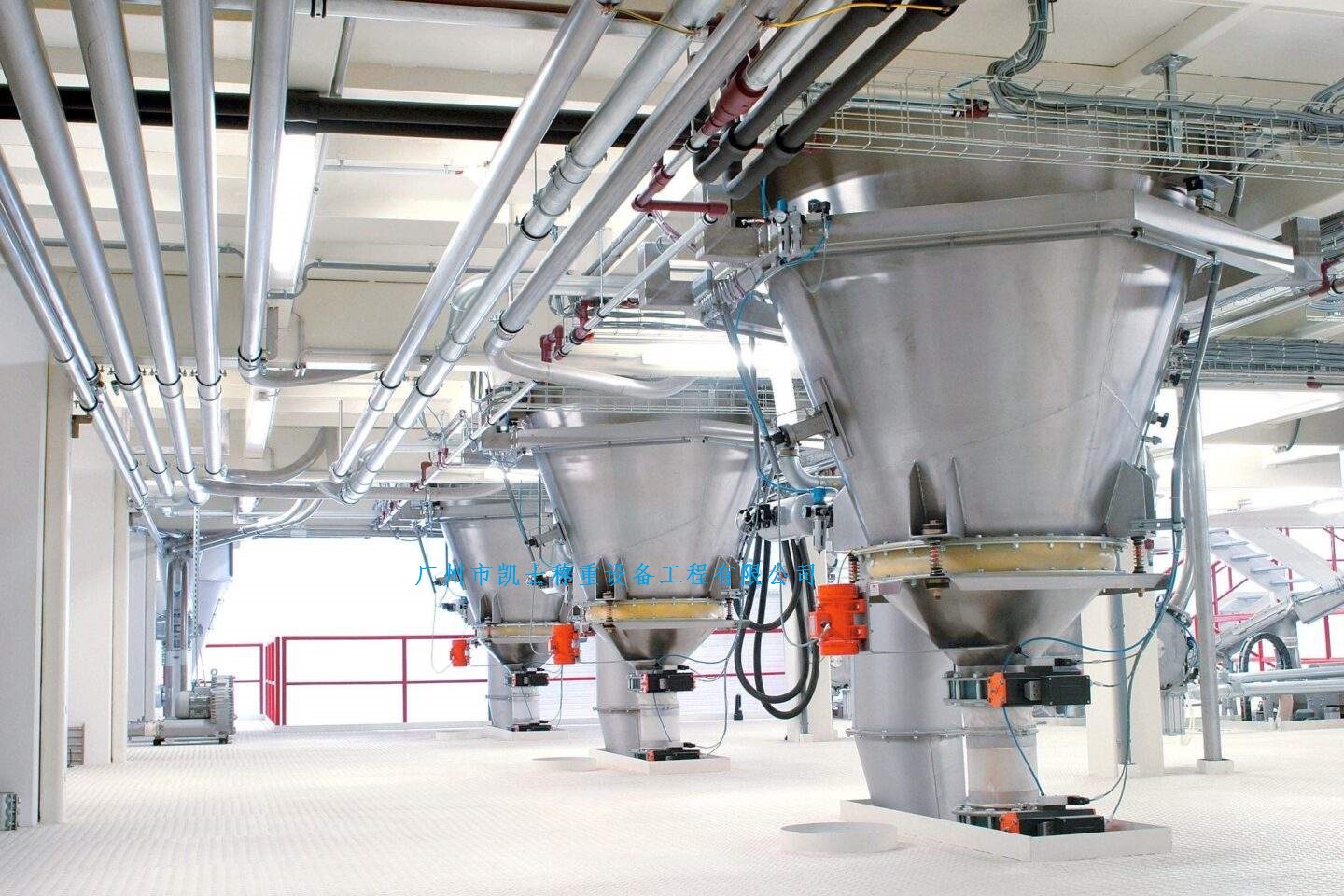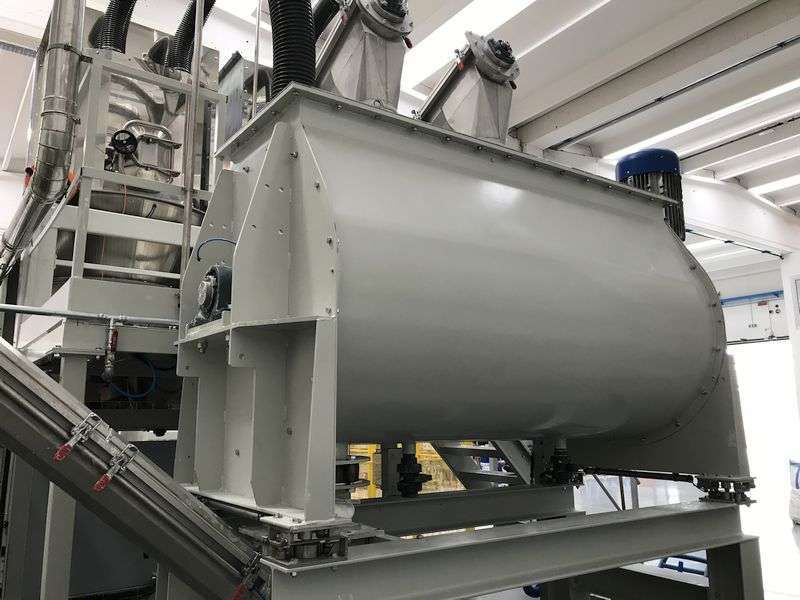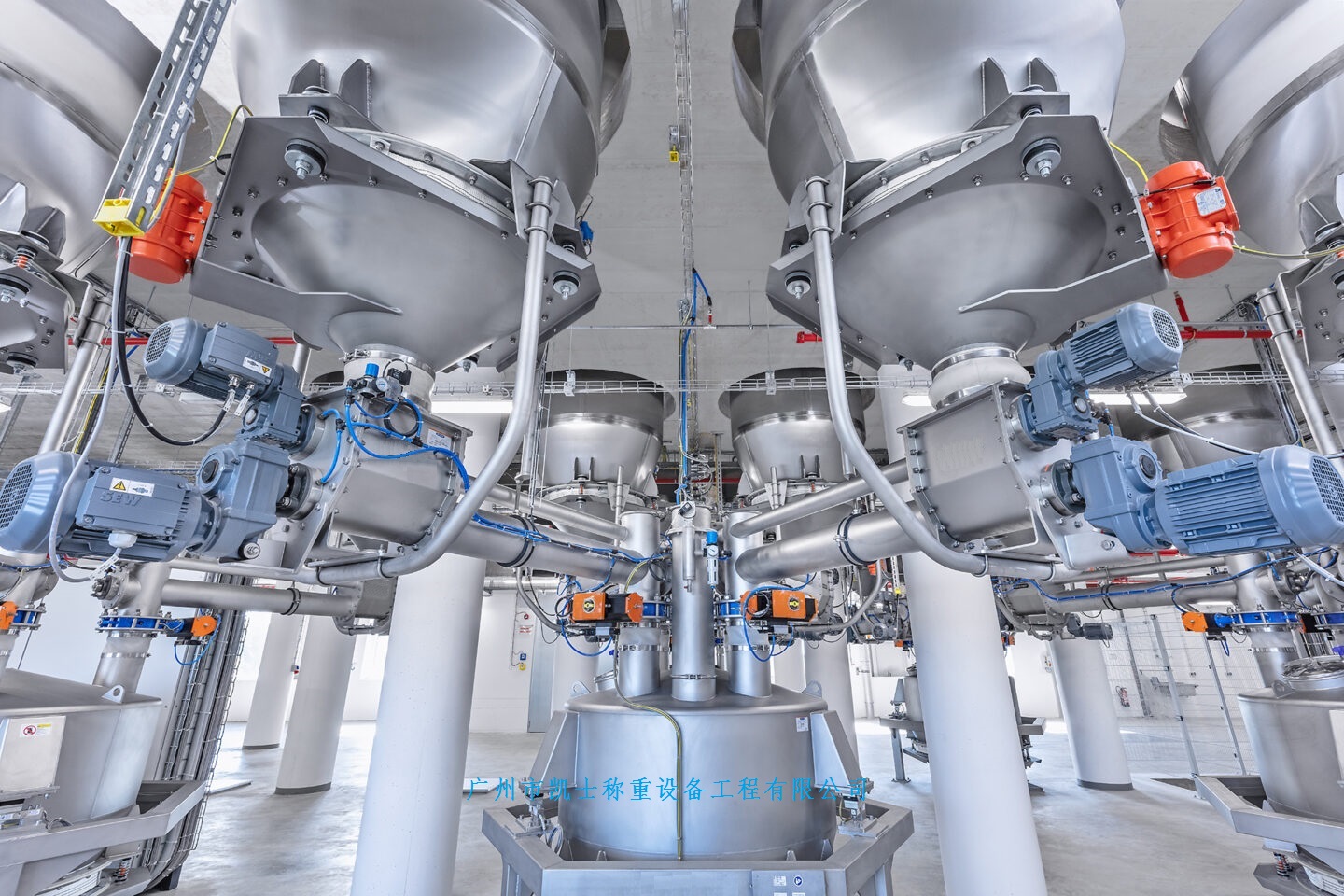





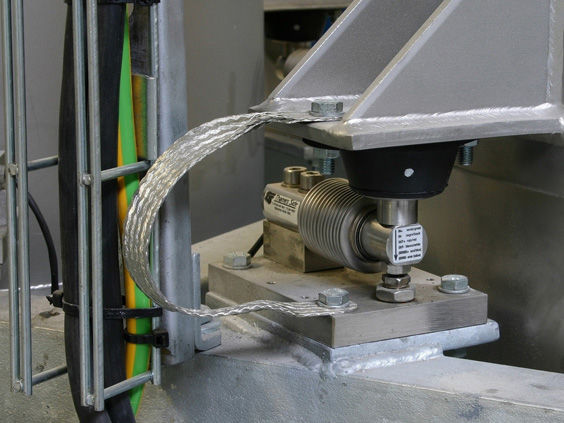
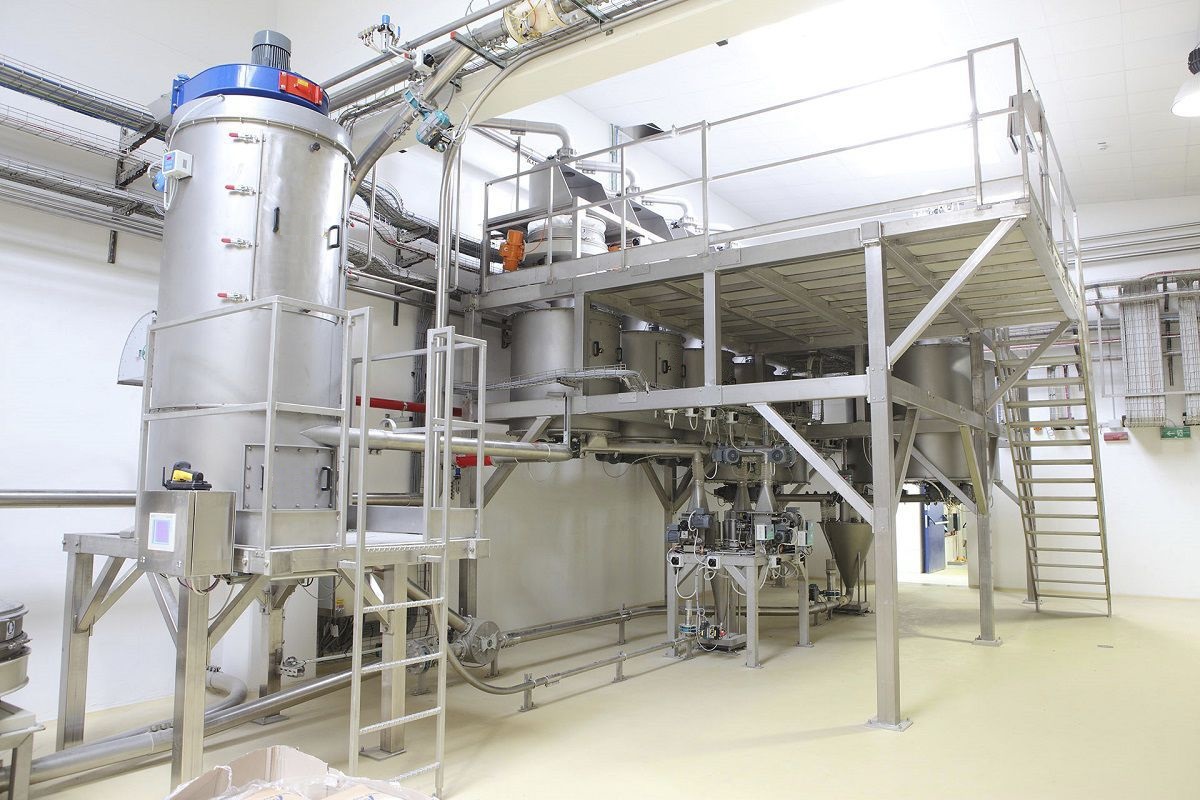
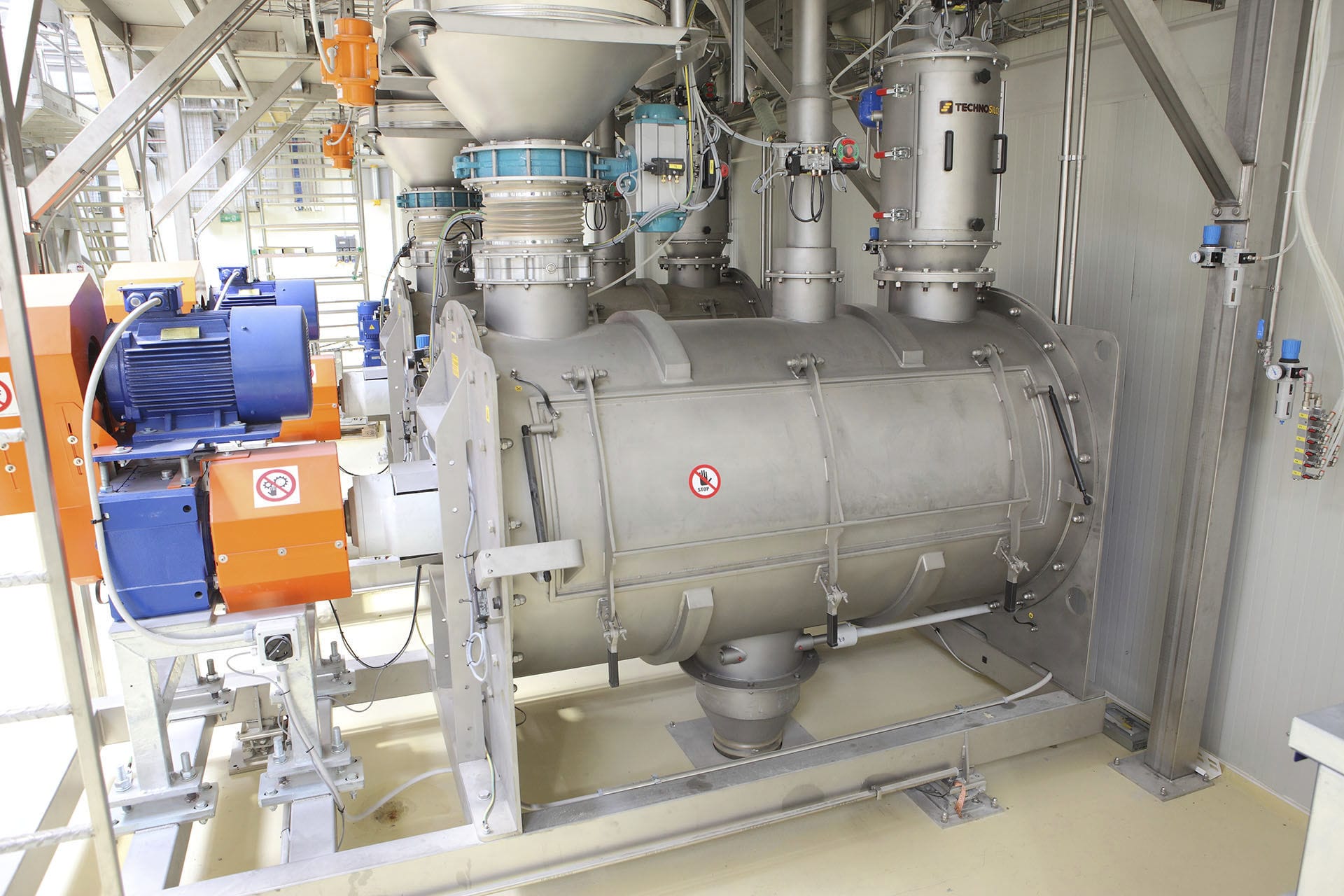
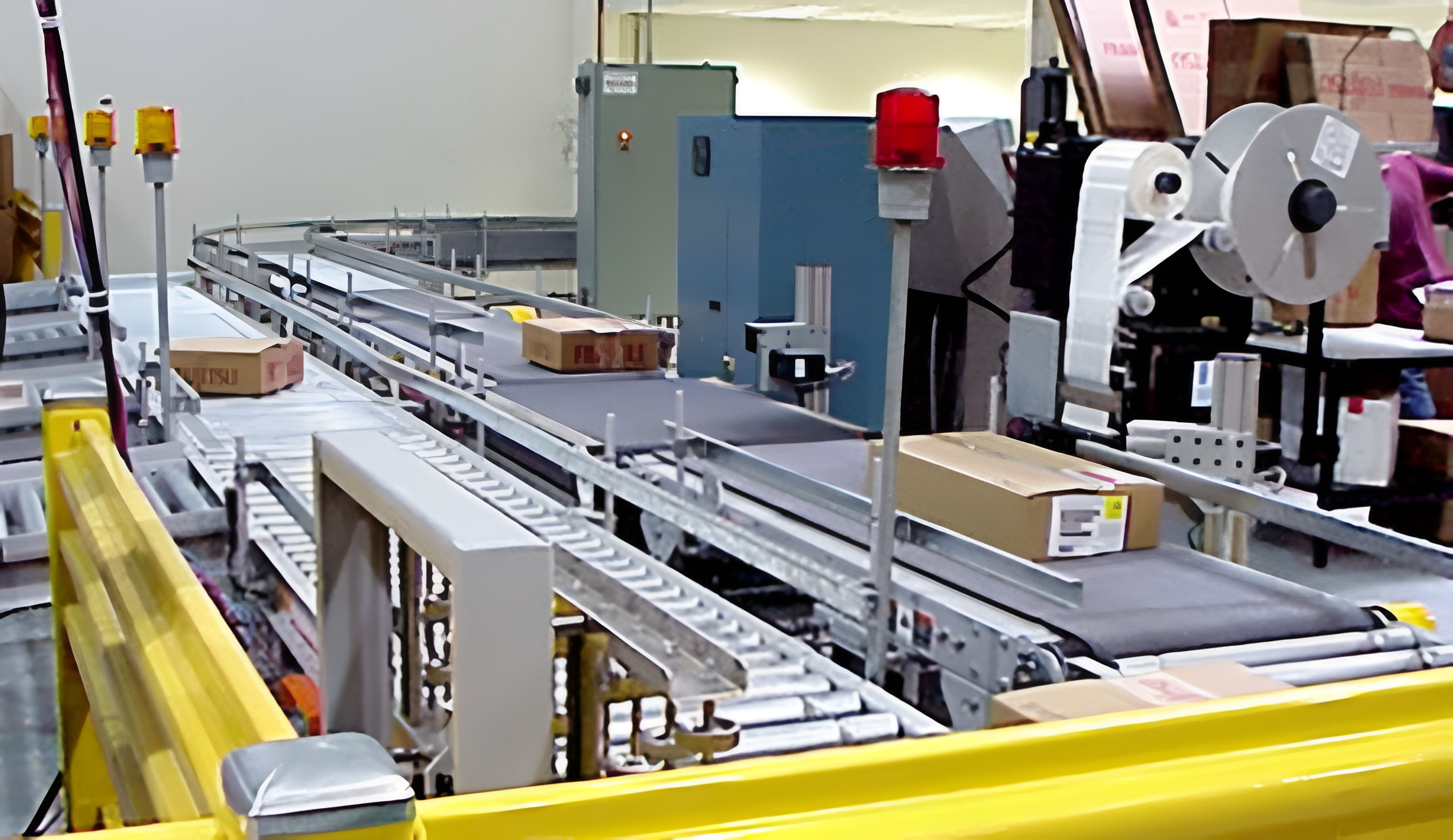
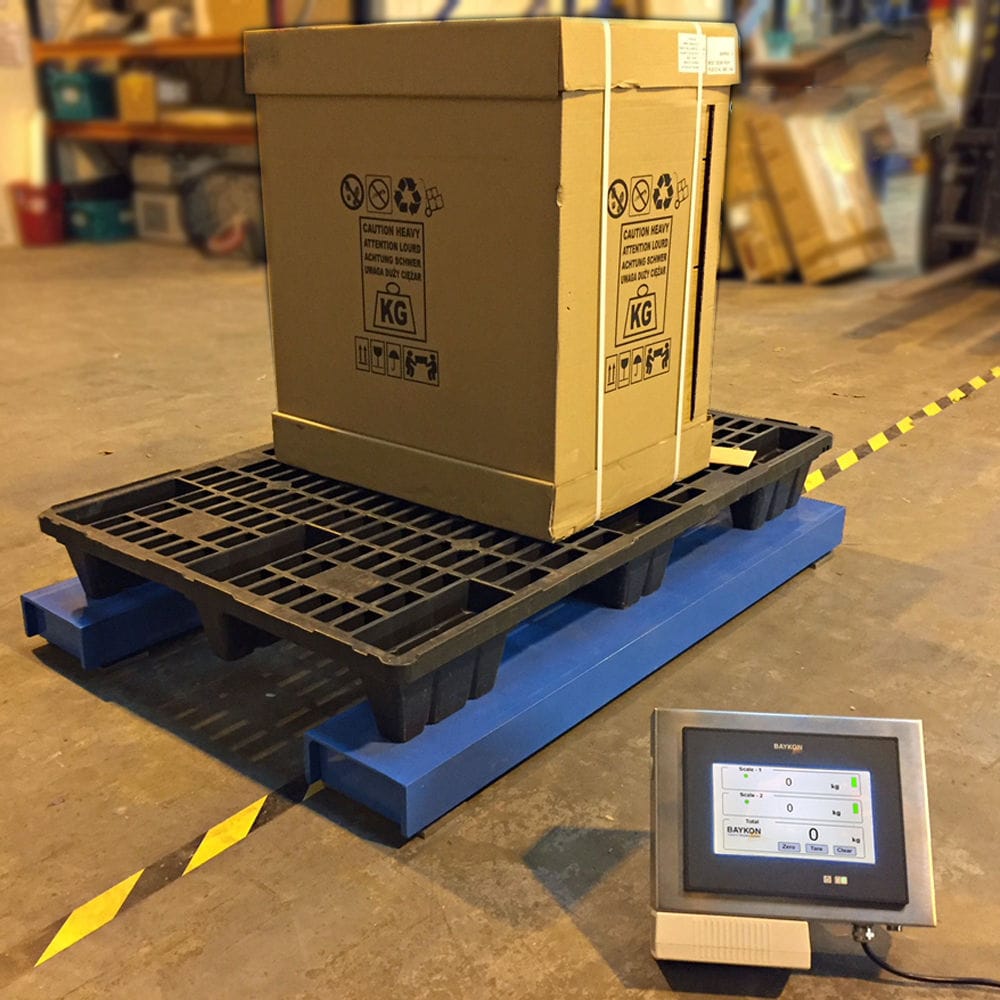


The weighing conveying and batching system is composed of a mixing bin, a storage bin, a weighing module, a level sensor, a PLC, a weighing instrument, multiple control valves and other devices. The hopper scale is supported on the weighing module and the electrical signals representing the weight generated by the sensors and transmitters are amplified by the signal amplification module and then collected by the weighing instrument. When the predetermined weight is reached, the PLC drives the motor to open the hopper scale door, allowing the materials to enter the mixer. At the same time, the mixing motor is started. After the specified time of mixing, the discharge port is opened to discharge the materials. One batching process is completed.

 020-34563445
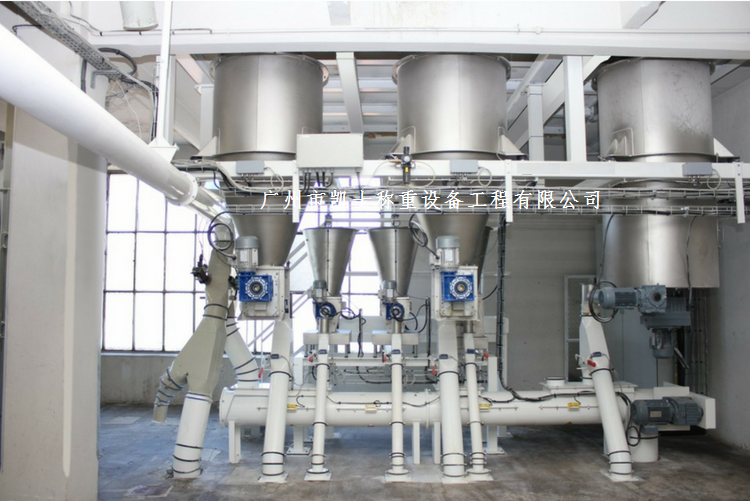
The weighing and conveying Batching system adopts the multi-material-one-scale or multi-material-dual-scale system. It consists of multiple silos, sequentially connected feeding and conveying chutes, hopper scales, mixers, buffer silos, and output chutes. The hopper scales, mixers, buffer silos, and output chutes are connected by soft connection pipes made of dust-proof fabric. The other part is the computer control system, which includes multiple sensors placed at the hopper scales, sequentially connected amplifiers, analog-to-digital converters, expansion interface boards, microcomputers, and computer control power supplies. It also connects printers and displays for the computer, input and output interface circuits for the expansion interface boards, output interface circuits connected to the controller, and the controller controls the suction motor for material intake and the switch release chute, the control door motor for the mixer door, and the central controller of the weighing control system also controls the operation of the mixer. The raw material batching process of the entire device is as follows: The raw materials are first sent into the silos by the elevator, then the computer, according to the requirements of the formula, instructs different feeding motors to act respectively. The feeding motor then inputs the raw materials from the silo through the feeding and conveying chute into the hopper scale for weighing. When the weight of each type of raw material reaches the requirements of the formula, the computer instructs the feeding motor to stop. After all the raw materials have been weighed, the computer issues an instruction, the hopper scale door opens, and the mixed raw materials in the hopper are sent into the mixer for uniform mixing. Finally, the mixed raw materials in the mixer are sent through the conveying chute into the finished product silo for packaging preparation.
The ingredient Weighing system is composed of a mixing bin, a storage bin, a weighing module, a level sensor, a PLC, a weighing instrument, and multiple control valves. It is divided into two major parts: mechanical and control. The mechanical part consists of an input bin, a hopper scale, and a mixer. The input bin delivers materials to the hopper scale under the drive of a motor. The hopper scale is supported by the weighing module and the weight signal generated by the sensor and the transmitter is amplified by the signal amplification module and then collected by the weighing instrument. When the predetermined weight is reached, the PLC drives the motor to open the hopper scale door, allowing the materials to enter the mixer. At the same time, the mixer motor is started. After a specified time of mixing, the discharge port is opened to discharge the materials. One batch of ingredient weighing process is completed. The signal of the weighing module is processed by the signal amplification module, and its weight change is a standard signal of 4-20mA. After data processing by the weighing instrument, it is transmitted to the PLC in serial communication mode. The PLC receives the data and sends it to the large screen for monitoring by the operator. On the other hand, the weighing instrument can also send the data to a micro printer for printing output. When it is necessary to perform mixed ingredient weighing, the user presses the automatic key, and the PLC starts the weighing valve. The required materials are added to the mixing bin in a certain ratio in sequence. At the same time, the PLC monitors the pulse signal sent by the level sensor to determine the position of the materials in the bin. Thus, the on-off of the weighing valve is controlled. After the weighing is completed, according to the preset mixing delay time, the PLC starts the mixer motor to ensure that the materials are fully mixed in the mixing bin, completing the mixing operation. Then, the discharge and pressing stage begins. The PLC controls the action of the discharge valve to output the materials from the mixing bin and press them into the storage bin to complete the automatic batching control process of one cycle of the automatic batching control process. Among them, the weighing is carried out by the weighing module, and the signal amplification is carried out by the signal amplification module. The large screen is an operator panel launched by the company that provides control and process monitoring through a sealed keyboard. During the control process, the large screen is mainly used to display the formula number, the batch number, and the theoretical weight of the current batch number. In the manual operation mode, the user can input or modify the formula through the operator panel, and can also control the motor's start and stop according to the displayed weight value and the formula requirements.
The batching system is mainly determined by sensors and signal amplification modules. Since the working process of the system is a dynamic process, at the beginning of each batching cycle, the difference between the previously set batching quantity and the actual batching quantity is calculated as the compensation value for the batching quantity set for this cycle, in order to eliminate the cumulative error of the batching quantity of each scale; the automatic zeroing at startup is not adopted, the purpose is to facilitate the observation of the working condition of the weighing module. After starting the weighing tank without additional weight, if the displayed weight value exceeds the standard weight by 30%, it should be considered that the sensor may have failed and needs to be replaced; during the actual operation of the system, due to mechanical vibration, equipment wear, and dust in the scale volume, the pre-added pressure changes and the zero point voltage changes. To ensure the accuracy of the measurement values, the system software automatically measures the zero point voltage at regular intervals and then deducts the zero point value in the calculation. When the timing interruption period of the weighing instrument reaches, the weighing instrument system outputs a reset signal to the PLC, which then turns off the motor, stops batching, and then allows the control system to run for a certain period of time to empty the material and measure it. The measured zero point voltage value is then stored in the temporary storage area; during the batching process, when the difference between the material usage amount and the actual batching quantity is less than the batching advance amount, the batching valve is closed, and batching is stopped. The material quantity is replenished by inertia and the material flow after the valve is closed. If the advance amount is too large, the point motion method is adopted (that is, the feeding motor is driven by pulse drive, and only a small amount of material is sent each time it is started), to ensure the accuracy of the weighing.
Main function
(1) It has an automatic power-off protection function. If there is a power outage during the ingredient mixing process, the site should be protected. Once the power is restored, a prompt screen will be displayed and a button will be waited for. If it is the stop button, the power-off protection status will be cleared and the initial working state will be returned; if it is the pause button, the working state at the time of the power outage will be restored and the operation will continue.
(2) Two working modes, "automatic" and "manual", are set. In "manual" mode, a specific control step can be completed independently, such as "ingredient preparation", "mixing" and "discharge". It allows for pausing using the "pause/continue" button and allows parameter modification during the pause. In "automatic" mode, a complete cycle of control is completed, including ingredient preparation, mixing, and discharge, etc. During "automatic" operation, only the "pause/continue" button is effective, while all "manual" buttons are invalid and parameter modification is not allowed.
(3) Instant stop function: When the "Stop" button is activated, any control process will be halted and return to the weight display state.
(4) It has a zeroing function. When in weighing mode and pressing the "Zero" button, the displayed value will return to zero. If the zeroing range is exceeded, it will not be able to be zeroed and an error message will be displayed.
(5) It has a peeling function. When in weighing mode, pressing the "Peel" button will subtract the displayed weight as the peel weight, and pressing the "Peel" button again will restore the original displayed weight.