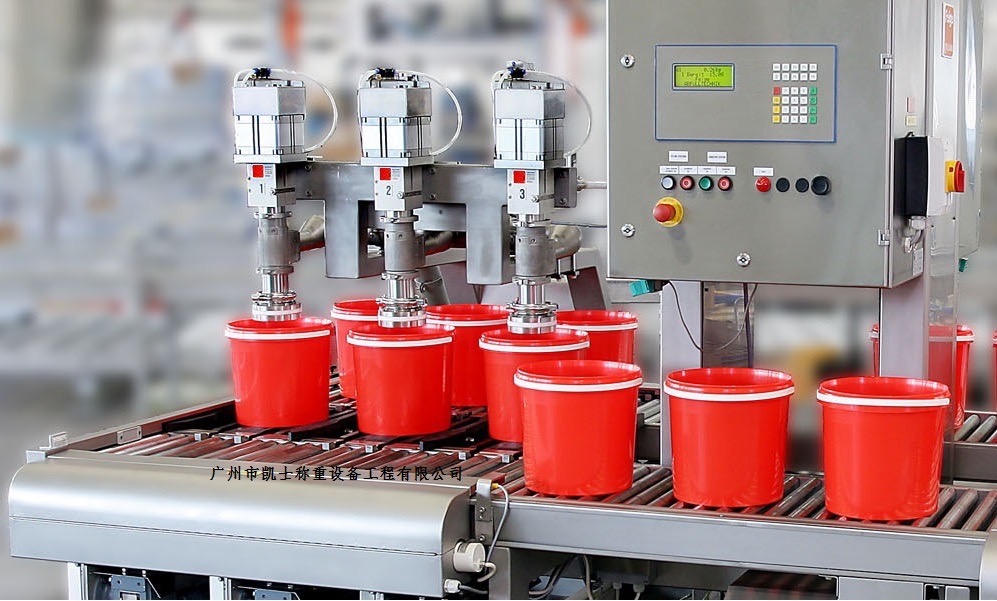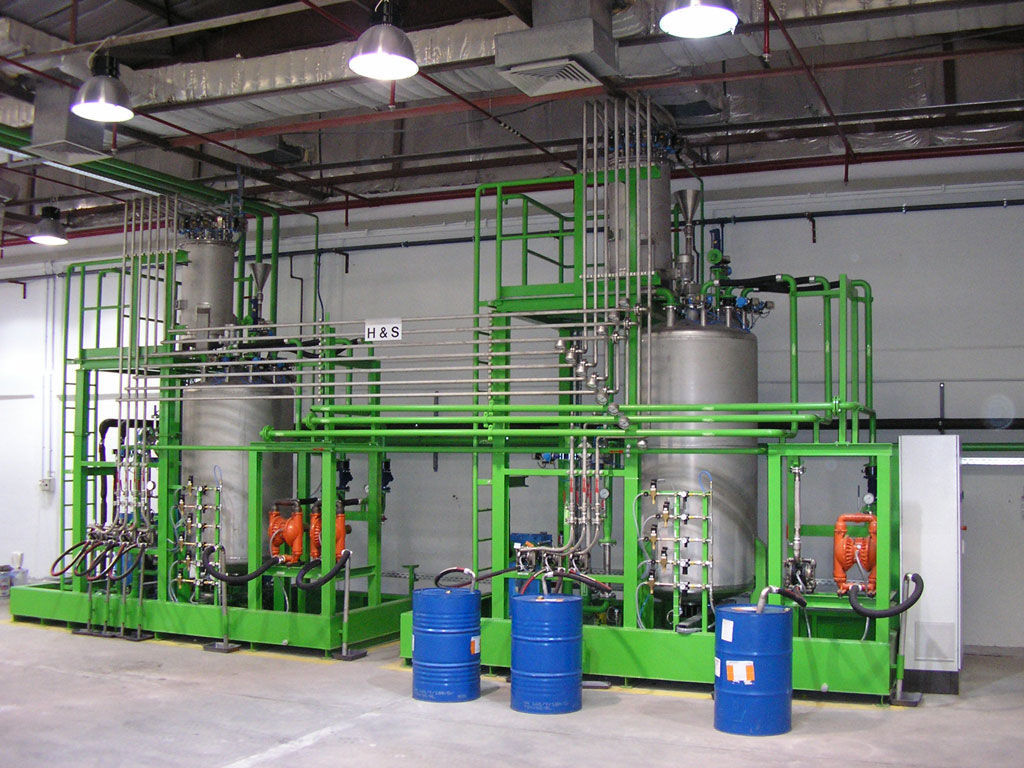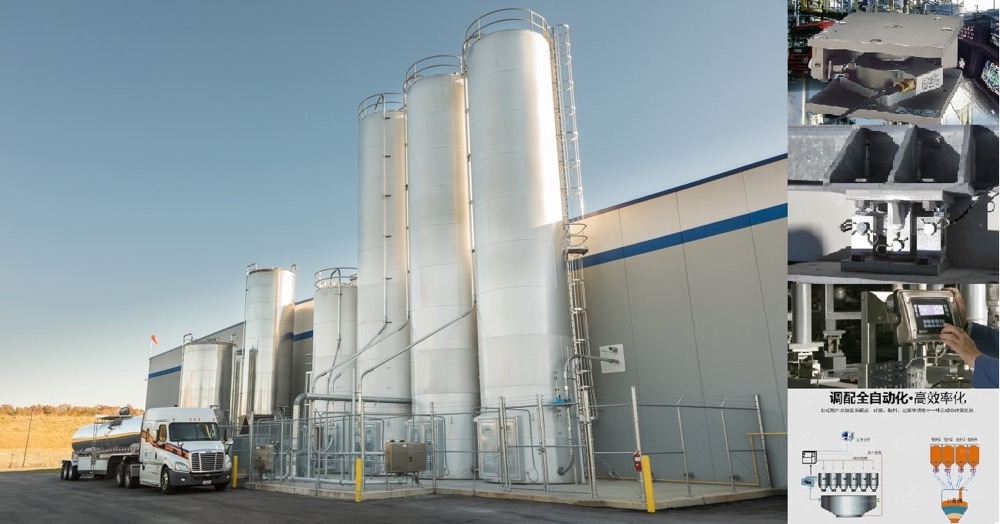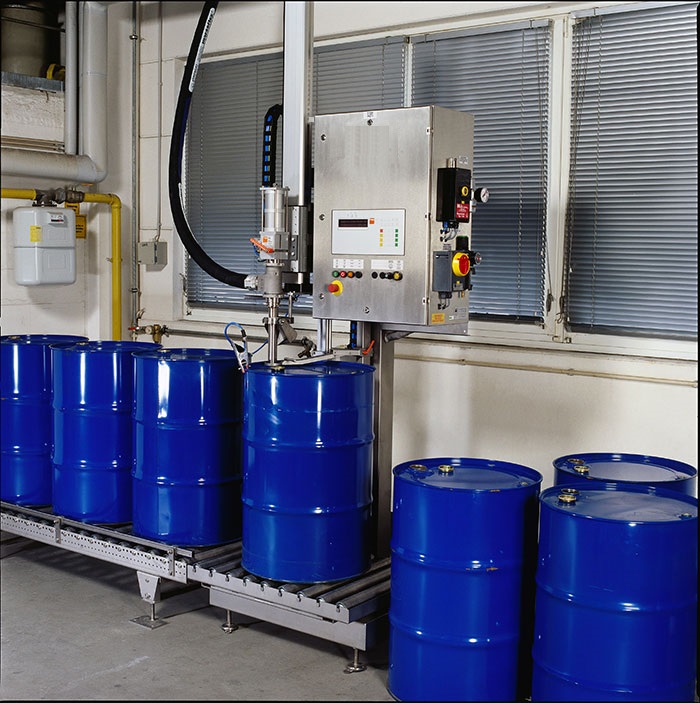


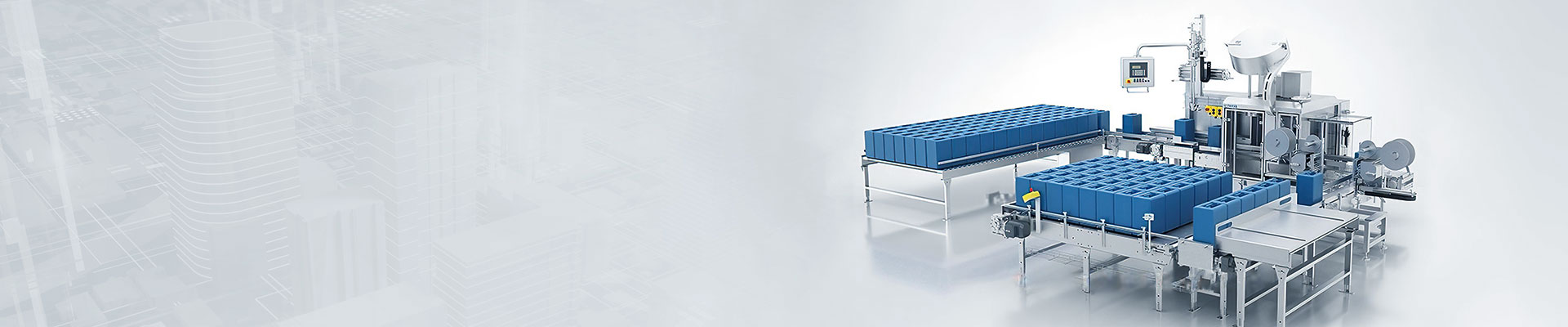


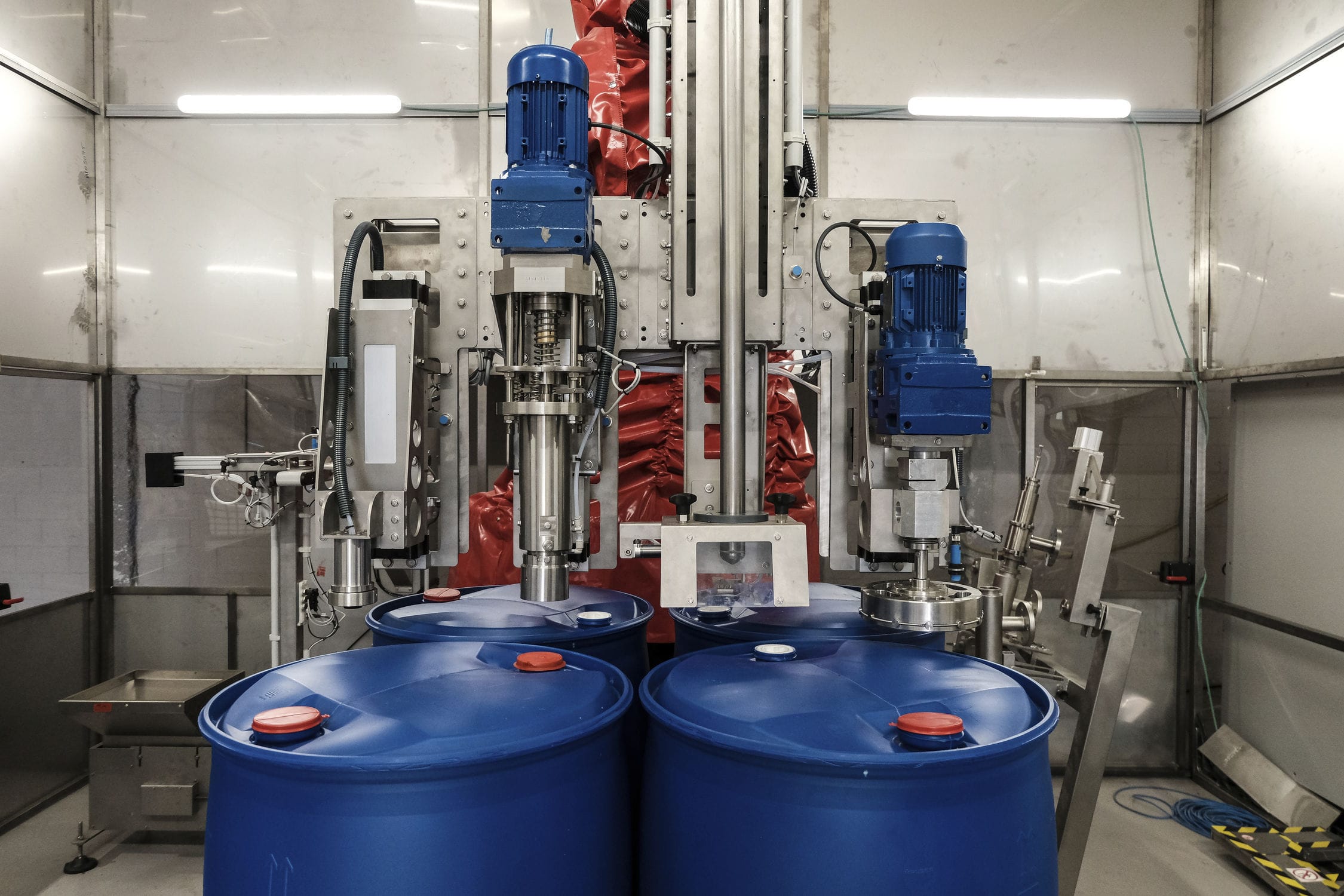
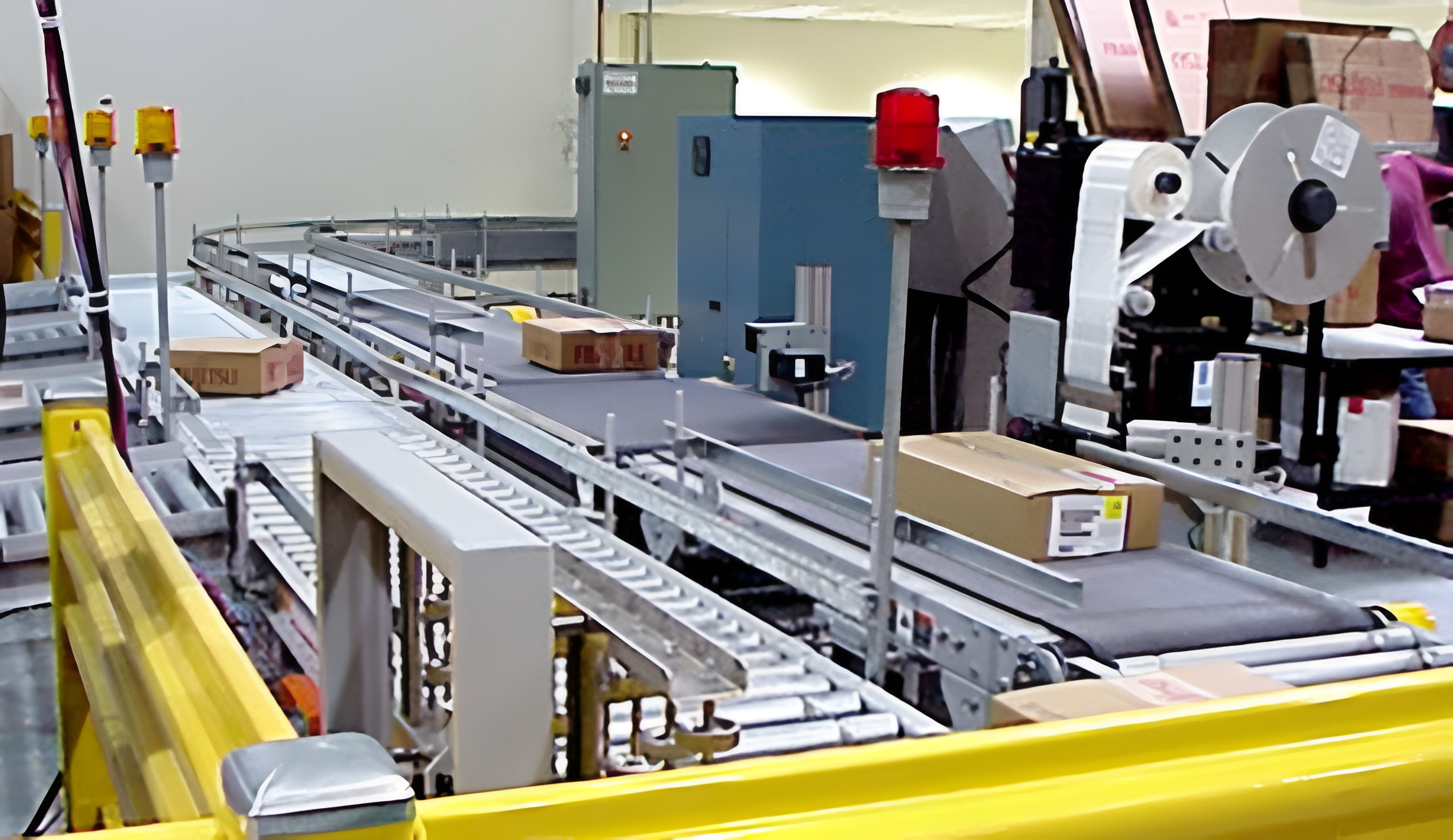


The lubricant filling machine is controlled by an independent servo drive, which is fed into the metering station by the automatic transmission system. After the automatic addressing of the barrel mouth is completed here, the filling system is driven by xy two-axis stepping motors to the mouth of the barrel, and then the lowering of the filling head action is completed by the pneumatic actuating system. The design applies mixed media transfer technology as well as token and master-slave logic topologies, allowing simultaneous controlled filling in the same pipeline.

 020-34563445
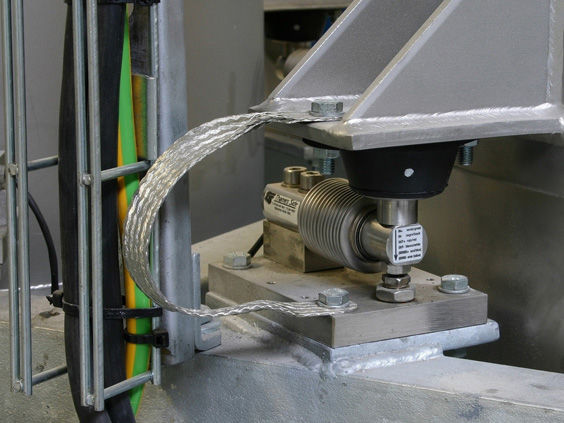
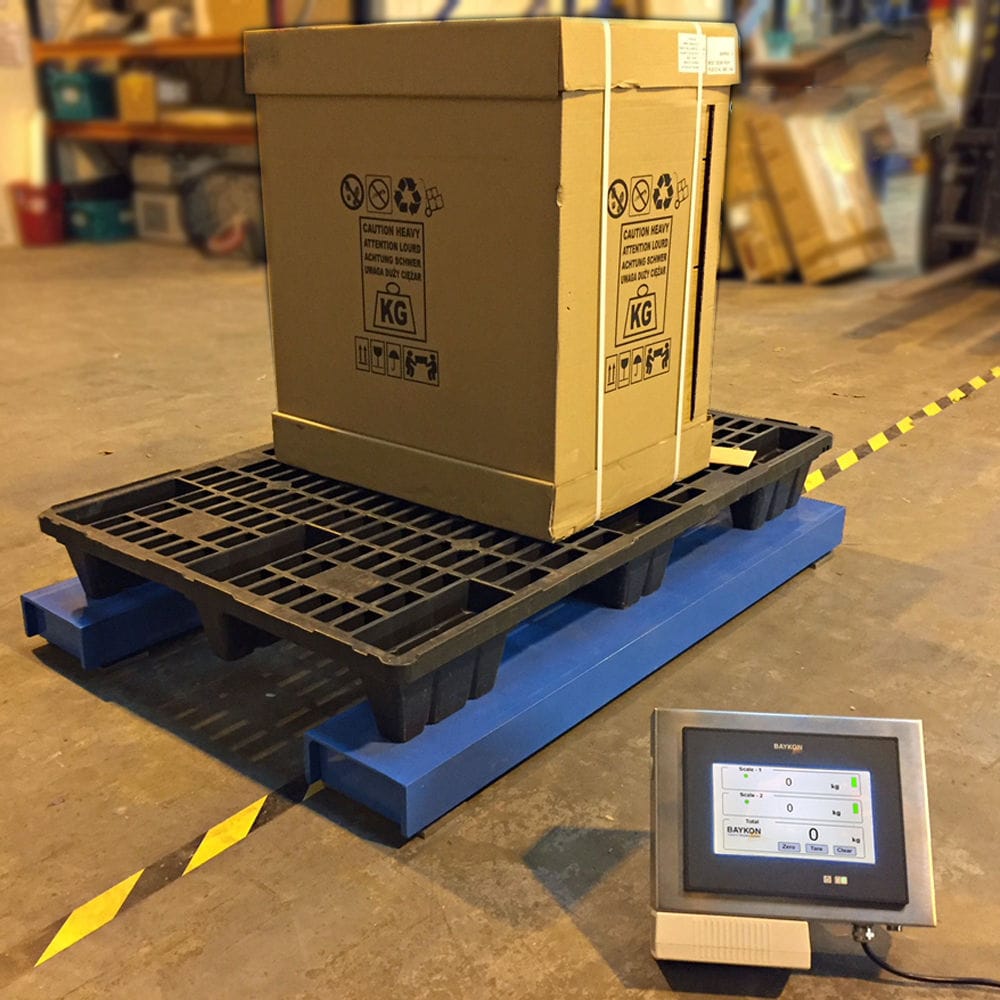
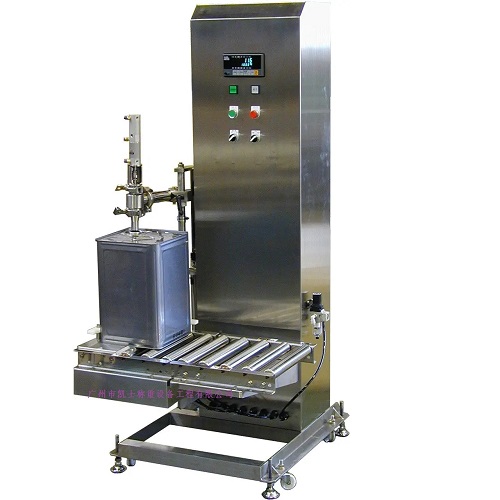
The metering Filling machine forms a networked monitoring system for filling through communication, thus forming a distributed automatic filling equipment that integrates management and control. All filling production lines strictly coordinate production and monitor material levels and weights in a timely and accurate manner. The Weighing system consists of Weighing modules, weighing instruments, filling valves, and rollers, forming a computer control network. It is connected to on-site weighing instruments, frequency converters, etc. Realize real-time control of the matching and weighing process of main and auxiliary materials in a certain proportion during the production process, complete the fault detection, display, and alarm of the Filling system, and output signals to the frequency converter to adjust the speed of the weighing quantity, providing data for the central access of the upper computer system. Liquid filling machine is a specialized equipment for automatic metering and filling of liquid products, used for measuring and filling all types of liquids (fluid, viscous and paste), and can choose to have a spinning system. During the operation, only the container needs to be placed at the input end of the transmission system, and the rest of the operation procedures (except for opening and closing the lid) are automatically completed. It can accurately complete automatic filling and metering of various liquid media.
The liquid filling machine uses a filling piston valve at the discharge port of the storage hopper after the material enters the storage hopper through a pipeline. A feeding filling gun is installed above the stainless steel weighing scale, and the material is discharged into the container by controlling the opening and closing of the feeding filling gun. The feeding door is designed as a two-stage structure, driven by a servo motor. The two-stage is fully open for coarse feeding, and after a certain weight, the two-stage is opened in place. The servo motor performs coarse feeding. When the coarse feeding weight reaches a certain position, the opening of the filling valve is reduced. When the feeding door is closed to a certain position, feeding begins. After a certain weight, feeding ends, and the operation continues to reduce the opening. After a certain weight, fine feeding is carried out. When the set weight in the calculated pipeline is reached, the two-stage piston valve is closed, and the measurement and weighing are completed. The weighing instrument provides an input signal to the PLC, which outputs a signal to the filling gun cylinder solenoid valve. The solenoid valve drives the filling gun cylinder to open the filling gun and discharge the material into the container. When the discharge weight reaches, the solenoid valve resets, drives the discharge cylinder to reset, and closes the filling gun. In this way, the electronic weighing scale completes a weighing cycle.
The quantitative filling machine is fixedly installed on the machine through a machine bracket, with the moving frame sliding up and down on the bracket, the handwheel grip and rod, and the grip rotating on the bracket. The rod passes through the moving frame and is connected to its thread, and the grip is connected to the rod as a whole. The cylinder is fixedly installed on the moving frame, and the filling head is connected to the moving part of the cylinder. The valve is fixedly installed on the bracket, with one end of the connecting pipe connected to the valve and the other end connected to the filling head. The weighing mechanism is used to weigh the filling quality. The frame support net is fixedly installed on the upper end of the frame, and the transparent container is placed on the support net, with a rubber pad adhered to it to increase the friction between the support net and the container. The aggregate frame is fixedly connected to the machine. There is a cavity inside for storing liquids, At its bottom, there is an exhaust pipe for emptying the liquid in its cavity. The weighing instrument is connected to the gap between its upper end and the frame, and to the gap between its lower end and the aggregate frame. The pipeline is connected to the interior of the frame and the aggregate frame, and the guide block is fixedly connected to the inner surface of the frame. The lower end of the pipeline is located at the lower end of the guide block. The stabilizing mechanism enables the frame to move up and down steadily, and the liquid level sensor is located on both sides of the transparent container, fixedly connected to the machine, to detect the liquid level inside the container.
Basic Parameters:
Maximum weighing capacity: 30kg
Minimum sensitivity: 0.01kg
Filling error: ± 0.01-0.02kg
Filling speed: 20L, approximately 150-180 barrels per hour
Control mode: 2nd gear control
Filling method: Insertion type, above liquid level
Gun head pipeline: PTFE gun head, valve+PTFE hose
Structural material: SUS304 stainless steel for the host, carbon steel for conveying and stacking with anti-corrosion paint.
Scale platform size: 400 × 800mm (304 stainless steel power raceway)
Empty bucket raceway: 400mm × 2500mm (304 stainless steel power raceway) with an additional 1200mm sloping unpowered drum
Heavy bucket raceway: 400mm × 2500mm (304 stainless steel power raceway, 2 sets)
Bucket sorting device: suitable for 20L buckets, carbon steel anti-corrosion paint structure, 304 stainless steel raceway.
Stacking equipment: translation type, suitable for pallets of 1200 × 1200 × 140mm, including pallet supply, palletizing, and lower pallet conveying.
Pipeline pressure: 0.2-0.6MPa (depending on material properties).
Material interface: 4 DN40 flange joints, available according to user provided interface standards
Air source interface: The user provides a 12mm air hose connector for quick connector connection
Power supply: AC220/50Hz (provided by the user to the machine side)
Gas source used: 0.4-0.8Mpa (provided by the user to one side of the machine)
Operating temperature: -10 ℃ -50 ℃
Basic conditions: A sturdy concrete floor with a suspended agent, and the concrete thickness should be greater than 10cm.
Optional models: Standard, Explosion proof Filling