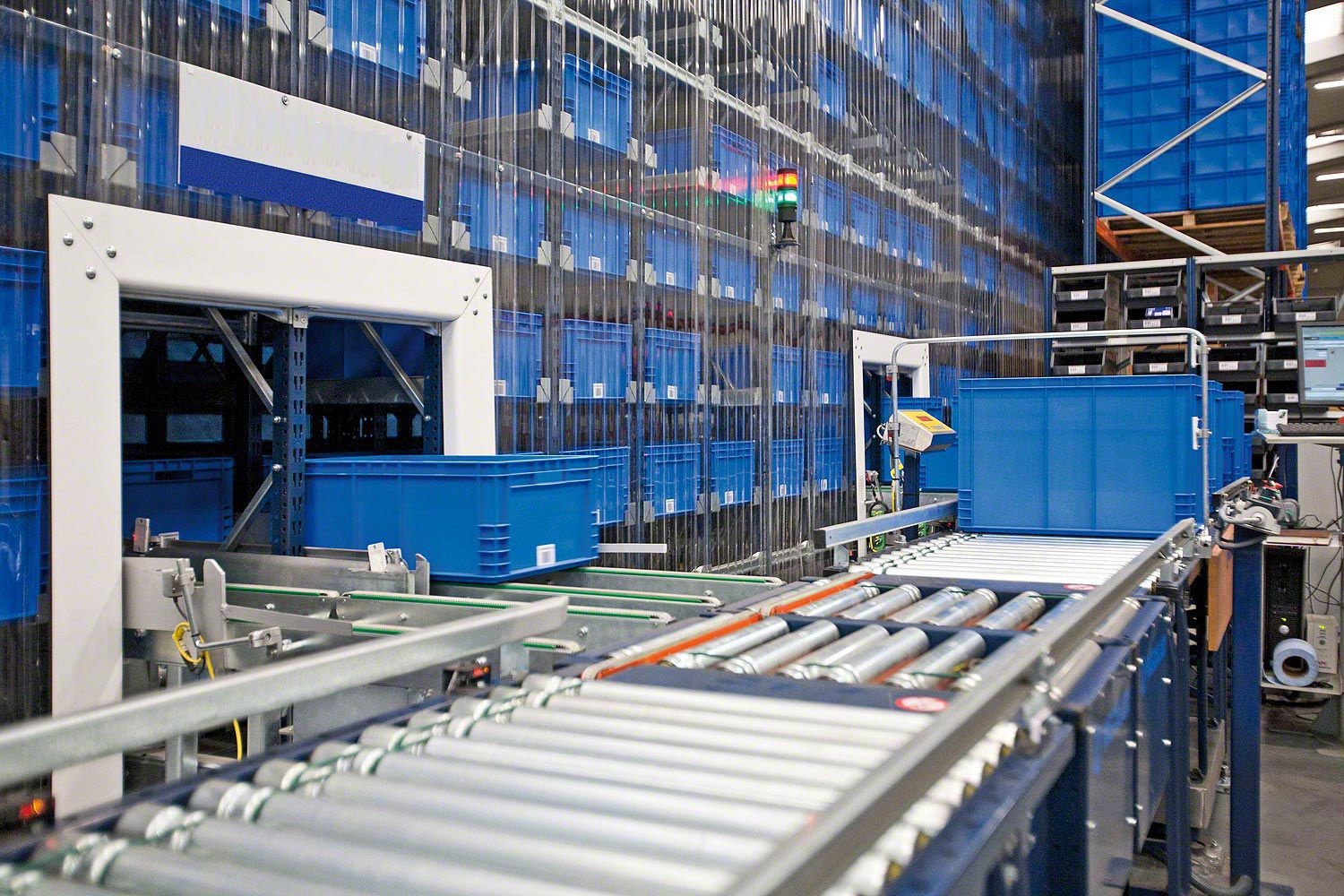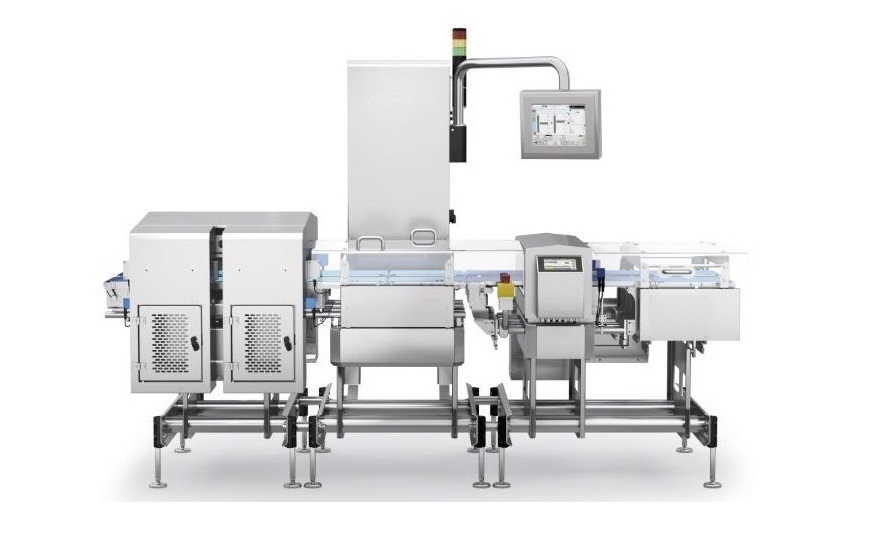






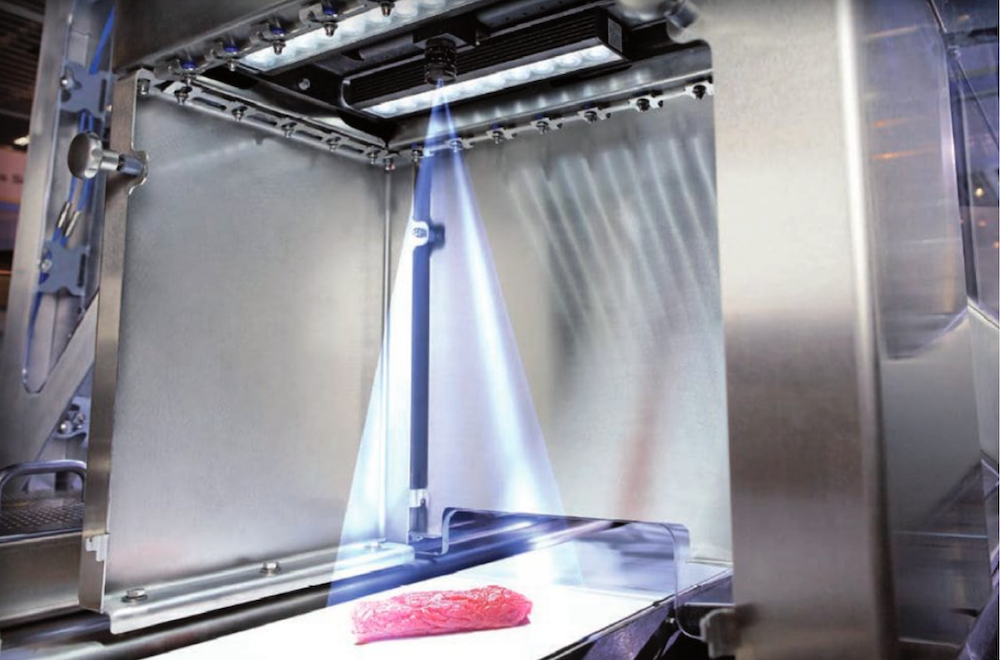
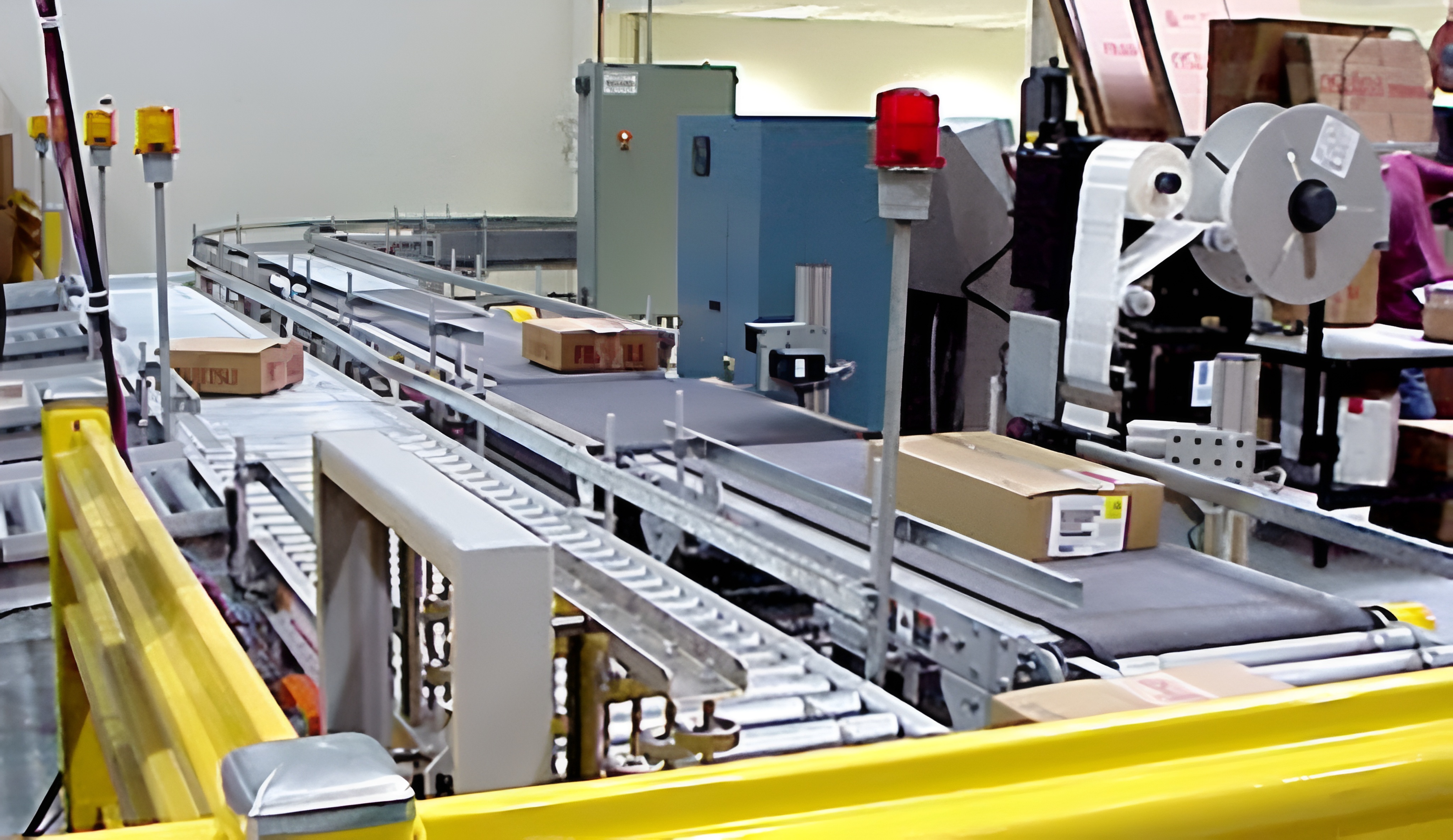


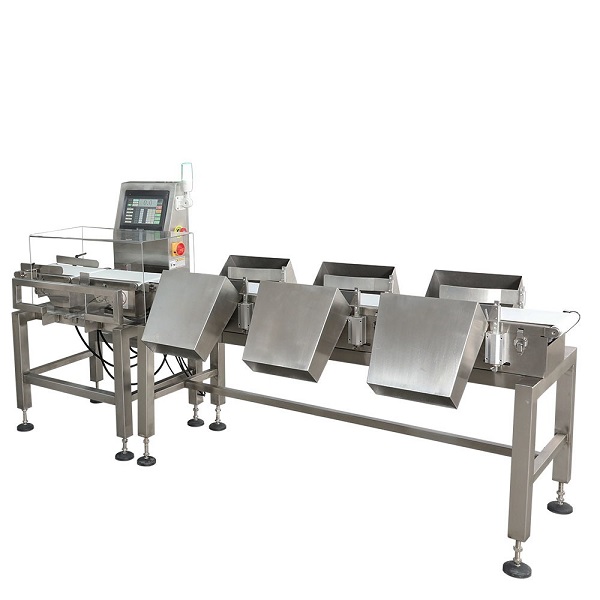
The automatic checkweigher is mainly completed by three parts: buffer part, dynamic weighing part and weight sorting part. Buffer section: mainly used for placing products, the speed is a little slower than the last two sections, mainly used as a buffer, so that the products enter the dynamic weighing section at a constant speed. Dynamic weighing: the products are dynamically weighed during the movement of the belt, and the weighing data is fed back to the control system. Weight Sorting Section: According to the weight data fed back from the dynamic weighing section, it determines the sorting action at which level of exit, and executes the rejecting action after the products run to the corresponding rejecting port.

 020-34563445
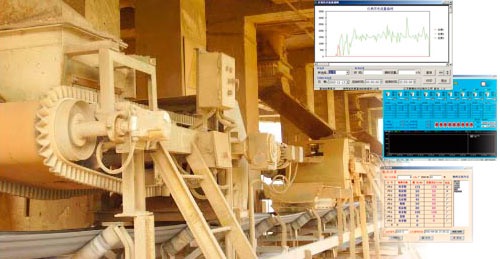
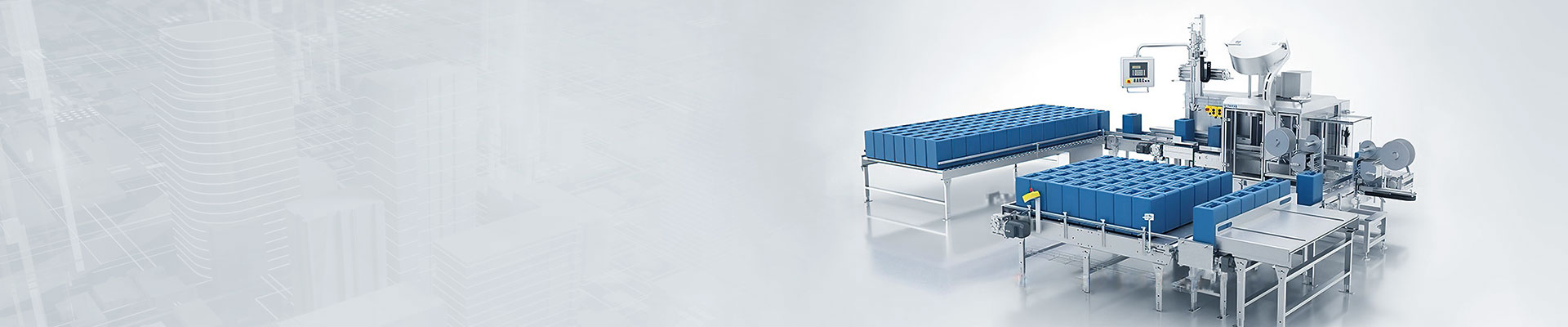
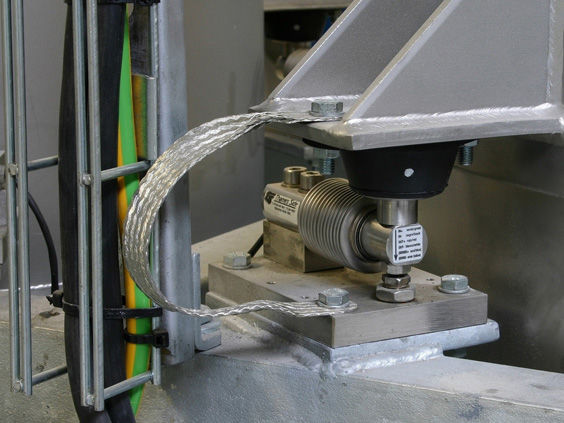
The automatic weighing machine is mainly composed of three parts: buffering, dynamic weighing, and weight sorting. Buffer section: mainly used for placing products, with a slightly slower speed than the last two sections, mainly used for buffering to ensure that the products enter the dynamic weighing section at a constant speed. Dynamic weighing: The product is dynamically weighed during the belt movement and the weighing data is fed back to the control system. Weight sorting section: Based on the weight data feedback from the dynamic weighing section, the sorting action is determined at which level of exit. After the product reaches the corresponding rejection port, the rejection action is executed. The weighing conveyor will pass through the material on the belt, and the weight will be detected by the weighing sensor under the weighing scale frame. The feeding controller compares the flow rate with the set flow rate, and the controller outputs a signal to control the frequency converter speed regulation, achieving the requirement of quantitative feeding. It refers to an automatic weighing device that continuously weighs bulk materials on a conveyor belt without the need for mass subdivision or interrupting the movement of the conveyor belt. The Sorting machine adopts a support rod with fixed connection on both sides with telescopic legs. The top of the telescopic legs is connected to the support platform. The front and rear sides of the top of the support platform are symmetrically installed with support baffles. The front surface of the support baffle is fixedly installed with a motor. The motor is fixedly connected to a tray through a transmission shaft, and the end of the tray away from the motor is flexibly connected to another support baffle. The top surface of the tray is equipped with a weighing module, and the top of the weighing module is equipped with a tray. The two sides of the support platform are connected with telescopic sliding plates through hinges. The front surface of the support platform is embedded with a display screen and weighing instrument from left to right, and the weighing module, display screen, weighing instrument, and motor are connected.
On the basis of the existing weighing and sorting machine, the Weighing system has been redesigned, which is controlled by weighing instruments. On the premise of maintaining the original measurement and control functions, the operation is more flexible and convenient, reducing equipment costs. The weighing system of this weighing instrument is based on a PLC system, equipped with several parts such as weighing sensors, input keyboards, and output displays. During operation, the motor drives the sprocket to transport the finished products into the conveyor belt. The weight of the finished products is detected by a weighing sensor installed under the conveyor belt, and the weight signal of the finished products is converted into an analog voltage signal. The analog voltage signal is first amplified and filtered by a signal conditioning circuit, and then analog-to-digital converted by an A/D converter before being sent to the host circuit with a PLC system as the core for data processing. When the host collects a digital signal representing the weight of the finished product, the system software calculates and judges the signal to determine whether the finished product is qualified, and sends a switch signal to the corresponding sorting switch. Here, the switch signal must be delayed by the software to ensure that the electromagnetic valve opens the sorting switch when the finished product reaches the sorting port, so that the unqualified products can accurately fall into the corresponding sorting container and be removed. Ultimately achieving dynamic weighing and real-time sorting control of finished products. Being able to pre-set sorting levels and achieve sorting of multiple products, it has good universality and flexibility.
Technical parameters
Testing weight: 5-500g
Detection accuracy: 2/1000
Detection speed: ≥ 40 packs/minute (single line)
Exclude institutions: Flip format
Operating pressure: 4~6 bar
Power supply: 220V 50Hz