logxlogx

EN
nan2
画板 1
PRODUCTS
filling machine

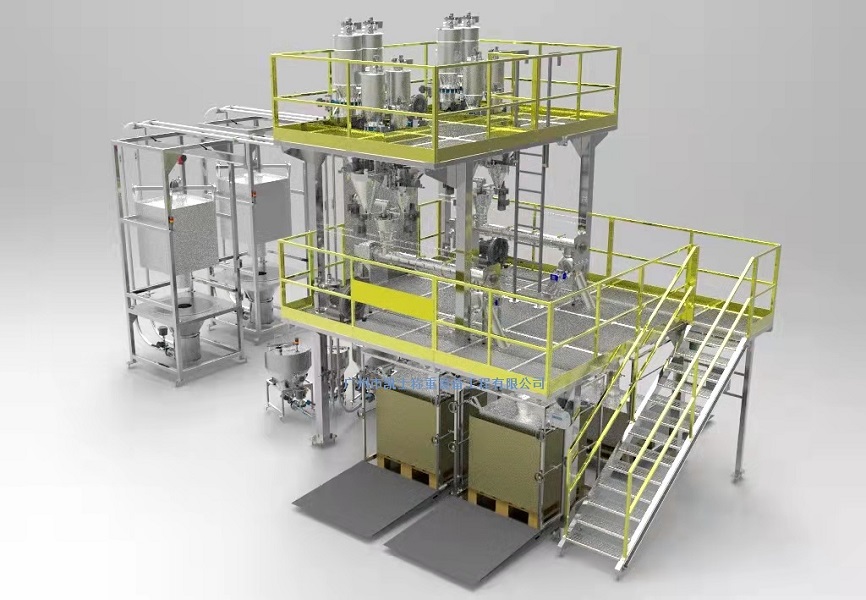
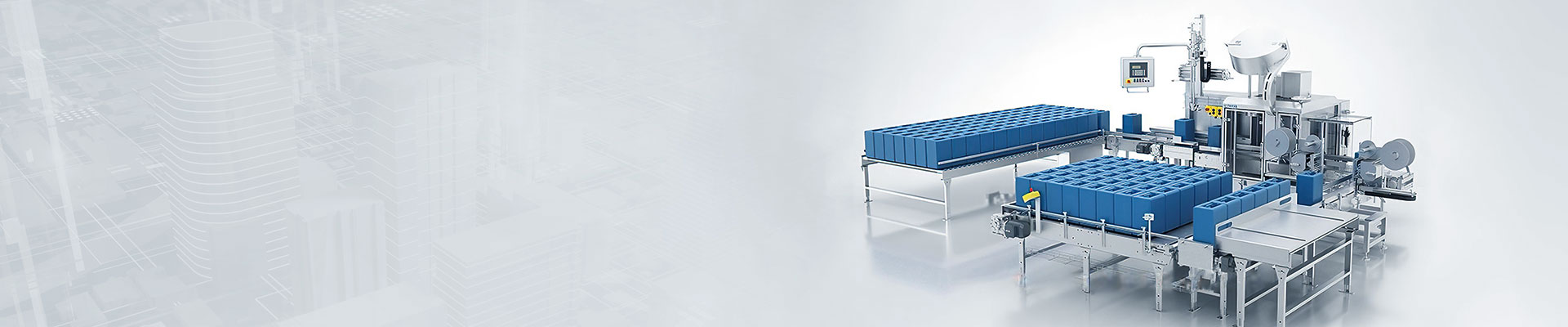
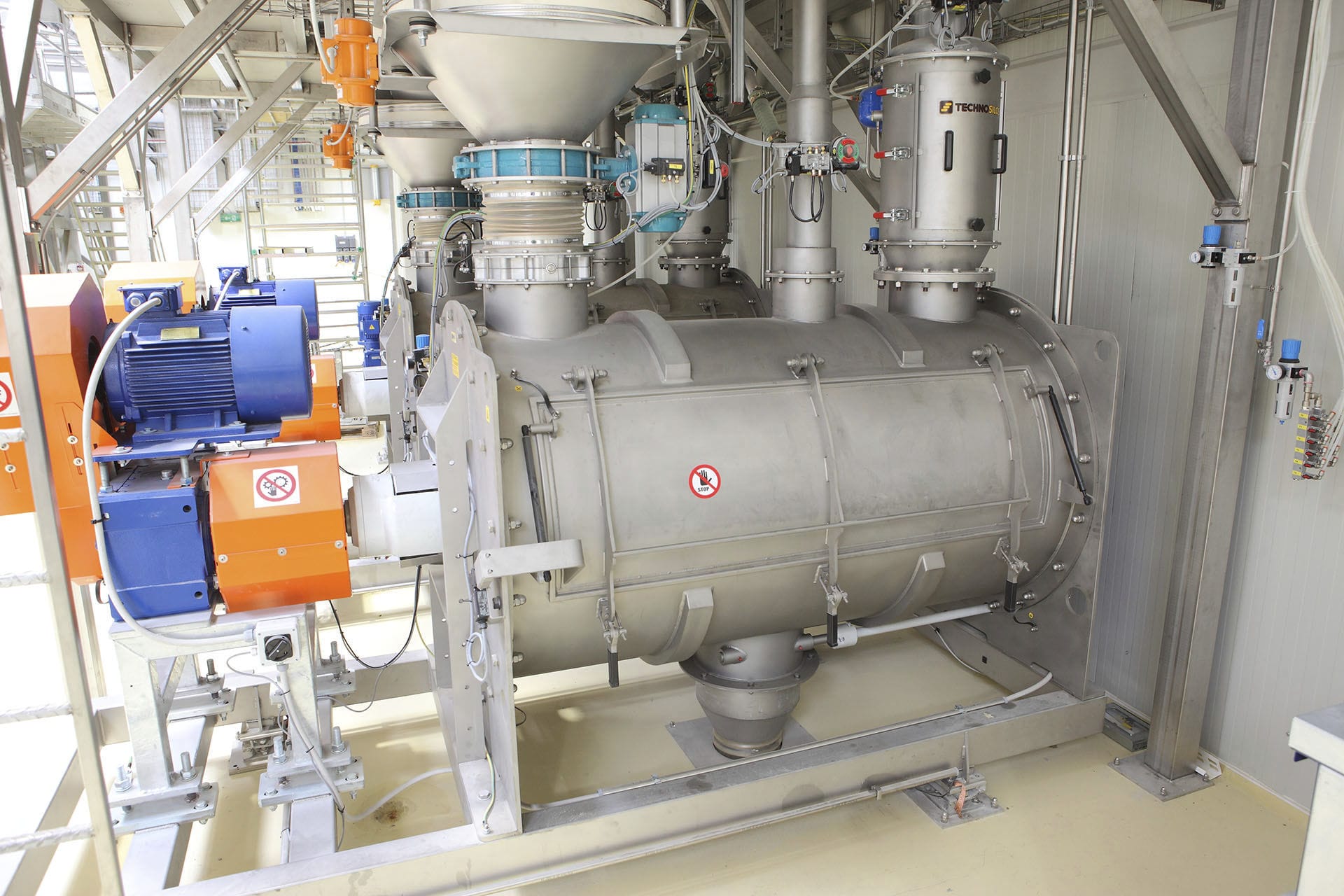
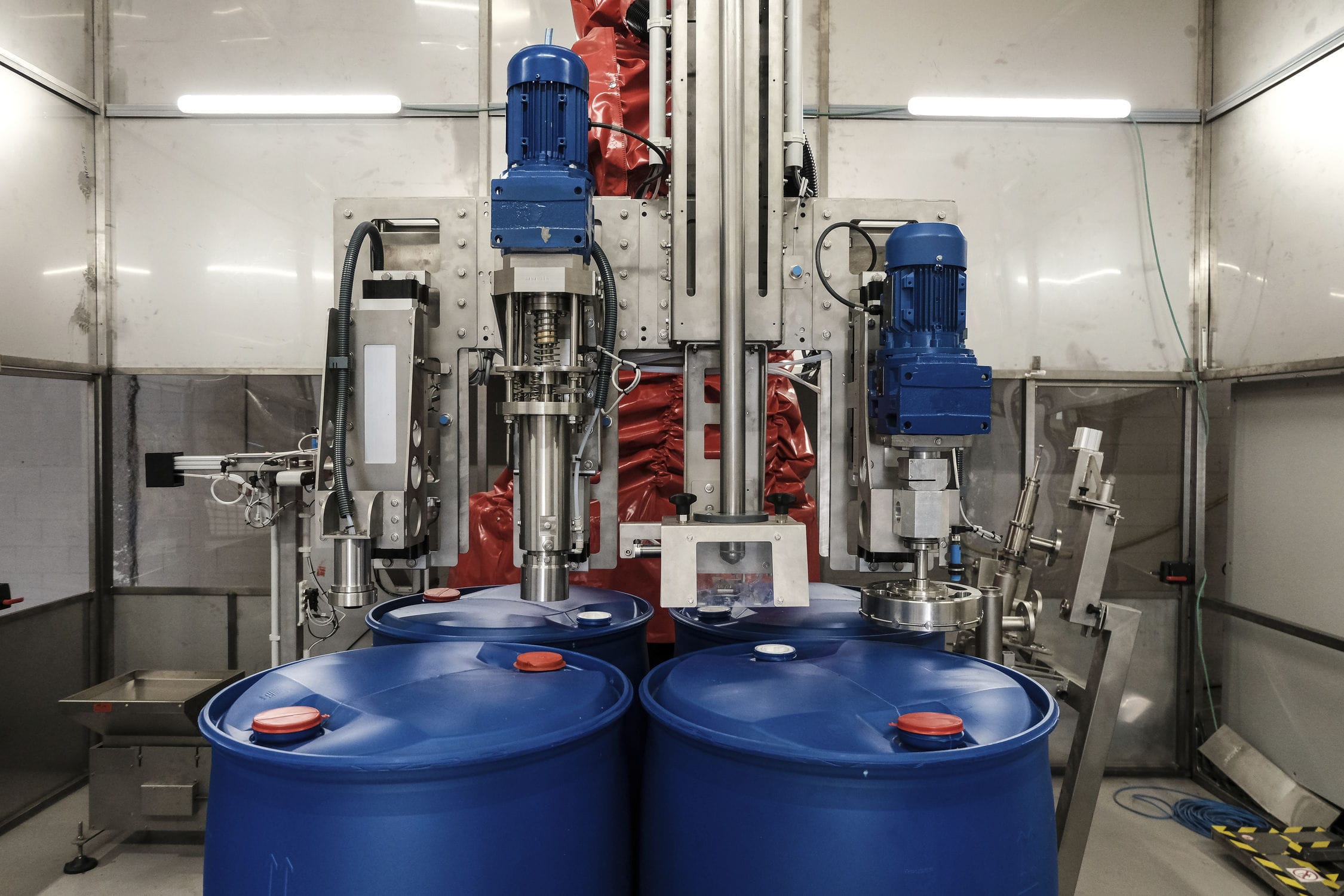
The filling machine is equipped with different actuating mechanisms such as barrel feeding, liquid injection, stopper pressing and barrel discharging. To ensure the accuracy of filling, synchronous servo motors are used to directly drive the filling screw, and AC motors are selected to drive the barrel inlet and outlet conveying devices, filling turntables and stopper capping mechanisms. The entire filling system is composed of four units: on-site equipment components, signal acquisition components, command control components and condition monitoring components.

Product details
020-34563445

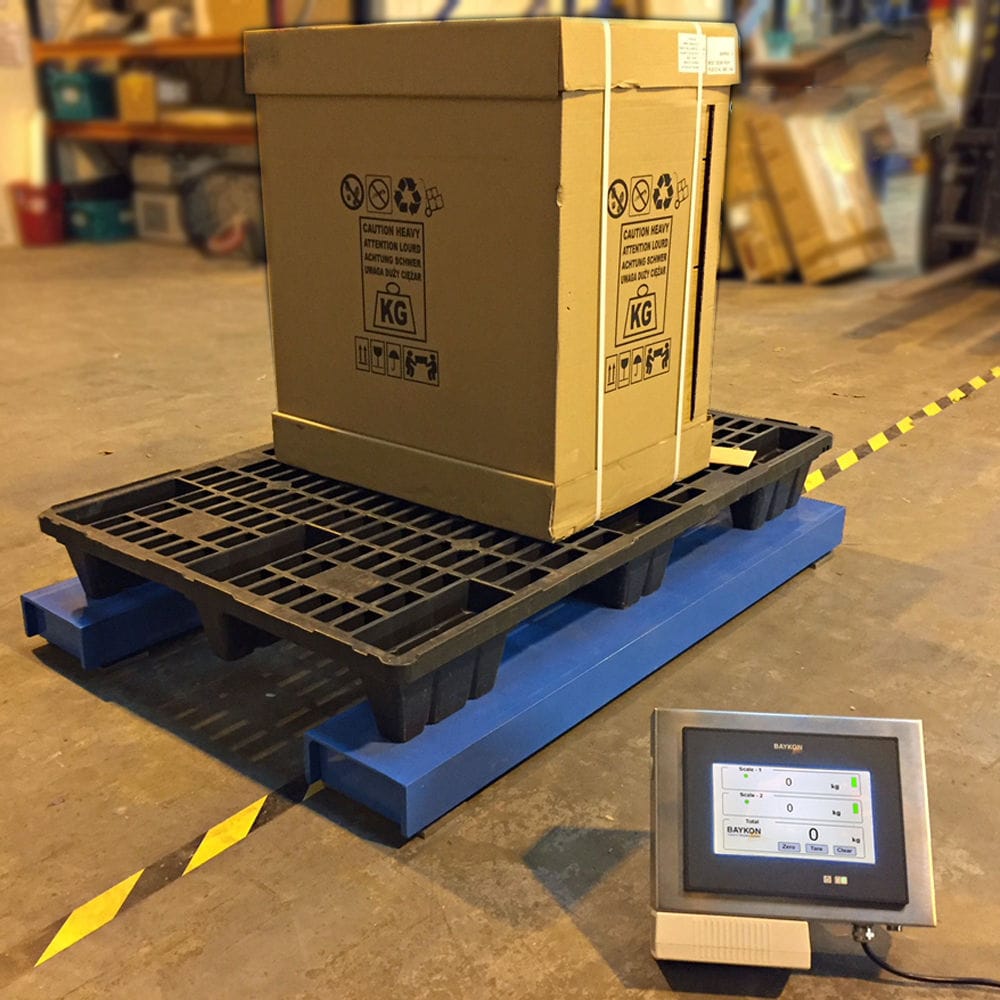
The automatic weighing of liquid fillers in the weighing and packaging system is divided into two steps: rough weighing and fine weighing. First, the weight to be weighed is set. When the execution cylinder carrying the filling gun is accurately transported to the material bucket at the Electronic scale station under the control of the PLC, the filling gun is lowered, the pneumatic valve is fully opened, and the liquid filler in the bucket begins to leak from the top of the weighing reactor to the space below the pneumatic valve filling gun. Under the space, there is an electronic scale conveyor platform. When the weighing indication weight is 90% of the set weight, the pneumatic valve closes 80% to complete the rough weighing. When the pneumatic valve remains at 20%, the material continues to leak. When the value indicated by the electronic scale matches the set value, the fine weighing is completed. The PLC will control the pneumatic switch to act, causing the pneumatic valve to close and completing the work at the weighing and packaging stations.

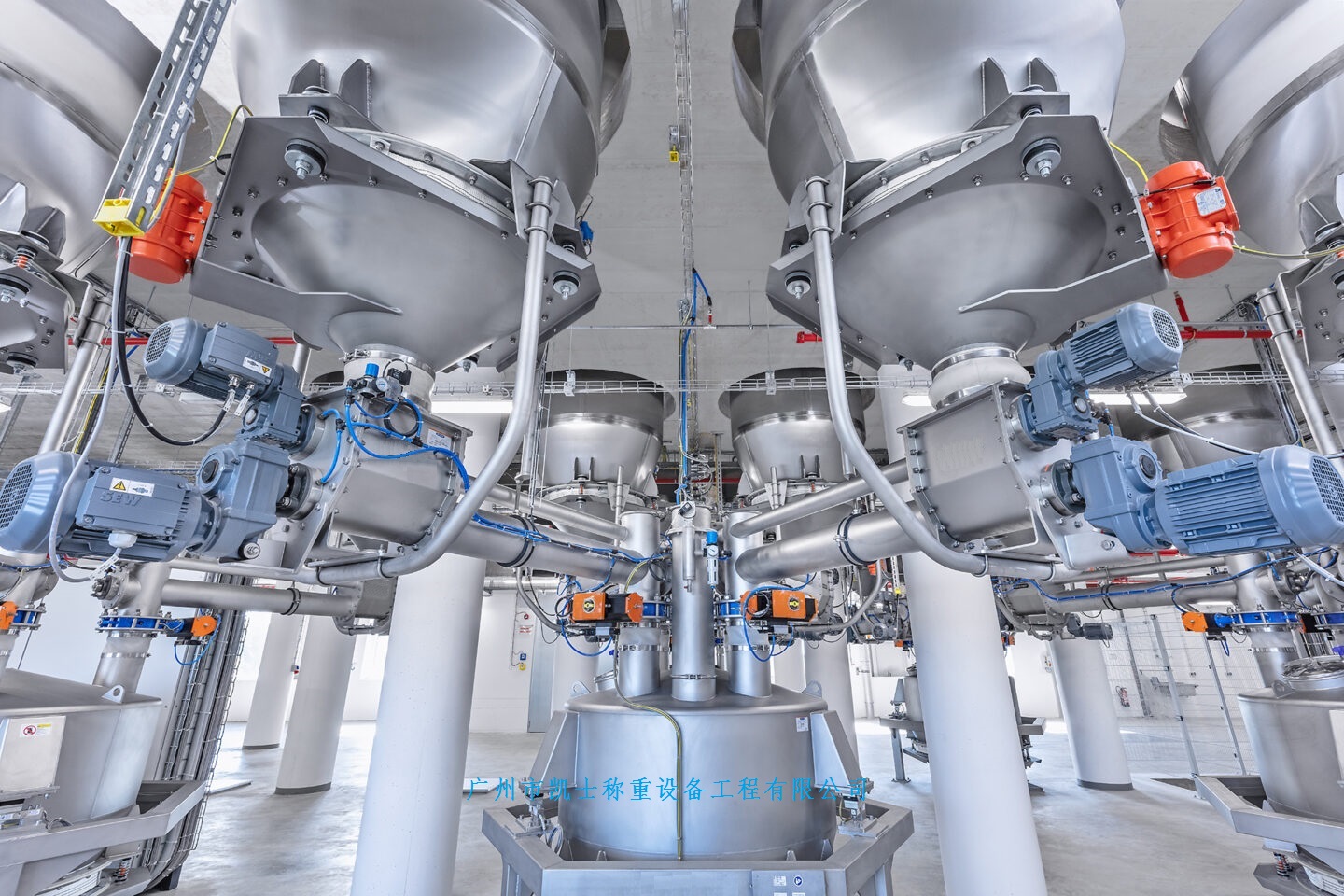
Under the weighing reactor is the automatic Filling machine section, which has multiple filling heads. The bucket clamping device is driven to descend by an air pressure cylinder. After descending to the position, the bucket clamping device is clamped and positioned by another set of cylinders. The descent and clamping positions are controlled by limit switches. After clamping and positioning, the filling head is driven down by the third set of cylinders. Once in place, the solenoid valve of the filling head opens to start filling the liquid. After a delay, the solenoid valve closes. The filling capacity is controlled by regulating the opening time of the solenoid valve. The motor of the conveyor belt for the bucket release action process is controlled by a frequency converter to achieve stepless speed regulation. One second after the motor starts, the cylinder for feeding the bucket retracts and begins to feed the bucket. Three seconds later, the cylinder for discharging the bucket extends to block the empty material bucket. A photoelectric switch is installed at the barrel entry point to detect the number of barrels entering. When the corresponding quantity is reached, the conveyor belt motor stops. When the filling head descends to the bucket mouth, the PLC controls the opening time of the filling head based on the time input through the touch screen. After filling is completed, the filling head rises, and the bucket clamping device relaxes and rises. The cylinder at the exit of the barrel retracts, and the transmission motor starts to rotate again. One second later, the cylinder at the entry of the barrel retracts, and the photoelectric switch starts to detect the number of barrels entering again.

The filling machine is equipped with different actuating mechanisms such as barrel feeding, liquid injection, stopper pressing and barrel discharging. To ensure the accuracy of filling, synchronous servo motors are used to directly drive the filling screw, and AC motors are selected to drive the barrel inlet and outlet conveying devices, filling turntables and stopper capping mechanisms. The entire Filling system is composed of four units: on-site equipment components, signal acquisition components, command control components and condition monitoring components. The servo system adopts the SIT series three-phase permanent magnet synchronous servo motor, featuring a wide speed regulation ratio, constant torque output, three times overload capacity, a rated speed of 3000rpm, and a code disk feedback pulse accuracy of 2500p/r. The drive unit adopts the latest digital signal processor DSP as the core, large-scale programmable gate array (CPLD) and MITSUBISHI intelligent power module (IPM), featuring high integration, small size, complete protection and good reliability. The control process is clear at a glance.

The number of rotations and angles of the screw are implemented by the servo motor (i.e., the rotation Angle of the servo motor), and the speed and rotation Angle of the motor are determined by the pulse signal output by the motor driver. The output of the driver is controlled by the PLC, and the parameters are set through the friendly human-machine interface (HMI) of the touch screen (mainly including the setting and adjustment of the packaging quantity) By sending instructions such as speed setting to the PLC, the operation of the entire system can be controlled.

The entire Weighing system consists of two parts: the main drive system and the screw dispensing system. To complete the control of the screw servo motor, the PLC system needs to adopt a dedicated position control unit module. Each servo motor receives the pulse sequence from the position control unit to complete the screw propulsion action. The main drive system involves the transmission issues of the filling tray, the stopper mechanism and the tracks for entering and exiting the barrels. To achieve smooth speed regulation, the frequency converter drives, and the error range of the filling volume is calculated based on the set parameters and the detected screw speed. The detection of the speed of the servo motor controlling the packaging screw in the system adopts a photoelectric encoder, and the pulse signal output by it is sent to the high-speed counting module in the PLC position control unit for counting. In addition, the PLC selects the RS-232C communication adapter to communicate with the industrial control computer to achieve parameter setting and monitoring.

Multi-station liquid filling machine
The field management and control system of liquid filling machine based on single chip microcomputer, radio frequency card and network integration technology can control the filling of materials in real time and effectively. Realize the real-time detection of filling weight and the real-time opening and closing of solenoid valve in filling process, and upload data for effective microcomputer management.
Automatic liquid filling machine function application
Automatic liquid filling machine is controlled by frequency converter to realize stepless speed change, set the target weight, easy operation and fast filling speed, adopting large and small feeding and filling methods, optional computer connection or real-time printing of filling parameters such as filling date, serial number, net weight, tare weight, cumulative weight and so on.
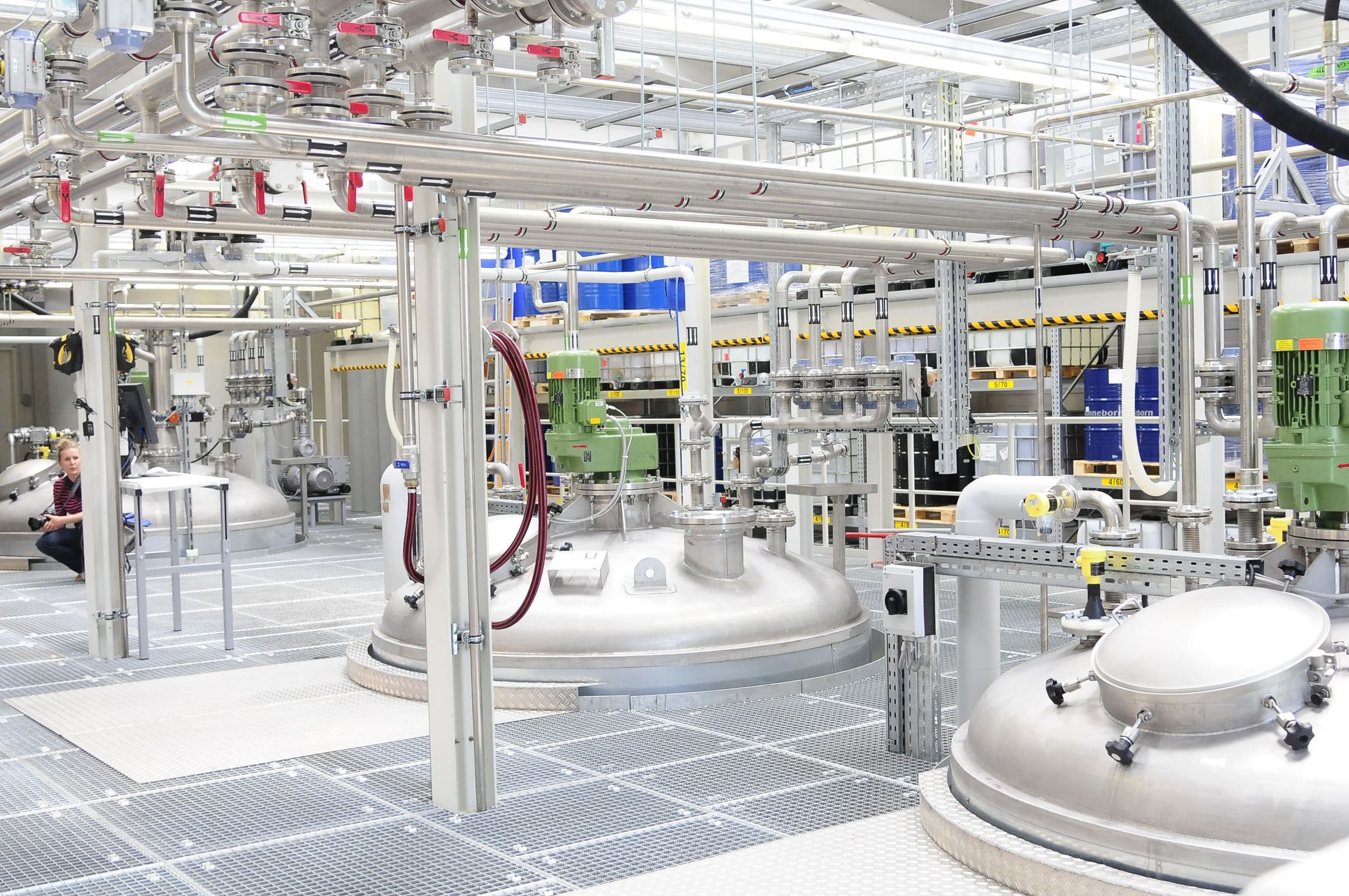
Reactor feeding and dosage system realization
Reaction kettle feeding dosage system through the explosion-proof electronic weighbridge direct collection of weight signals, automatic control of weighing, the operator through the keyboard or the mouse in the upper computer human-machine interface (HMI) on the input charging information (charging type, weight, etc.), monitoring the whole process of charging control, printing the results of the charging and production reports, to achieve the process of charging the measurement and control of the integration of the management, is not lost as a practicable and effective method.
×