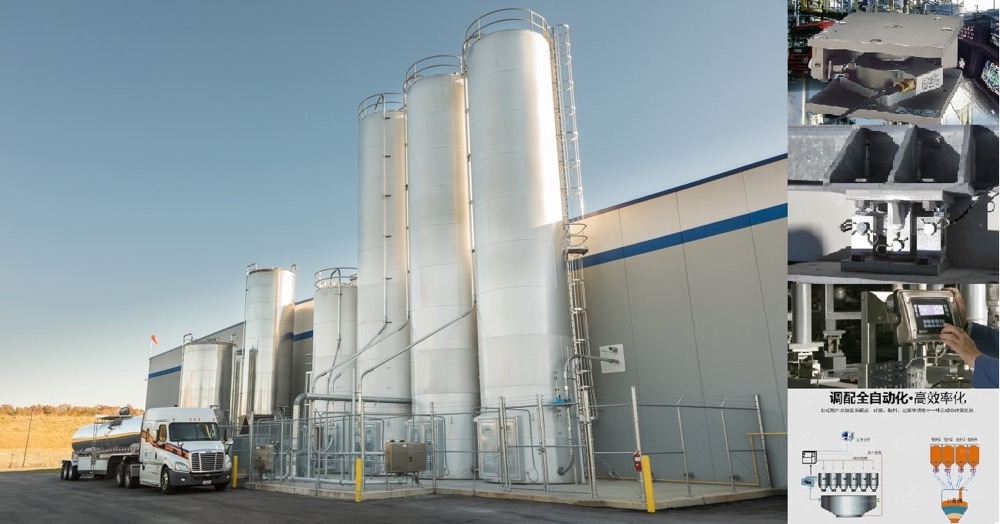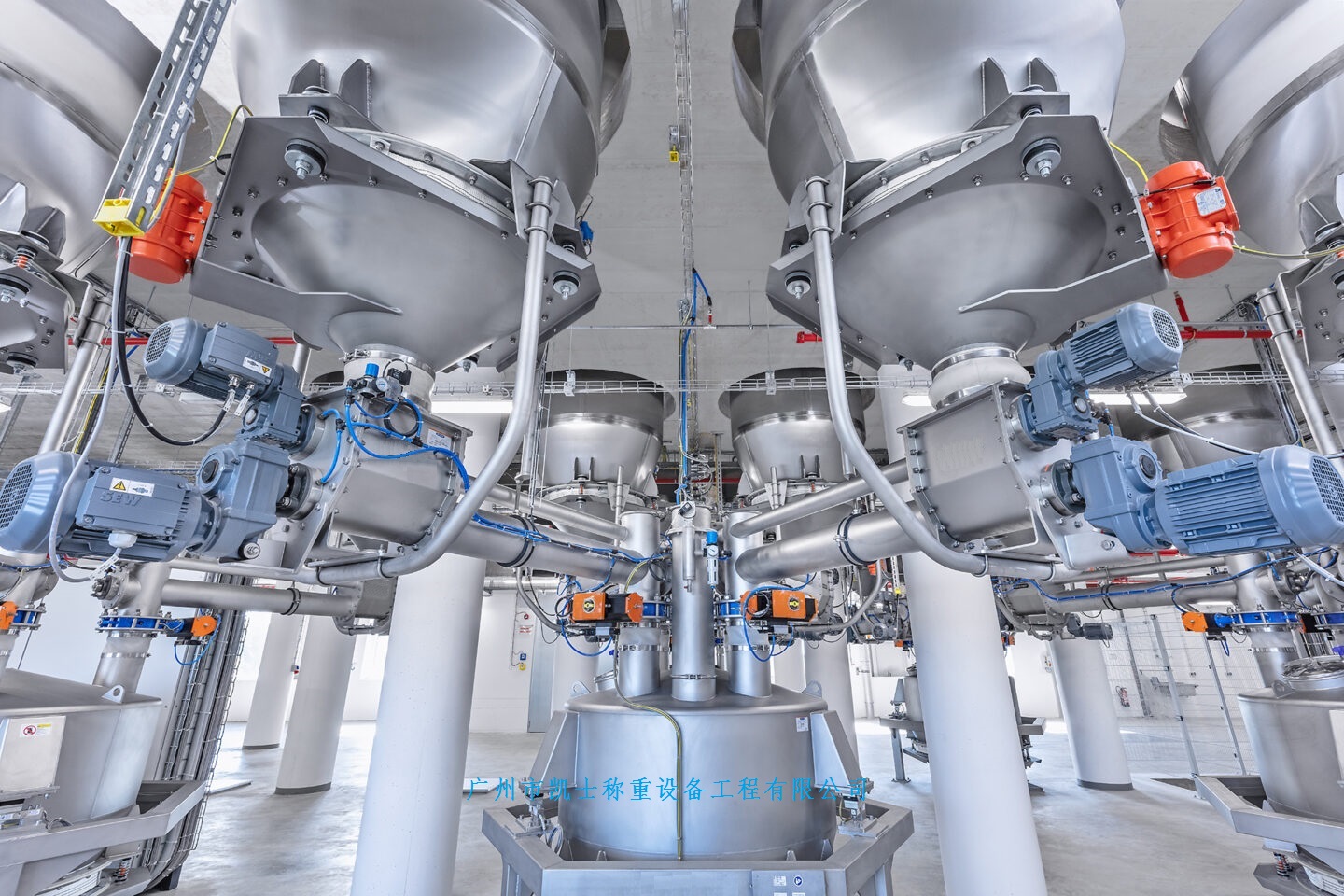





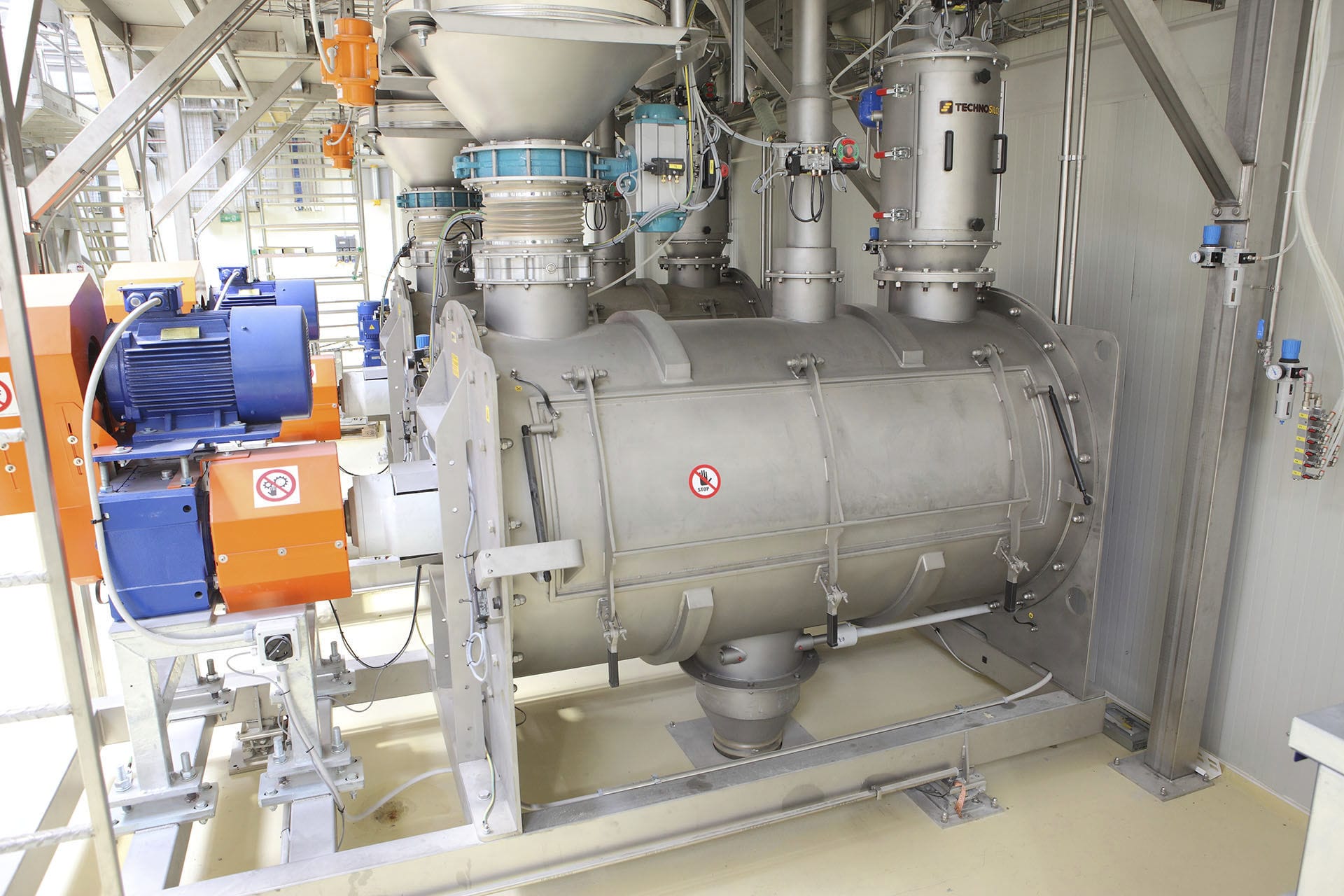
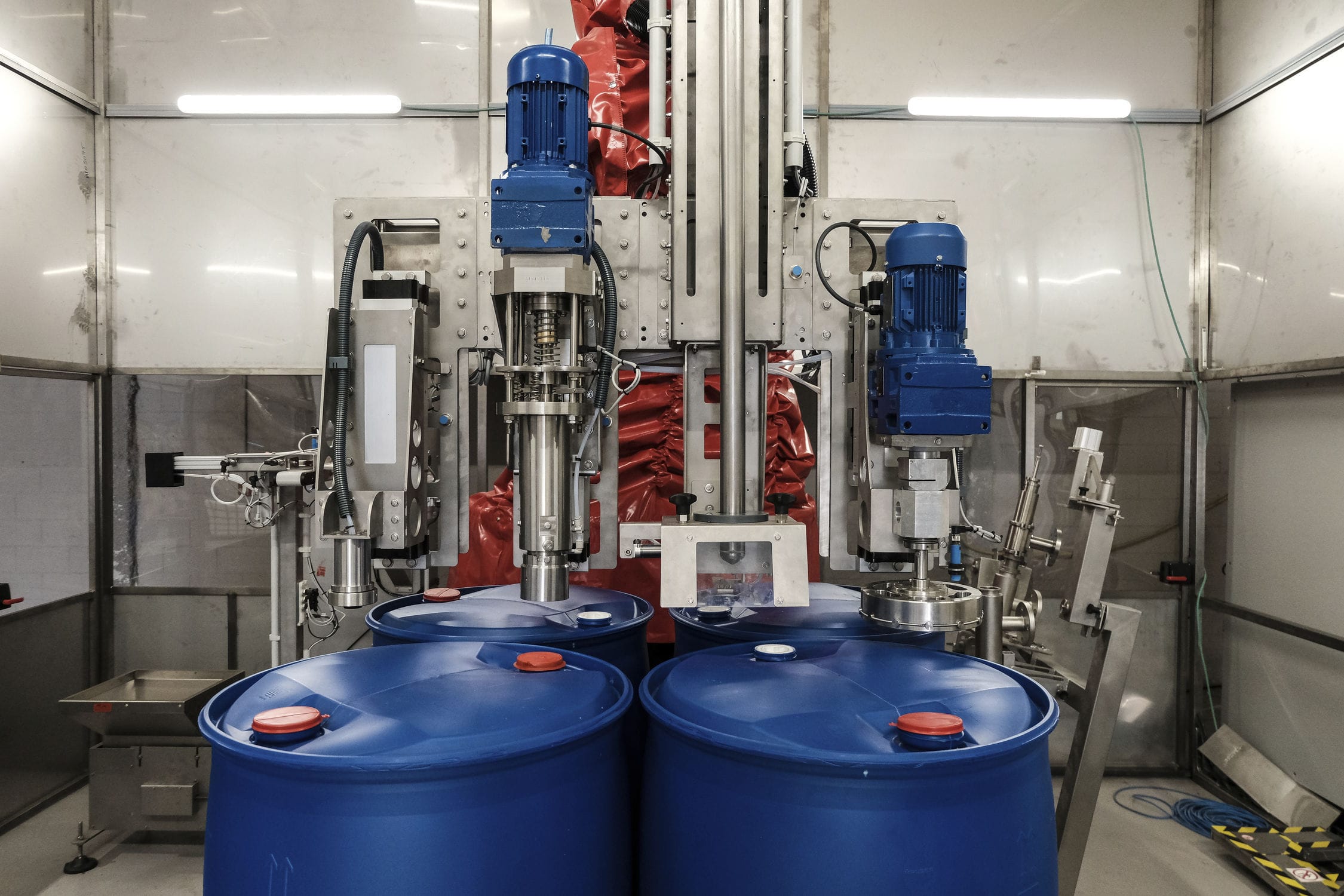


The hopper feeder mainly consists of a spiral feeder, a buffer hopper, a hopper scale, a variable frequency motor, an electromagnet, etc. The feeder is composed of two spiral propellers of different diameters. During the high-speed loading stage, to increase the loading speed, the double-wound wheel operates at high speed simultaneously; during the low-speed fine adjustment stage, the clutch is used to disengage the large wheel and the small wheel is used alone for loading. The entire loading process is equipped with the stepless speed regulation feature of the variable frequency motor, thus enabling precise loading.

 020-34563445
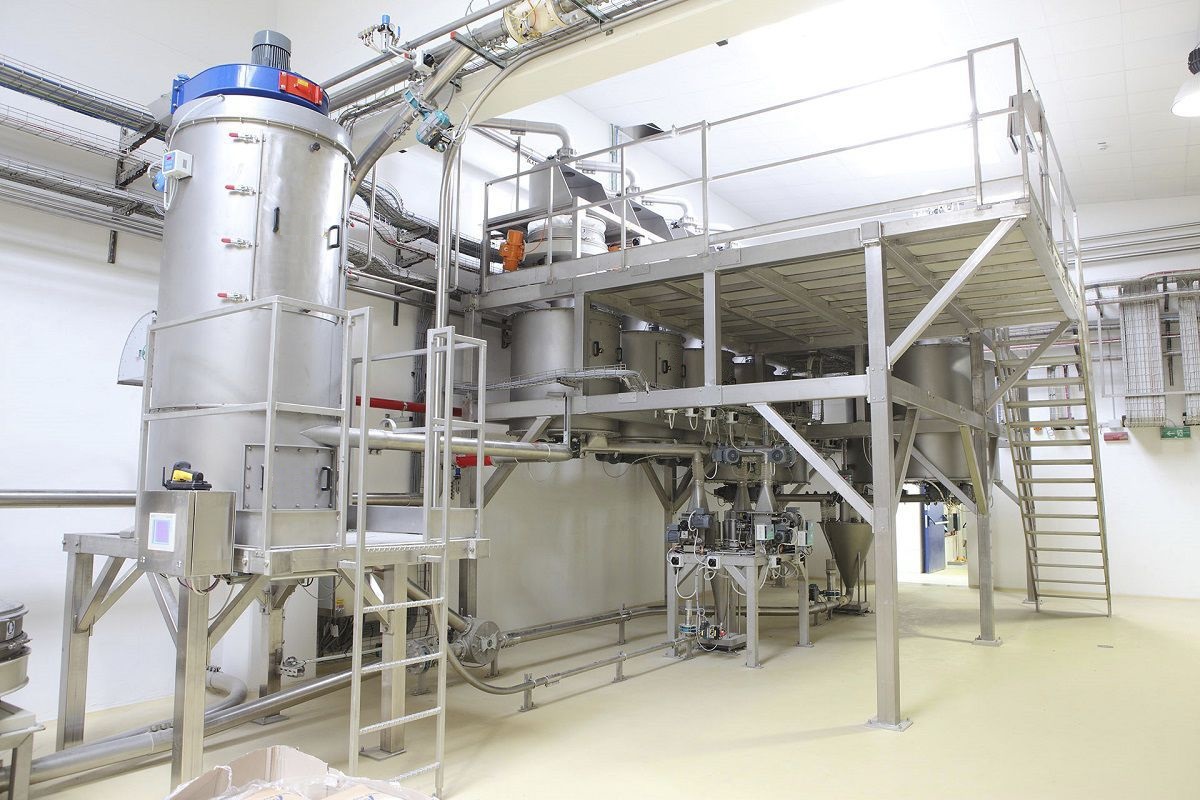
The powder produced by the grinding machine is sent directly (or through a buffer silo) to the packaging workshop via the conveying machine. In the packaging workshop, multiple dynamic hopper scales and corresponding packaging machinery are installed according to the production scale. The incoming material from the conveying machine is divided into multiple discharge ports to send the powder into the buffer silos of each dynamic quantitative scale respectively. The hopper scales are controlled by the computer's screw Feeder to deliver the powder into the hopper scales and simultaneously monitor the weight (flow rate) of the powder in the hopper scales through electronic sensing elements in real time. The computer controls the rotational speed of the feeder based on the best scheme, and stops the feeder when the quantitative value is reached and closes the buffer material door to collect the powder that is suspended in the air, achieving quantitative measurement control. When the quantitative measurement is completed, the computer determines the status of the discharge switch. If discharge is required, the weighing hopper door is opened to pour the powder into the packaging machinery, and the packaging machinery completes bagging and sealing.
The hopper scale is mainly composed of a screw feeder, a buffer hopper, a hopper scale, a variable frequency motor, an electromagnet, etc. The feeder is made up of two different-sized spiral propellers. During the high-speed loading stage, to increase the loading speed, the double-wound wheel operates at high speed simultaneously; during the low-speed fine adjustment stage, the clutch disengages the large-wound wheel and the large-wound wheel alone is used for loading. The entire loading process is equipped with the stepless speed regulation feature of the variable frequency motor, thus enabling precise loading. At the front end of the propeller blades of the spiral propeller, a special structure with multiple blades and a shorter head is adopted, which greatly improves the uniformity and stability of the material flow, especially the low-speed material flow, thereby effectively enhancing the weighing accuracy. The buffer hopper is composed of a storage bin and a double-flap door and is connected to the outlet of the screw feeder. When the material approaches the rated value, the buffer hopper is closed to intercept the material remaining in the air, reducing the impact of the falling material on the measurement accuracy.
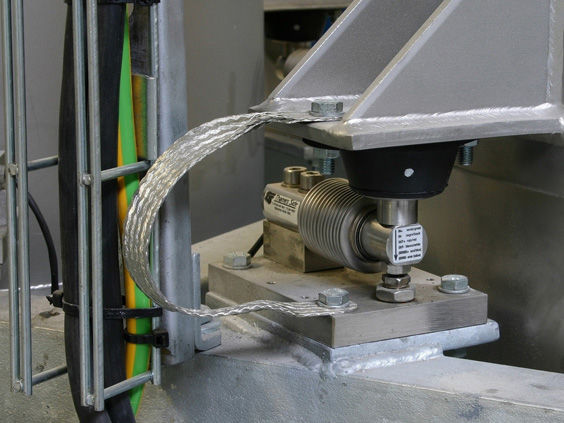
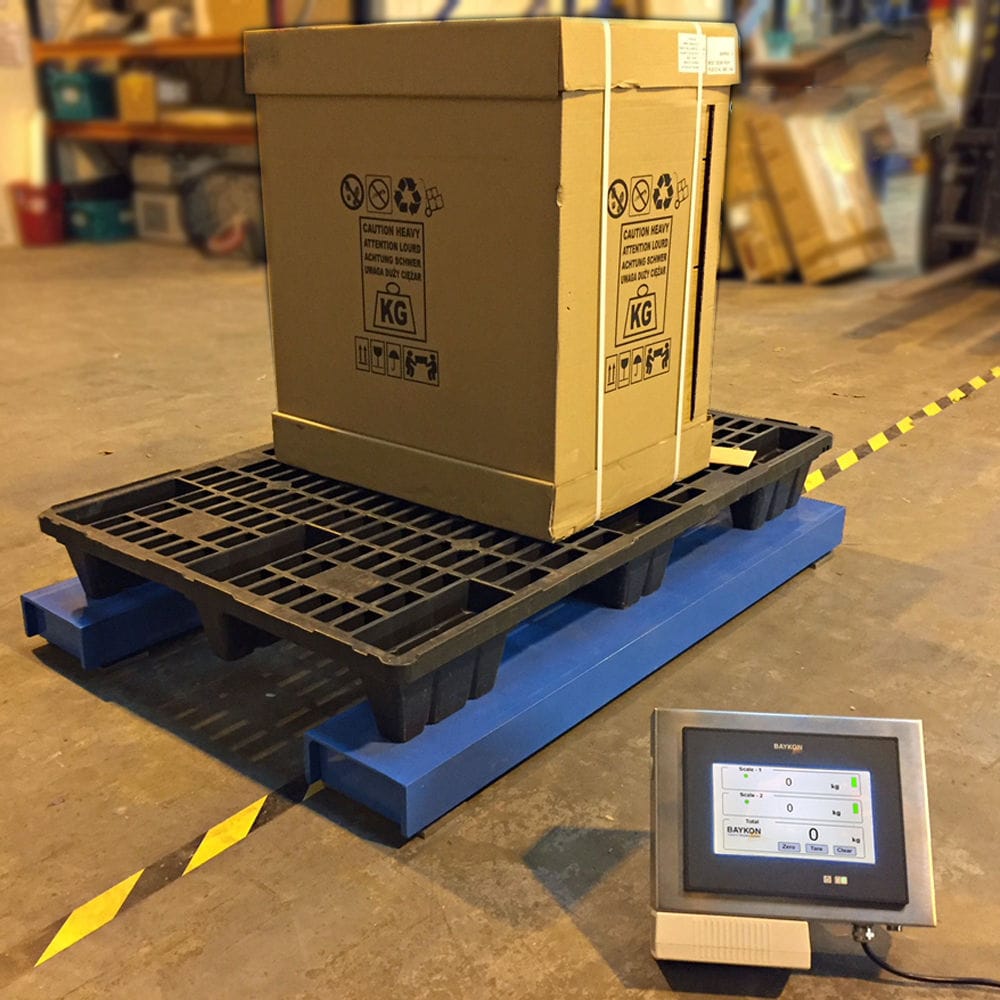
The hopper scale is composed of a storage bin, a sensor suspension mechanism and a double-door material gate. It adopts a suspended structure. Three Weighing modules are used to suspend the weighing hopper in a symmetrical structure through a double-linkage mechanism. The weight of the object is converted into叠加 mv signals by the three weighing modules and sent to the computer for processing. This structure eliminates the problem of force point offset caused by the uneven distribution of materials in the hopper scale, thus avoiding signal distortion. The material gates are all equipped with a pull-rod interlocking mechanism, which is controlled by an electromagnet and has a fast response speed and good consistency in opening and closing the door. In the weighing module suspension mechanism, a damping device is added to reduce the influence of mechanical vibration on the signals of the weighing modules.
The Weighing system consists of a hopper, a stepper motor, a drum, a hopper scale, a load sensor, a frame rotating shaft, and a driving pulley. One end of the screw conveyor is inside the material cylinder, and the other end is on the hopper scale, which is convenient for discharging. The screw conveyor is driven by the stepper motor and the driving pulley. The hopper scale is installed on the weighing module, and a screw conveyor motor is installed on the side of the hopper scale for discharging the weighed materials. The hopper and the screw conveyor rotate around the frame rotating shaft according to the material characteristics. The angle of the screw conveyor changes accordingly, which helps with the discharging. The screw conveyor adds materials to the hopper scale under the drive of the stepper motor, and the weighing module continuously measures the amount of materials in the hopper scale in real time. The hopper scale adopts a coarse-fine two-stage feeding method. When the controller starts to operate, the materials fall from the preparation hopper into the hopper scale, and the mass of the hopper scale is measured by the controller in real time. The controller controls the preparation hopper to feed materials to the hopper scale at two speeds (coarse and fine) in sequence according to the current material quality. When the material quality is much less than 90% of the system's set target quality, rapid feeding is carried out. When the material quality is greater than 90% of the target quality, slow discharging is performed to ensure accuracy. When the material reaches the target quality, feeding is immediately stopped. Because there is still some material mass in the air and the electromagnetic valve of the actuator has a delay, generally, a pre-closed drop amount is needed, that is, the feeding time is estimated.