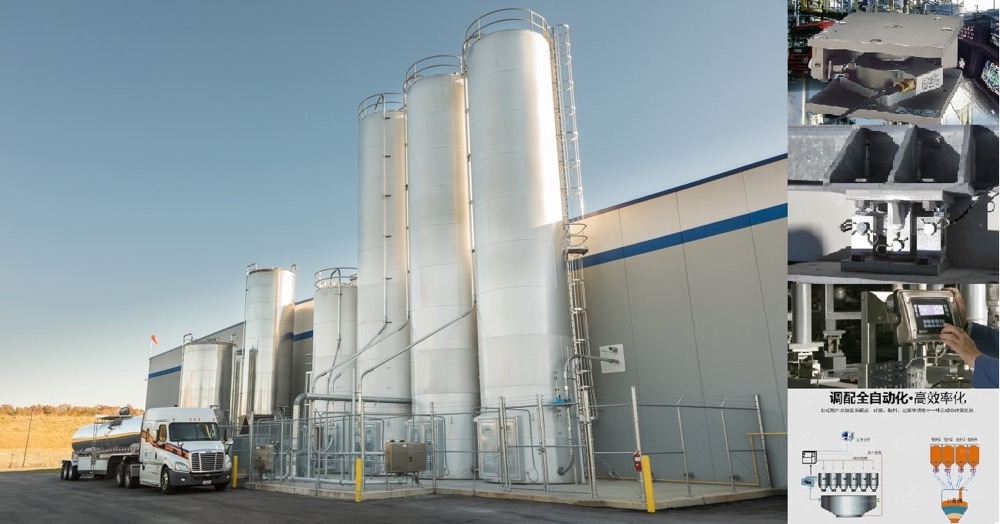


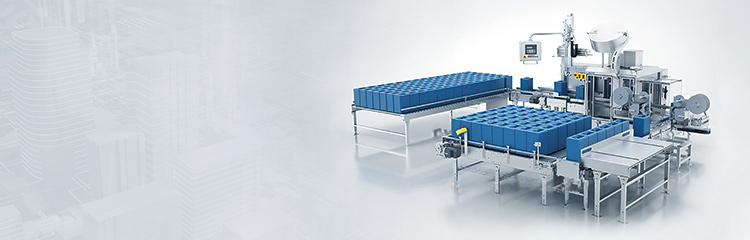


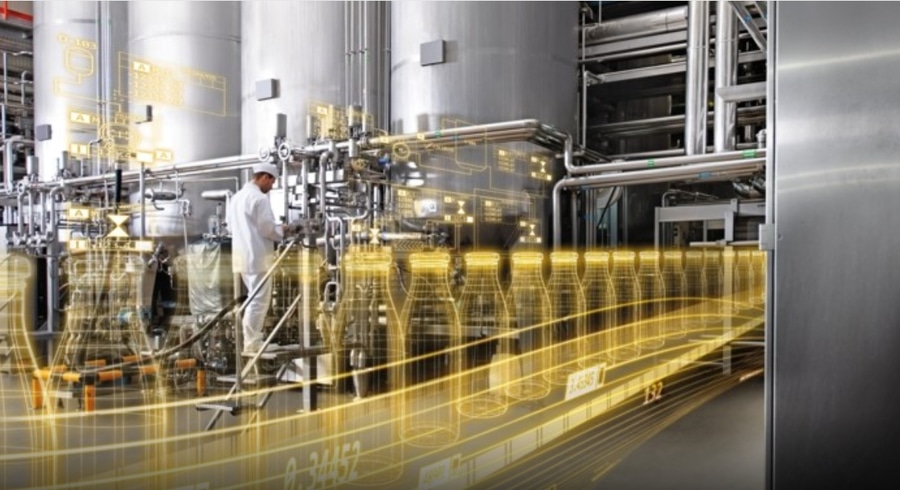
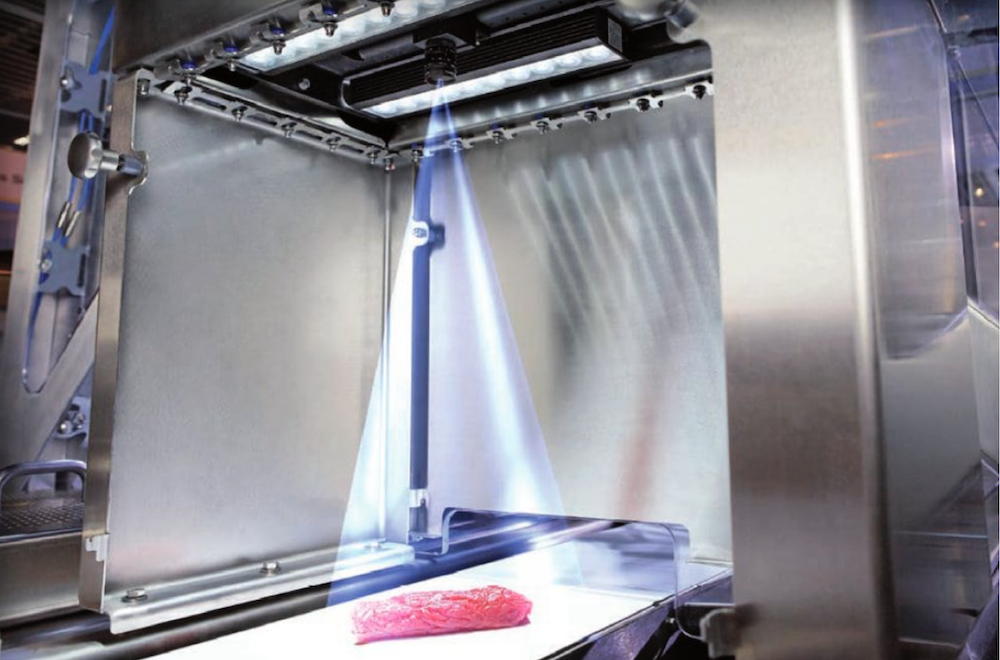
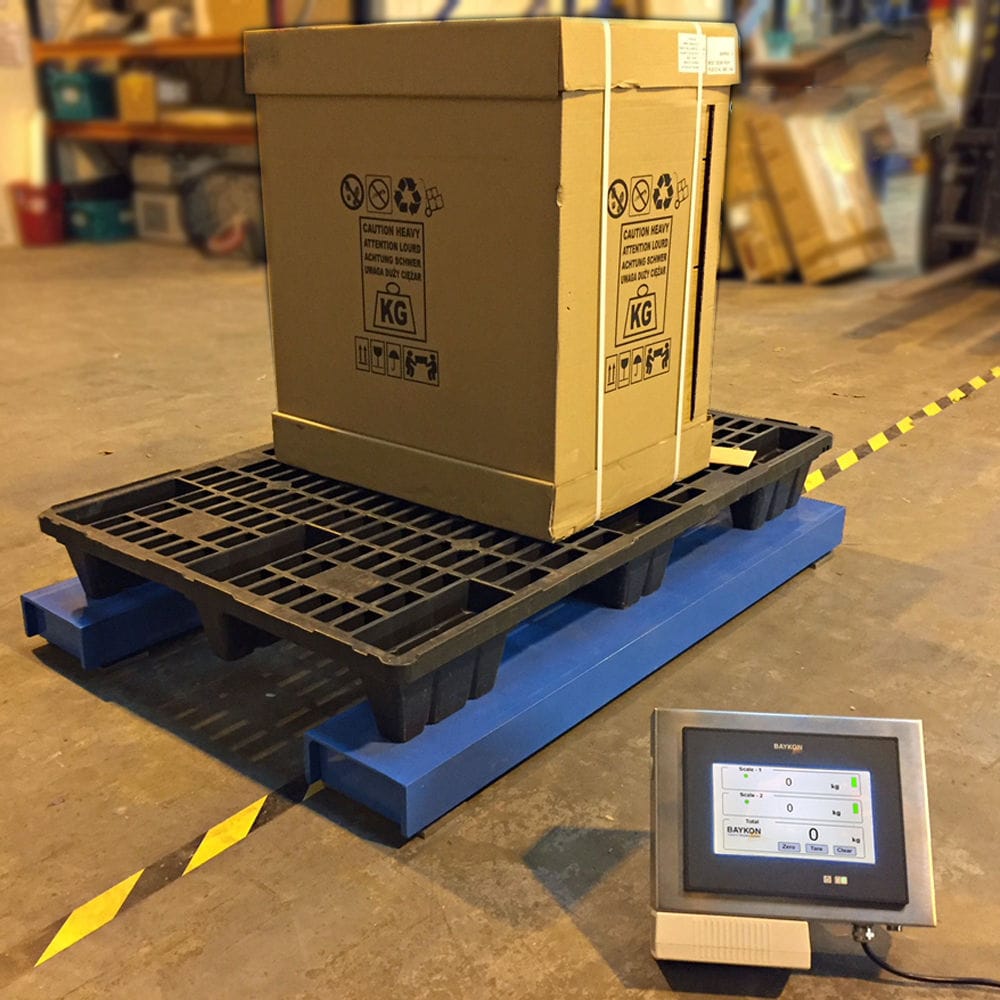


Quantitative Batching system realizes intelligent and networked management of small material batching, so that finished products and raw materials can be traced in both directions, production decision-making and production control are seamlessly connected, production execution is improved, and real-time and accurate production data are used as the basis for managers' decision-making, so as to prevent the occurrence of quality accidents. Help customers to solve the dosage error prevention, improve dosage precision, quality traceability products, intuitive image, over the limit of the sound and light alarm prompts the application of bar code to effectively prevent the occurrence of the wrong raw materials raw material lot number bar code and finished product lot number bar code fixed in the bar code block can be reused.

 020-34563445
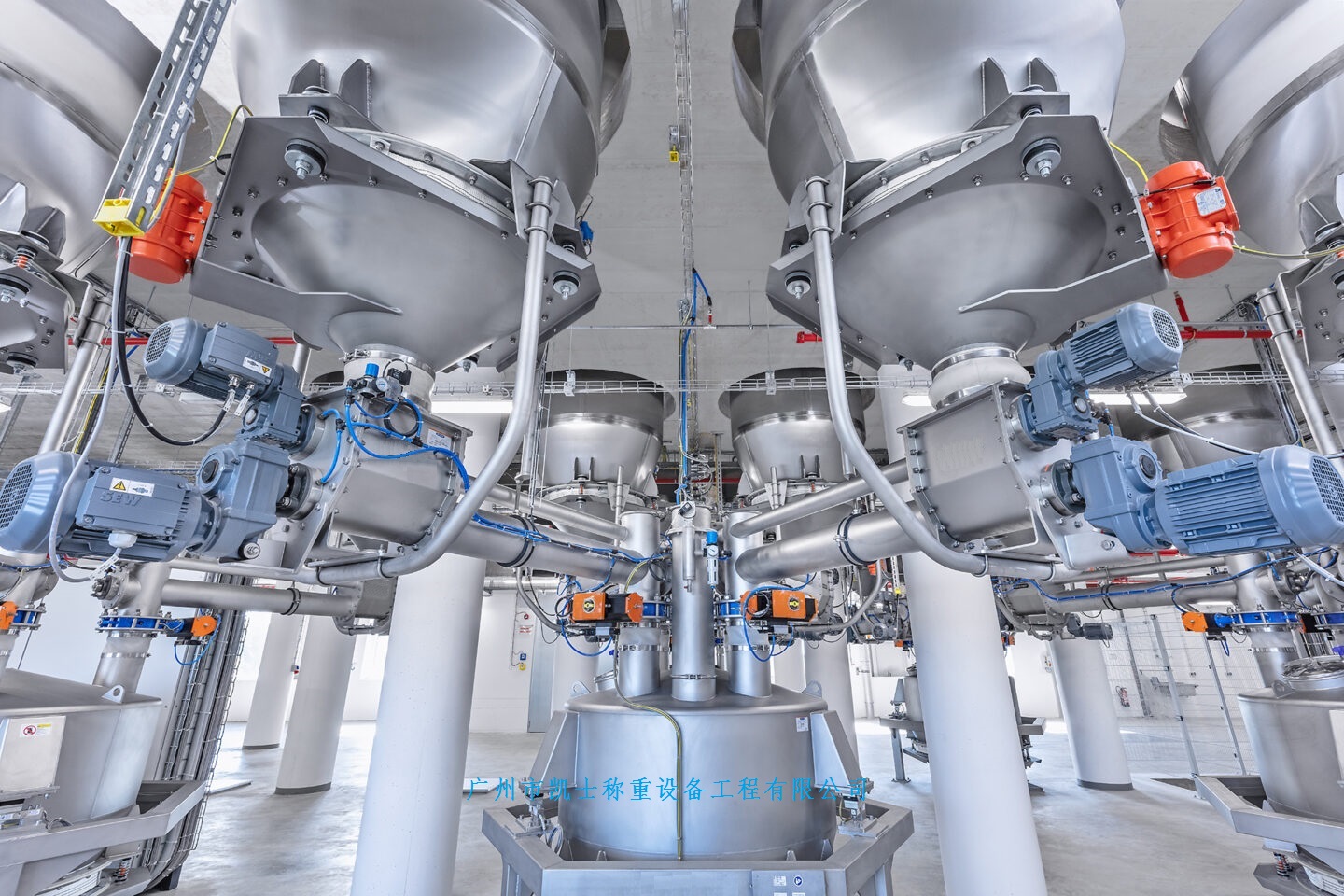
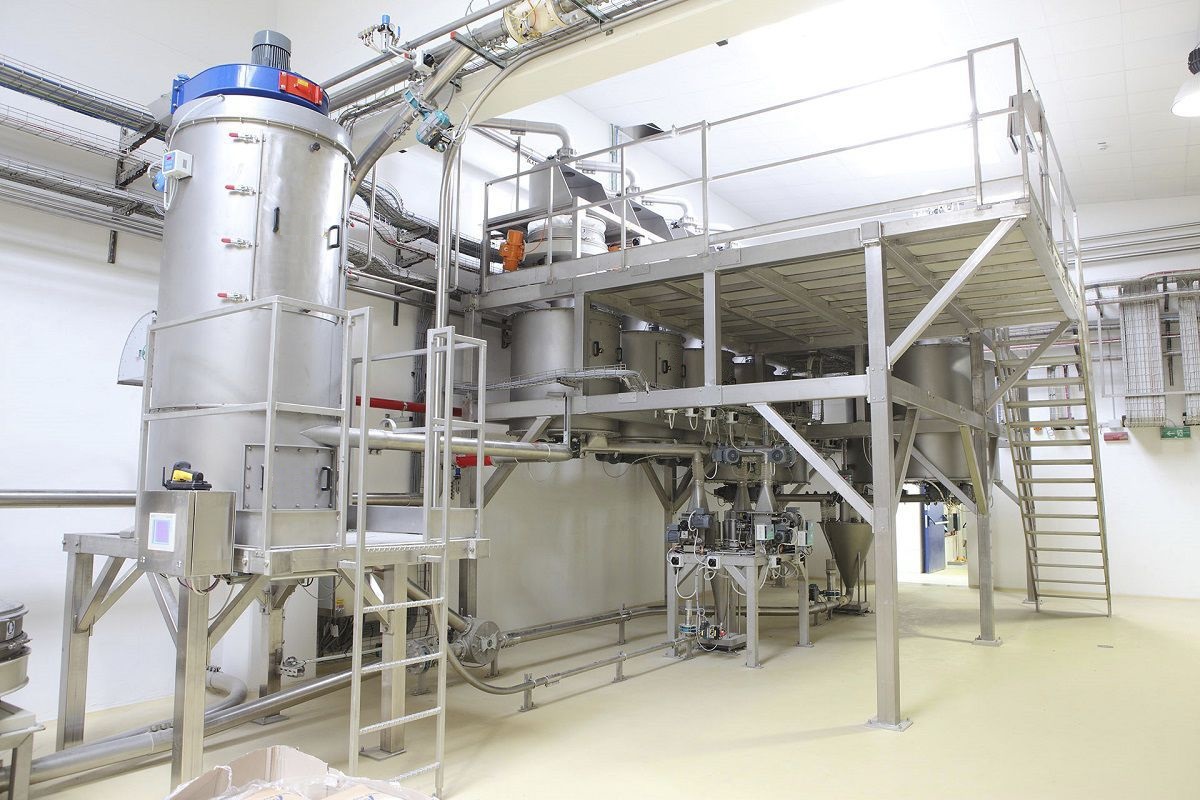
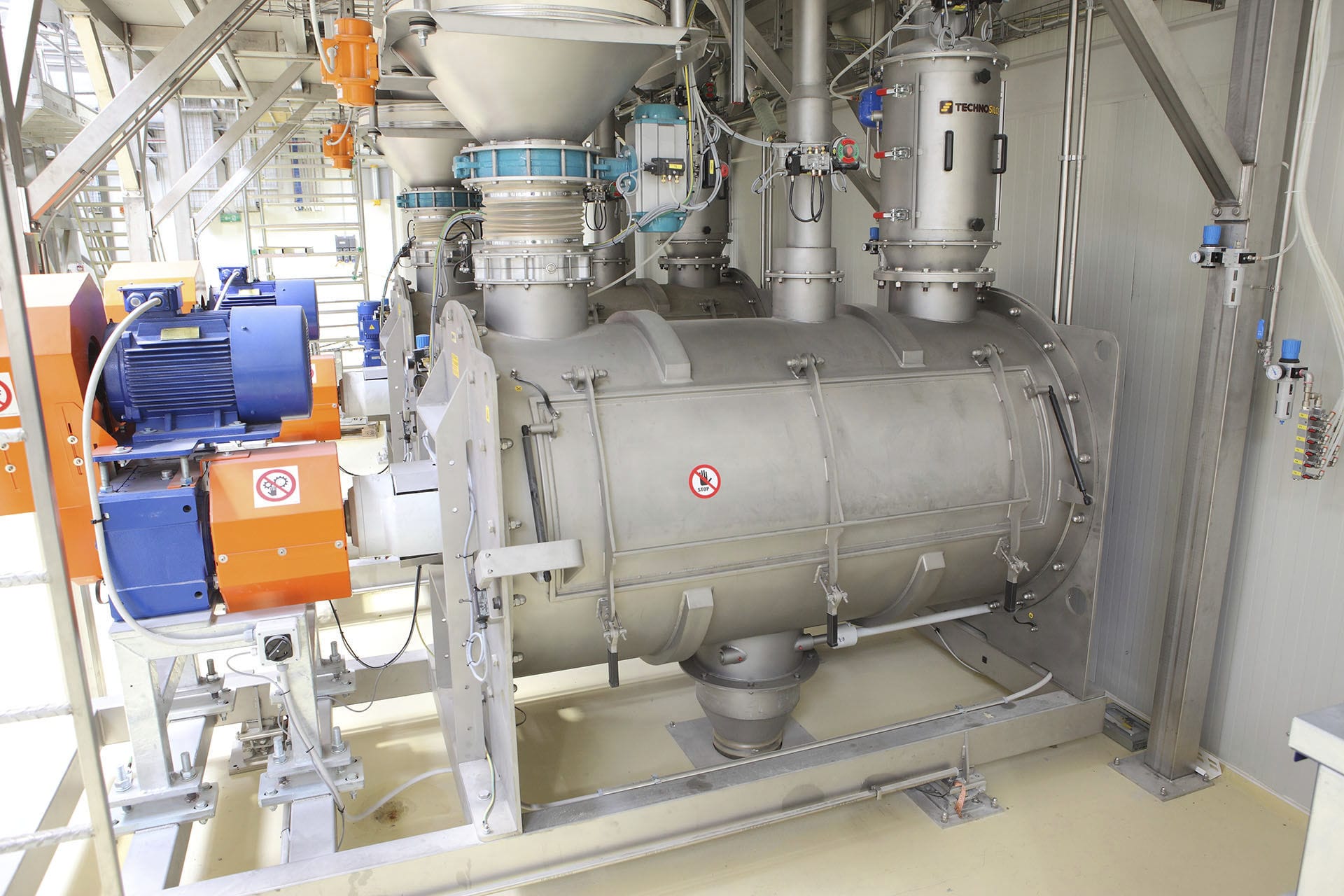
The Batching system consists of raw material storage bin, discharge auger, hopper scale, mixing and blending bin, opening and closing mechanism, and weighing module, etc. The batching control is carried out by the elevator to transport the materials to the corresponding raw material storage bin. After starting the batching process, the control system, based on the given formula, first activates the feeding auger of the first raw material storage bin to continuously feed into the hopper scale. At the same time, the control system continuously collects the feeding amount in the hopper scale through the weighing module. Due to the certain drop difference between the outlet of the auger and the hopper scale, as well as the certain inertia of the feeding auger, there will be a time difference between the feeding amount of the auger and the weighing. When the weighing of the first raw material reaches 95% of the given weight in the formula, the continuous feeding stops and slow intermittent feeding begins. The feeding amount for each intermittent feeding should be controlled to be less than the given ratio error limit. Since the specific gravity of various ingredients is different, the intermittent feeding time for each ingredient can be set through the keyboard. After each intermittent feeding, the control system measures whether the feeding reaches the given value error limit. If it does, the control system stops the intermittent feeding of the first auger, and the feeding of the first ingredient is completed. Then, the second auger is activated, and the second raw material is fed in. The control method is the same as the previous feeding process. If a certain ingredient is not used in the formula, it will automatically skip and feed the next ingredient. This process repeats until all raw materials are added. To improve production efficiency, the weighing batching and the mixing process are carried out simultaneously. That is, while performing a certain batching process, the blending bin mixes the previous batch. According to the requirements of the production process, the mixing time of the ingredients is given. When the time for a certain batching process is less than the given mixing time (including the actual mixing time, opening and discharging time of the blending bin, and closing time), the control system must wait for the mixing to be completed before opening the discharge door of the hopper scale to start feeding into the blending bin. After the discharge is completed, the hopper scale door is closed, and the next batching process begins.
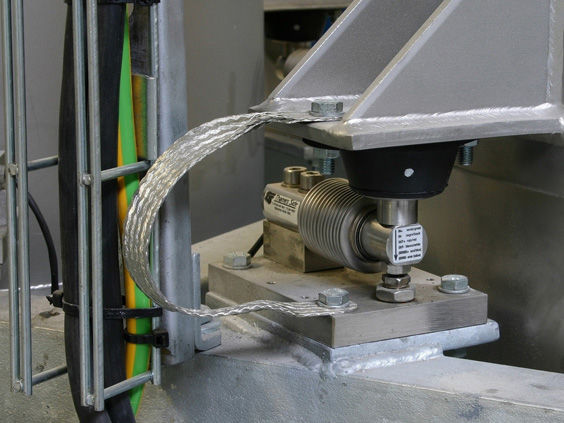
In order to enhance production efficiency and the accuracy of the Electronic scale, this system is equipped with fast and slow scales. The former has a larger flow rate when discharging materials from the silo, while the latter has the smallest flow rate. To compensate for the zero point shift of the sensor and the preamplifier, it is necessary to perform zero point tracking on the electronic scale. During weighing, the actual weighing value often deviates from the required target value. When the positive deviation exceeds a certain limit, an over-weighing occurs. During feeding, a reduction of the amount of material needs to be carried out to limit the actual ratio error within the allowable error range. When the negative deviation exceeds a certain value, the system needs to continue weighing to make up for the weighing value. Using the linear error tracking method, the advance amount for the next weighing is automatically corrected to improve the weighing accuracy of the next scale. To improve the quality of the mixture, a secondary control process is adopted, which consists of feeding in a certain time sequence, with multiple silos, connected feeding and conveying chutes, hopper scales, mixers, buffer silos, and output chutes. The hopper scale, mixer, buffer silo, and output chute are connected by a soft connection pipe made of dust-proof fabric. The other part is the computer control system, including the weighing module placed at the hopper scale, the amplifiers connected in sequence, the analog-to-digital converters, the expansion interface boards, the microcomputers, and the computer control power supply, the printer and display connected to the computer, the input and output interface circuits connected to the expansion interface boards, the output interface circuits connected to the controller, the controller controlling the feeding motor and the control motor for opening the hopper scale and the mixer door, and the entire device configuration process is to first send the raw materials to each silo by the elevator, then the computer, according to the requirements of the formula, issues instructions to different feeding motors to act, the feeding motor then inputs the raw materials from the silo through the feeding and conveying chute into the hopper scale for weighing, when the weight of each type of raw material reaches the requirements of the formula, the computer issues instructions to stop the feeding motor, and after all raw materials have been weighed, the computer issues instructions, the hopper scale door opens, and the mixed raw materials in the hopper are sent to the mixer for uniform mixing. Finally, the mixed feed is sent through the conveying chute to the finished product silo for packaging.