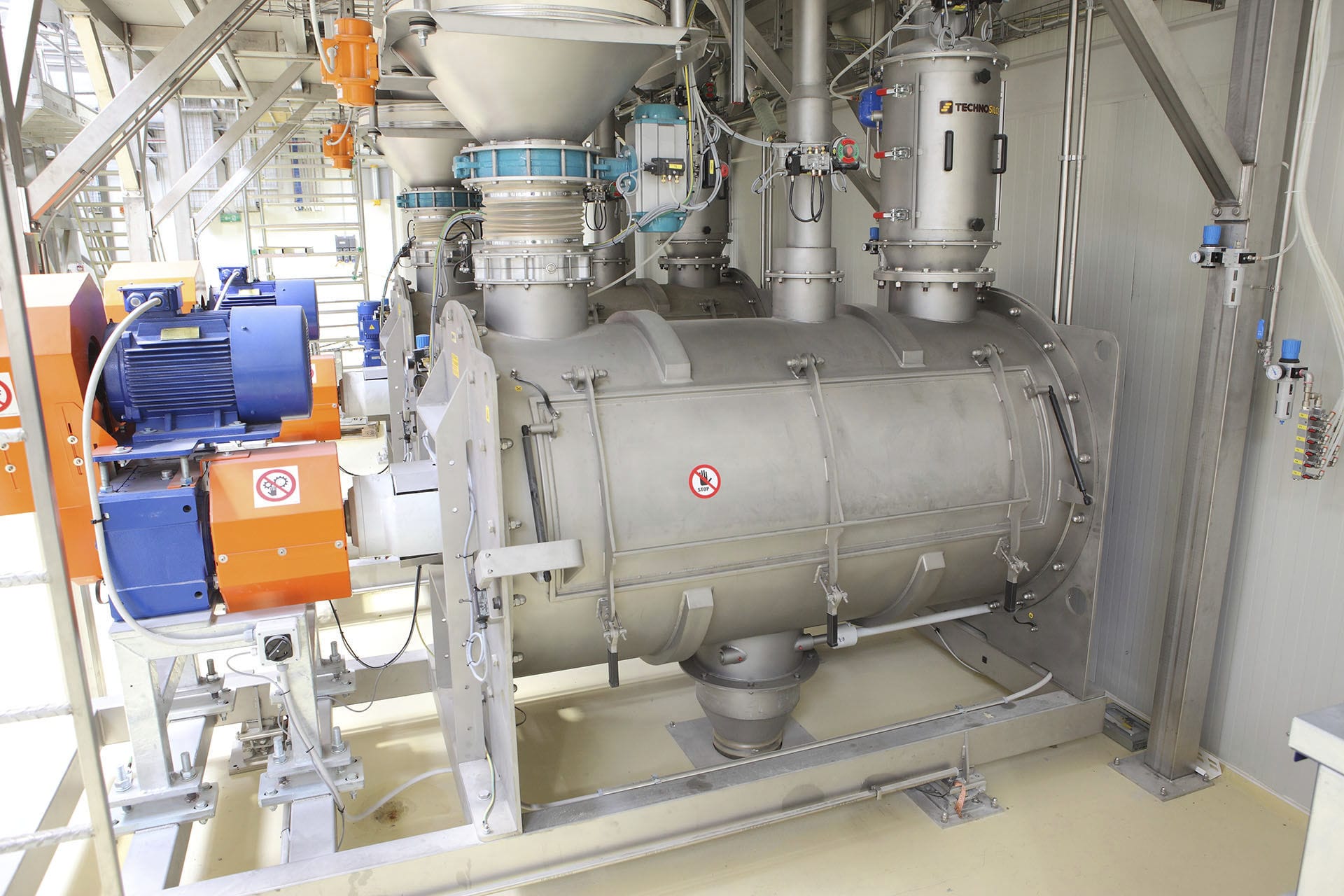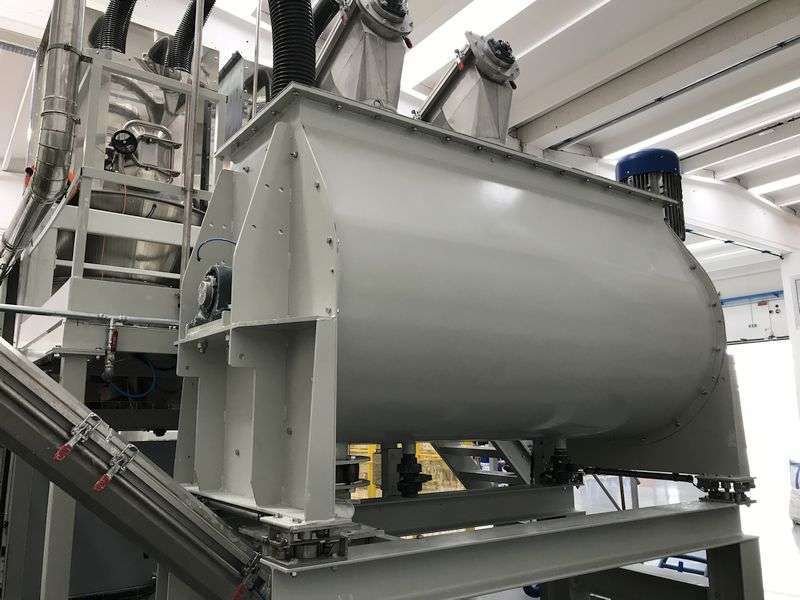









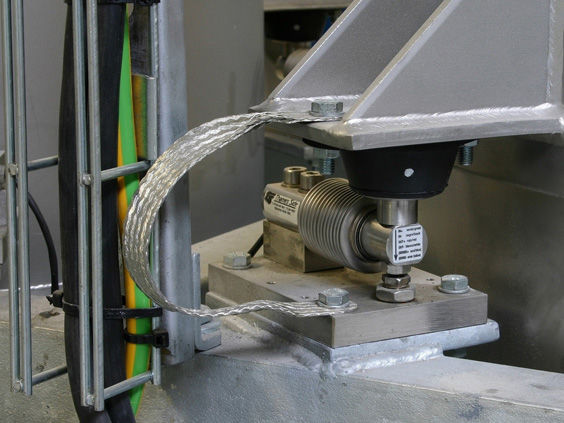




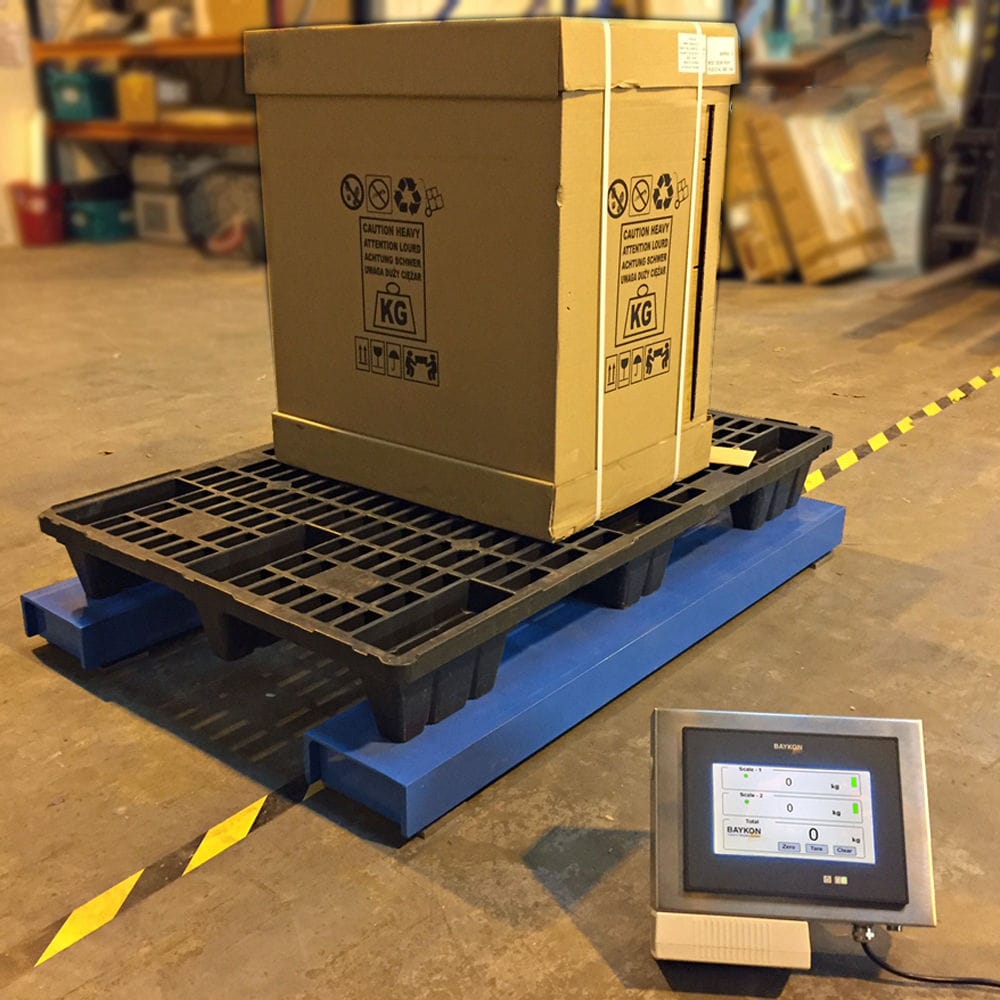


In order to realize the static weighing measurement of large containers and hoppers in industrial environment, weighing module integrates weighing sensor, load transmission device, limit and overload prevention, and can be easily connected with various mechanical equipment. On the basis of traditional resistance strain sensor, combined with modern microelectronics technology and microcomputer technology, control functions are added, including weight display, quantitative feeding, unloading, field equipment control, alarm signal display, formula setting and process monitoring.


 020-34563445
The working principle of a weighing sensor is to stretch and thin the metal resistance wire under tension, and then increase the resistance, that is, the metal resistance changes with the strain it is subjected to. A weighing sensor is a conversion device used to convert weight or pressure signals into electrical signals. The construction principle of a weighing sensor is that the metal resistance has the characteristic of obstructing the flow of current. The explosion-proof weighing module can be easily installed on containers of various shapes, and can be conveniently used for loading, batching, or mixing in this container. By combining weighing sensors, instruments, and control systems. A system that controls the weighing and measurement of tank bodies. The Weighing system mainly consists of multiple sensors, multi-channel junction boxes (including amplifiers), display instruments, and output multi range control signals. The weighing module is a device that can convert physical or chemical quantities into easily usable electrical signals, convert input variables into measurable signals, and sense changes in acceleration force. Acceleration force is the force acting on an object during acceleration, which can be converted into electrical signals by G-sensors in various gravity changes such as shaking, falling, rising, and falling. After calculation and analysis by a microprocessor, it is transformed into electrical signals or other required forms of information output according to certain rules to meet the requirements of information transmission, processing, storage, display, recording, and control.
A weighing sensor and its weighing module, the weighing sensor comprising an upper surface formed by extending along the long axis direction and a side surface formed by intersecting with the upper surface, and forming a cylindrical weighing sensing part; A limiter that limits the deformation generated on the weighing sensor when a load exceeding the specified value is applied. A strain body formed in the short axis direction perpendicular to the long axis direction of the weighing sensor, which penetrates the weighing sensor part from the side and can be elastically deformed, and a limiter is connected to the side of the weighing sensor part. The weighing module connector is installed on the loading surface of the weighing sensor, which includes a force transmission component and a Yao column. A Yao column installation hole is provided on the loading surface of the weighing sensor, and the force transmission component is installed in the Yao column installation hole. The upper end surface of the force transmission component is consistent with the contact surface of the Yao column installation hole. Install the Yao pillar into the installation hole of the Yao pillar, so that the top of the Yao pillar is in contact with the force transmission component. The force transmission component is a cylindrical body, with the upper end face of the cylinder being an outwardly convex spherical surface, the lower end face of the cylinder being a flat surface, and the top end face of the Yao column being an outwardly convex spherical surface. The upper end face of the cylinder is connected to the loading surface of the weighing sensor, and the top end face of the Yao column is pressed against the lower end face of the cylinder. The connection piece of the weighing sensor may also include a positioning piece, which is installed at the bottom of the Yao column and fixed to the lower end face of the loading surface of the weighing sensor.
The dynamic load weighing module includes a substrate, an upper plate located directly above the substrate, and a weighing sensor located between the substrate and the upper plate. There is also a limit column between the substrate and the upper plate. The bottom end of the limit column is installed at the center of the substrate, and the top end of the limit column is inserted into the limit hole at the center of the upper plate and fits with the gap between the limit holes. A limit block is located on the right side of the limit column, and the top end of the limit block is connected to the right end of the upper plate. The bottom end of the limit block extends into the limit groove on the right side of the limit column and fits with the gap between the limit groove. The weighing sensor is located on the left side of the limit column, and the upper and lower ends of the weighing sensor are connected to the left ends of the substrate and the upper plate through a pressure head. The top of the limit column of the dynamic weighing module is stepped, and the bottom of the upper plate is placed on the stepped surface of the top of the limit column. There is a first gap between the outer surface of the top of the limit column and the inner surface of the limit hole. The upper left side of the limit block of the alloy weighing module is provided with an arc-shaped groove, and the arc-shaped side wall of the groove is adapted to the outer circumference of the limit column. The lower left side of the limit block extends into the limit groove. There is a second gap between the arc-shaped side wall of the anti roll weighing module's arc-shaped groove and the outer circumference of the limit column, a third gap between the bottom wall of the arc-shaped groove and the top wall of the limit groove, and a fourth gap between the lower left side of the limit block and the side wall of the limit groove. The pressure head of the column weighing module is equipped with an installation hole near the end of the weighing sensor. The end of the weighing sensor extends into the installation hole and fits with the gap between the installation hole. The end face of the weighing sensor is an arc-shaped spherical surface. There is an O-ring between the outer surface of the end of the weighing module and the inner surface of the mounting hole, and the O-ring is embedded in the inner surface of the mounting hole. The left ends of the weighing module substrate and upper plate are equipped with installation slots and triangular braces, and the pressure head is installed in the installation slots and secured by the triangular braces. The cross-section of the installation groove for the explosion-proof weighing module is semi-circular, and the circumferential surface of the protruding installation groove of the pressure head conflicts with the end face of the triangular brace near the pressure head. There is a connecting plate between the weighing module substrate and the upper plate. The bottom end of the connecting plate is connected to the right end of the substrate through a nut, and the top end of the connecting plate is connected to the right end of the upper plate through a nut. The weighing module also includes a shielded wire, with one end of the shielded wire connected to the right end of the substrate and the other end connected to the right end of the upper board.
Technical parameters
*Rated load (R.C.): 10,15,20,25,30,50T
*Rated output (R.O.): 2 ± 0.0050mV/V
*Zero point balance: ± 0.015mV/V
*Comprehensive error: ± 0.03% R.O
*Nonlinear: ± 0.03% R.O
*Lag: ± 0.03% R.O
*Repetition: Sex ± 0.02% R.O
*Creep (30 minutes): ± 0.03% R.O
*Normal operating temperature range: -10...+40 ℃
*Allowable working temperature range: -20...+70 ℃
*Temperature effect on sensitivity: ± 0.02% R.O./10 ℃
*Temperature effect on zero point: ± 0.02% R.O./10 ℃
*Recommended excitation voltage: 10V (DC/AC)
*Maximum excitation voltage: 15V (DC/AC)
*Input impedance: 770 ± 10 Ω
*Output impedance: 700 ± 5 Ω
*Insulation impedance:>5000M Ω
*Safe overload: 150% R.C
*Extreme overload: 300% R.C
*Elastic element material: alloy steel
*Protection level: IP68