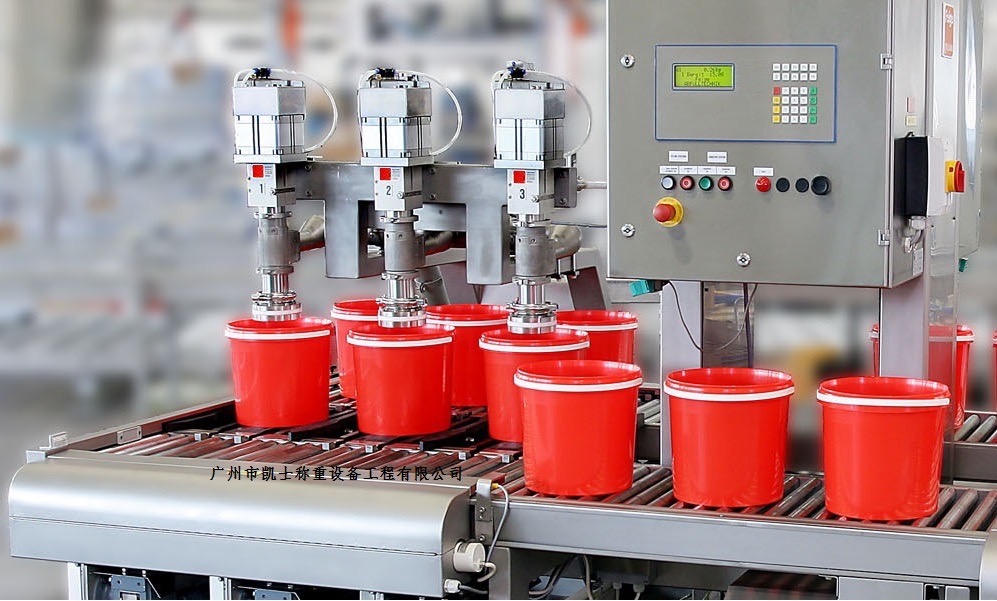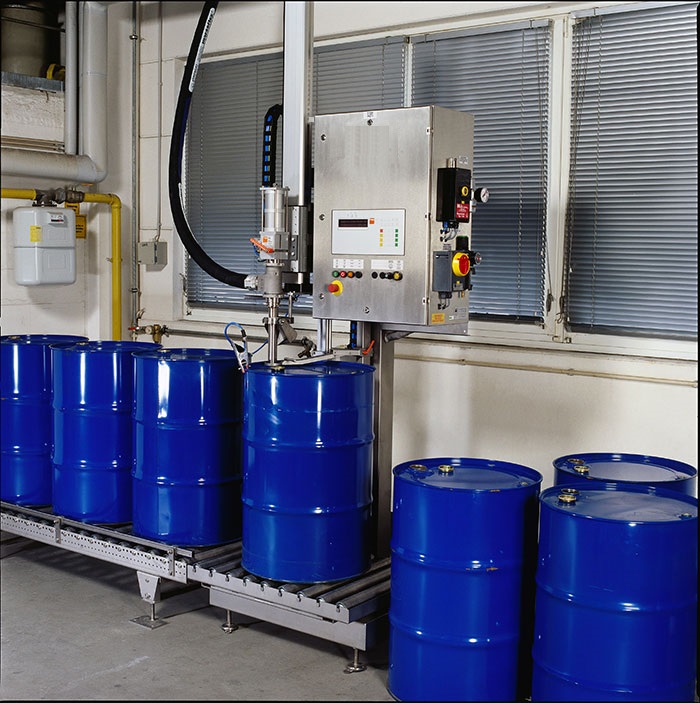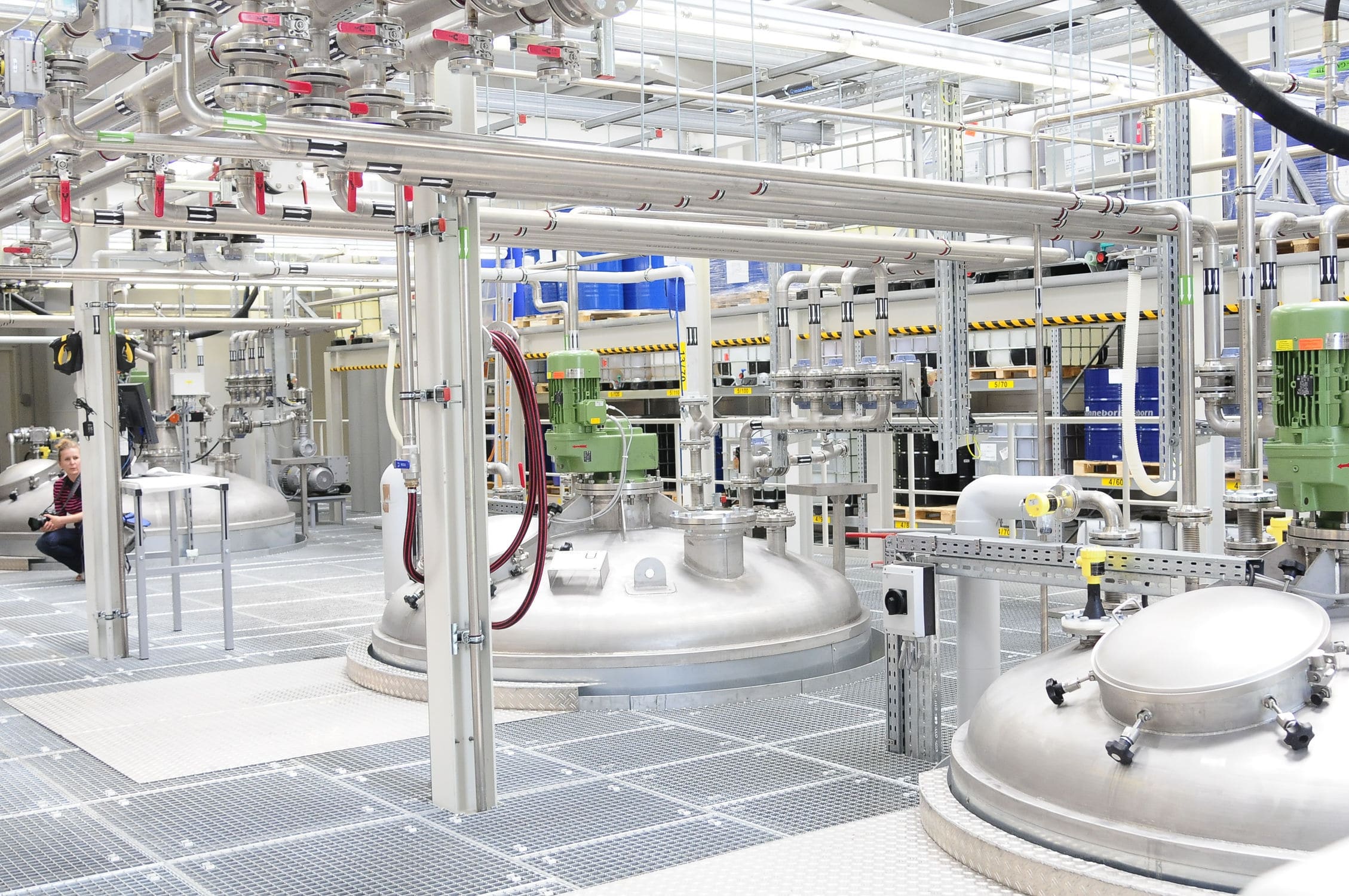


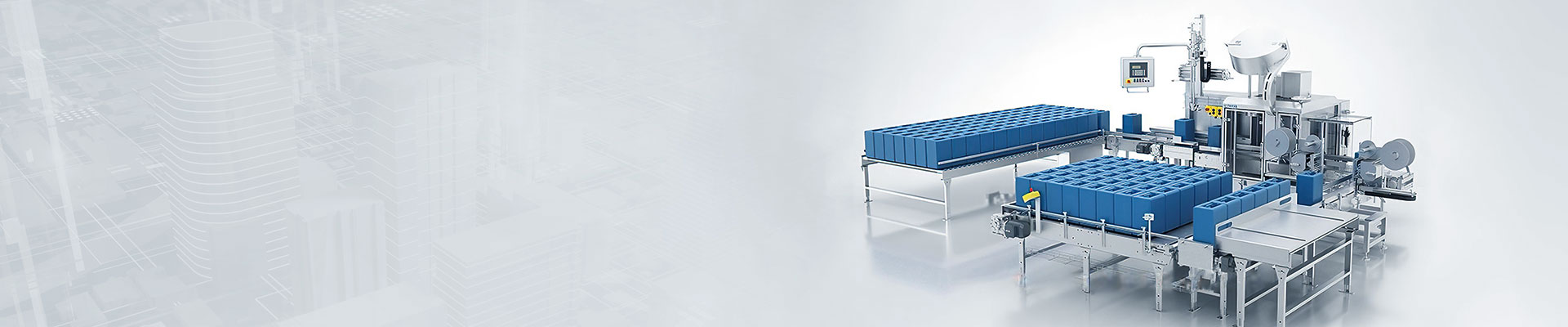
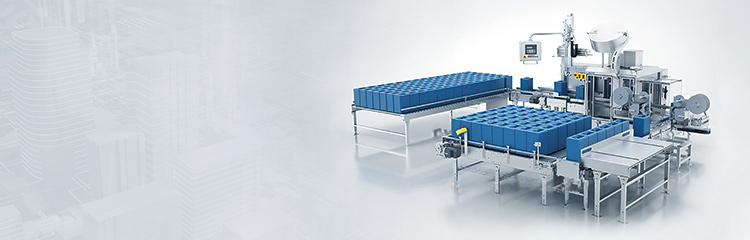


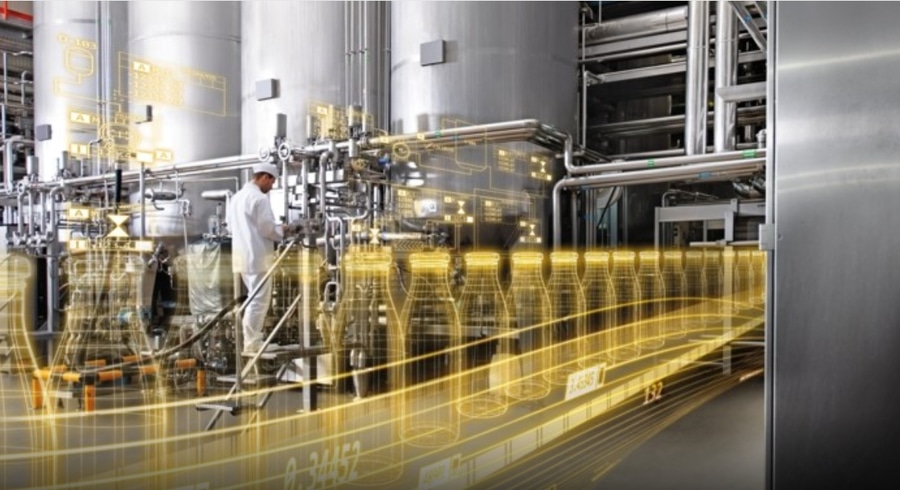
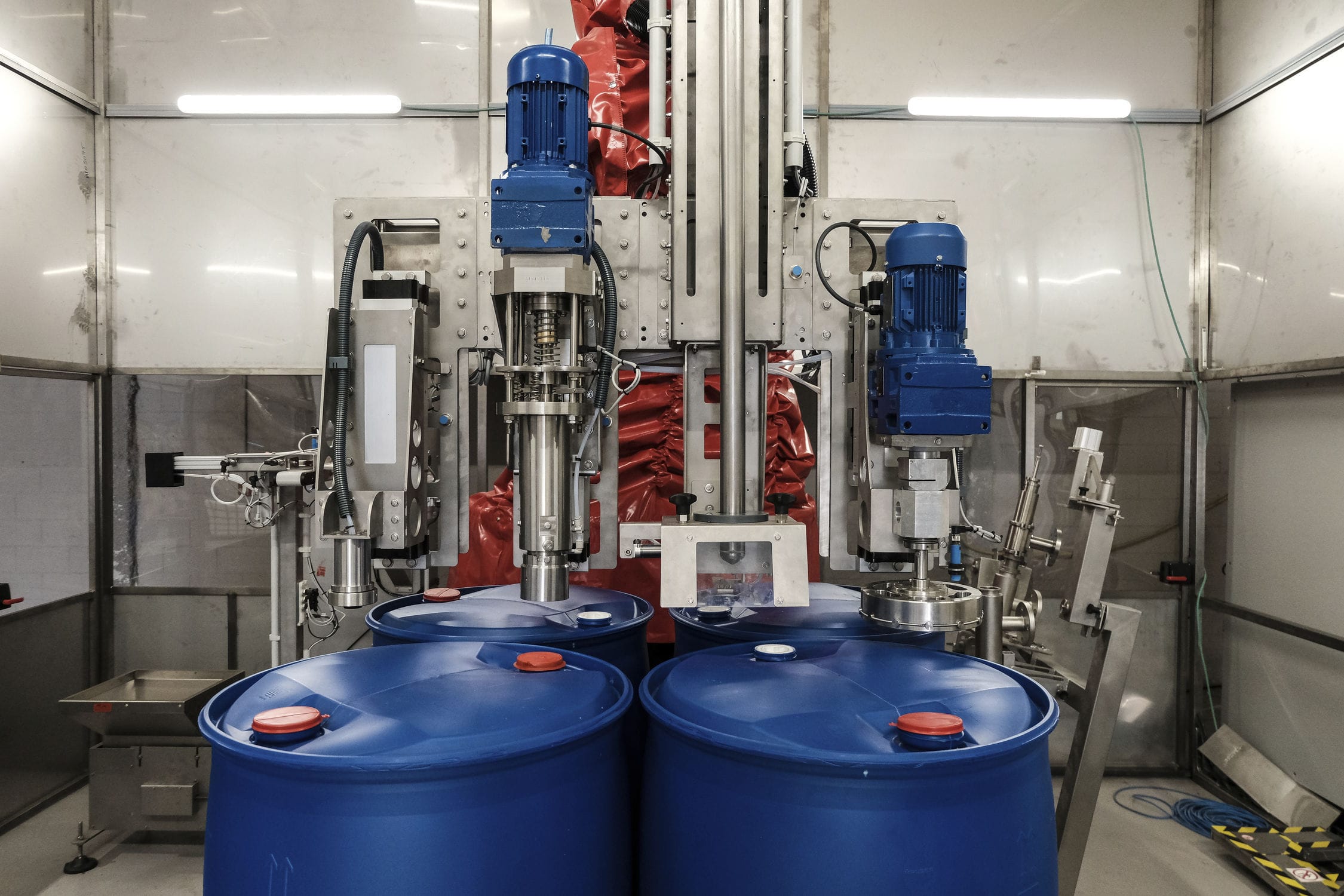
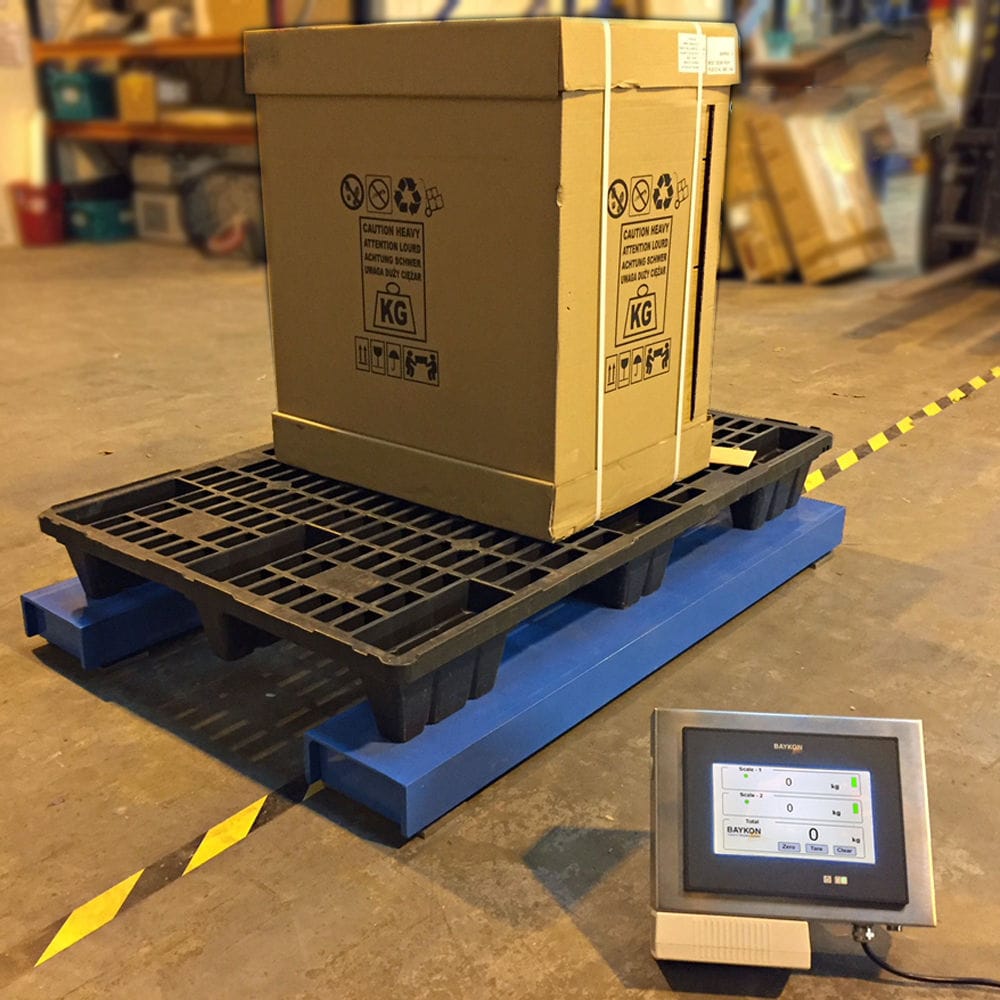


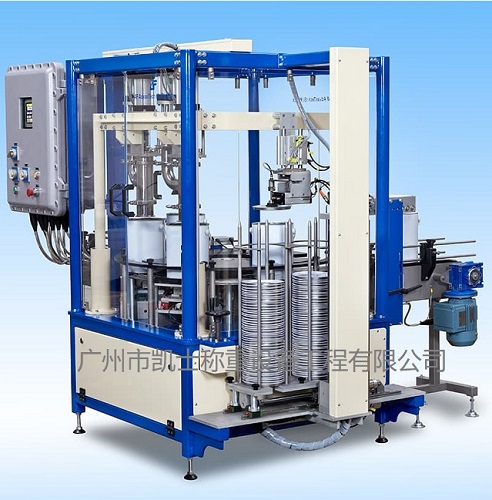
The quantitative dye adding filling machine uses a piston-type metering filling gun. The driving module is controlled by a cylinder to drive a ball screw, and the distribution module uses a conical valve type one-way valve. The liquid level tracking module is realized by controlling the driving ball screw. The automatic control adopts PLC, which is widely used as the control center. The electronic scale adopts the automatic weighing method. To improve the operability of the control equipment, the human-machine interface enables convenient selection and invocation of filling parameters, and provides intuitive access to the filling results.

 020-34563445
The quantitative automatic Filling machine adopts fully automatic bucket sorting and taking equipment. From the stage of taking the buckets, it is fully automated. All you need to do is to neatly place buckets of the same specifications and models at the designated positions. The conveyor will accurately take out one packaging bucket each time and precisely transport the bucket to the filling nozzle through the power track. The filling head's discharge device is equipped with an Electronic scale and an electrical and control system with PLC as the core. The electronic scale is the detection element, the variable frequency control is the execution element, the human-machine interface is the monitoring means. Through the electronic scale, all the analog and digital quantities required by the Filling system are collected. Using A/D chips and anti-dripping leakage technology, various operation processes are interlocked controlled. A separate cylinder-controlled residual liquid collection tank is installed below the filling head, combined with the adjustable-speed filling function. The conveyor belt starts and moves the bucket forward. After passing the bottle inspection photoelectric counting (8 buckets), the front bottle-blocking cylinder acts to block the subsequent buckets, the carding cylinder acts to card the bucket mouth (for large-bore buckets, this function will be closed), the filling head descends to fill, the filling head descends, the leakage-receiving cylinder extends to receive the leakage, the rear bottle-blocking cylinder acts, and the bucket moves forward to complete one filling.
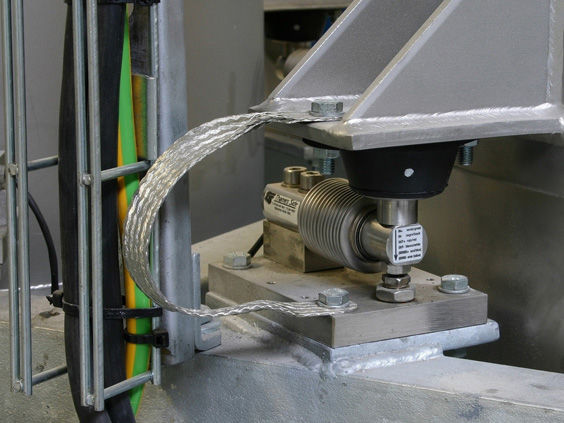
The components of the liquid automatic filling machine mainly include an electronic scale, PLC, conveyor, filling machinery, touch screen, and up-and-down sliding filling guns, etc. During the operation of the PLC system, it can read the relevant information of the material weight, and at the same time, it can start the up-and-down sliding filling guns that move up and down according to the program to perform a series of operations such as material recovery and weighing. Moreover, when the filling starts, the piston of the up-and-down sliding filling gun may occasionally have a slight dripping and leakage situation. The dripping and leakage can be controlled by the residual liquid collection tank for recycling operations. And when the material gets closer and closer to the target value, it can reduce the dripping amplitude of the up-and-down sliding filling gun in actual operation to a certain extent, thereby effectively achieving precise recycling operations. When the material reaches the weight value set by the program before reaching the target value, the filling process will stop. During the operation of the automatic filling material supply control system, both rapid or precise recycling can adjust the amplitude of the dripping by frequency conversion. At the same time, during the weighing process of the material, the touch screen can display the actual weight of the material in real time, and the accuracy of the material weighing can be controlled within the error range.
The automatic Liquid filling machine fills each weighing module separately. It generates driving force through the rotation of a servo motor, and drives the piston rod to move up and down through the transmission of a ball screw. The ball screw and the piston rod are connected by a slider. To ensure the smoothness of the slider's movement, a linear guide rail is installed on the left side of the slider. Under the drive of the servo motor, the piston rod of the piston-type metering filling gun moves up and down reciprocally. The metering filling gun is of a cylindrical structure, and the movement distance of the piston rod corresponds to the filling weight of the metering filling gun. A one-way valve is selected as the flow distribution mechanism. During liquid intake, the one-way valve at the intake port opens, and the one-way valve at the outlet port closes. During liquid filling, the one-way valve at the outlet port opens, and the one-way valve at the intake port closes, thus completing the liquid intake and filling process. The filling nozzle is connected to the flow distribution structure through a steel wire hose. The filling container is placed on the electronic scale tray. The liquid level tracking module uses a stepper motor and a ball screw. The ball screw converts the rotation of the stepper motor into the up and down movement of the tray, thereby ensuring that the distance between the nozzle and the liquid surface of the container is constant, reducing splashing and foaming during the filling process. On the human-machine interface, by changing the filling quantity, filling speed, and other filling parameters, the PLC can send corresponding control signals to the servo motor and the stepper motor based on the input parameters, achieving control of different filling parameters.
The automatic weighing filling machine is a eccentric barrel filling device based on visual positioning. Its features are as follows: on both sides of the base plate, there are 2 vertical supports. Between the 2 vertical supports, there is an eccentric barrel on the base plate. The ends of the horizontal support are respectively set on the upper ends of the 2 vertical supports. The moving mechanism is set on the horizontal support. The lower end of the moving mechanism is equipped with a camera, a lens, and a filling gun for filling the eccentric barrel. The eccentric barrel is located below the lens and the filling gun. The image signal output end of the camera is connected to the control box. The control box contains an image processing unit for recognizing the center of the filling port of the eccentric barrel through image processing. The control box drives the filling gun to move in the vertical direction and drives the moving mechanism to move in the X and Y directions on the horizontal plane. This eccentric barrel filling device based on visual positioning has accurate positioning and high automation level.
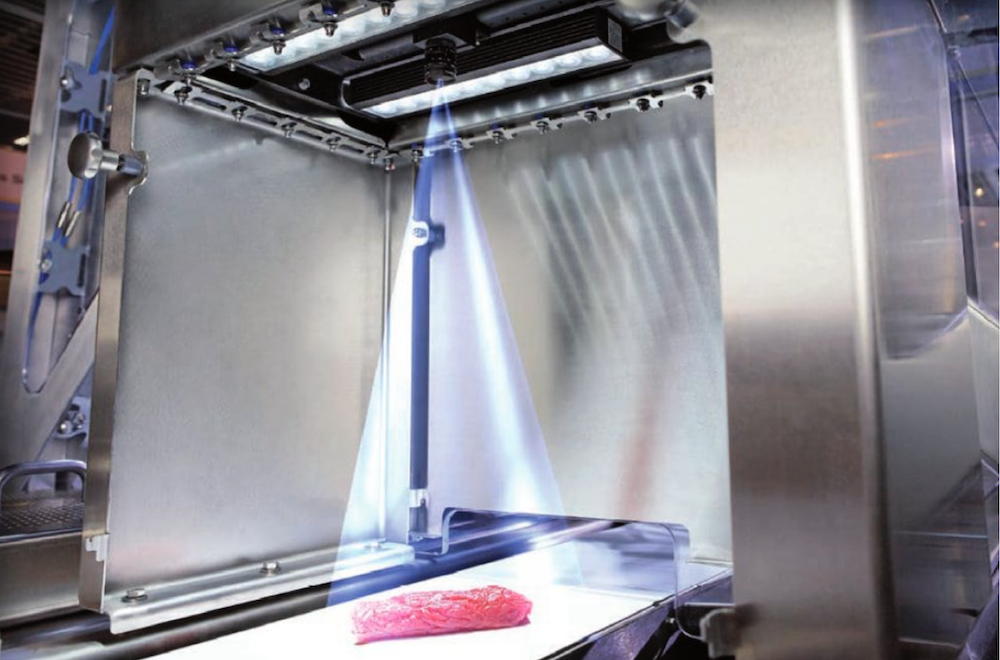
The self-positioning system for the barrel opening of the automatic filling machine acquires the images of the barrels being inspected on the electronic scale detection platform in real time, transmits them to the image acquisition card, and the input signals undergo digital decoding, A/D conversion, etc. for processing, and are then transmitted via a bus to the computer memory for storage. During the acquisition and transmission process of the image signals, noise such as environmental influence, electrical signal interference, and imperfect transmission channels causes degradation of the image. For Gaussian noise and uniformly distributed noise in the image, there should be pre-processing for noise reduction. The main purpose of pre-processing is to improve the visual effect of the image, enhance the clarity of the image, and make it more conducive to subsequent operation processing. In the Weighing system, the fast median filtering algorithm is used to reduce the noise of the signal, and then the image is binarized. Compared with the low-pass linear filter, median filtering can filter out point and coarse line noise in the image, remove binary noise, pulse noise and particle noise, and attenuate random noise without blurring the boundary. By starting the image processing program, access is made to the memory buffer of the retained image, and the position information of the circular filling port in the surface image of the barrel cover is calculated. This includes the size of the filling port radius and the coordinates of the center of the filling port. After the calculation is completed, the position information of the filling port is transmitted to the stepper motor control system, and the stepper motor control system drives the stepper motor according to the pulse instructions sent by the computer, driving the XY positioning frame to run above the filling port to achieve automatic positioning.