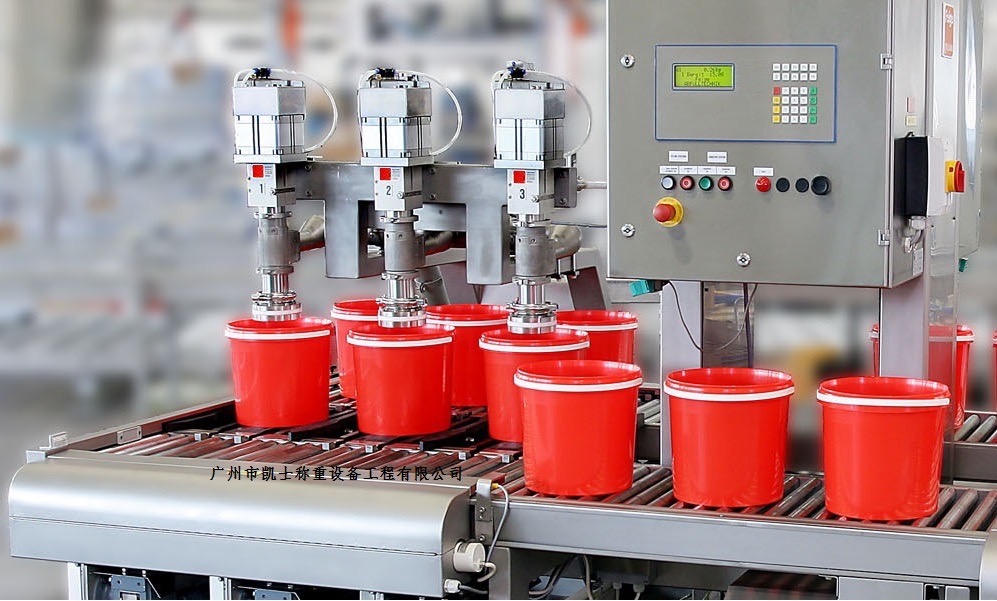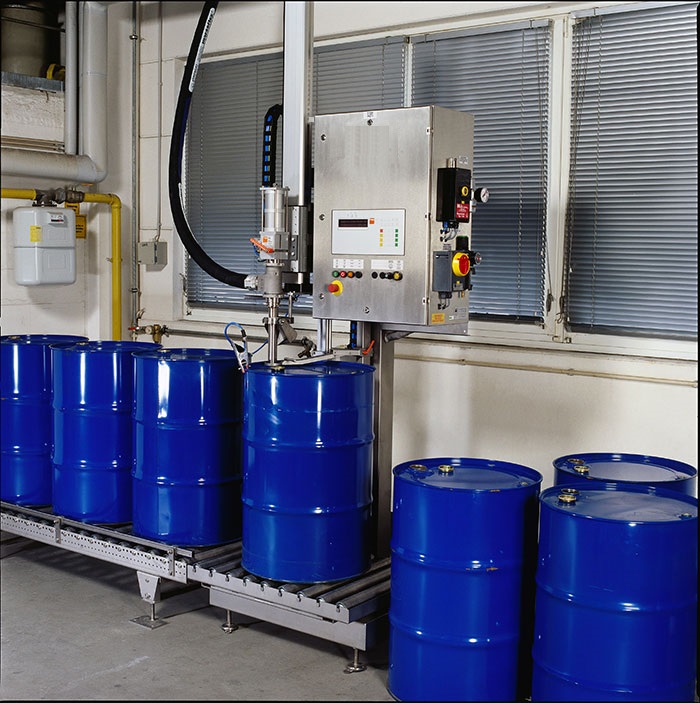





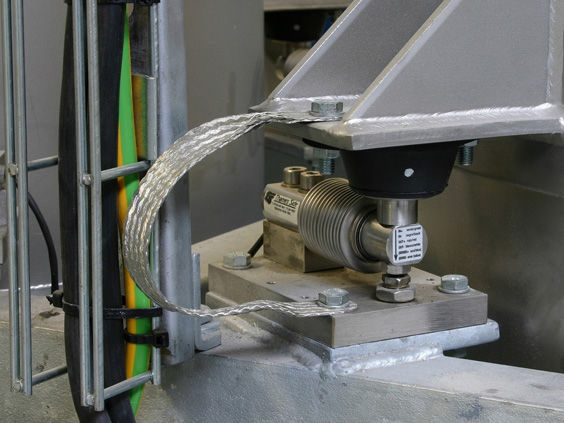
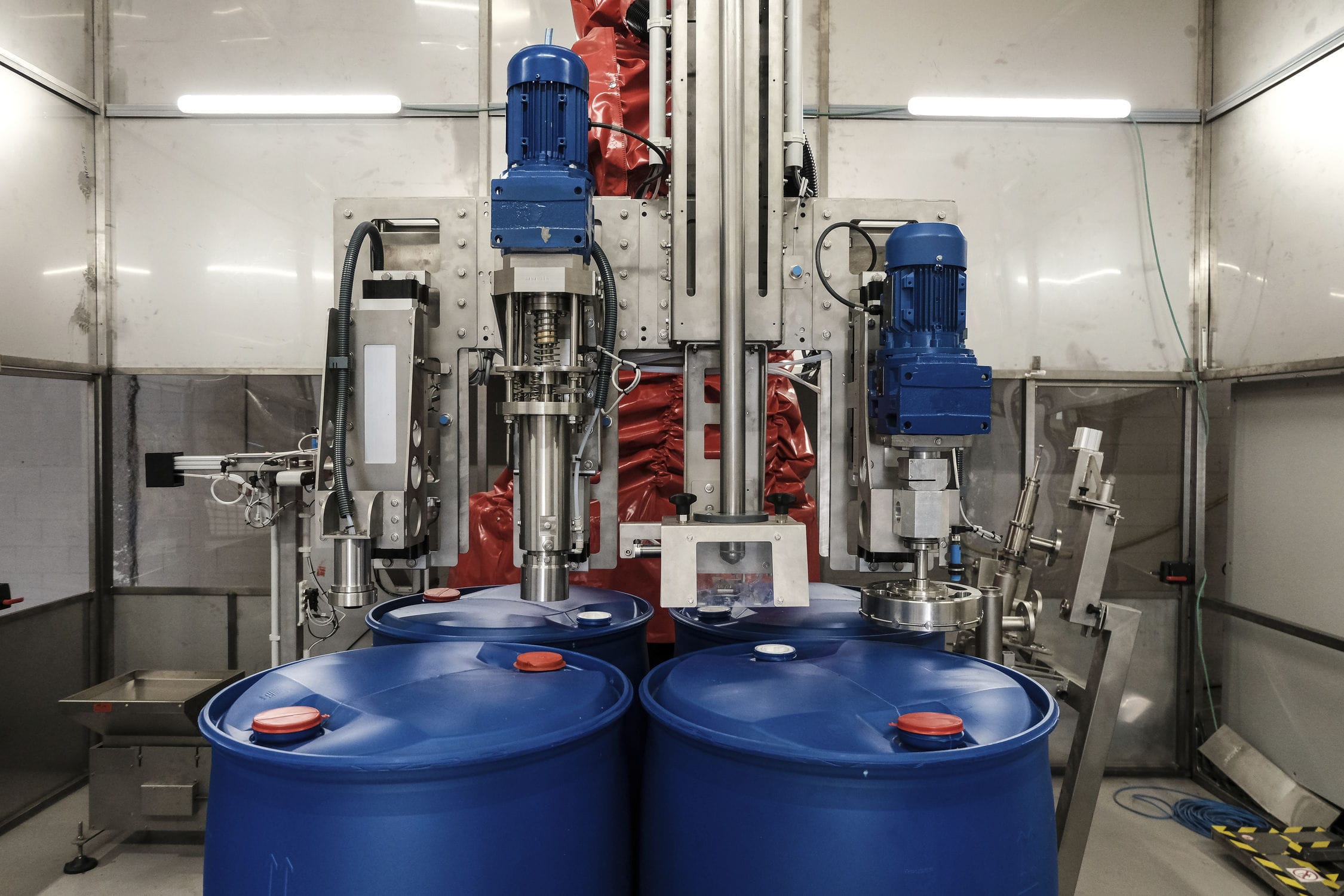


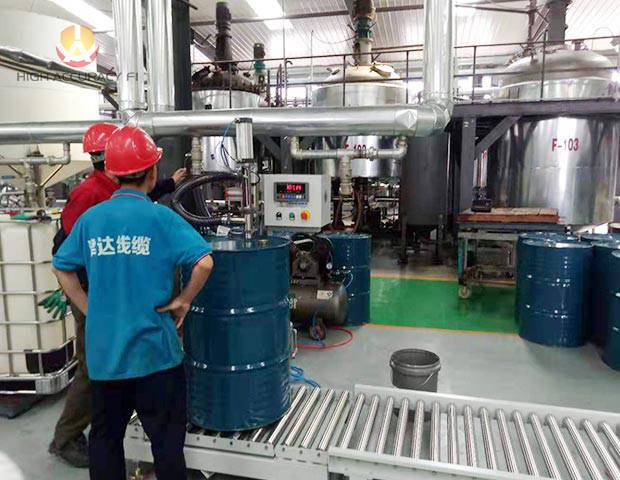
Pus Liquid Filling Machine is mainly used to collect the set value of filling quantity, process the pulse signal of weighing module, drive the relay to drive the frequency converter to control the motor and centrifugal pump to convey the material, calculate the pulse signal of pipeline tube flow through weighing module, get the weight of liquid actually discharged from the weighing system, and control the operation of the motor according to the difference between the actual filling quantity and the set value, so as to realize the precise control of filling quantity according to the actual need.

 020-34563445
The pus filling bucket machine is composed of a programmable controller and an Electronic scale to form a two-level computer control network. It is connected to on-site weighing instruments, control computers, PLCS, frequency converters and other intelligent and fast processing equipment through a fieldbus. The PLC mainly undertakes the fault detection, display and alarm of the automatic Filling machine, and simultaneously outputs signals to the frequency converter. The frequency converter then regulates the rotational speed of the electronic scale at the designated point.
The electronic scale measures the instantaneous flow rate, while the upper computer provides the set flow rate. There is a deviation between the two in real-time measurement. The PID regulation, which is the most widely used in industrial control, is adopted for actual flow control. Based on the flow deviation, the control quantity is calculated by means of proportion, integration and differentiation. The speed of the electronic scale is adjusted by the frequency converter to make the given quantity equal to the set value, thus completing the automatic filling process.
To achieve precise production and prevent production losses or even accidents caused by human operational errors during the production process, the automatic filling machine ensures the correctness of its execution through constraints such as verifying and confirming the instruction information during the feeding process and filling process, electronic signatures for important steps, and identification of material and container codes.
The CS structure is adopted, with the control and management server serving as the filling center server to manage the entire automatic filling machine. Connect the operation stations of each process through industrial Ethernet as the network. An operation station is placed in each process and connected to the equipment of each process. The functions of each workstation are realized through the operation station.
Basic parameters
Maximum weighing capacity: 300kg
Minimum sensitivity: 0.1kg
Filling error: ±0.1-0.2kg
Filling speed: approximately 150-180 barrels per hour
Control mode: 2-speed control
Filling method: Insertion type, liquid surface
Gun head tubing: Teflon gun head, valve + Teflon hose
Structural material: Main unit SUS304 stainless steel, conveying and palletizing carbon steel anti-corrosion paint.
Scale platform size: 800×800mm(304 stainless steel power raceway)
Empty barrel raceway: 800mm×2500mm(304 stainless steel power raceway), with an additional 1200mm slope unpowered roller
Heavy barrel raceways: 800mm×2500mm(304 stainless steel power raceways,2 sets
Barrel separation device: Suitable for 200L barrels, carbon steel anti-corrosion paint structure, 304 stainless steel raceway.
Palletizing equipment: Translation-type, suitable for pallets of 1200×1200×140mm, including pallet, palletizing and lower pallet conveying.
Pipeline pressure: 0.2-0.6MPa(related to material properties).
Material interface: 4 DN40 flange joints, which can be customized according to the interface standards provided by the user
Air source interface: The user provides a 12mm air pipe connector for quick coupling connection
Power supply: AC220/50Hz(provided by the user to one side of the machine)
Air source used: 0.4-0.8Mpa(provided by the user to the machine side)
Operating temperature: -10℃ to 50℃