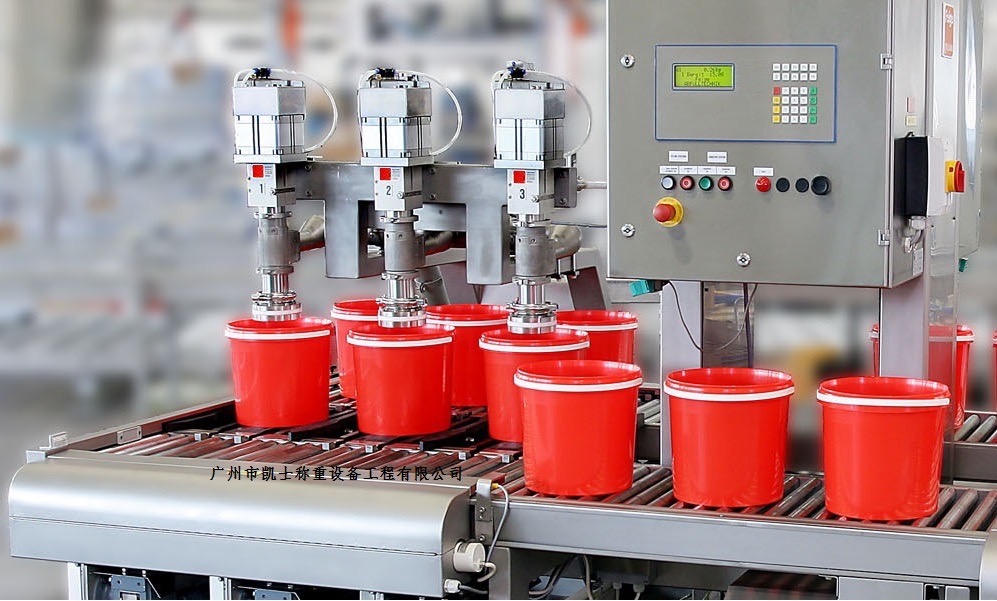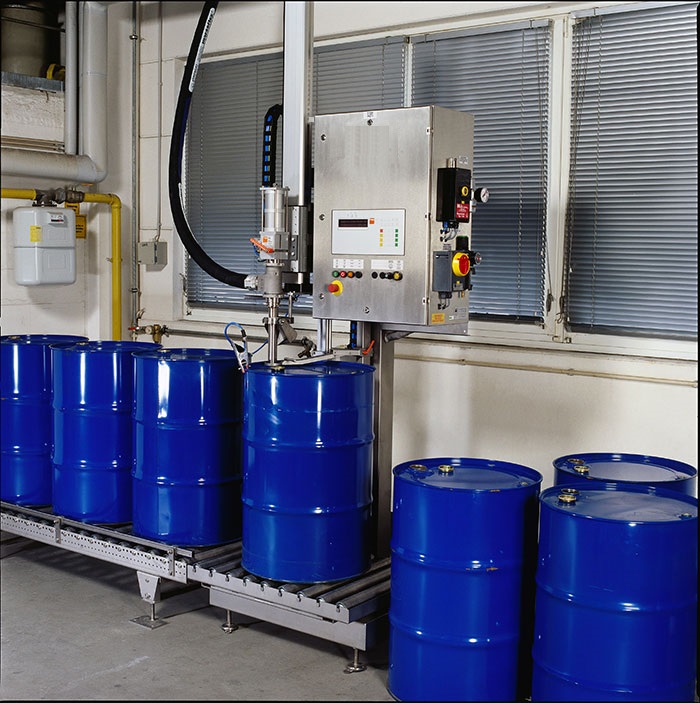


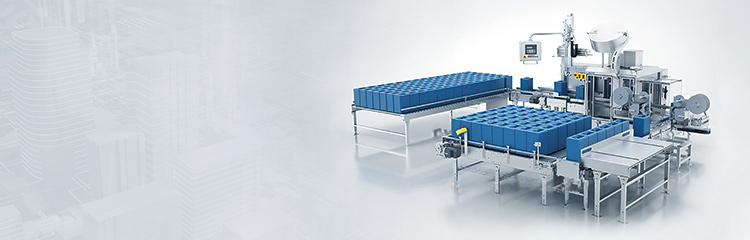


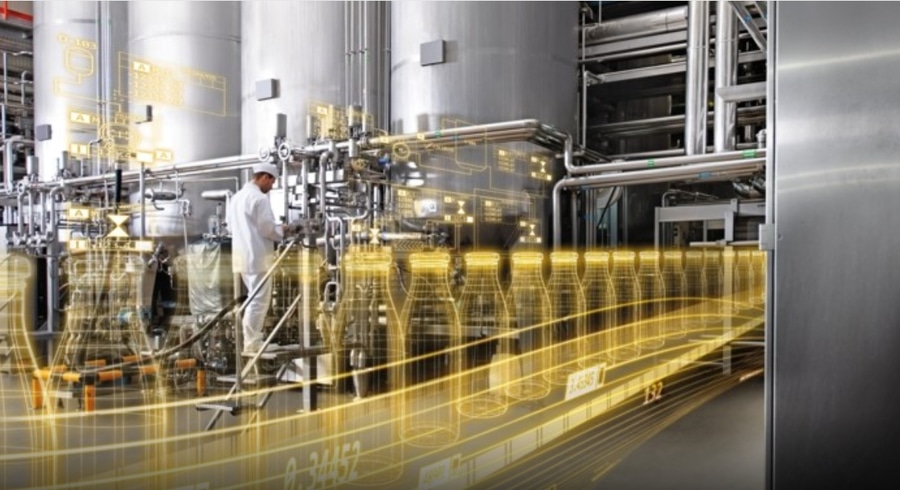
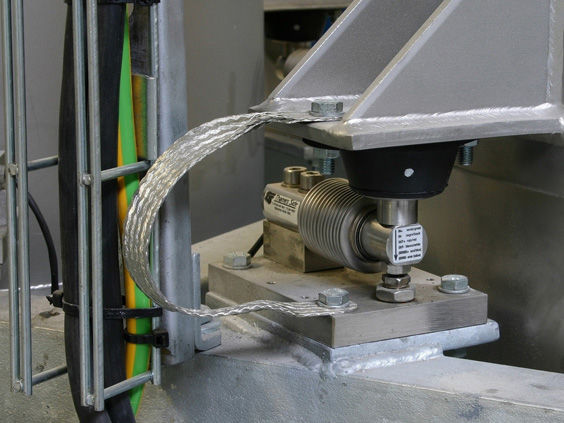
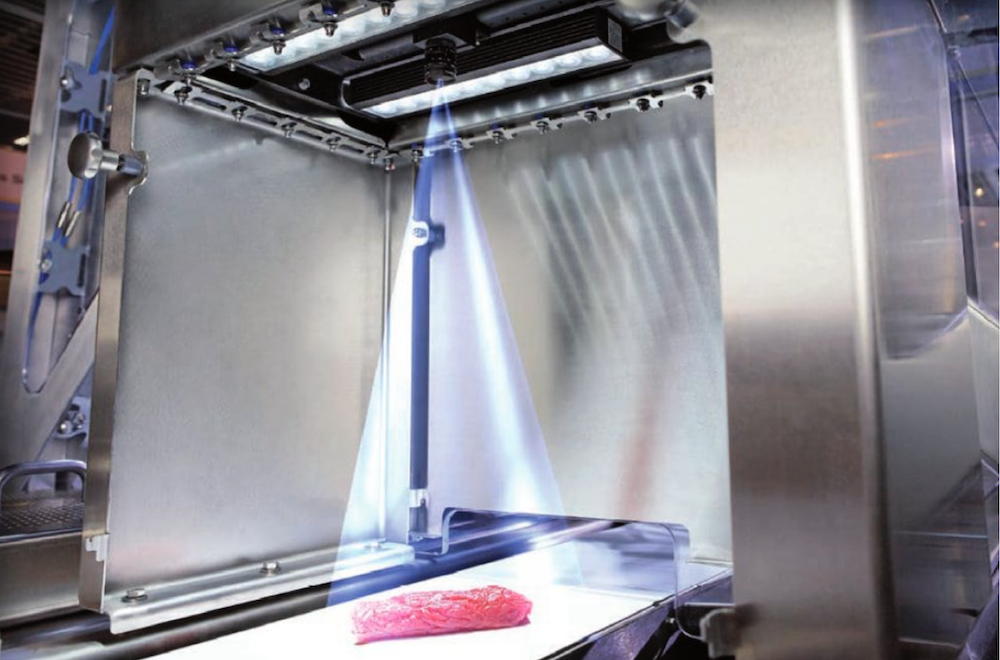
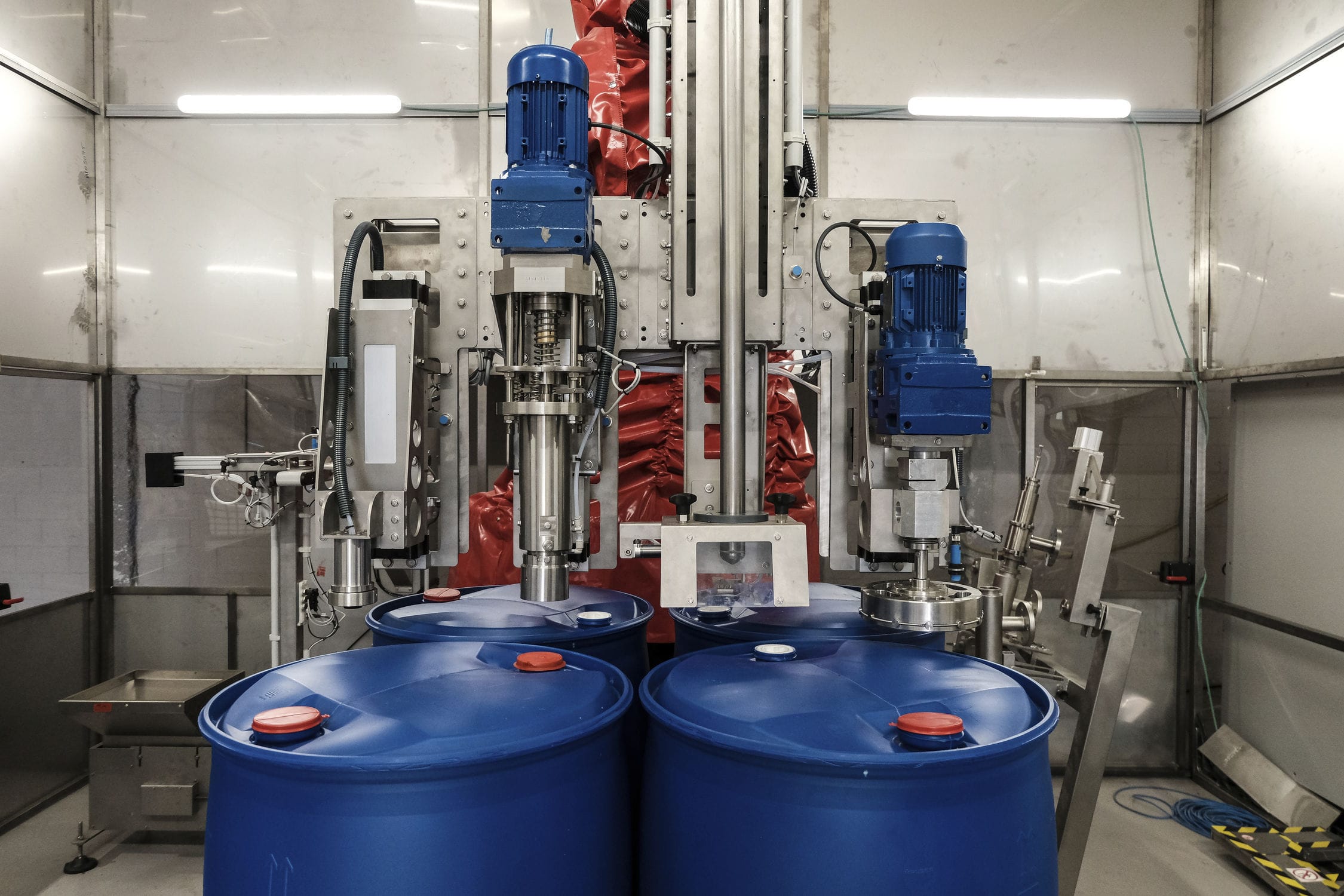
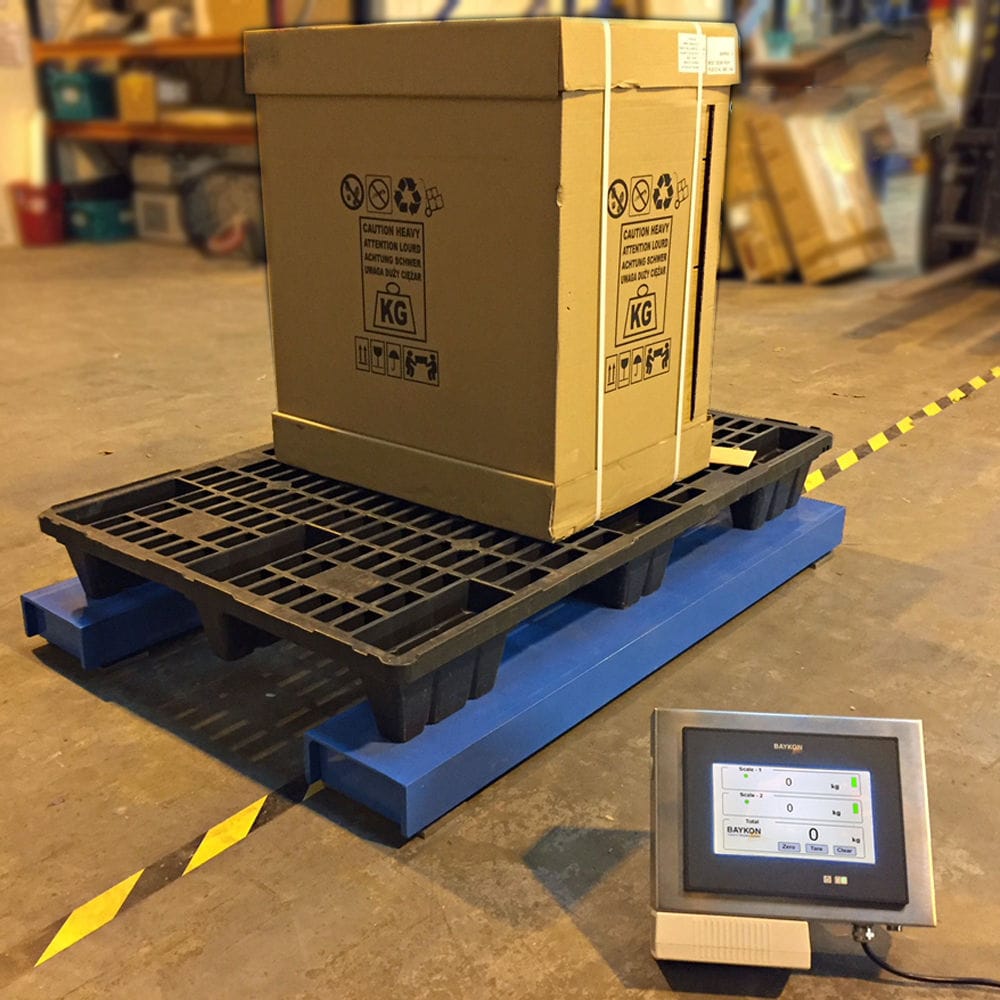


The liquid ethanol filling machine for barrels adopts frequency converter to achieve two-speed regulation control for the feeding process, thereby enabling fast filling, slow filling and point filling control functions for the materials, ensuring the accuracy and speed of the variable frequency feeding. After starting the pre-set metering feeding program, the weight of the weighing container is measured and stored, and then the rotor pump, circulation pump switches, liquid feeding pneumatic valves, and the piston of the filling gun entering the weighing container are controlled in sequence. Among them, the feeding of the filling gun piston is controlled by two-stage electronic scales and dual-scale switches.

 020-34563445
The intrinsically safe liquid Filling machine utilizes a combination of an Electronic scale, weighing instrument, and Filling system to achieve the weighing and metering of containers during filling. This allows the filling system to be applied to various filling equipment. Users can directly access the PLC system and the terminal filling system to achieve multi-range control and automated control. The system digitizes the weak weight signals output by the electronic scale to obtain high-precision weighing data. The weighing filling machine adopts inlet air speed regulation. The purpose of this is to ensure that when using inlet throttle speed regulation, the speed regulating valve is installed close to the cylinder, resulting in a lower average speed of the piston with small fluctuations. Throughout the entire stroke, the piston speed gradually increases; the cylinder inflation pressure rises slowly, and it also reaches the gas source pressure slowly. By adjusting the valve cores of filling valve 1 and valve 2 to an appropriate number of turns, it ensures that the fast feeding cylinder piston rod extends quickly and retracts slowly, thereby controlling the opening and closing speed of the fast feeding valve. The metering filling machine is mainly composed of a PLC, filling device, electronic scale, and frequency converter. The touch screen allows operators to input various chemical components and proportions of raw materials through the operator station. The flow signal is converted into a digital signal by the electronic scale and input into the functional module for comparison with the set value. The obtained control quantity is transmitted to the frequency converter through communication. The frequency converter controls the motor speed based on this signal, allowing the feeding amount of each feeding device to fluctuate slightly around the set value. The PLC output and weighing instrument settings control the filling frequency. When selecting a given ratio, the on-site frequency converter adjusts the control error based on the flow rate and material viscosity at the given ratio, flow rate, and frequency. The total flow rate and drop height of the filling can be input to automatically calculate the feeding amount of the electronic scale, and adjustments are made based on this feeding amount.
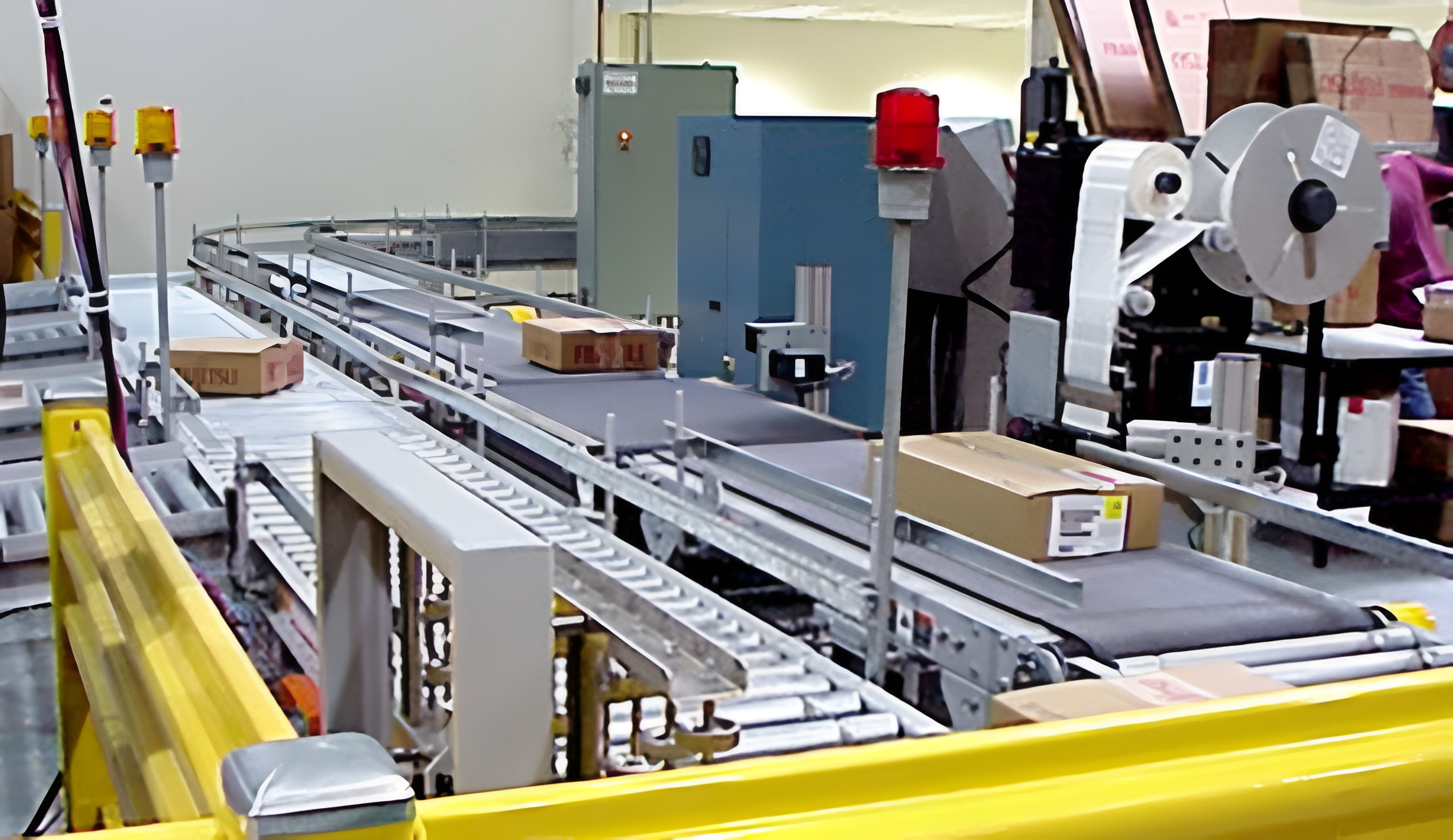
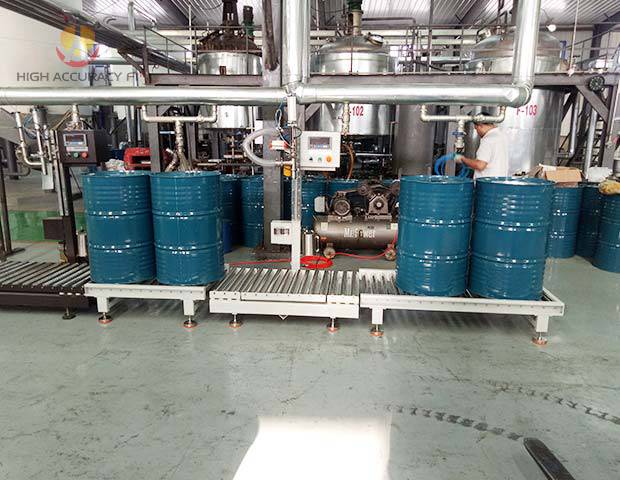
The Liquid filling machine controls the feeding speed in two stages through a frequency converter, achieving fast, slow, and point filling control functions for materials, ensuring the accuracy and speed of variable frequency feeding. After starting the preset metering feeding program, the tare weight of the weighing container is measured and stored. Then, the rotor pump, circulation pump switch, liquid feeding pneumatic valve, and filling gun piston entering the weighing container are controlled in sequence. The feeding of the filling gun piston is controlled by a two-range switch of a two-stage electronic scale. Each type of filling material is fed in two ways: coarse material and fine material, to ensure the weighing accuracy reaches 98% to 99%. The material weight is converted from the weighing instrument of the electronic scale into an electrical signal, which is read into the PLC through A/D conversion for weight calculation. After removing the tare weight, the result is compared with the set value, and the comparison serves as the basis for controlling material switching or coarse and fine feeding conversion. The quantitative filling machine adopts a valve body with a valve chamber inside. The valve body is equipped with a liquid inlet valve connected to the valve chamber, which is connected to the liquid tank through a connecting pipe. A liquid outlet valve connected to the valve chamber is installed at the lower part of the valve body. The valve body is equipped with a valve cylinder with a cylinder chamber inside, which is connected to the valve chamber of the valve body. The valve cylinder is equipped with a pressure boosting air intake device, which includes a connecting pipe connected to the valve cylinder. The other end of the connecting pipe is connected to a two-way solenoid valve and a three-way solenoid valve in sequence. The two-way solenoid valve and the three-way solenoid valve are controlled by the PLC, achieving negative pressure defoaming for normal pressure liquid inlet and outlet. According to the difference between the upper and lower liquid levels set according to the filling capacity requirements, empty buckets are conveyed from the inlet roller conveyor. When the photoelectric switch detects an empty bucket, the cylinder acts, and the piston rod pushes the empty bucket onto the filling head of the weighing mechanism roller. The filling machine cylinder is a double-acting cylinder, using a double-stroke cylinder for filling. When the photoelectric switch detects an empty barrel beneath the filling head, the cylinder activates, causing the piston rod to retract to its full extent. The filling head fully opens, allowing the liquid to flow automatically into the barrel. When the liquid in the barrel reaches the main measurement value, the weighbridge weighing instrument sends a signal, prompting the piston rod to extend for the first stroke. At this point, the filling opening narrows. When the liquid in the barrel reaches the set value, the electronic weighbridge instrument sends a signal, prompting the piston rod to extend for the second stroke. At this moment, the filling opening is fully sealed, marking the completion of liquid filling. As the piston rod pushes the next empty barrel onto the weighing mechanism roller, this empty barrel also pushes the liquid barrel onto the roller conveyor, which transports the liquid barrel away.