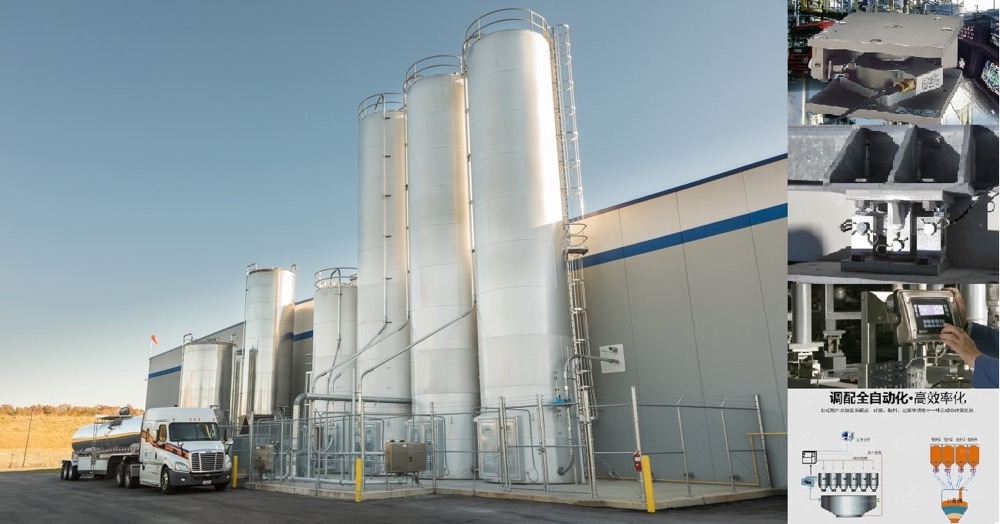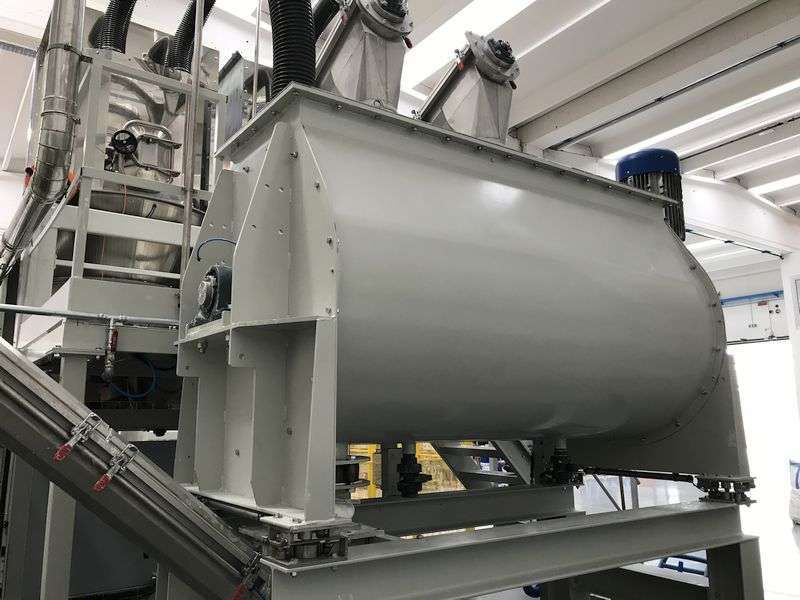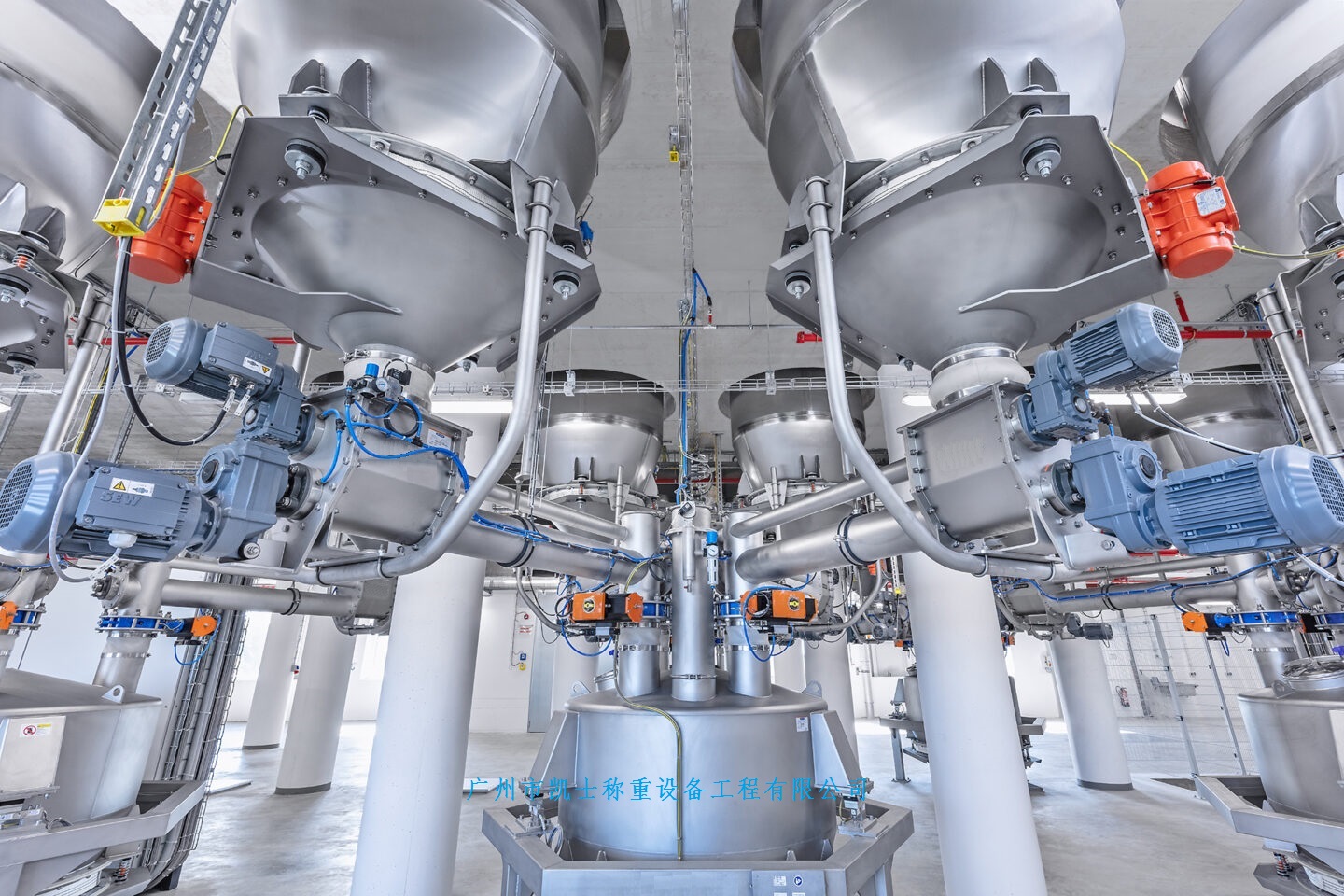




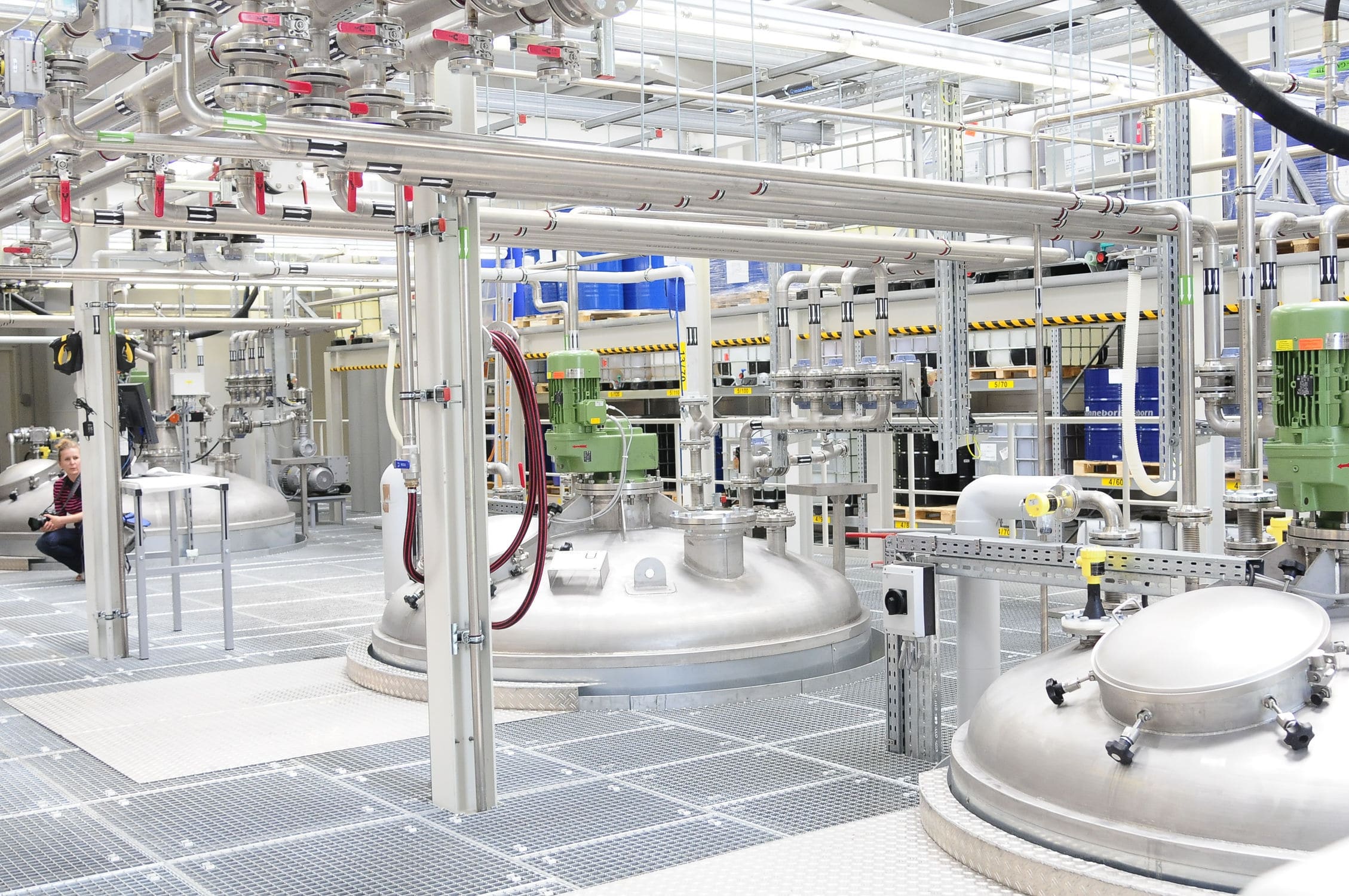


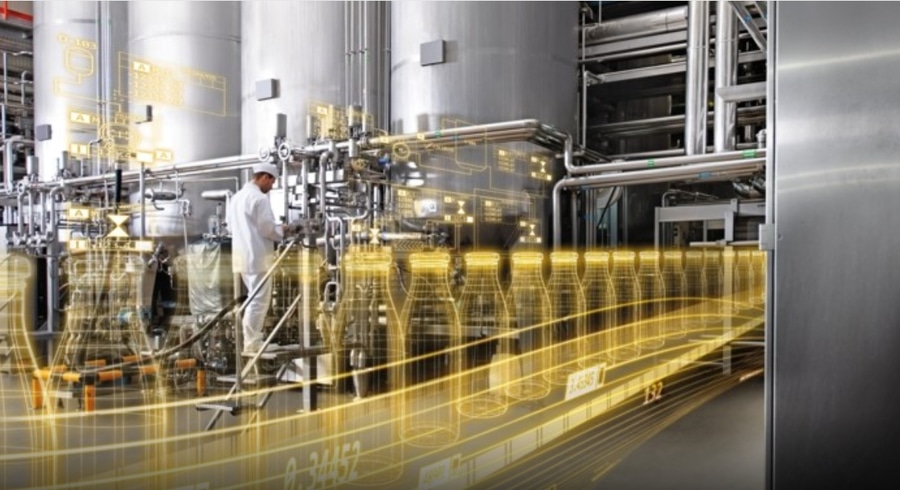
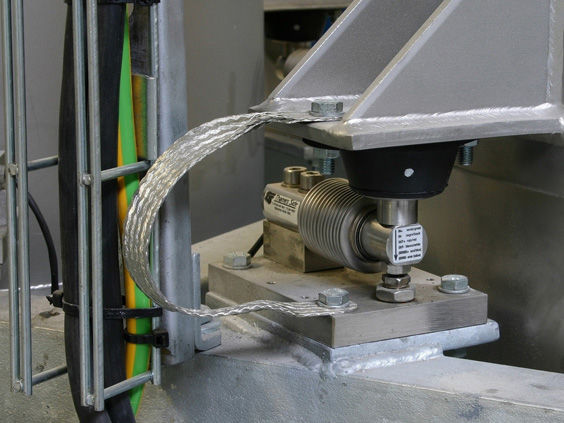
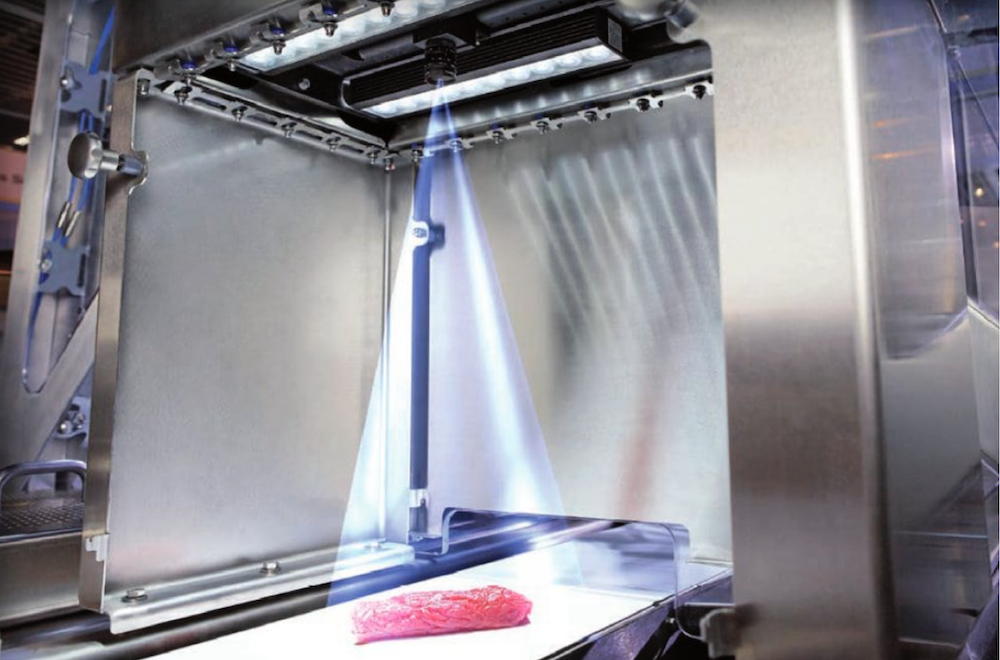
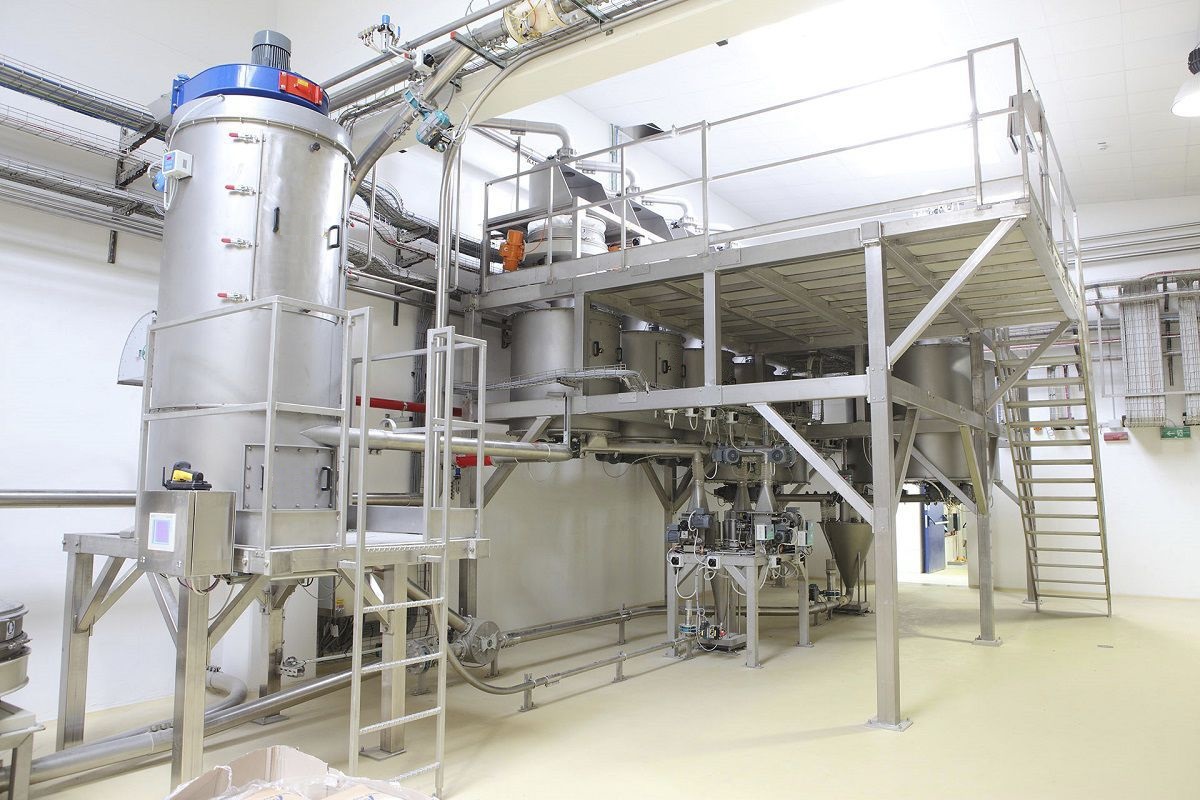
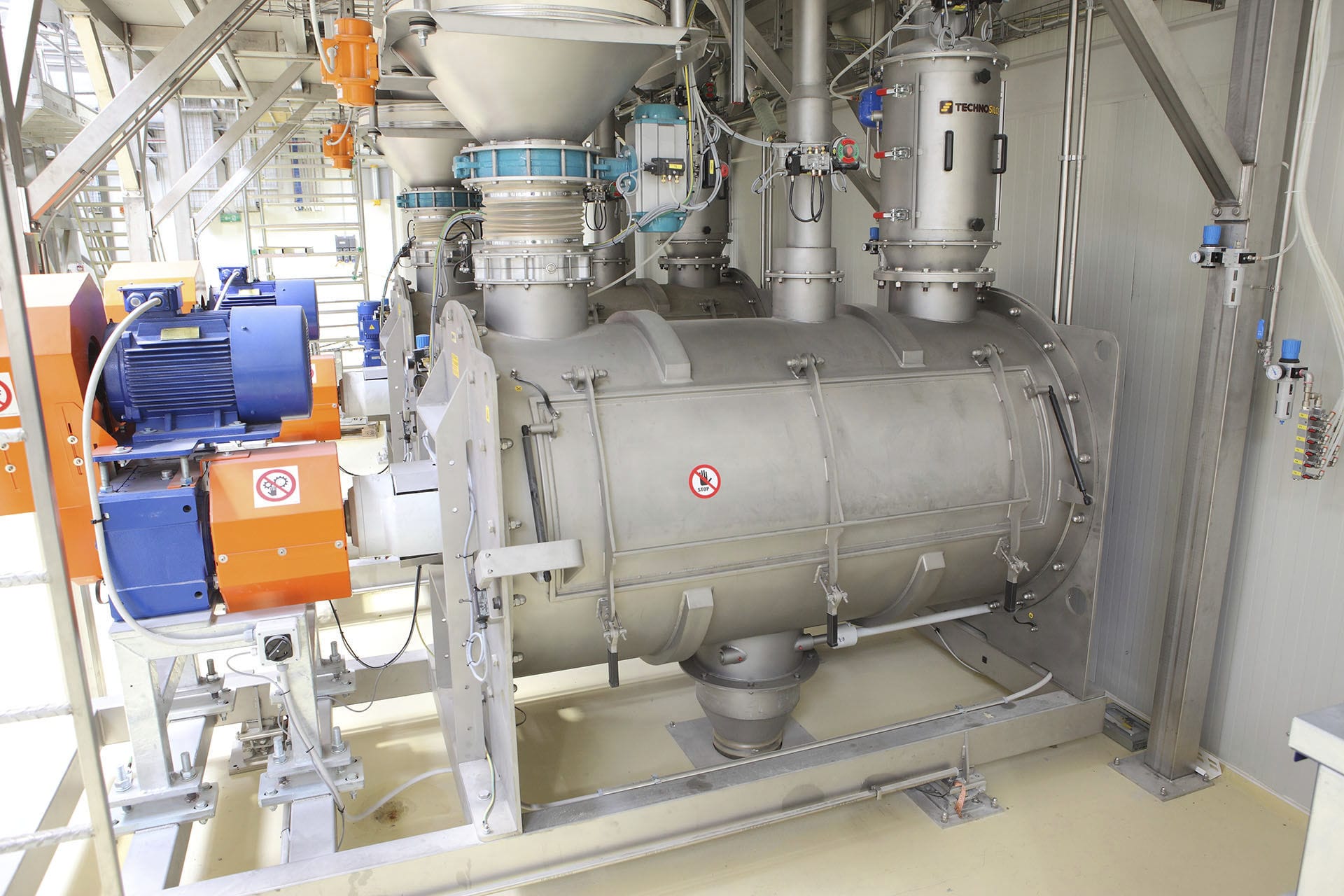
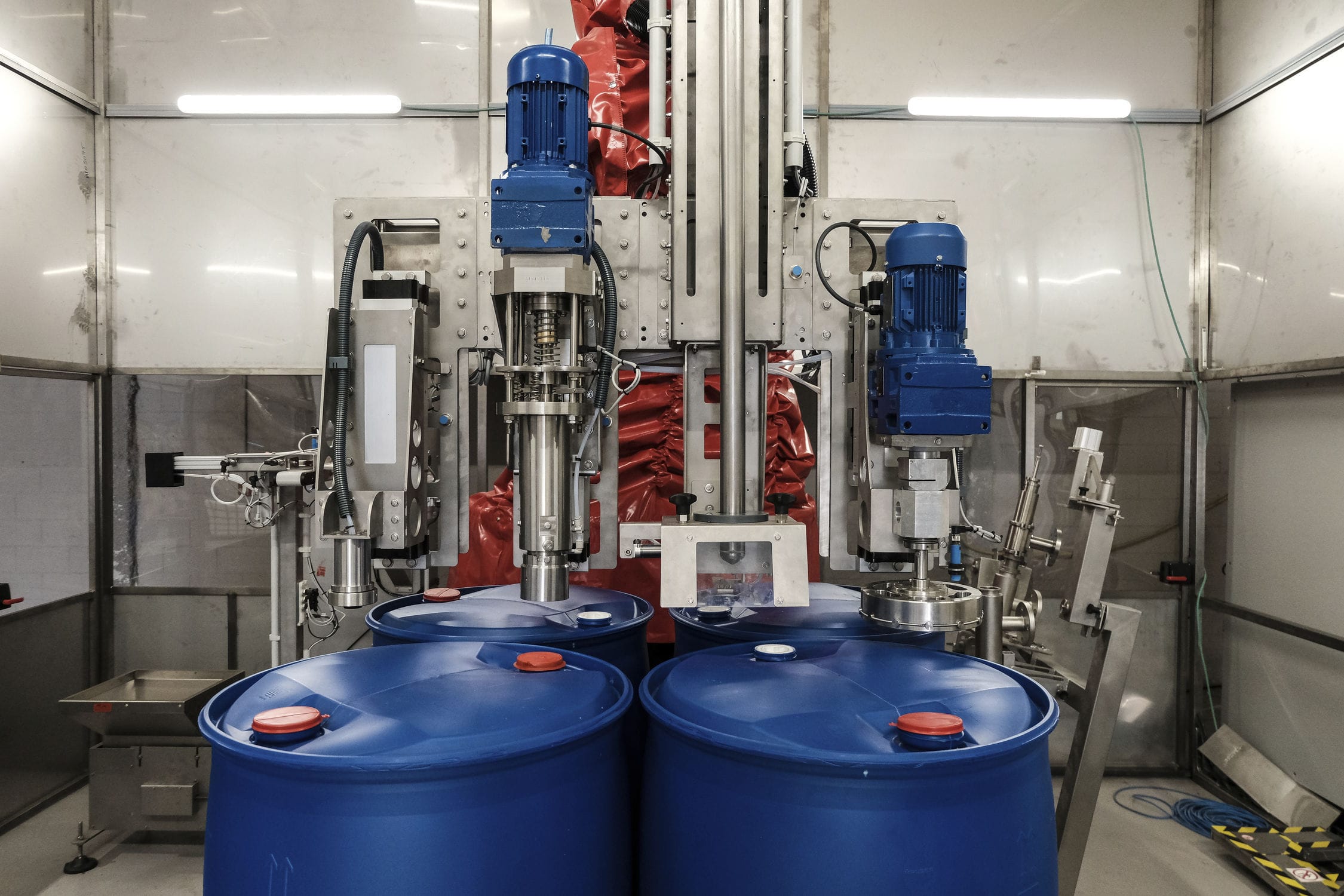


The Storage automatic dosing machine is usually composed of a weighing module, a weighing body, a discharging mechanism, a feeding mechanism and a control system. The weighing module cooperates with the weighing transmitter, PLC and touch screen, and measures the weight through the weighing module under the scale frame to ensure the quality of raw materials on the silo. When the system is running, the weight data and speed signal received by the computer are converted into accumulated value and instantaneous flow after operation, and the data are transmitted to the work control machine, and the analog current signal is transmitted to the frequency conversion controller, and the frequency conversion machine properly sorts out the current, changes the rotation speed of the superior feeder, and then completes the calculation and configuration of raw materials.

 020-34563445
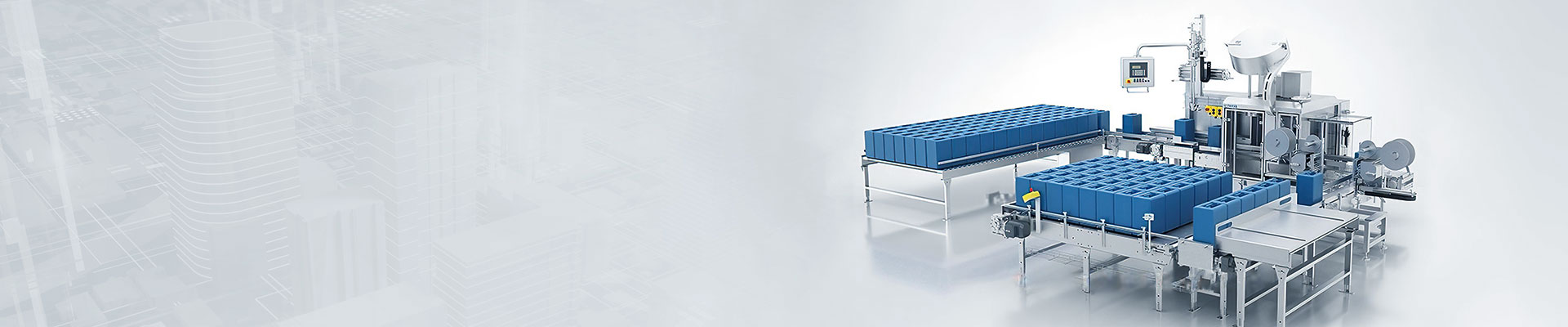
The automatic storage batching machine is a production equipment used in industry for automatically and precisely formulating different powder or liquid main materials and auxiliary materials in a certain proportion. It is usually composed of a weighing control system, weighing instruments, PLC system and upper computer, etc. The automatic batching scale consists of various equipment such as raw material storage bodies, conveying bodies, weighing batching bodies, dust removal bodies, and material mixing bodies; the batching method can be reasonably selected as "zero position method" or "decrement method" based on industry characteristics, production process requirements, and specific material properties, and has various working modes such as single-bucket single-material, single-bucket multiple-material, and multiple-bucket multiple-material. The smaller hopper has sufficient capacity for the loss of weight in the bulk output bag and the discharge of the sewage, providing enough capacity to allow the main components to be conveyed at a lower rate, and the secondary components are reloaded by a small-diameter flexible screw conveyor. In addition, the secondary components are conveyed by the flexible screw conveyor with weight loss, and manually poured into any two dumping stations equipped with a vacuum filtration system containing dust in the air. All flexible screw conveyors discharge to a common shoulder weight transition hopper installed with a weighing sensor, and before feeding a batch of materials, the signal is transmitted through a rotating air valve to the above pneumatic pipeline for accuracy by the computer.
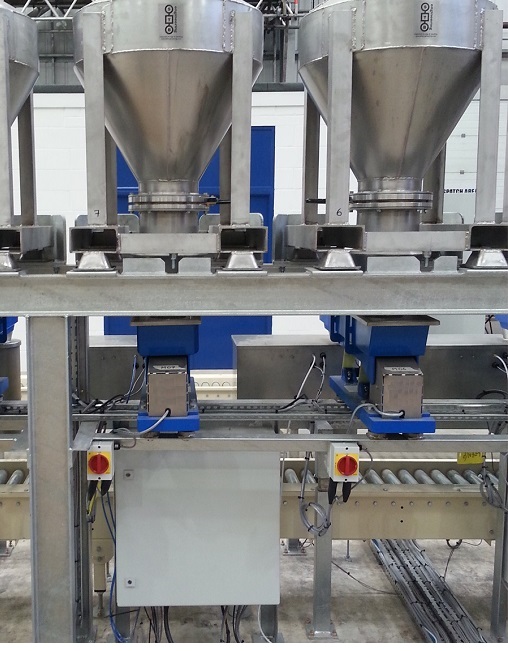
The hopper scale composition includes a powder storage bin and a base for supporting the powder storage bin. The base is equipped with a weighing module through a support frame, and the weighing module is connected to the sensor wiring box, weighing instrument and computer through signal lines. The lower part of the powder storage bin has an outlet, and at the outlet, there are a gate valve, expansion joint and blower in sequence. The blower outlet has a drum, and the gate valve's gate end has a cylinder, which is connected to the computer. By static discharging and using the weighing sensor for weighing simultaneously, the weighing is precise and stable, and the air pump can be controlled by the computer to open and close the gate valve, and the quantitative filling of the material is achieved through the quantitative mechanism. The quantitative mechanism divides the weighing of the material into with and without weighing bins, and is realized by the weighing module installed under the support structure of the container. The self-weight and the weight of the scattered material in the container are all applied to the weighing module through the support or quantitative tray, and the force measured by the weighing module is output as an electrical signal, which is processed by signal processing circuits such as amplification, filtering, A/D conversion, etc. and then transmitted to the weighing instrument. The weighing instrument compares the signal with the calibrated data of the sensor and makes a judgment, and calculates the mass of the scattered material in the container. The control system outputs the quality information of the system to the display instrument, printing device, etc. according to the system settings, and outputs control signals to the actuator according to the control requirements. During the feeding process of the hopper scale, the force measured by the weighing module in real time and dynamically includes the weight of the quantitative support, the weight of the material already in the container, the impact force of the material falling, and the additional force caused by the vibration of the quantitative mechanism, etc. Therefore, after certain methods are used to eliminate the interference force, the mass of the material in the container can be calculated. During the feeding process, the scattered material in the container accumulates continuously, and the total mass of the material in the container is the integral of the feeding speed. In an ideal situation, the change in the mass of the material in the container is composed of two straight lines with different slopes, corresponding to the coarse feeding stage and the fine feeding stage, with a large slope in the coarse feeding stage and a small slope in the fine feeding stage.
6) The display shows that the operation status of the control parameters during the ingredient mixing process can be shown through a computer monitor or weighing instrument.
7) Professional material handling capabilities, in combination with the characteristics of the user's raw material measurement, use various types of Feeders and inlet/outlet valves.
8) A friendly human-machine interface, can be connected to various types of controllers, to execute the quantitative measurement or batching process control.
9) Multiple control mode selection, can be controlled in the form of PLC, human-machine interface, single-chip microcomputer, industrial control computer, etc.
10) Rich system integration experience, various peripheral equipment can be designed and planned according to the user's requirements.
11) Reasonable on-site layout design, can be configured according to the user's production volume and workshop environment.
System technical characteristics
1. System measurement accuracy: less than or equal to 1%
2. Static error: less than or equal to 0.5%
3. Dynamic cumulative error: less than or equal to 1%
4. Ambient temperature: instrument: -20 degrees Celsius to -50 degrees Celsius; on-site equipment: -30 degrees Celsius to -60 degrees Celsius
5. Relative humidity: 35% - 80%