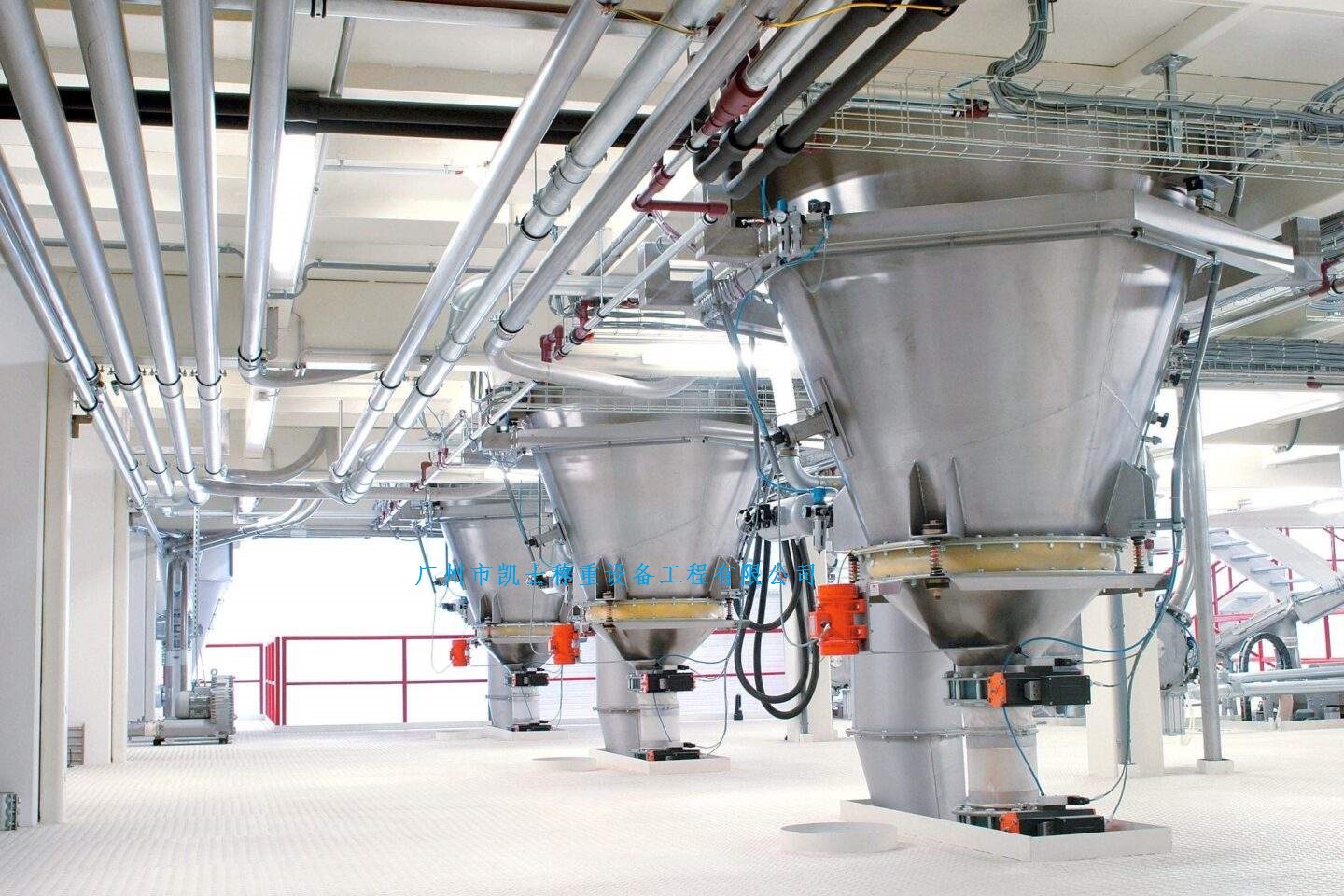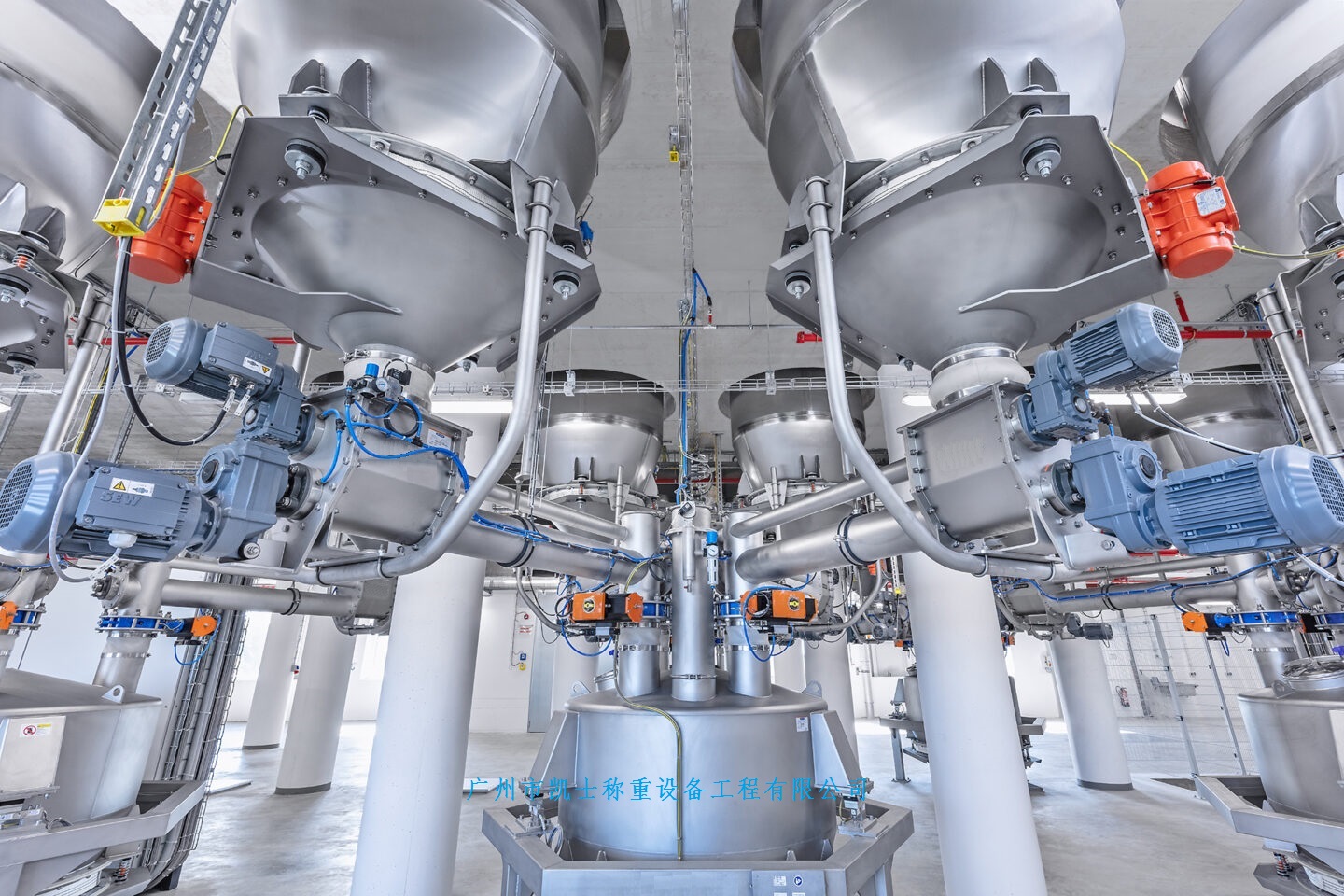





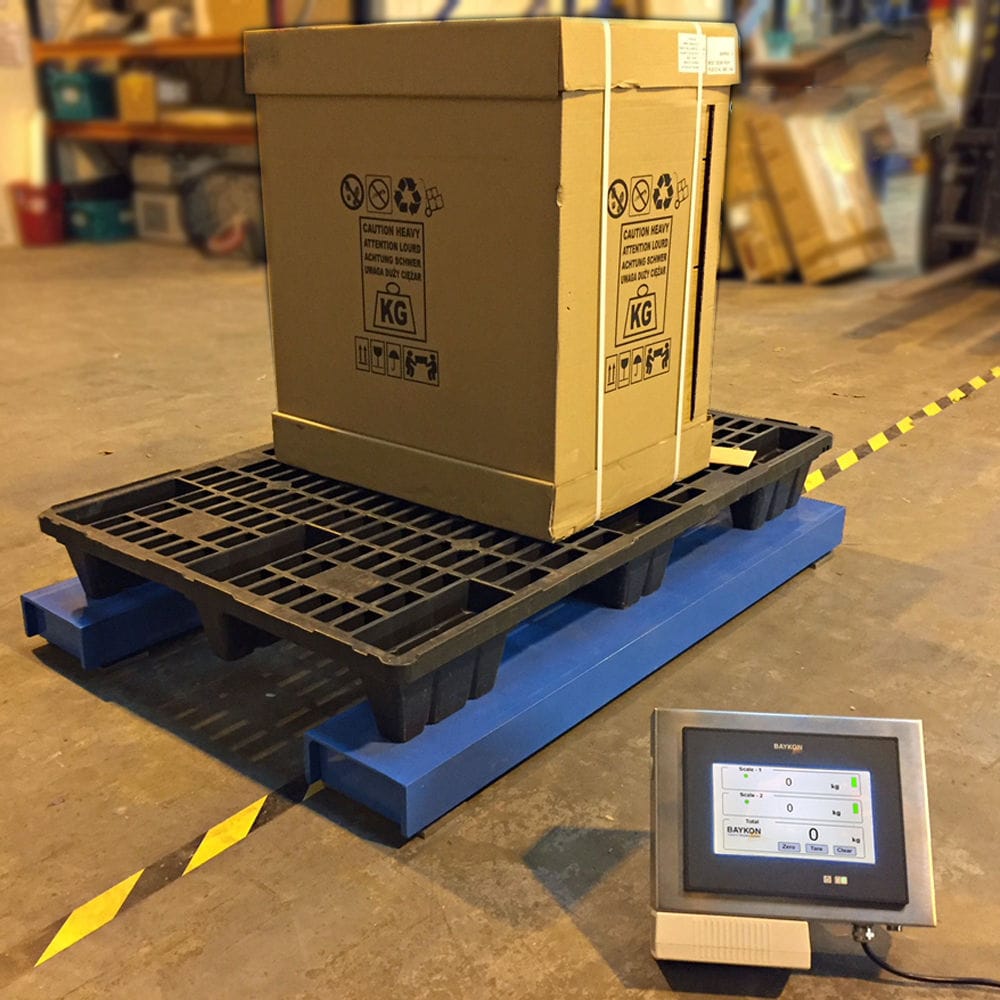


The hopper formula scale uses a laser distance sensor for measurement. The distance sensor transmits continuous electrical signals to the PLC. The PLC outputs corresponding analog signals to the pilot proportional directional valve according to the preset acceleration and deceleration positions and workstations to control the start and stop of the feeding hopper and the running speed. The discharging process and the material sticking situation of the hopper are detected by the weighing module. During the running discharging process, when the electrical signal of the weight sensor is less than the preset weight of the hopper skin, the discharging is ended and the discharging door is closed. When the weight of the hopper skin exceeds a certain weight, an alarm signal is issued to prompt the operator to clean it in time.

 020-34563445
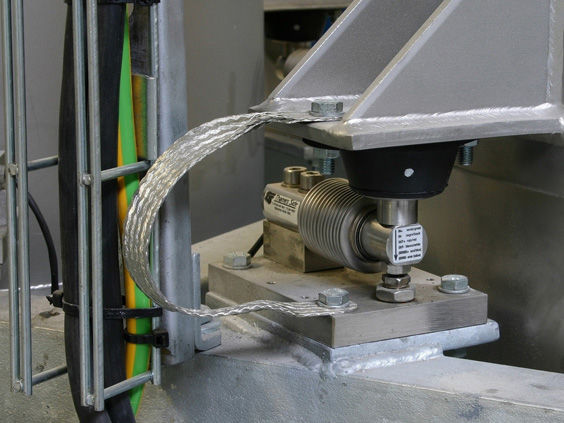
The hopper scale is realized by using PLC and the upper computer. It serves as the preparation for the control of the material batching and weighing process. The task of the batching process is to weigh the materials from each storage bin, and then mix them in the double-screw mixer according to the proportion specified in the formula to form the product. Before being sent down to the summary hopper, the weighing is completed by the hopper scale. Each hopper scale is supported by three Weighing modules, and the analog signals from the weighing modules are converted by A/D conversion and then added together. After the corresponding dimensional transformation, they become the weighing values of each hopper scale. The resistance strain type weighing module is selected as the detection component for the weight of the auxiliary raw materials. The weight of the auxiliary raw materials is converted into a 4-20mA (DC) current signal by the sensor on the hopper scale, and the measured value is compared with the given value by the weighing transmitter. If there is a deviation, the regulator will issue a regulation signal, and through the adjustment of the actuator, the vibration frequency of the electromagnetic vibrating Feeder is changed to achieve the control of the material weight, ensuring that the weight of the auxiliary raw materials is equal to the given value.
The Weighing system is used to complete the input of all manual operation commands and the monitoring of the equipment operation status. The control system includes manual control and automatic control operation modes. Manual control is mainly used for single-step operation during equipment debugging and fault handling; automatic control is used for the continuous cyclic process of the hopper automatically transporting the paste to each workstation during production. The prerequisite for switching to the automatic control mode is that the hopper must be at position 0 (the receiving position). If the hopper is not at position 0, the hopper will be moved to position 0 by manual operation. The running position of the feeding hopper is measured by a laser ranging sensor, and the continuous electrical signals are transmitted to the PLC. The PLC outputs corresponding analog signals to the pilot proportional directional valve to control the start and stop of the feeding hopper and its running speed according to the set acceleration and deceleration positions and workstations. The discharge process and the sticky condition of the hopper are detected by the weighing module. During the discharge process, when the electrical signal of the weight sensor is less than the set weight of the hopper skin, the discharge is ended and the discharge door is closed. When the weight of the hopper skin exceeds a certain weight, an alarm signal is issued to prompt the operator to clean in time.
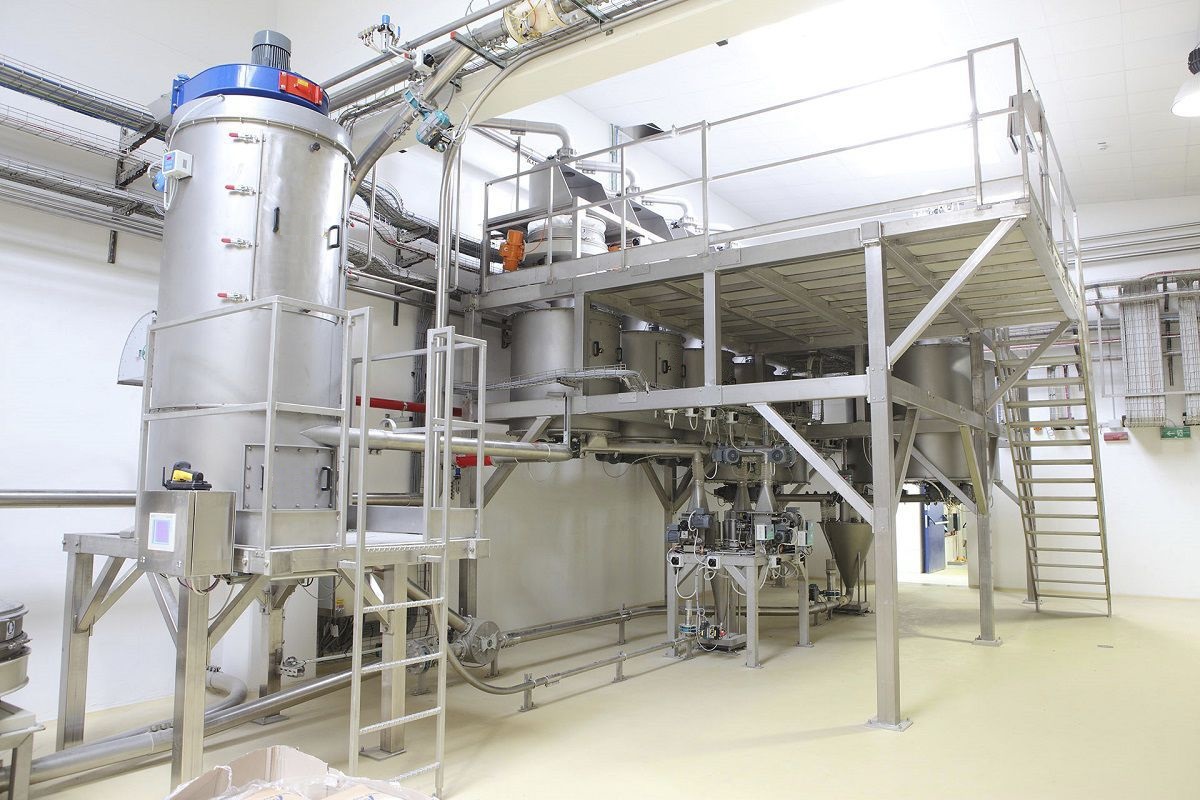
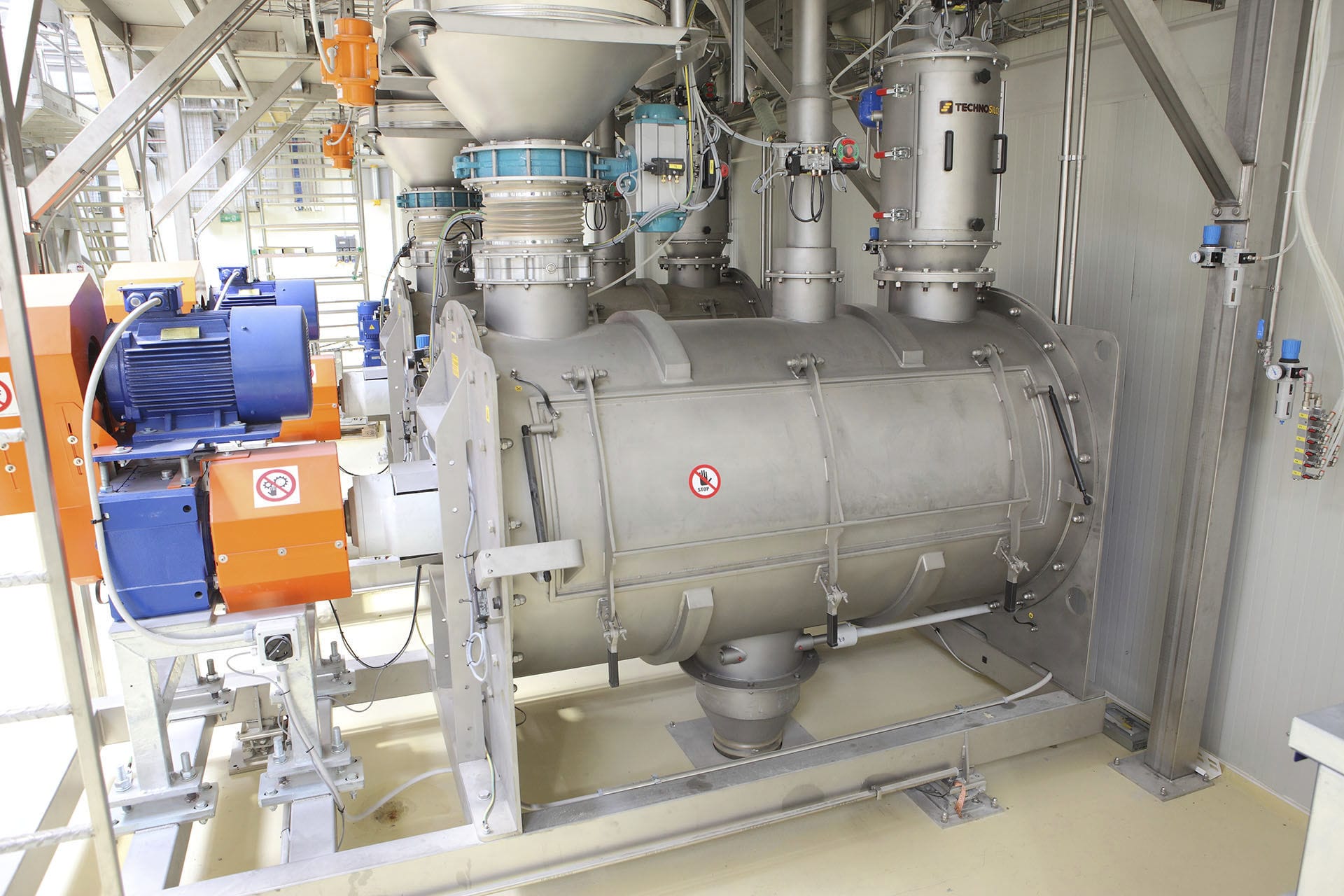
The weighing control system detects various materials on the first floor by a bucket elevator and lifts them to the self-cleaning scraper conveyor on the third floor. Two scraper conveyors are each connected to three storage bins, and there are electric gates between the conveyors and the storage bins to control the material feeding to the designated storage bins. An interlock alarm system composed of a rotary stopper type level sensor is used to open and close the elevator and the scraper conveyor. Each storage bin is equipped with a screw conveyor below. During batching, the program control is carried out by the batching controller according to the pre-determined formula, and each screw conveyor is pushed to the weighing hopper to deliver and weigh the materials. The weighing program is one material one discharge. When discharging to the double-screw mixer, the double-screw mixer is started to mix the sequentially entered materials. After the mixing is completed, the double-screw mixer starts to discharge to the finished product bin, and the next batching and weighing will be carried out after the discharge is completed. An interlock rotary stopper type level sensor is also installed at the top of the finished product bin. When the finished product bin is full, the batching and weighing will be stopped. When the material level is below the upper limit position, the system will resume the continuous batching and weighing. The entire system can be divided into two parts: the batching process before the weighing and the weighing process after the batching. The task of the batching process is to transport each material in the product ratio from the elevator and the scraper conveyor to the designated storage bins.
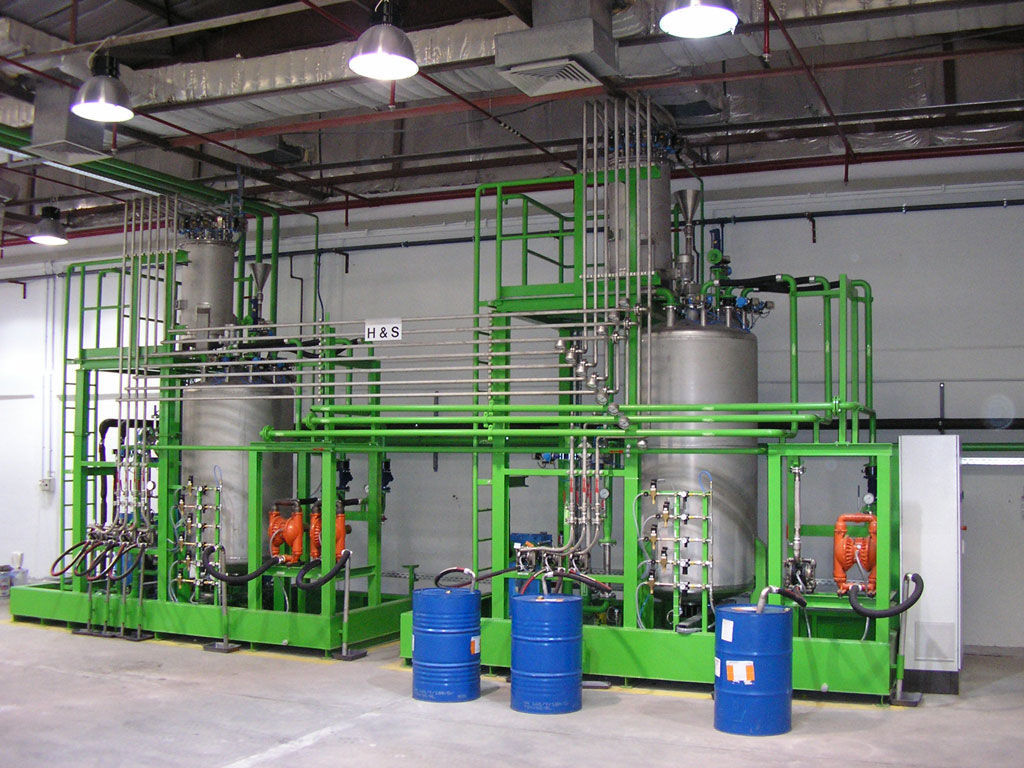
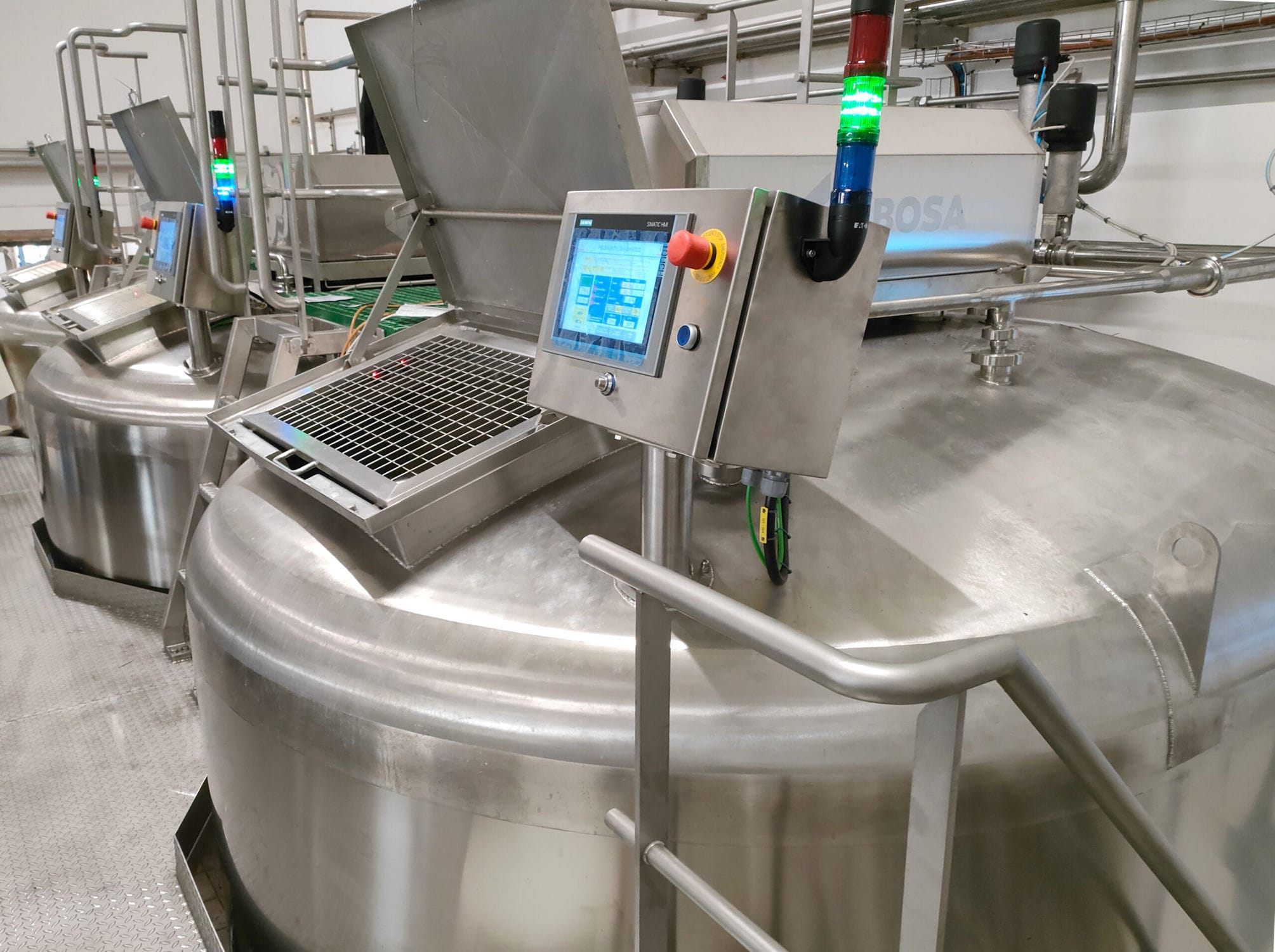
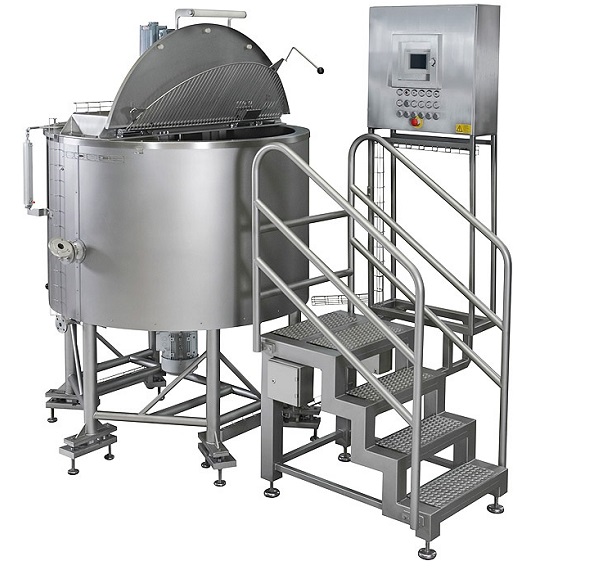
The entire batching and weighing system consists of a mixing bin, a storage tank, weighing modules, level meters, PLC, weighing instruments, the weighing system, and multiple control valves and gate valves. It is divided into mechanical and control two major parts. The mechanical part consists of three components: the feed hopper, the hopper scale, and the mixer. The feed hopper delivers the materials to the hopper scale under the drive of the motor. The hopper scale is supported on the weighing module, and the electrical signals representing the weight generated by the weighing module and the transmitter are amplified by the signal amplification module and then collected by the weighing instrument. When the predetermined weight is reached, the PLC drives the motor to open the valve of the hopper scale, and the materials enter the mixer. At the same time, the mixing motor is started. After the specified time of mixing, the discharge port is opened to discharge the materials. One batch of material mixing process is completed. The signals from the weighing module are processed by the signal amplification module, and their weight changes are a standard signal of 4-20mA. After data processing by the weighing instrument, it is transmitted to the PLC in serial communication mode. The PLC sends the received data to the touch screen for display, allowing the operator to monitor. On the other hand, the weighing instrument can also send the data to the micro printer for printing output. When it is necessary to perform mixed material mixing, the user presses the automatic key, and the PLC starts the feeding valve, which adds the required materials in a certain ratio to the mixing bin one by one. At the same time, the PC monitors the pulse signal sent by the level sensor to determine the position of the materials in the bin, thereby controlling the opening and closing of the valve of the feeding valve. After the feeding is completed, according to the preset mixing delay time, the PLC starts the mixing motor to ensure that the materials are fully mixed in the mixing bin, completing the mixing operation. Then, the discharge and pressing stage begins. The PLC controls the action of the discharge valve valve to output the materials from the mixing bin and press them into the storage tank, completing the automatic material mixing control process of one cycle. During the control process, the touch screen is mainly used to display the formula number, the batch number, and the control weight of the current material. In the manual operation mode, the user can input or modify the formula through the operator panel, and can also control the motor's start and stop according to the displayed weight value and the formula requirements.
The weighing control system for various materials is lifted to the third floor by a bucket elevator from the first floor to the self-cleaning scraper conveyor. Two scraper conveyors are connected to three storage bins respectively, and there are electric valves between the conveyors and the storage bins to control the material feeding to the designated storage bins. The storage bins are equipped with a rotary sensor-type level detector to form an interlock alarm system, which is used to open and close the elevator and the scraper conveyor. At the bottom of each storage bin, there is a screw conveyor. During the batching process, the program control of the batching controller is used to control the sequential feeding of each screw conveyor to the weighing hopper for weighing. The weighing program is one material one discharge. When discharging to the double-screw mixer, the double-screw mixer is started to mix the materials that enter successively. After the mixing is completed, the double-screw mixer starts to discharge to the finished product bin until the discharge is completed and the next batch of material mixing and weighing is performed. At the top of the finished product bin, there is also a rotary sensor-type level detector. When the finished product bin is full, the material mixing and weighing stop. When the material level is below the upper limit position, it resumes the operation and continues to weigh. The entire system can be divided into two parts: the batching process before the storage bins and the batching process after the storage bins. The task of the batching process is mainly to transport the various materials in the product ratio from the elevator and the scraper conveyor to the designated storage bins.
Main functions:
(1) Has power-off protection function: If a power-off occurs during the material feeding process, the site should be protected. Once the power is restored, a prompt screen will be displayed and wait for the button. If it is the stop button, the power-off protection state will be cleared and the initial working state will be returned. If it is the pause button, the power-off working state will be restored and continue to work;
(2) Sets two working modes: "Automatic" and "Manual". "Manual" operation is to complete a certain control section independently, such as "feeding", "mixing" and "discharging". It allows the use of the "pause/continue" key to pause and allows modifying parameters in the pause state; "Automatic" operation completes a full cycle of control, which includes feeding, stirring, discharging, etc. During "automatic" operation, only the "Pause/Continue" button is effective, while all "Manual" buttons are invalid, and parameter modification is not allowed.
(3) It has an immediate stop function: When the "Stop" button is active, any control process will stop and return to the weight display state.
(4) It has a reset function: In the weighing state, pressing the "Reset" button will make the displayed value return to zero. If the reset range is exceeded, it cannot be reset and an error message will be displayed.
(5) It has a zeroing function: In the weighing state, pressing the "Zero" button will deduct the displayed weight as the skin weight, and pressing the "Zero" button again will restore the original displayed weight.