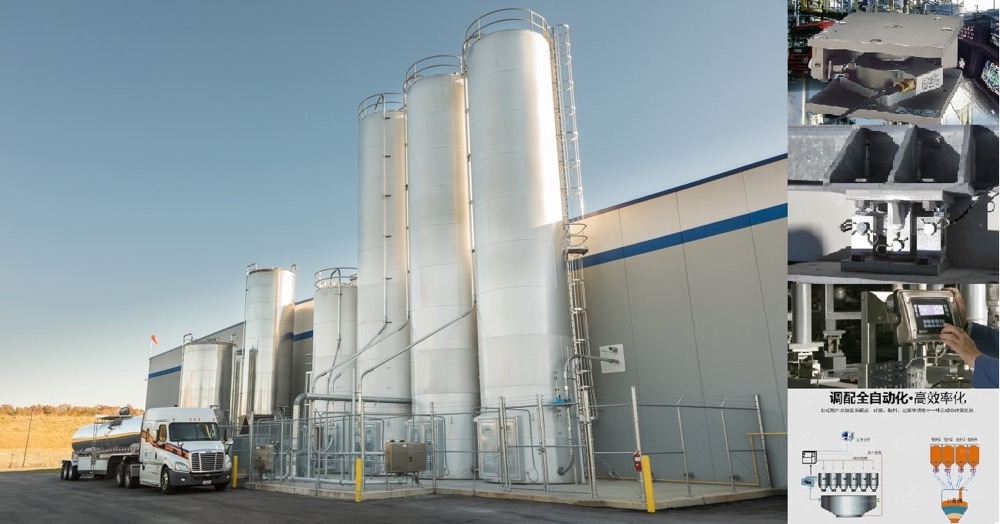










To reduce the mechanical inertia and the deviation in loading caused by factors such as the spiral feeding of the feeding equipment, the weighing discharge machine requires the PLC to issue a signal indicating that the loading is complete before stopping the feeding equipment. The loading completion signal is sent when the weight of the hopper reaches the loading completion control value. An appropriate loading completion advance amount should be selected. After one weighing cycle is completed, the loading deviation can be calculated, and the loading advance amount for each material in the next weighing cycle can be corrected using this loading deviation.

 020-34563445
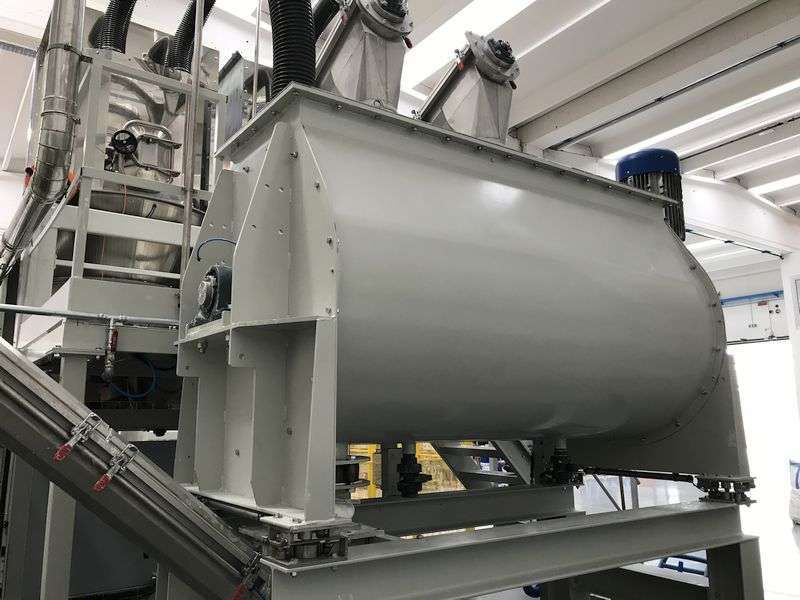
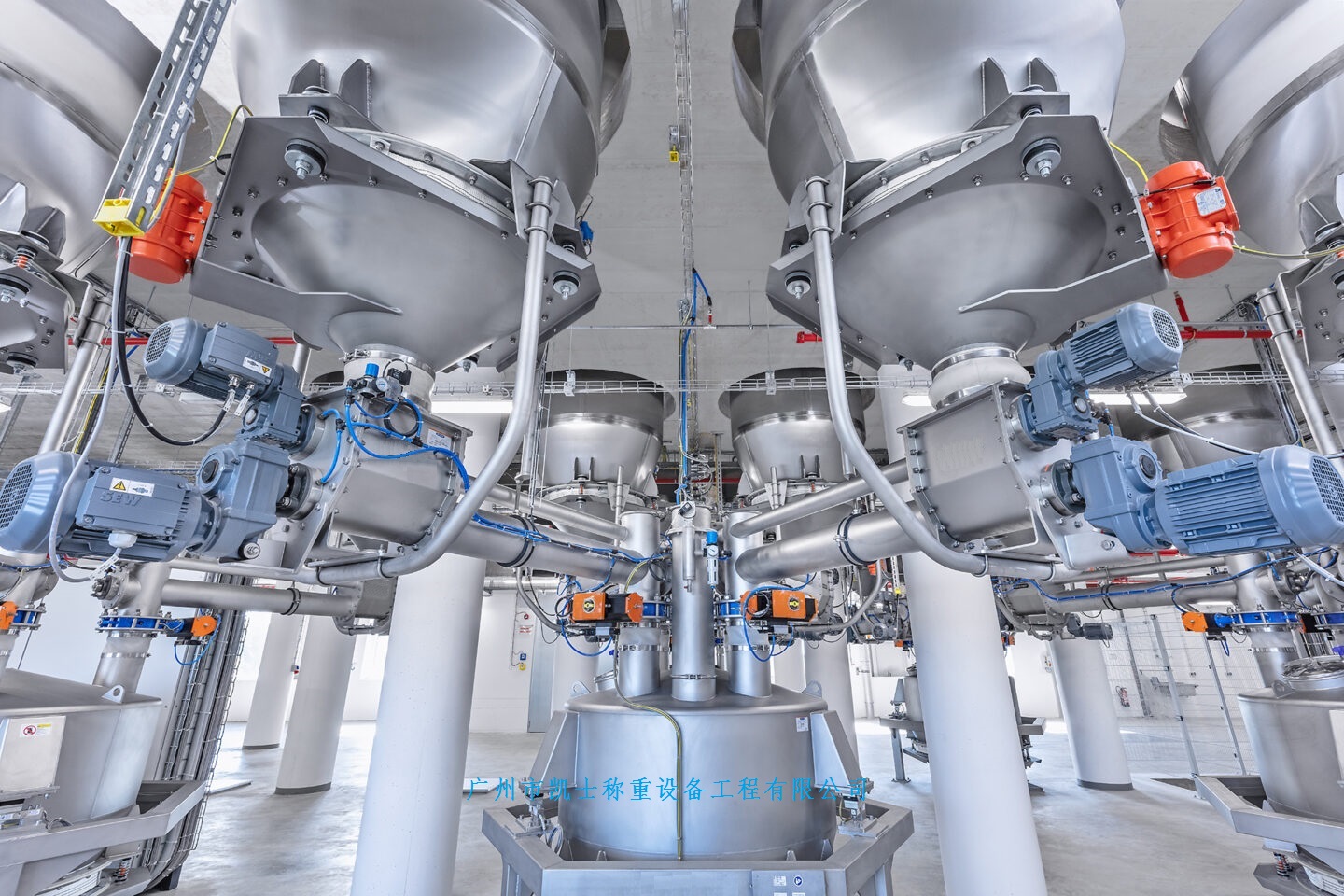
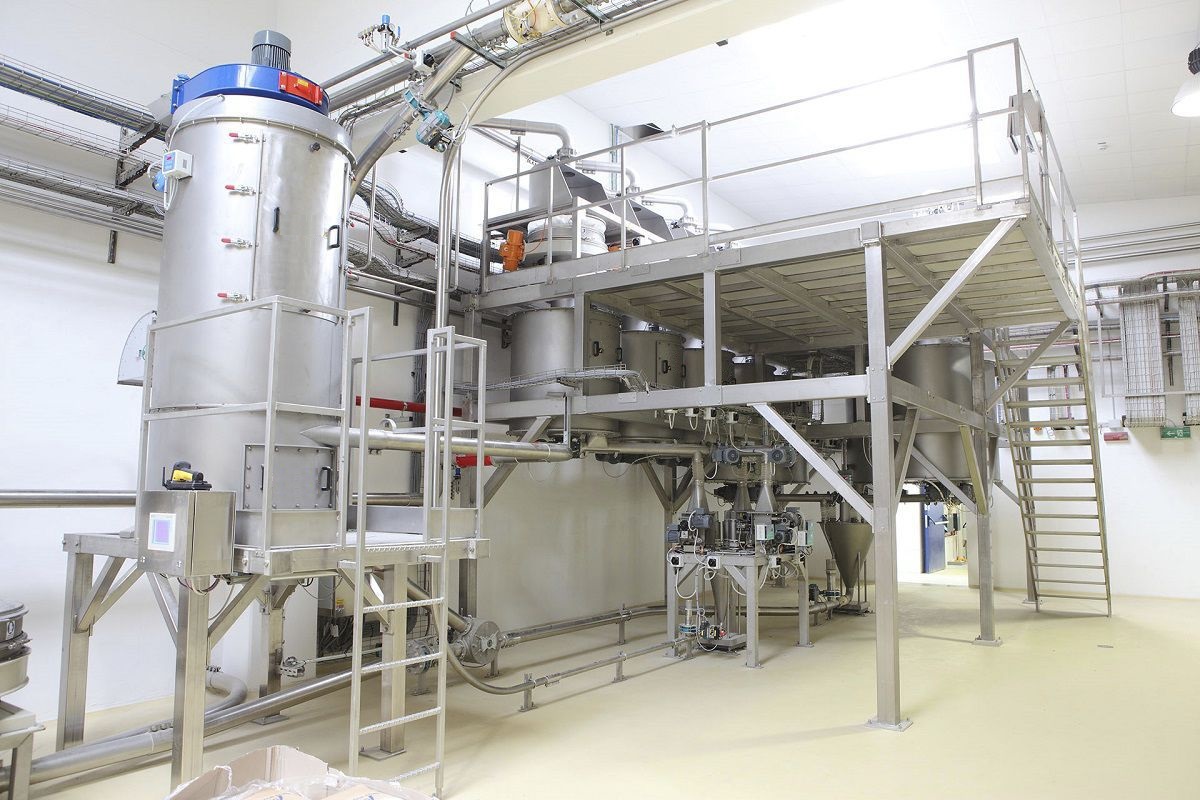
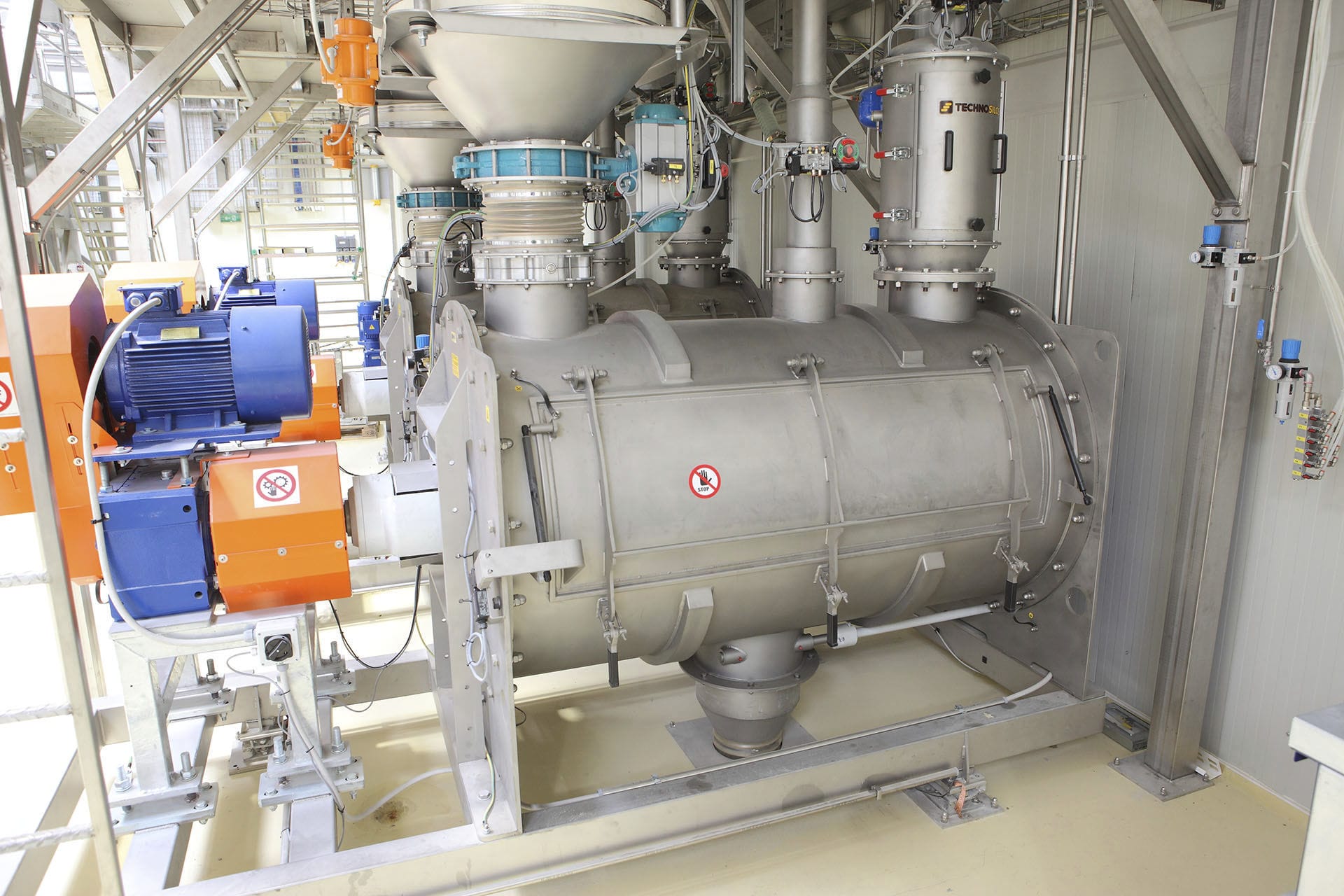
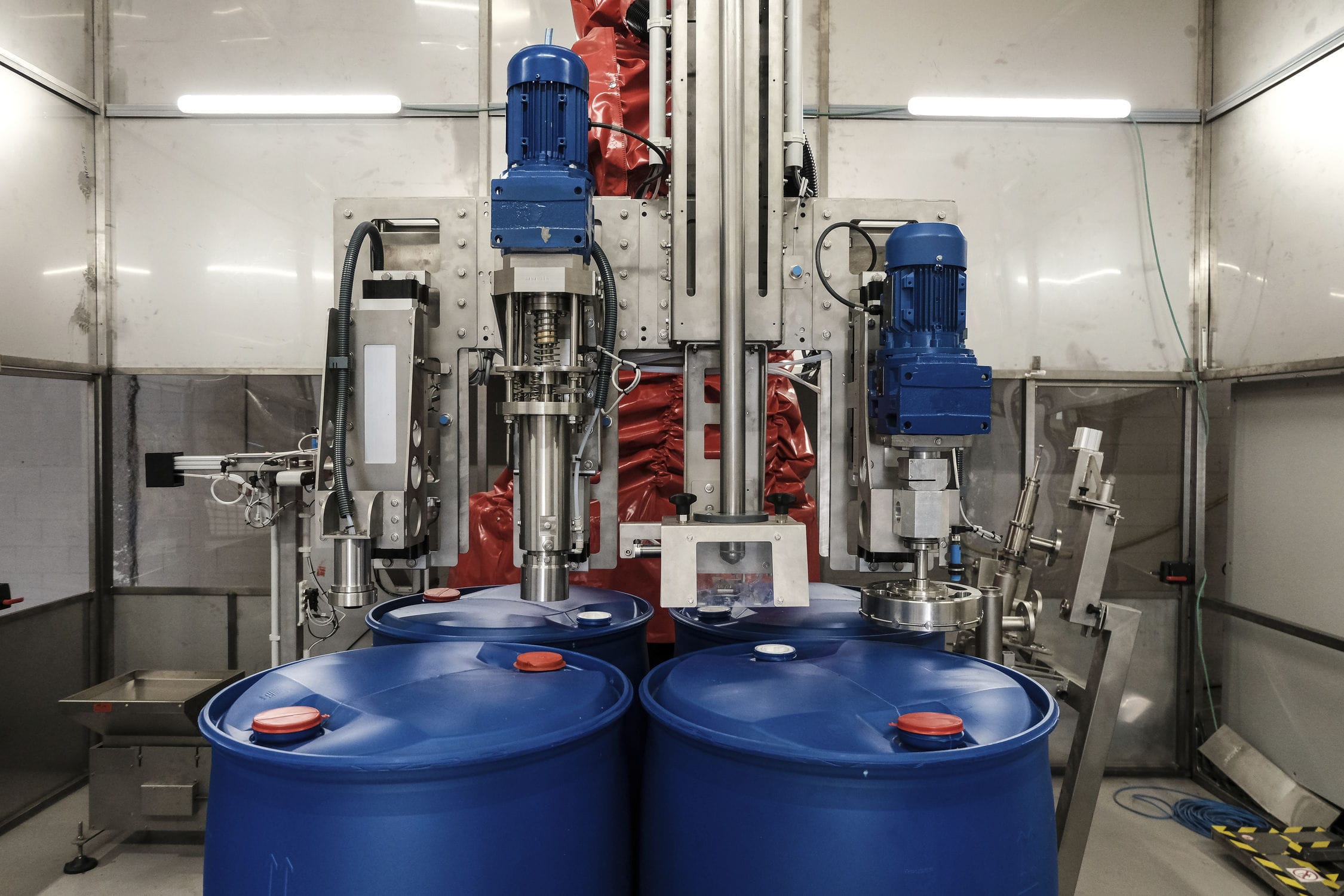
The weighing discharge machine mainly consists of a frame with a discharge hopper, a weighing module, a diaphragm valve, an air massage device, and a dust removal device, etc. The ton bags are transported from the ground to the equipment feed port by a crane or a forklift, and then the diaphragm valve is opened manually. The ton bag is dropped into the inlet of the silo, and then the diaphragm valve is closed. After opening the side quick-opening bag opening, the discharge port of the ton bag is removed, thus achieving the discharge effect.
The Batching system mainly uses pneumatic massage plates and spiral devices to promote the material in the ton bag, thereby achieving good discharge. The frame support structure of the discharge station, the spiral conveyor, the spiral suspension device, the supporting massage plate, the bag opening control valve, and the sealing device. It can be combined with a glove box design to achieve 100% isolation from the operator's dust and gas. A fluidizer can be selected, and a spiral, rotary valve, screw Feeder, screw conveyor, pipe chain conveyor, vacuum conveyor, etc. can be installed under the hopper.
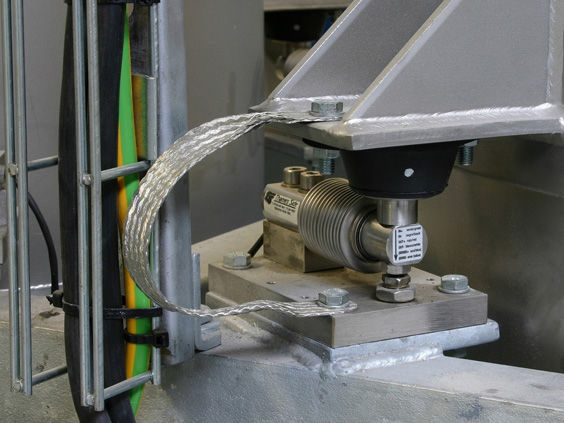
The weighing discharge machine is used to obtain the current powder material mass in the hopper scale. The system uses a resistive strain type weighing module, mainly consisting of an elastic body, a resistive strain gauge, and a compensation circuit. The voltage difference is proportional to the force applied to the elastic body, and this analog voltage signal is amplified by an amplification circuit and sent to the input of the weighing discharge machine. After being collected and calculated by the weighing instrument, the corresponding weight value is obtained.
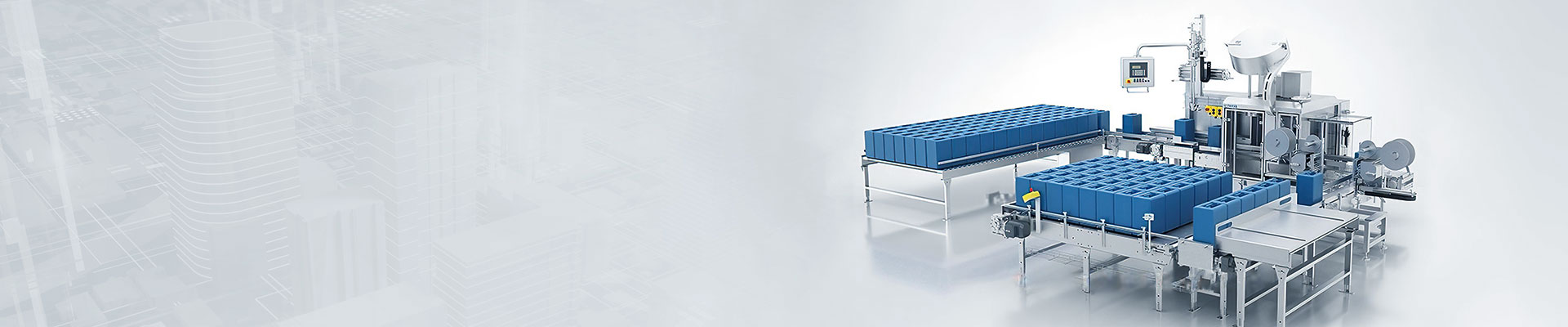
During the weighing process, the power supply of the equipment is turned on, the parameters are set in the weighing instrument, the weighing switch is opened, the spiral feeder performs coarse and fine secondary feeding, and when the set weighing value is reached, the spiral rotation stops, and the hopper scale is opened by the cylinder for discharge. The process repeats in sequence. During the equipment operation, the speed of the spiral is measured, converted into corresponding pulse signals, sent to the computer through photoelectric isolation, and the computer communicates with PLC to detect the flow rate and the operation status of the feeding motor. After the computer calculates the instantaneous flow rate and compares it with the required flow rate, it outputs the corresponding speed control signal, which is converted into a 4-20mA speed control signal through DA conversion and adjusted to the operating frequency of the frequency converter to control the feeding motor speed, achieving the purpose of controlling the feeding amount in the batching process.
When the hopper scale is filled with material, the preparation process is over. When the feeding program selects this hopper scale for discharge, the weighing hopper gate is opened for discharge and the Electronic scale weight is automatically tracked. After the material is discharged, a material empty signal is sent, and the weighing hopper gate is closed. After the discharge process is completed, the residual weight of the material in the electronic scale, that is, the empty scale weight of the hopper scale, is measured.
To reduce the deviation caused by mechanical inertia and factors such as the spiral discharge of the feeding equipment, the PLC must send a material full signal to stop the feeding equipment in advance. The material full signal is sent when the weight of the hopper scale reaches the material full control value. An appropriate material full advance amount is selected, and the deviation of loading can be calculated after one weighing. This deviation can be used to correct the advance amount of each material full in the next weighing.