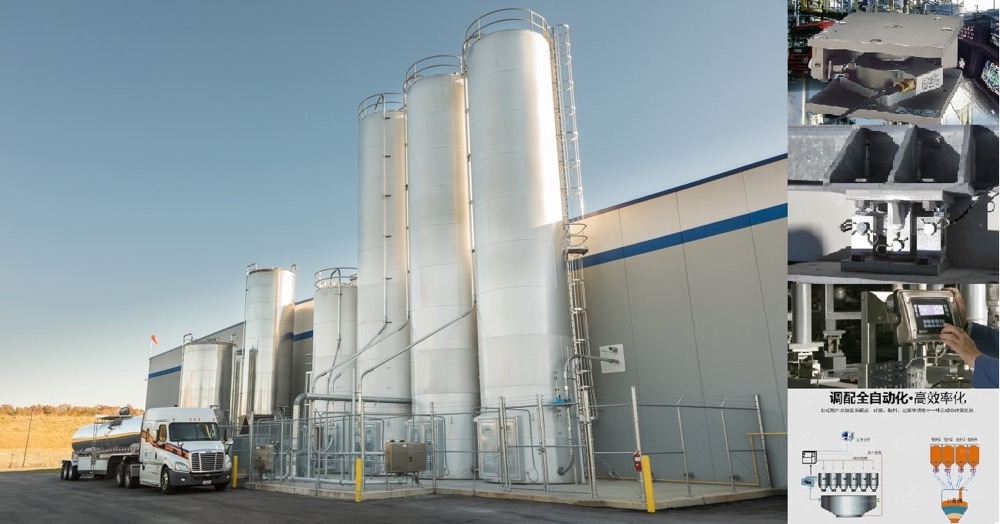






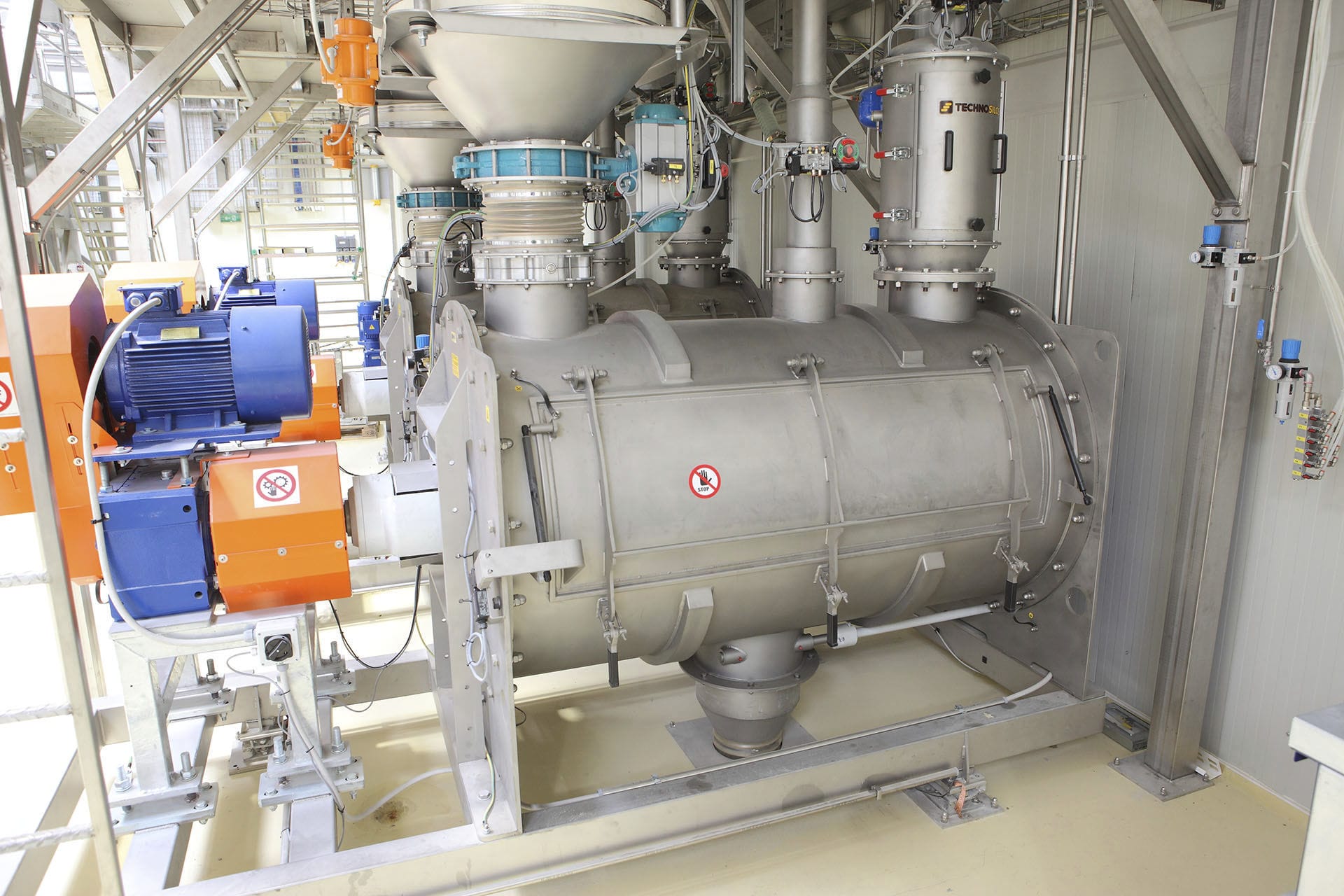
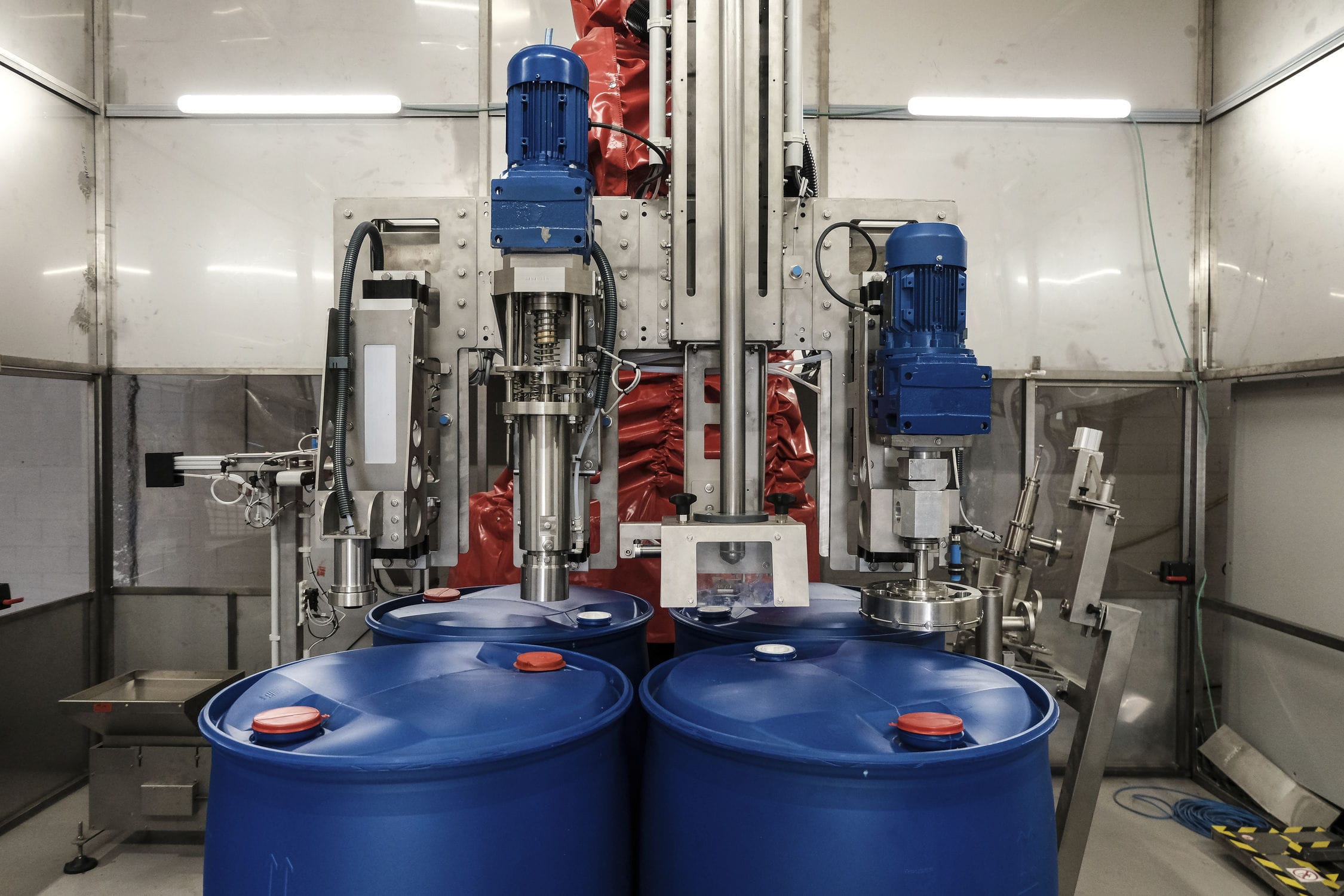


The intelligent batching system can adjust the size of the screw and the spatial distribution angle of the screw to achieve the adjustment of the flow rate. To achieve the purpose of precise quantitative conveying, the speed of the motor and the conveying time are changed through communication between PLC and frequency converter to realize precise quantitative conveying (quantitative range) or continuous conveying. The human-machine interface (HMI) adopts an industrial touch-type liquid crystal display. Through this control interface, the purpose of precise quantitative conveying and continuous conveying can be achieved, and at the same time, the current operating parameters of the frequency converter, such as conveying frequency, current, voltage, etc., and the rotation parameters of the motor can be obtained.


 020-34563445
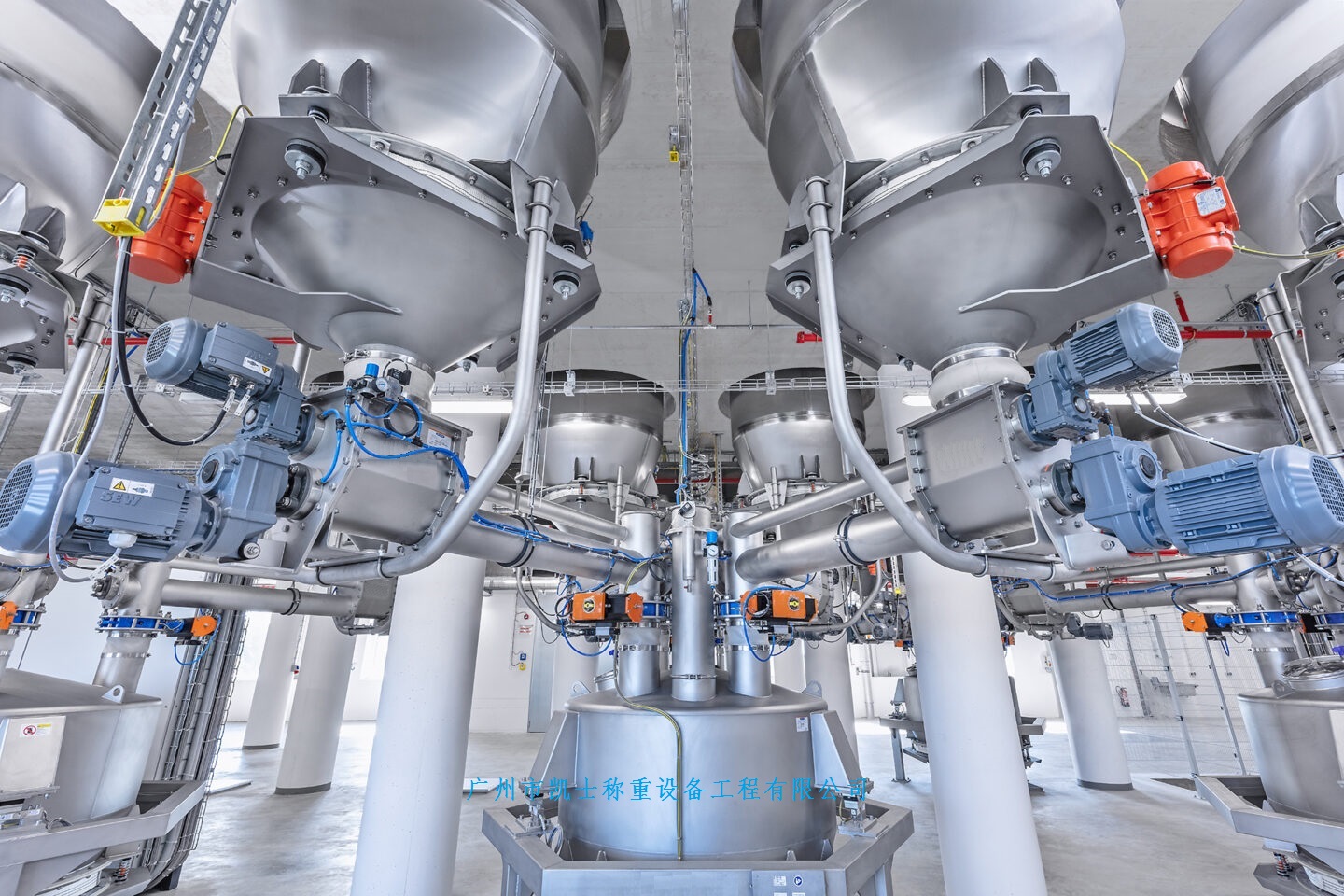
The intelligent Batching system is mainly composed of three parts: the mechanical conveying part, the electrical control part, and the human-machine interface. The mechanical conveying part uses a spiral axial-flow pump. Under the condition of the same motor speed, the flow can be adjusted by changing the size of the spiral and the spatial distribution angle of the spiral. To achieve the purpose of precise quantitative conveying, the electrical control part uses a variable frequency drive device based on PLC control. According to the conveying formula obtained from fluid experiments, the motor speed and conveying time are changed through communication between PLC and the frequency converter to achieve precise quantitative conveying (quantitative range) or continuous conveying. The human-machine interface (HMI) uses an industrial touch-screen LCD display. Through this control interface, the purpose of precise quantitative conveying and continuous conveying can be achieved, and the current operating parameters of the frequency converter, such as conveying frequency, current, voltage, etc., and the rotational parameters of the motor can be obtained. The system mainly consists of the mechanical conveying part, the electrical control part, and the human-machine interface. The mechanical conveying part uses a spiral axial-flow pump. Under the condition of the same motor speed, the flow can be adjusted by changing the size of the spiral and the spatial distribution angle of the spiral. To achieve the purpose of precise quantitative conveying, the electrical control part uses a variable frequency drive device based on PLC control. According to the conveying formula obtained from fluid experiments, the motor speed and conveying time are changed through communication between PLC and the frequency converter to achieve precise quantitative conveying (quantitative range) or continuous conveying. The human-machine interface (HMI) uses an industrial touch-screen LCD display. Through this control interface, the purpose of precise quantitative conveying and continuous conveying can be achieved, and the current operating parameters of the frequency converter, such as conveying frequency, current, voltage, etc., and the rotational parameters of the motor can be obtained. The weighing batching machine uses a PLC centralized control system to automatically and continuously discharge powder through the weighing sensor. After the quantitative hopper stores a certain amount of powder, the pneumatic valve is opened to supply powder to the discharge hopper. After the discharge hopper finishes discharging the powder, it automatically descends to the bottom of the bin or the contact bottom part of the storage material, and then the bottom gate is opened to discharge the powder, completing the conveying function. By changing the frequency of the frequency converter, the motor speed can be changed, and by changing the conveying time each time, the purpose of conveying different flow rates can be achieved. The weighing module used is a U-shaped double-vibration quantitative hopper. When there is no fluid flowing through the vibrating quantitative hopper, the vibrating quantitative hopper is driven by the electromagnetic driving coil installed in the middle of the vibrating quantitative hopper. The vibration of the weighing hopper is uniform horizontal vibration with an amplitude less than 1mm and a frequency of about 80Hz. When there is a fluid flowing through the vibrating quantitative hopper, during the half cycle of the upward vibration of the weighing hopper, the fluid flows into the weighing hopper and is forced to undergo vertical movement for measurement weighing. The fluid resists the downward movement of the weighing hopper and exerts a downward force on the weighing hopper. When the fluid flows out of the weighing hopper, it exerts a downward force to vibrate the weighing hopper and reduces its vertical momentum. The size of the vibration is proportional to the mass flow rate of the weighing hopper. The mass flow rate is determined by the phase difference of the two signal detectors of the weighing module installed on both sides of the inlet and outlet of the double weighing hopper. When there is no fluid flowing through the weighing hopper, the weighing hopper does not vibrate, and the detection signal is in phase. When there is a fluid flowing through the weighing hopper, the weighing hopper vibrates, and thus the two detection signals have a phase difference, that is, the potential of the detection coils at both ends of the inlet and outlet changes. This phase difference is proportional to the mass flow rate flowing through. In summary, the weighing module mainly relies on the vibration and vibration of the weighing hopper to measure the flow rate.