






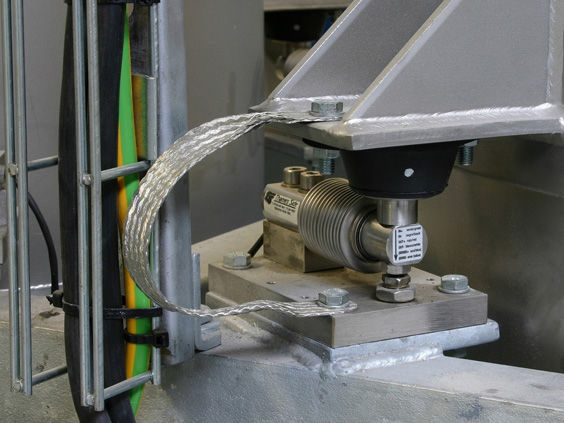
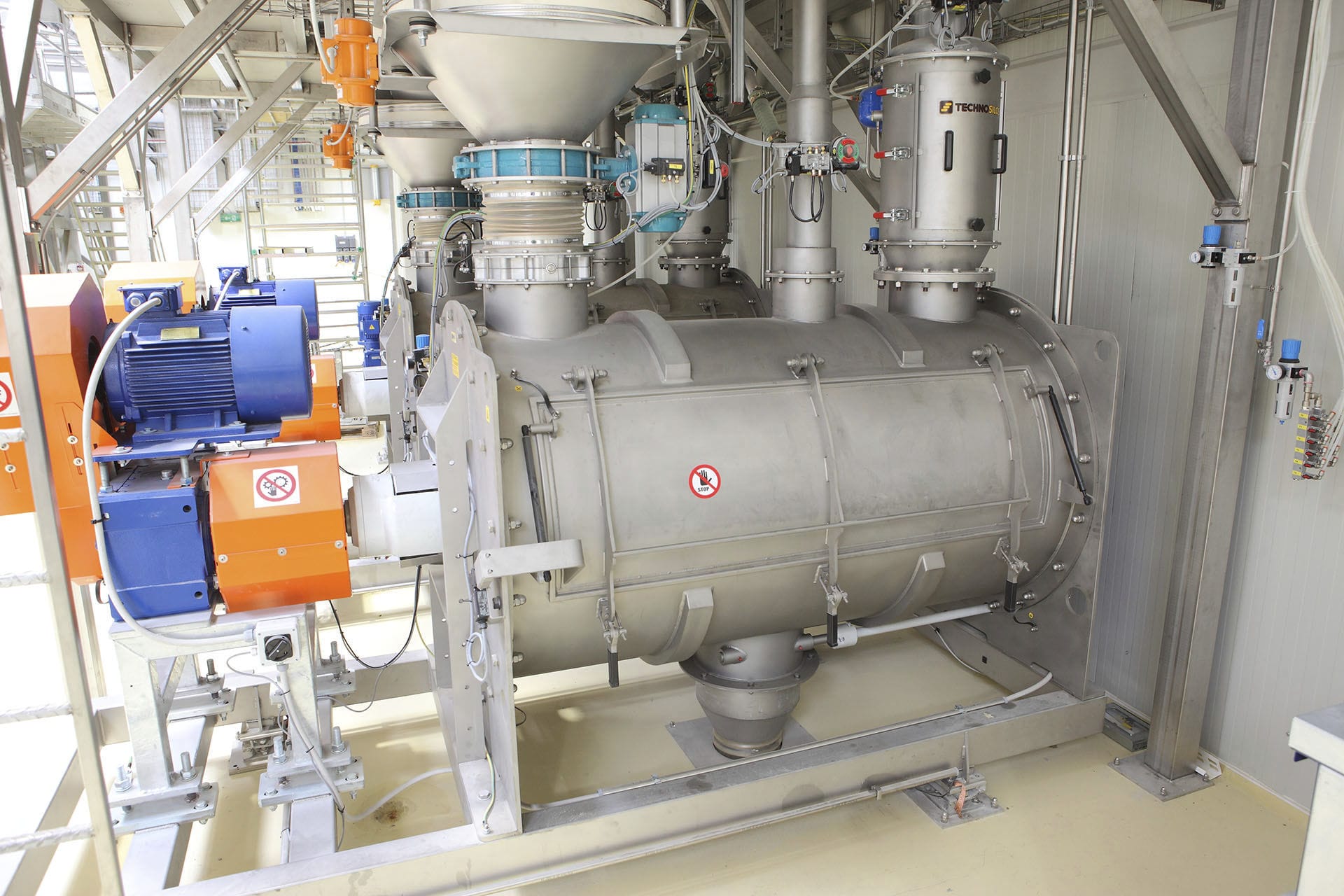
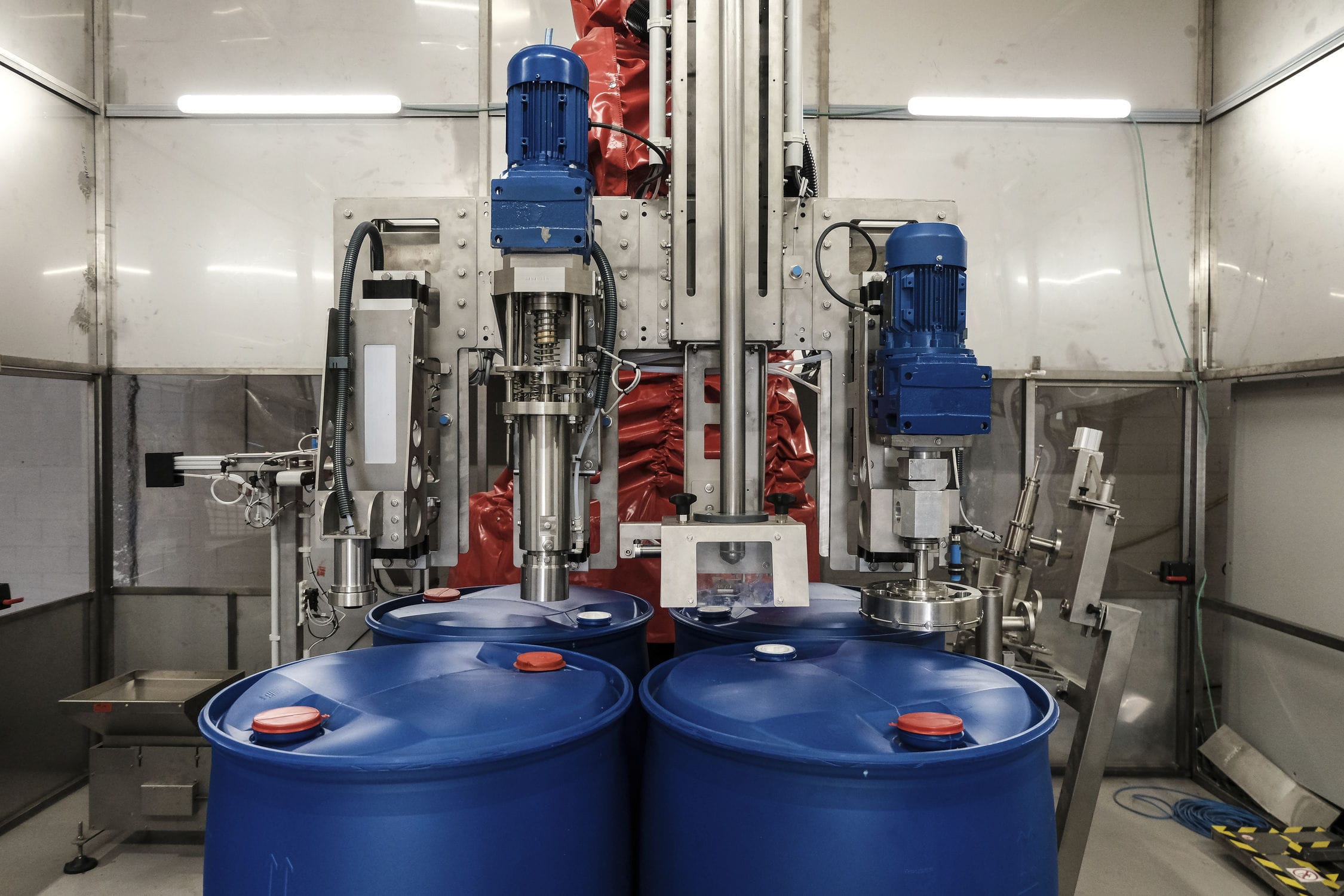
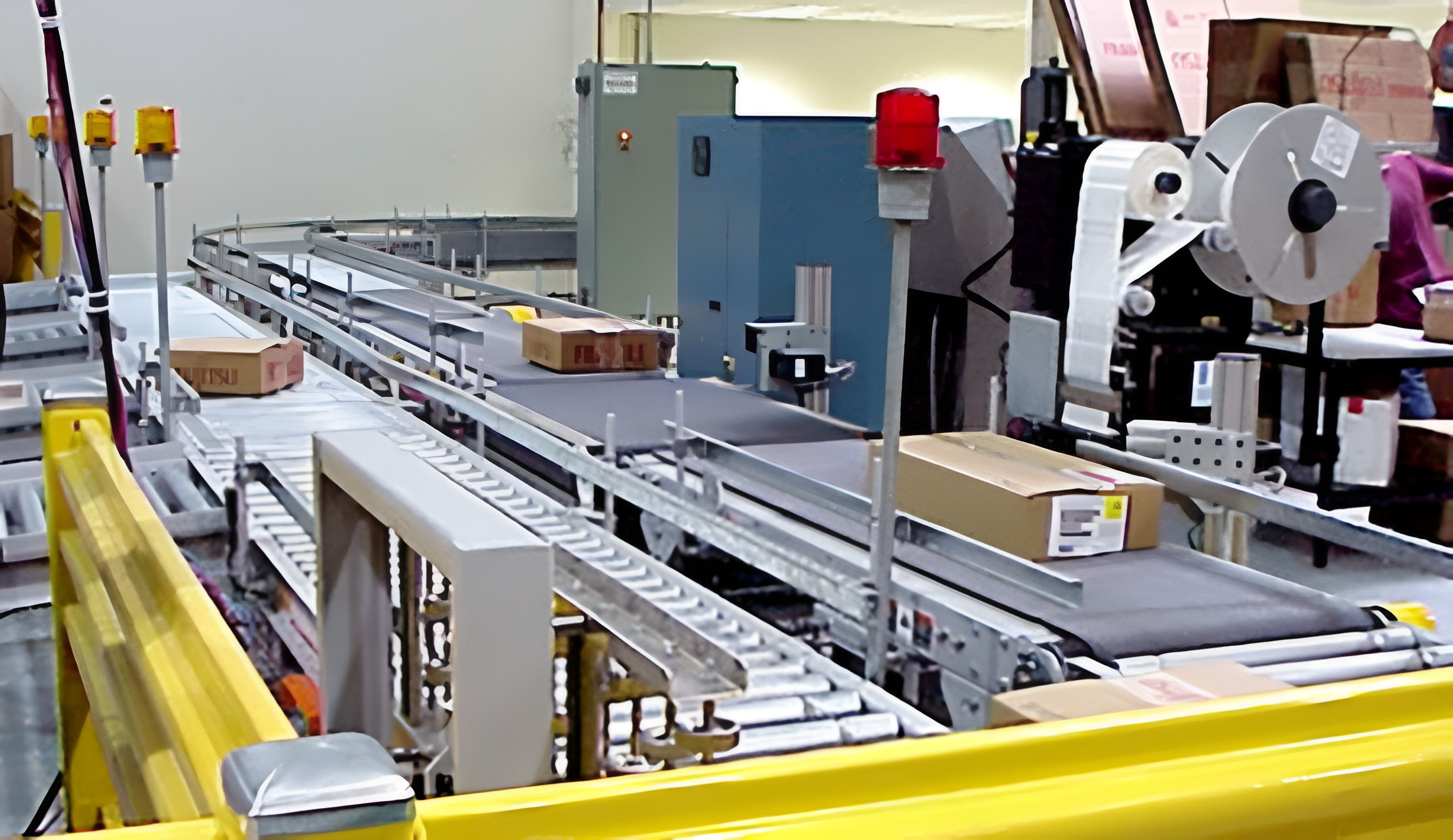
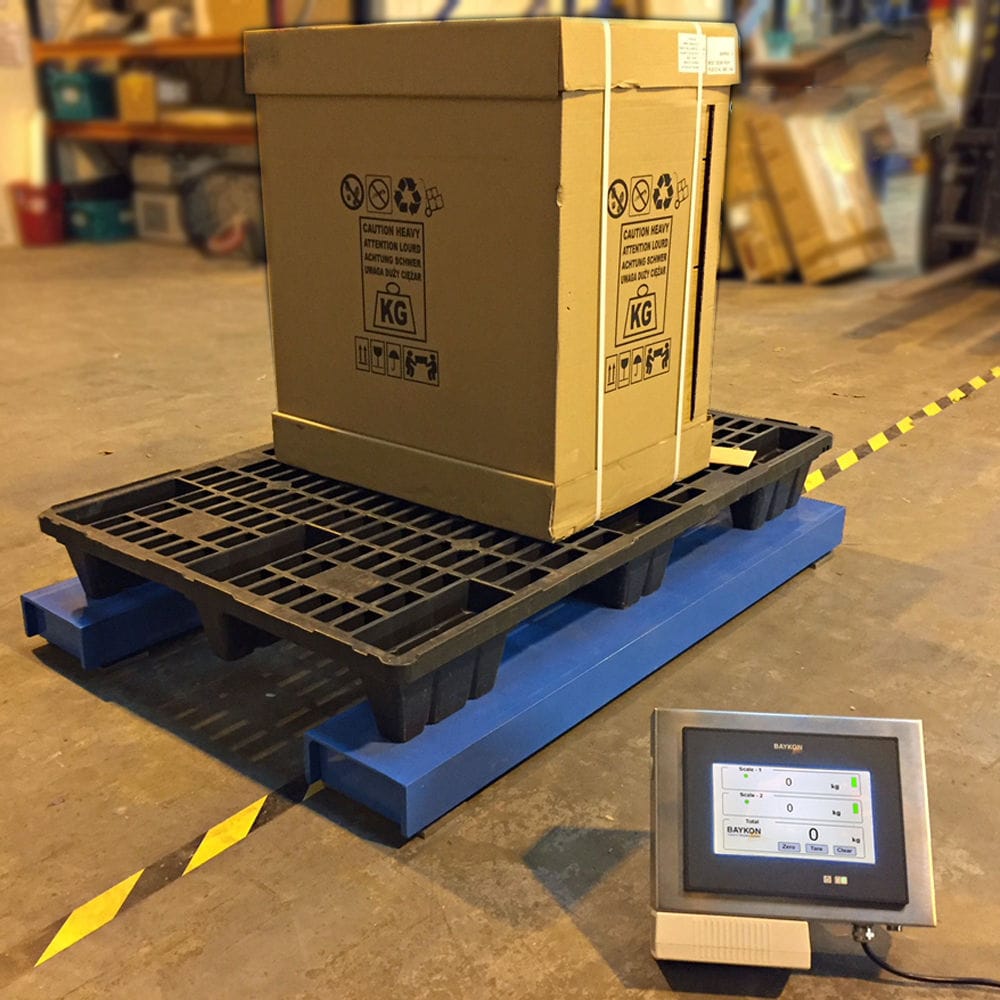


The feeding device pours the materials into the hopper on the weighing module at a certain speed. Finally, the screw feeds the two materials into the mixer for blending. The feeding size of the feeding control device is determined by the speed of its driving motor, which is controlled by a frequency converter, and the frequency converter is regulated by the analog signal output by the PLC. The feeding size of the final feeding device is determined by the size of the analog signal output by the PLC.

 020-34563445
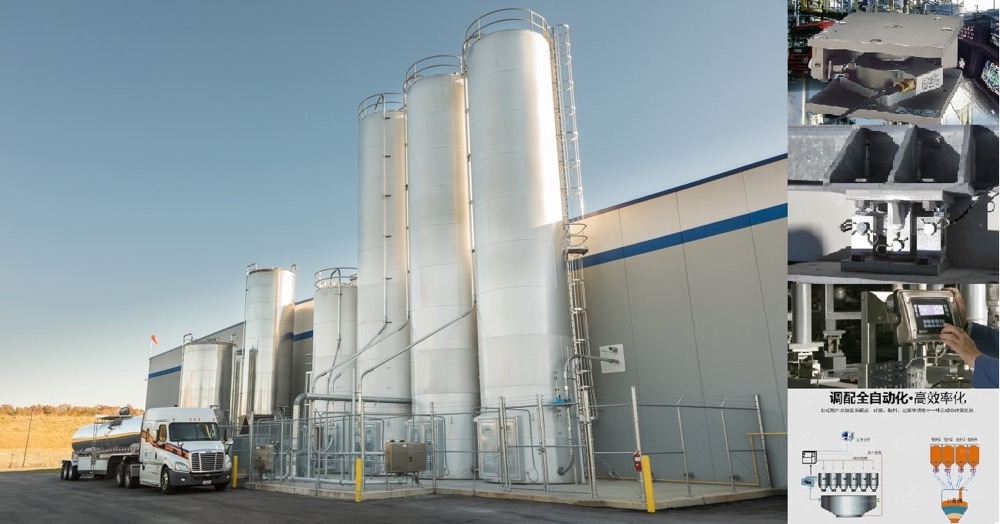
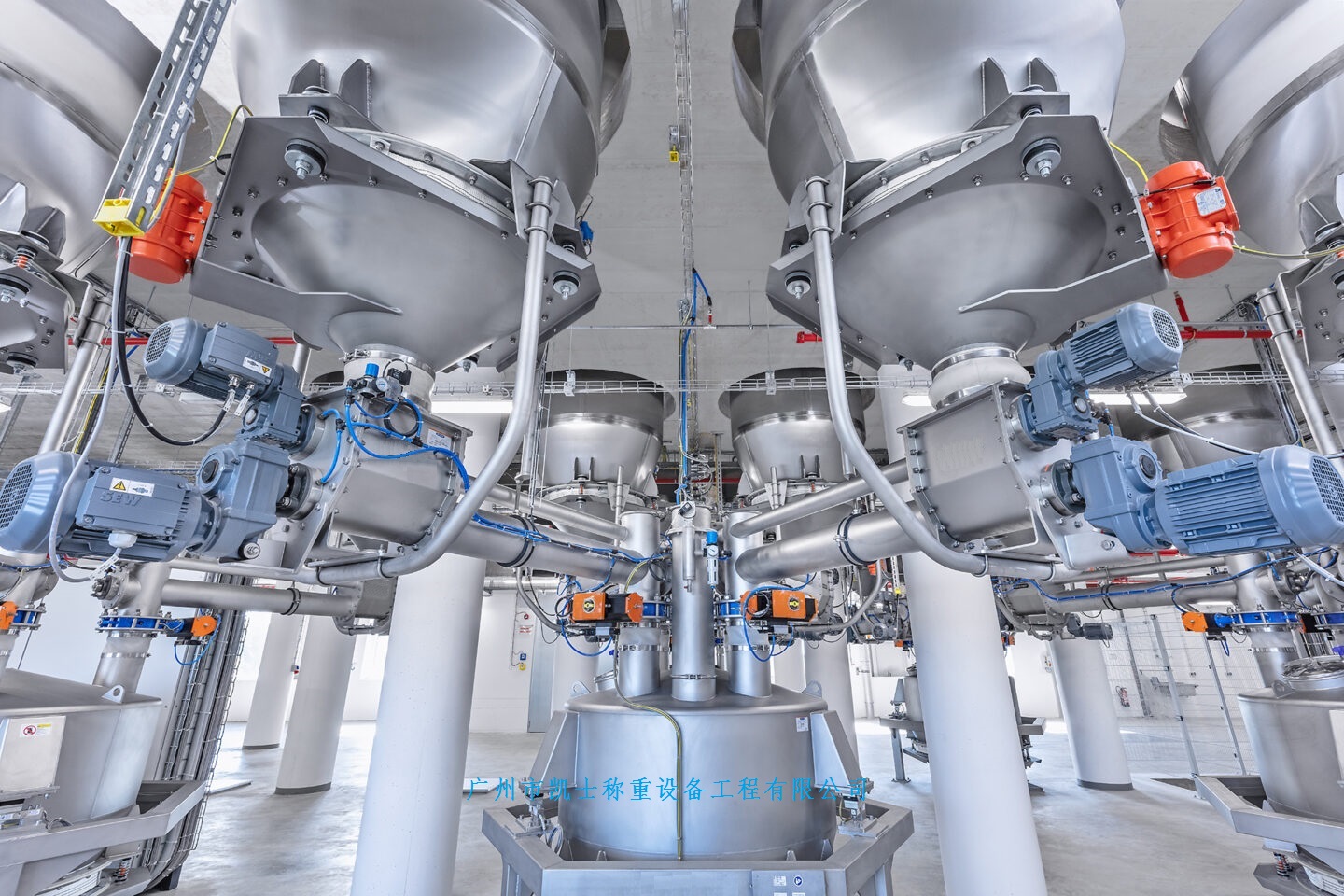
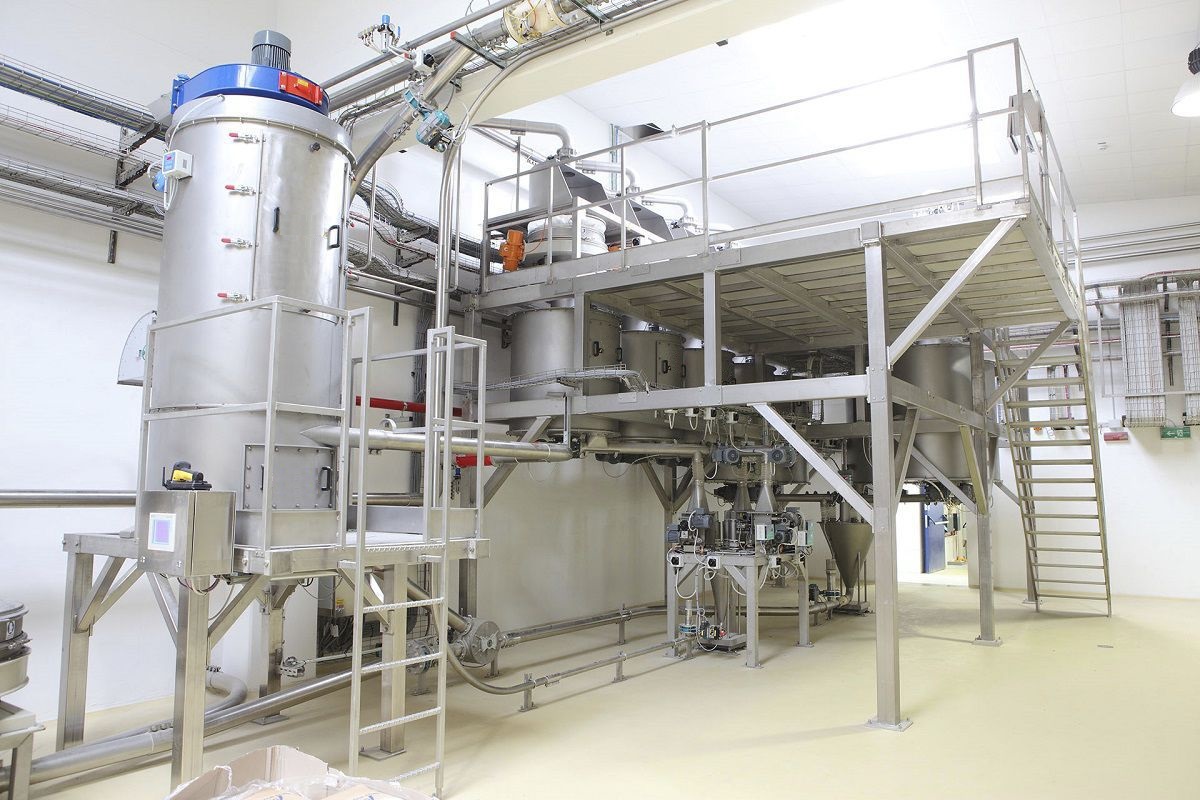
The feeding device has a relatively simple structure, mainly consisting of a silo, a feeding device, a batching scale, etc. The silo is filled with solid materials in powder, granular or small block form. Due to the slope design around the silo, the materials will automatically slide onto the feeding control device. The feeding control device is actually a screw conveyor driven by a three-phase motor. The motor drives the screw to send the materials onto the batching scale. The batching scale can measure the weight of the material on the screw, and the screw pours the material into the hopper on the weighing module at a certain speed. Finally, the screw feeds the two materials into the mixer for blending. The feeding size of the feeding control device is determined by the speed of its driving motor, which is controlled by a frequency converter, and the frequency converter is regulated by the analog signal output by the PLC. The feeding size of the final feeding device is determined by the size of the analog signal output by the PLC. After passing through the reducer, the screw motor rotates at a fixed speed. Therefore, the materials on the batching scale basically move at a low speed and a uniform speed.
The feeding device is mainly used for the batching of solid materials, and is mostly applied to powdered materials. Powdered materials have better uniformity and are easier to control. Moreover, most of them adopt a quantitative method. During the batching process, the unpacking chamber is mainly used for feeding materials. Relevant workers will open the material bags and put them into the unpacking chamber. To reduce and avoid the scattering of powder materials in all directions in traditional powder batching devices In response to the situation where the environment is damaged and the health of the staff is threatened, a dust collector is installed above the unpacking chamber. While the staff are feeding materials, the dust collector starts to work, adsorbing the dust raised above the unpacking chamber to keep the working environment clean and tidy to the greatest extent. The unpacking chamber is connected to the storage bin and the feeding device. The materials put in are dropped from the unpacking chamber into the storage bin. Then it enters the feeding device. At this feeding position, if there is a need for material mixing, a dedicated staff member or equipment should place the feeding device in an orderly manner and then start working. After the feeding device starts working, powder materials are conveyed to the material loading tool. At the same time, the weighing work begins simultaneously, and the centralized dust removal device also starts working. When the weight of the ingredients placed in the feeding device reaches the expected value set in advance, the weighing module will feed back to the feeding system, and one round of feeding work will be temporarily stopped. When the weights of multiple ingredients all reach the preset values, the feeding device will lower all the ingredients and send them into the conveyor to be conveyed to the next working stage. After all the ingredient stages are completed, Then, the staff will remove the containers for holding the materials and process and bag them in accordance with the corresponding working procedures. During processing, the equipment mainly relies on the weighing module system to control the accuracy of batching. The accuracy of the Weighing system is directly related to the precision of batching. This link is mainly automatically corrected by the weighing system. Only by continuously reducing the weighing error and keeping the precision within a reasonable error range can the quality and grade of the powder be better guaranteed.