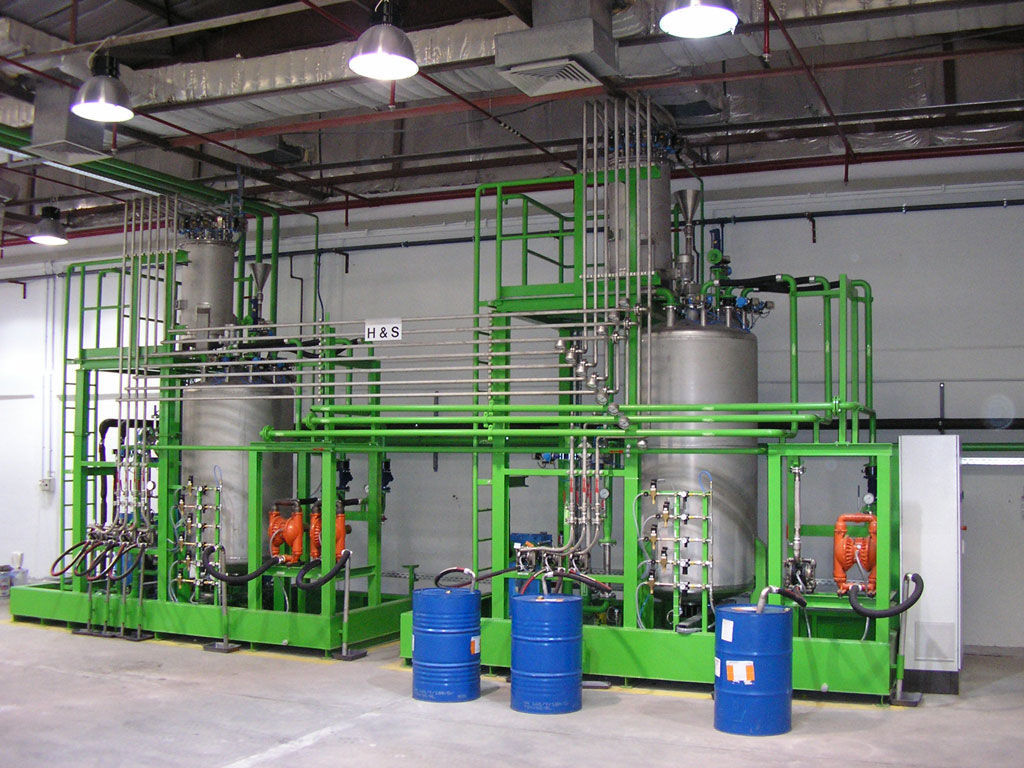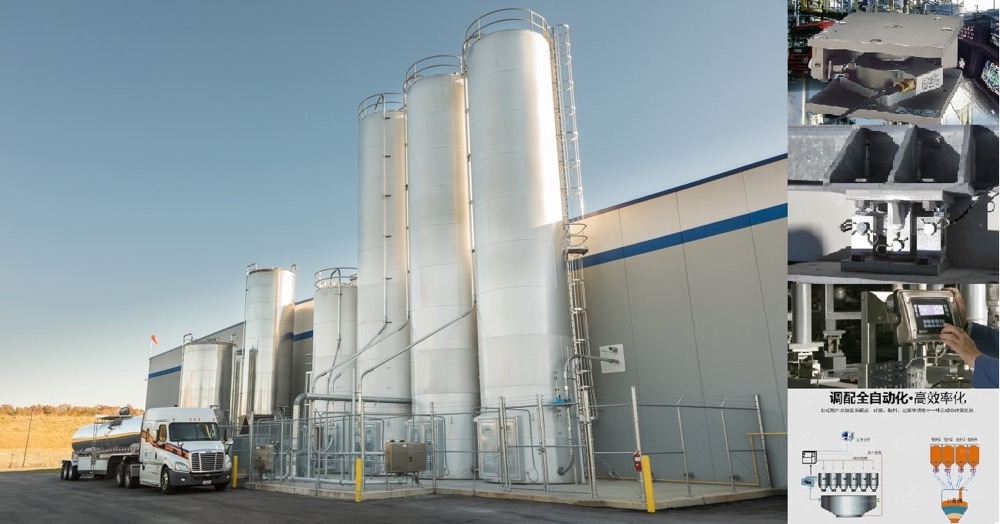




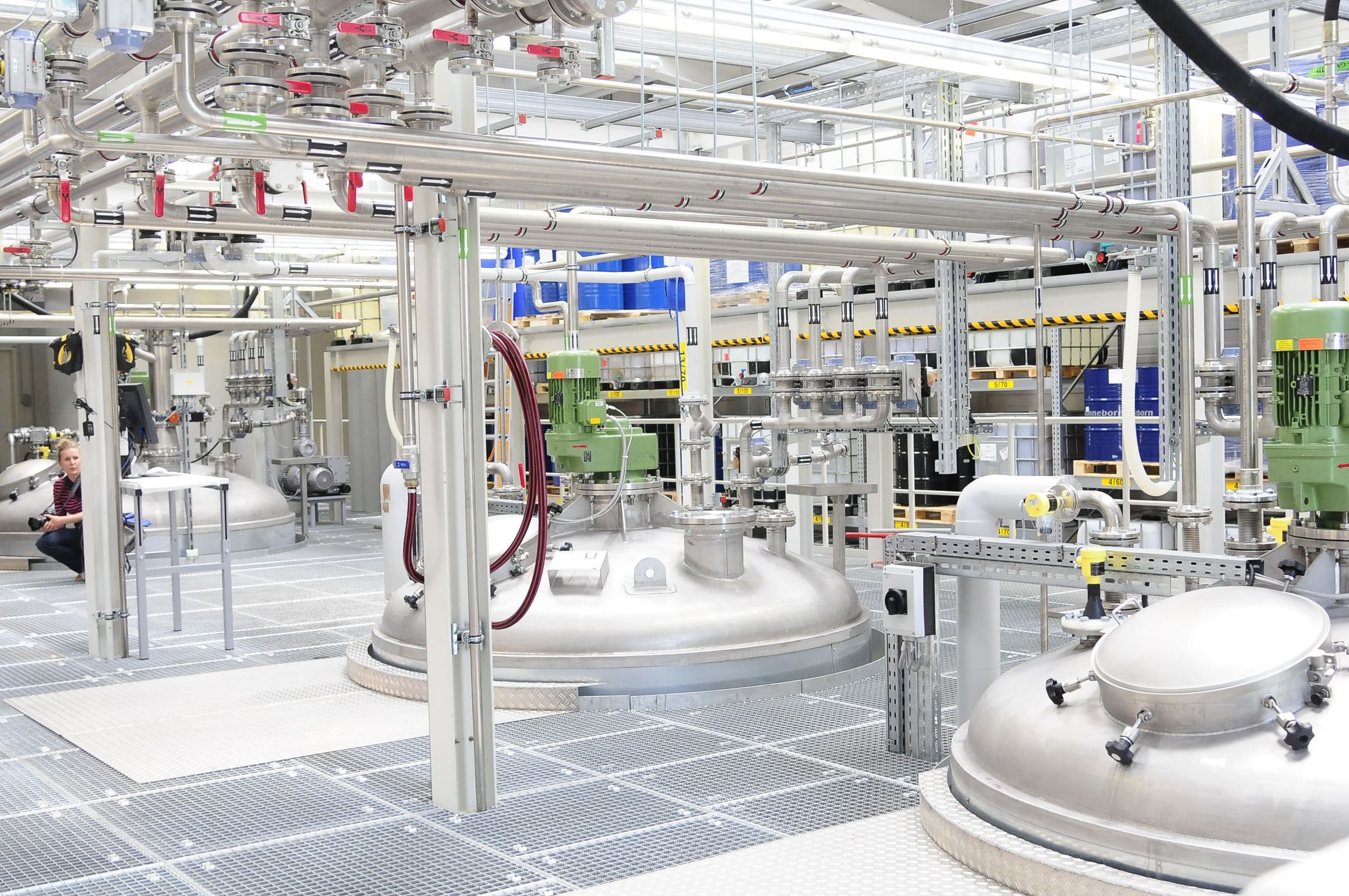


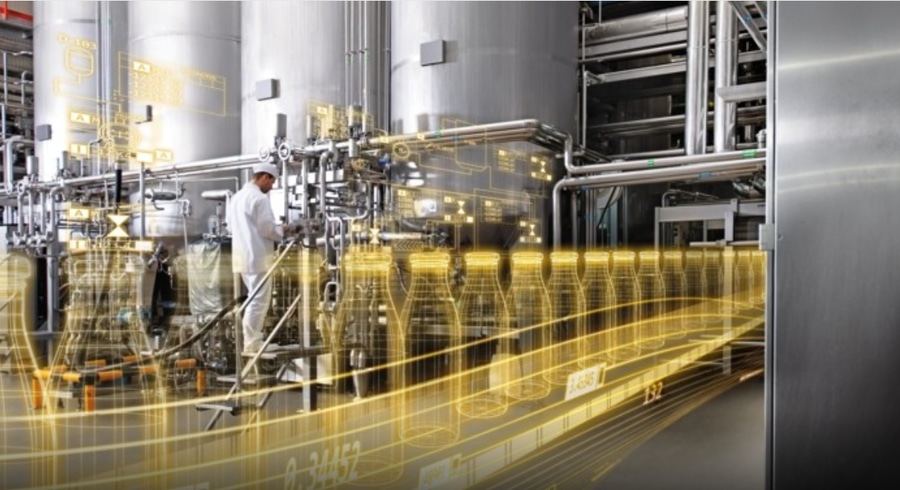
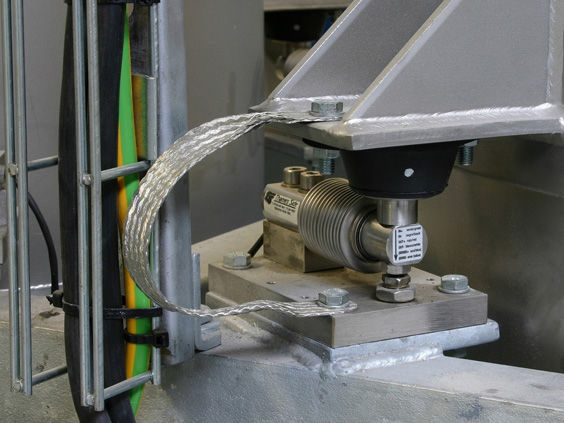
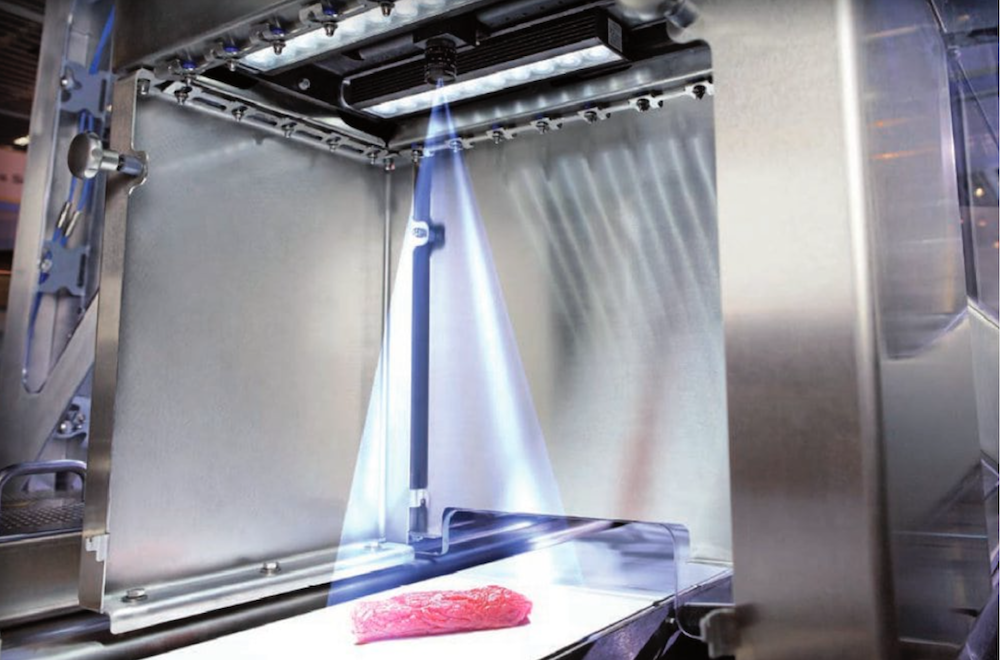
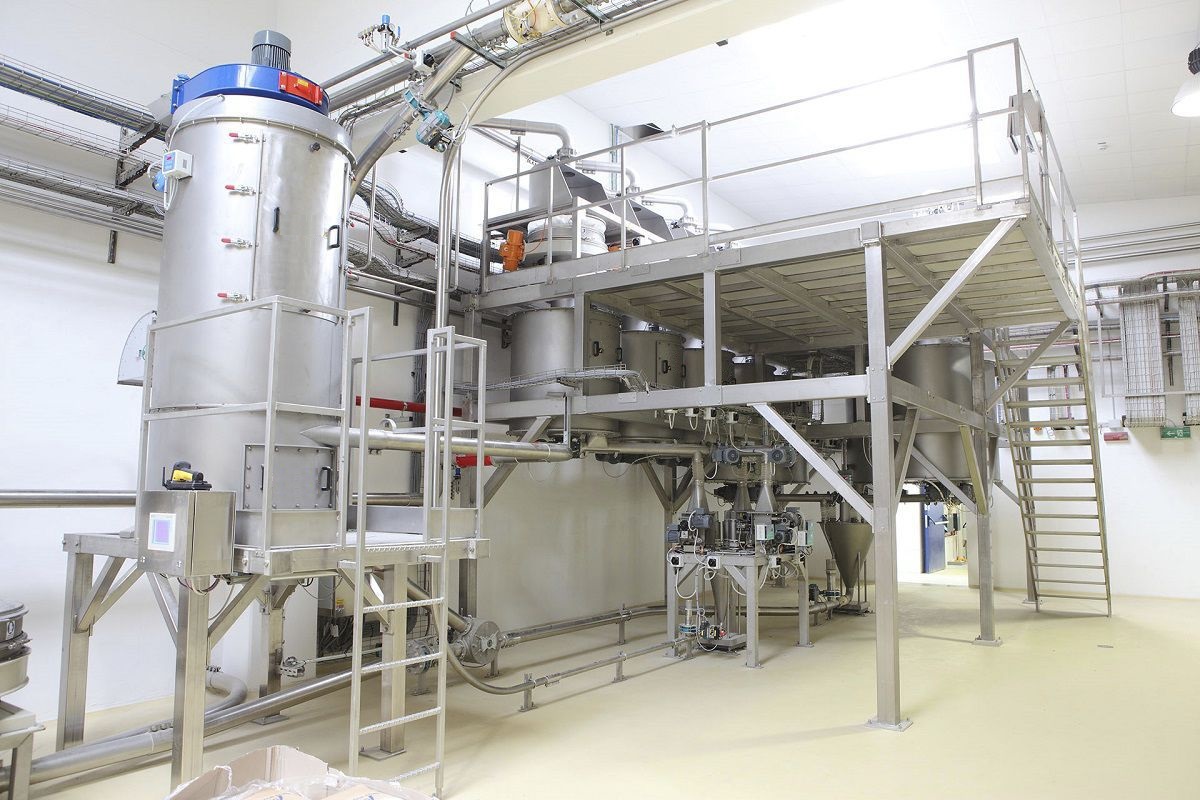
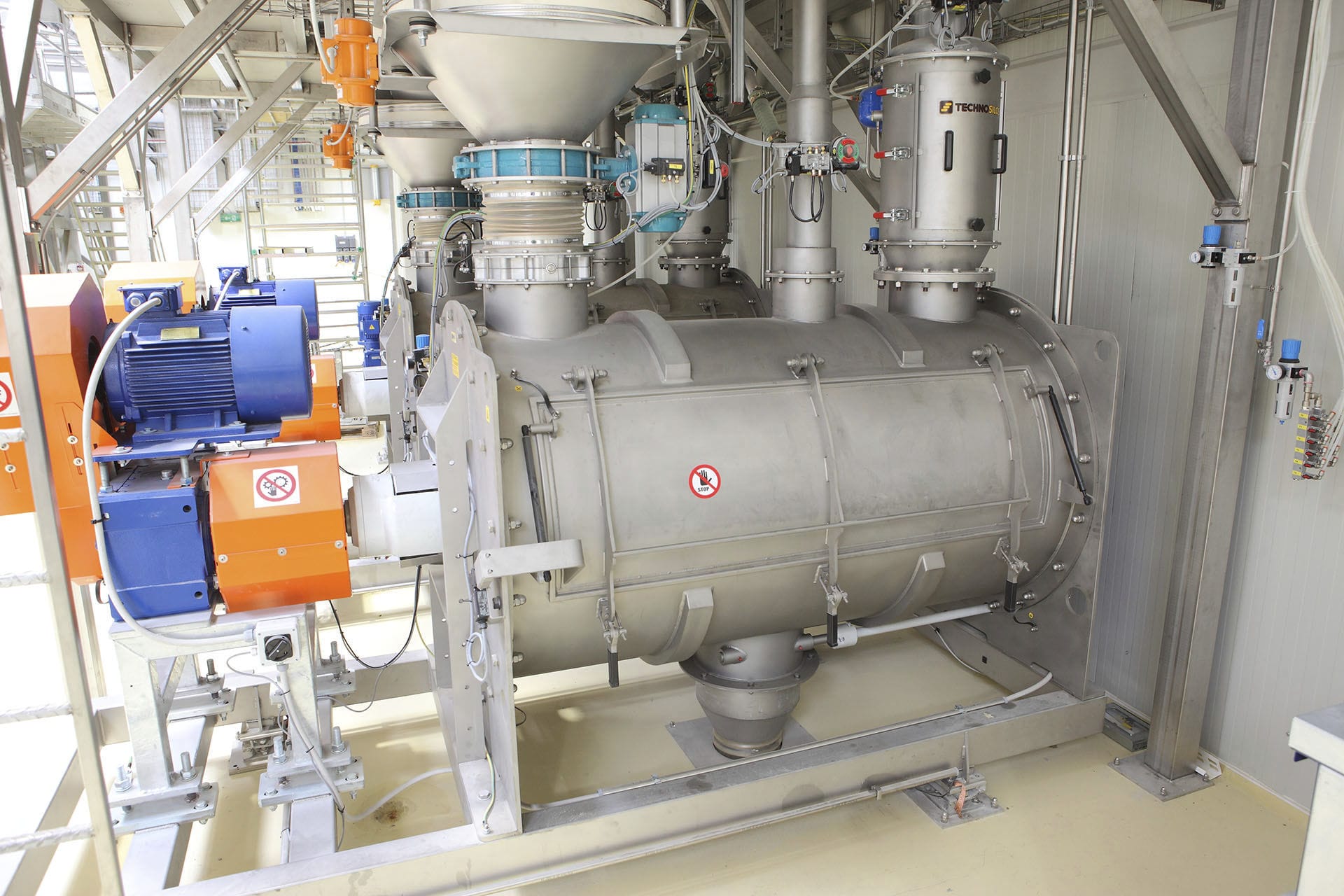
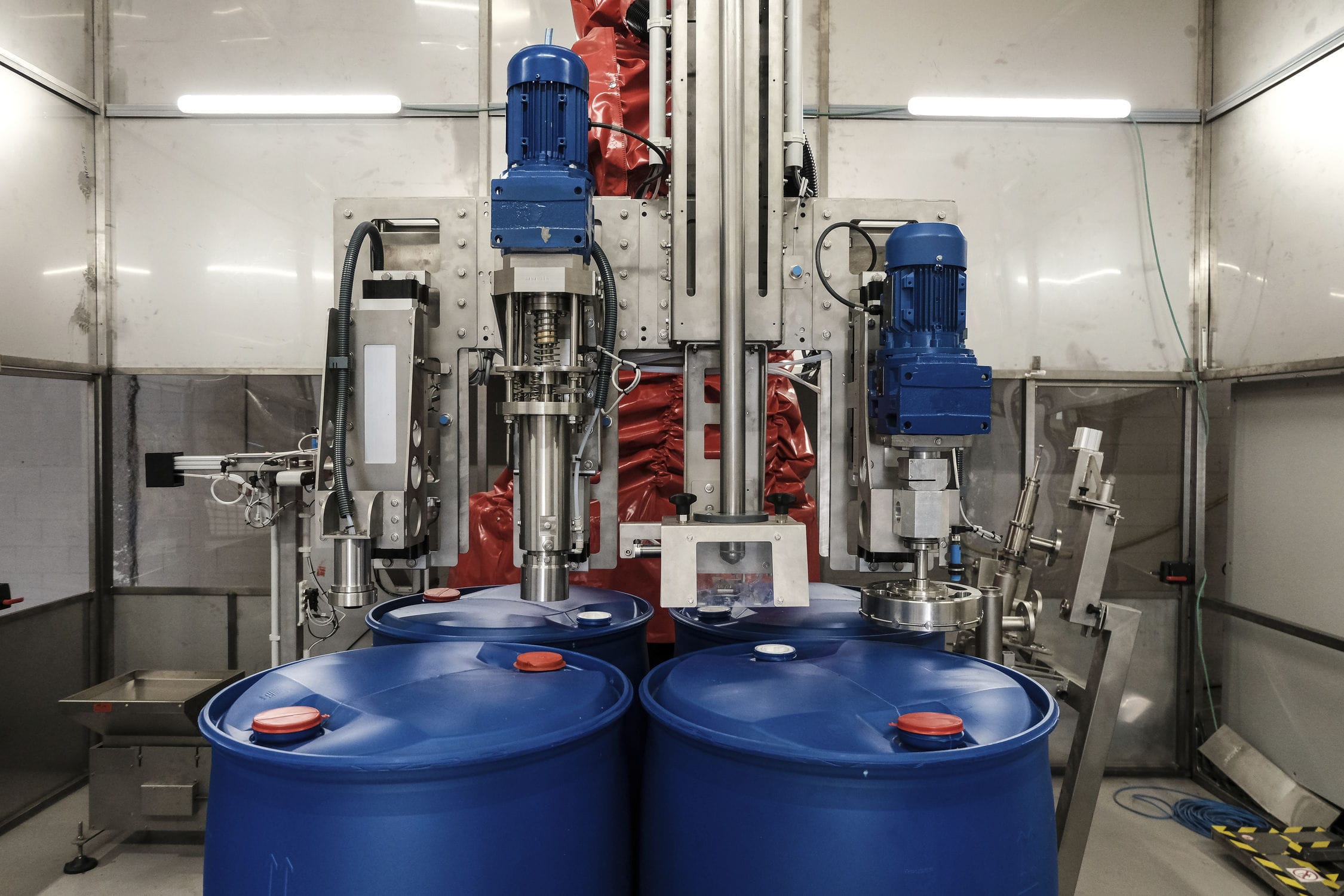
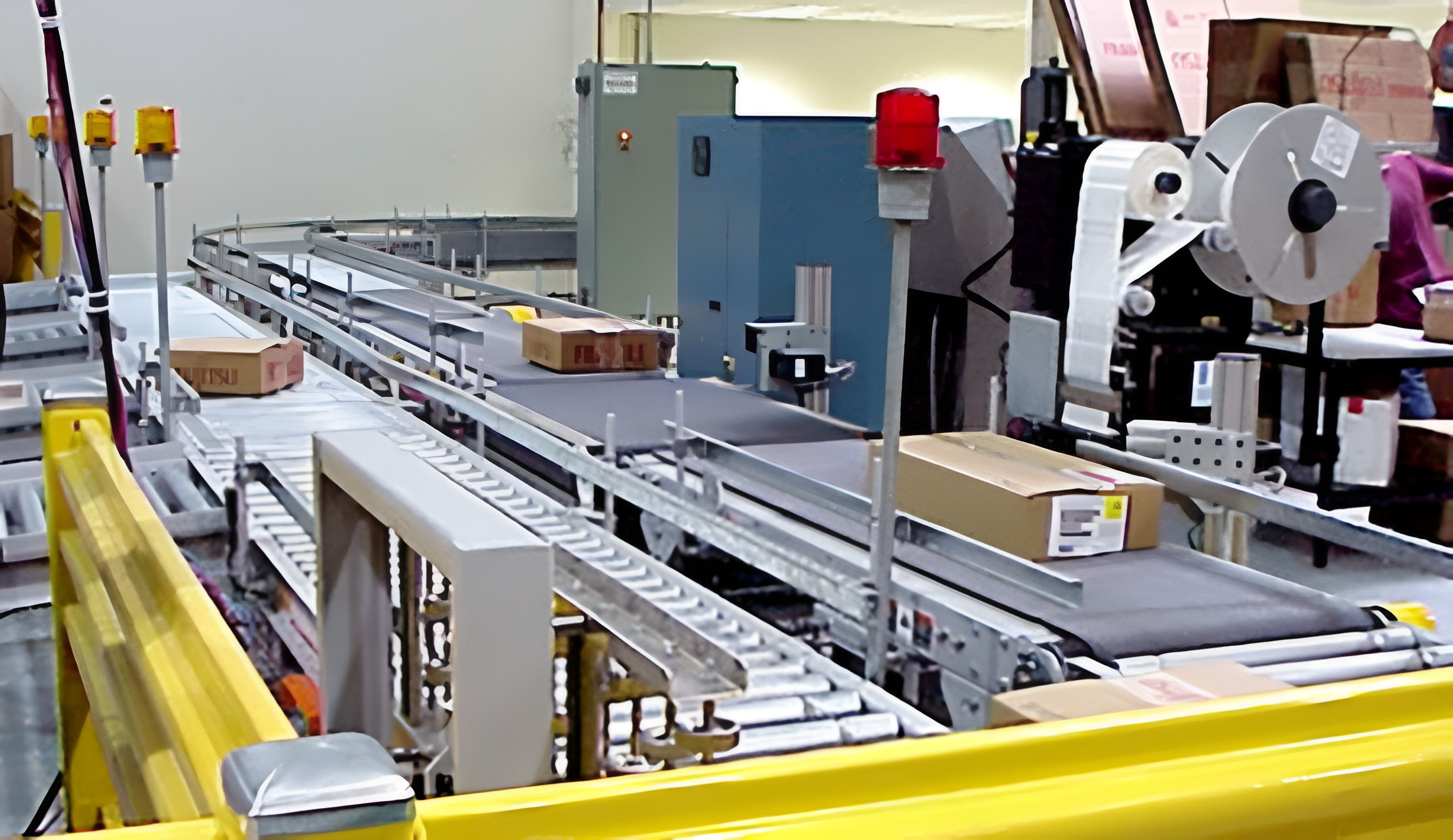
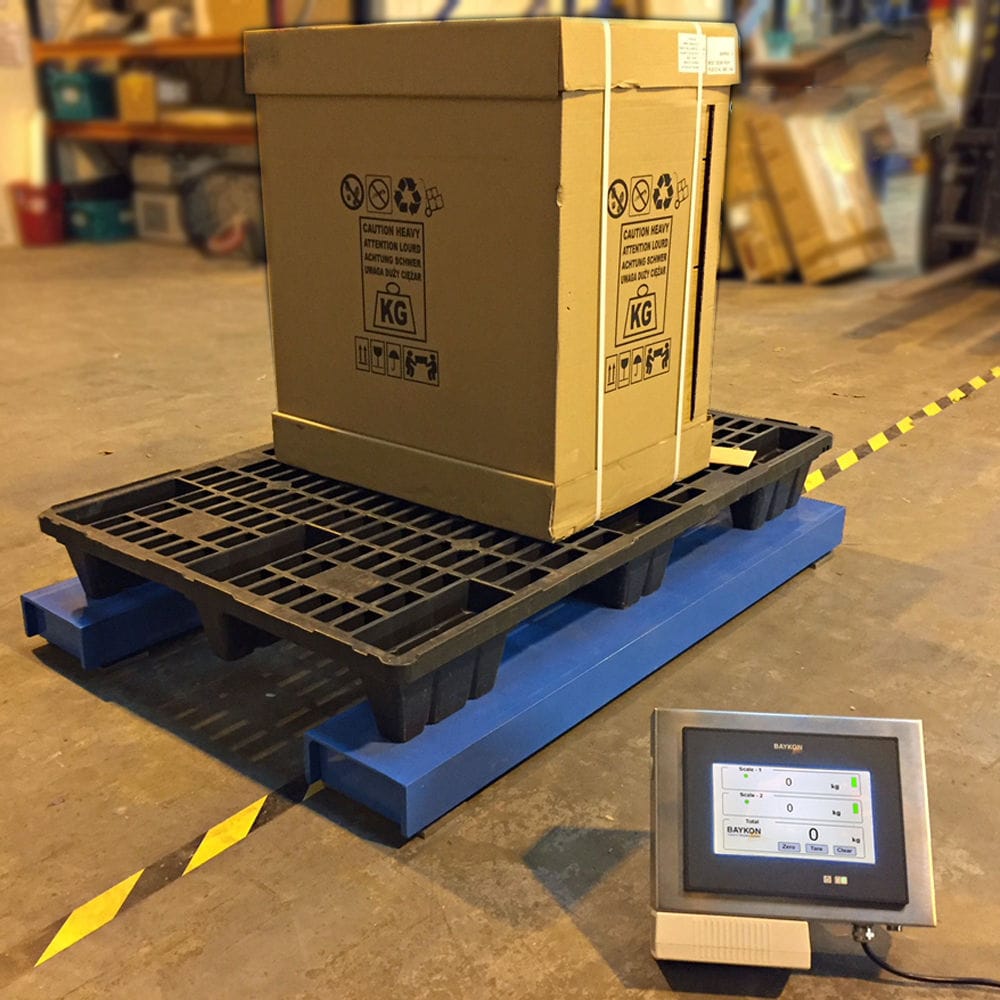


The Ingredients weighing of the reaction vessel is calculated based on the target liquid level and the tank capacity respectively to determine the volume of the required additives and other liquids. Relying on the weighing module installed at the bottom of the material tank, the pneumatic valves of the additive liquid inlet pipe and the liquid inlet pipe, the cumulative volume weight of the feed and liquid is measured. By comparing with the calculated values, when the target values are reached, the feed and liquid inlet valves are closed to complete the batching process.

 020-34563445
In the liquid level control-based scheme, the weighing of the reaction vessel is carried out by measuring the initial liquid level, the target liquid level of the additive, and the final liquid level of the batching tank. The entry of the additive and the liquid into the batching tank is controlled step by step in sequence. The target liquid level of the additive is used as the signal to stop the entry of the additive, and the final liquid level is used as the signal to stop the entry of the liquid, thus completing the automatic operation process of feeding and liquid feeding To achieve the purpose of automatic batching; The scheme based on weighing control calculates the volume of the required additives and other liquids respectively according to the target liquid level and the tank capacity. Relying on the weighing module installed below the material tank, the pneumatic valves of the additive liquid inlet pipe and the liquid inlet pipe, the cumulative volume weight of the feed and liquid is measured. By comparing it with the calculated value, the feed and liquid inlet valves are closed when the target value is reached. Complete the ingredient mixing process.
The Ingredients weighing of the reaction vessel is visually measured based on the change of material level. It adopts weighing instruments and automatic control devices. Through equipment such as frequency converters and the motor of the conveying pump, the speed of the conveying pump is adjusted and controlled in real time through the processes of electrical signal measurement, transmission, reception, conversion, comparison operation and control, so as to overcome the influence of the change in the amount of incoming materials and bring the controlled variable back to the set value. Ultimately, a constant material level is achieved. When the material level changes by rising or falling, the weighing module transmits the detected electrical signal to the PLC. Through A/D signal conversion, the analog signal is converted into A digital signal and sent to the PID regulator for operation according to the set operation rule. After D/A signal conversion, the corresponding analog signal is output The feedback value is obtained by comparing it with the set values given by the industrial control computer (i.e., the lower and upper limit values of the material level). When the signal value detected by the weighing module is less than or greater than the set value, the difference between the set value and the feedback value is the input signal of the PID regulator. After calculation, it outputs a control signal to the frequency converter. After receiving the control signal, the frequency converter automatically adjusts the output frequency to decrease or increase, changing the speed of the conveying pump motor, thereby keeping the material level within the set range. When the signal value detected by the weighing module remains within the set value range (lower limit value and upper limit value), the set value is balanced with the control variable, the input deviation signal of the PID regulator is zero, the output frequency of the frequency converter remains unchanged, the motor speed of the conveying pump is constant, and the material level also remains unchanged.