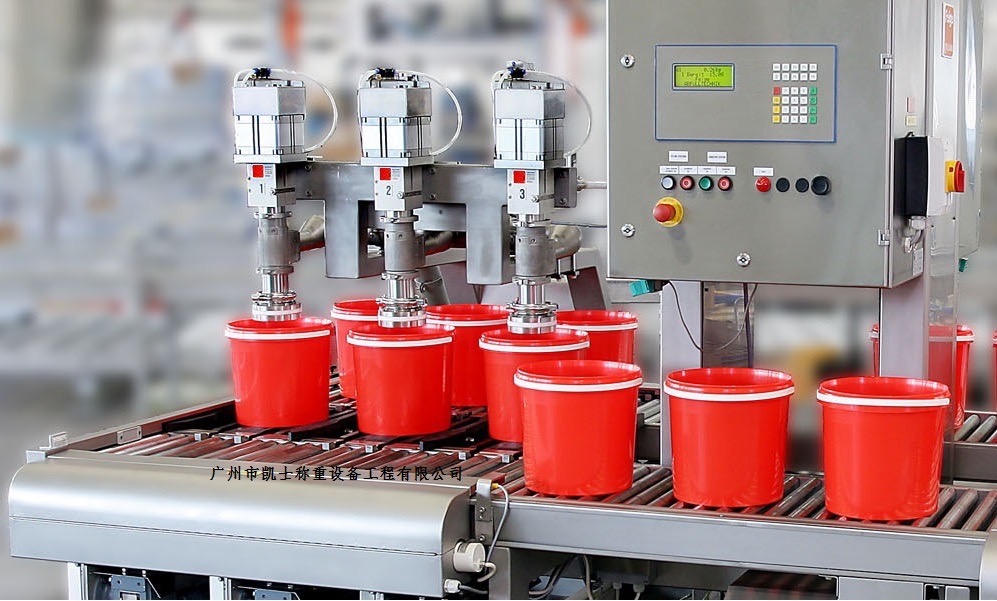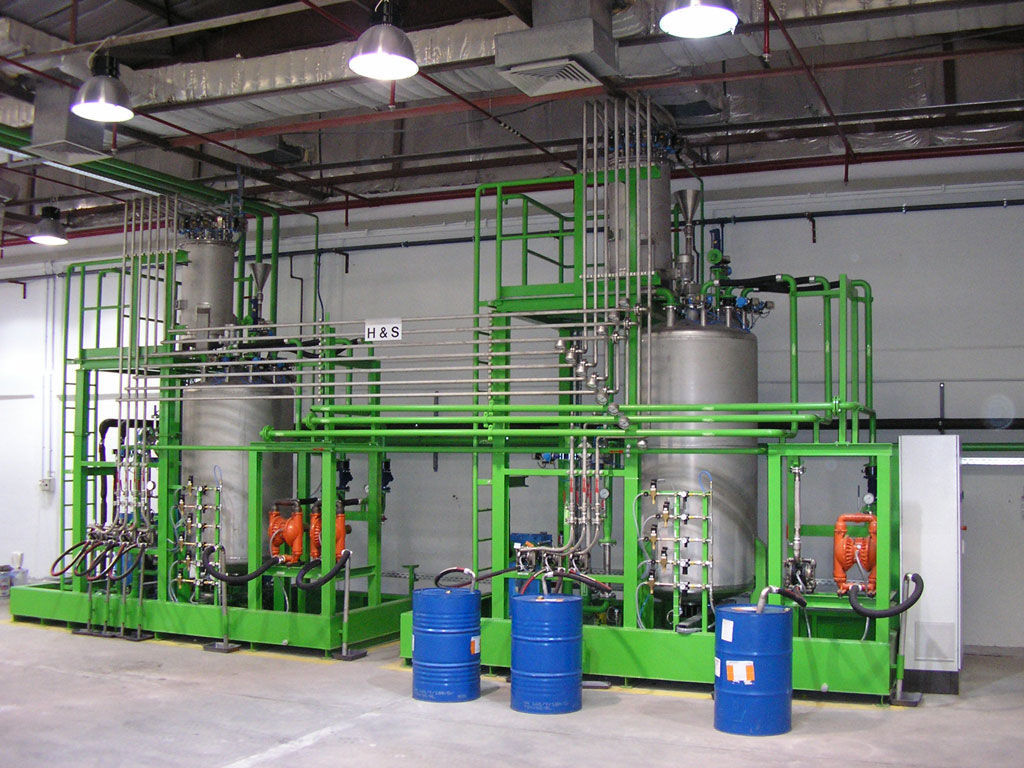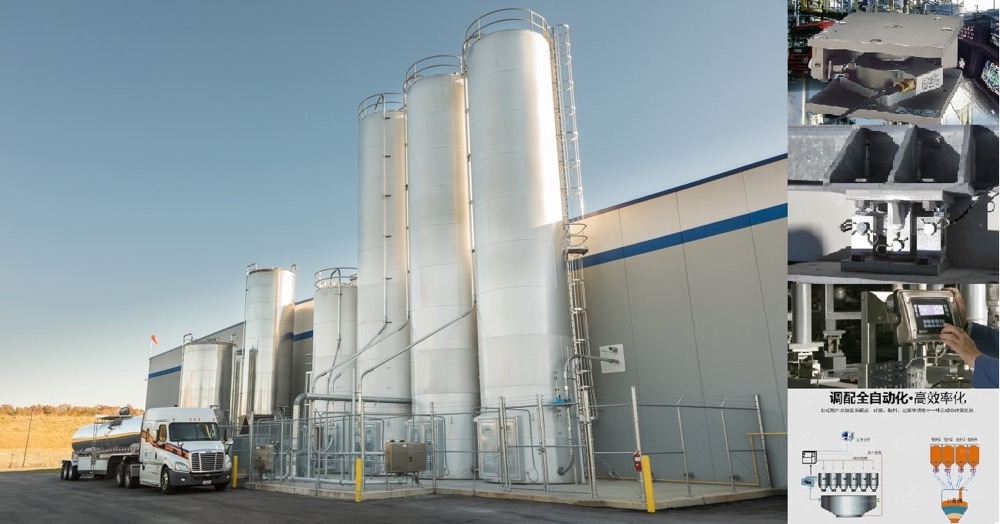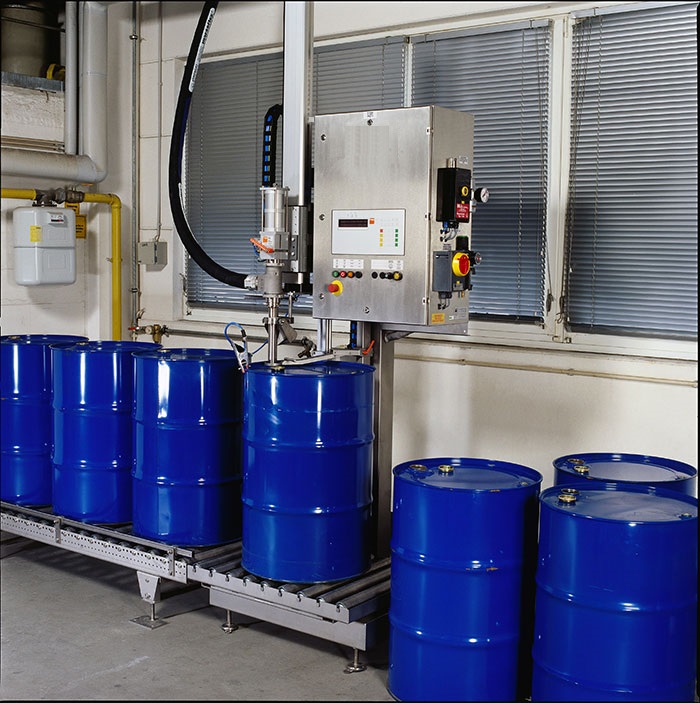


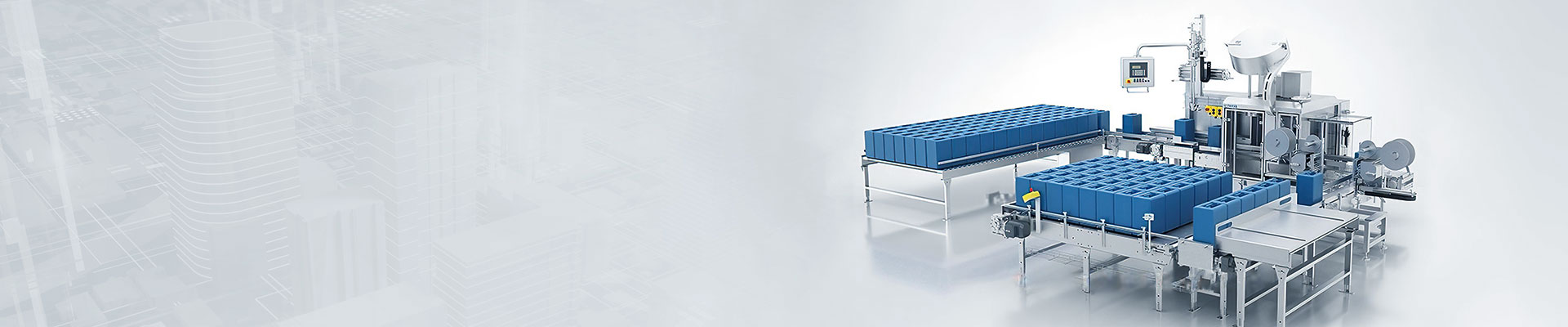



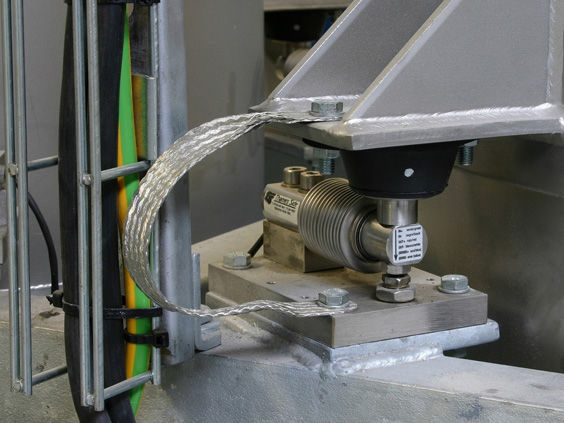
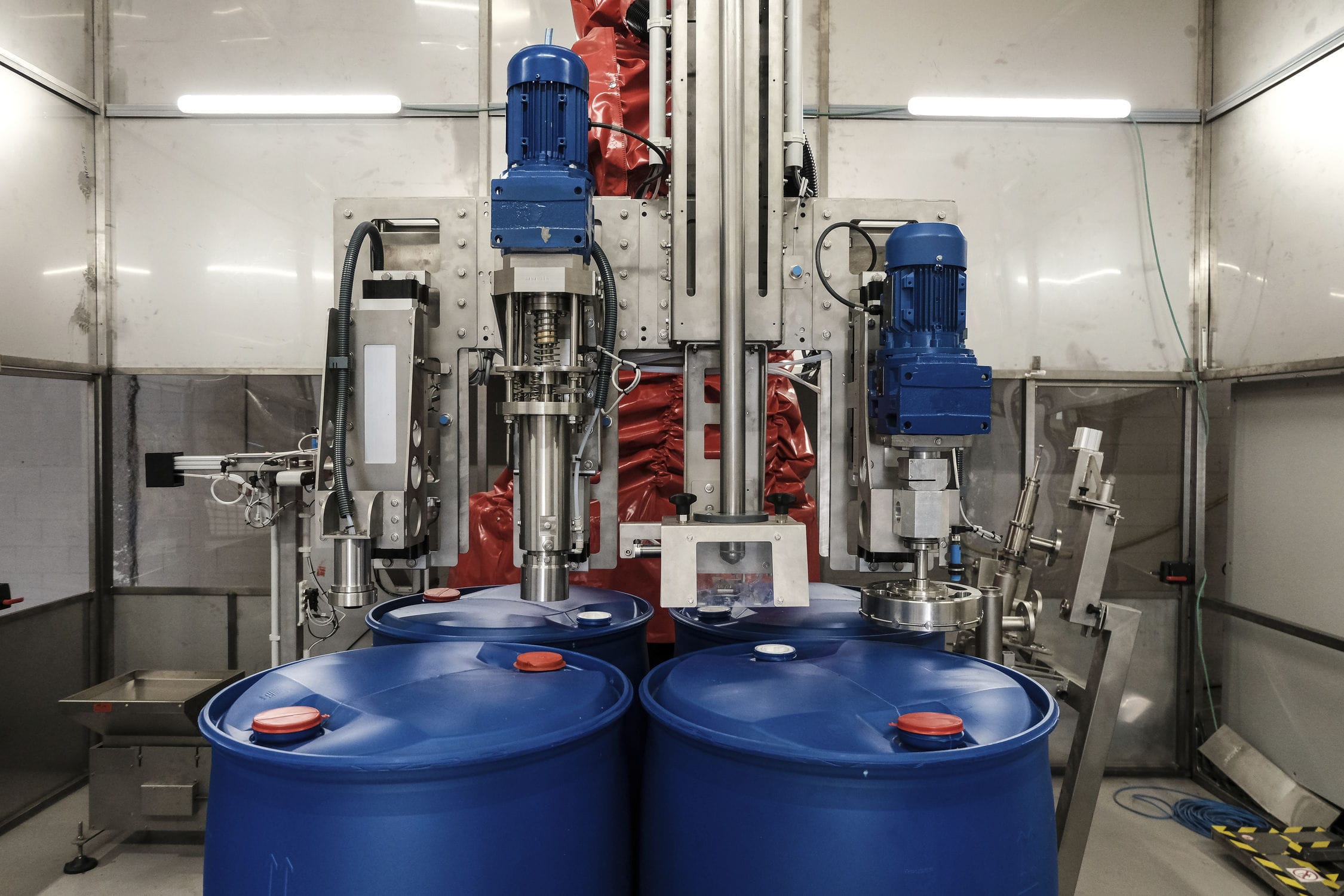
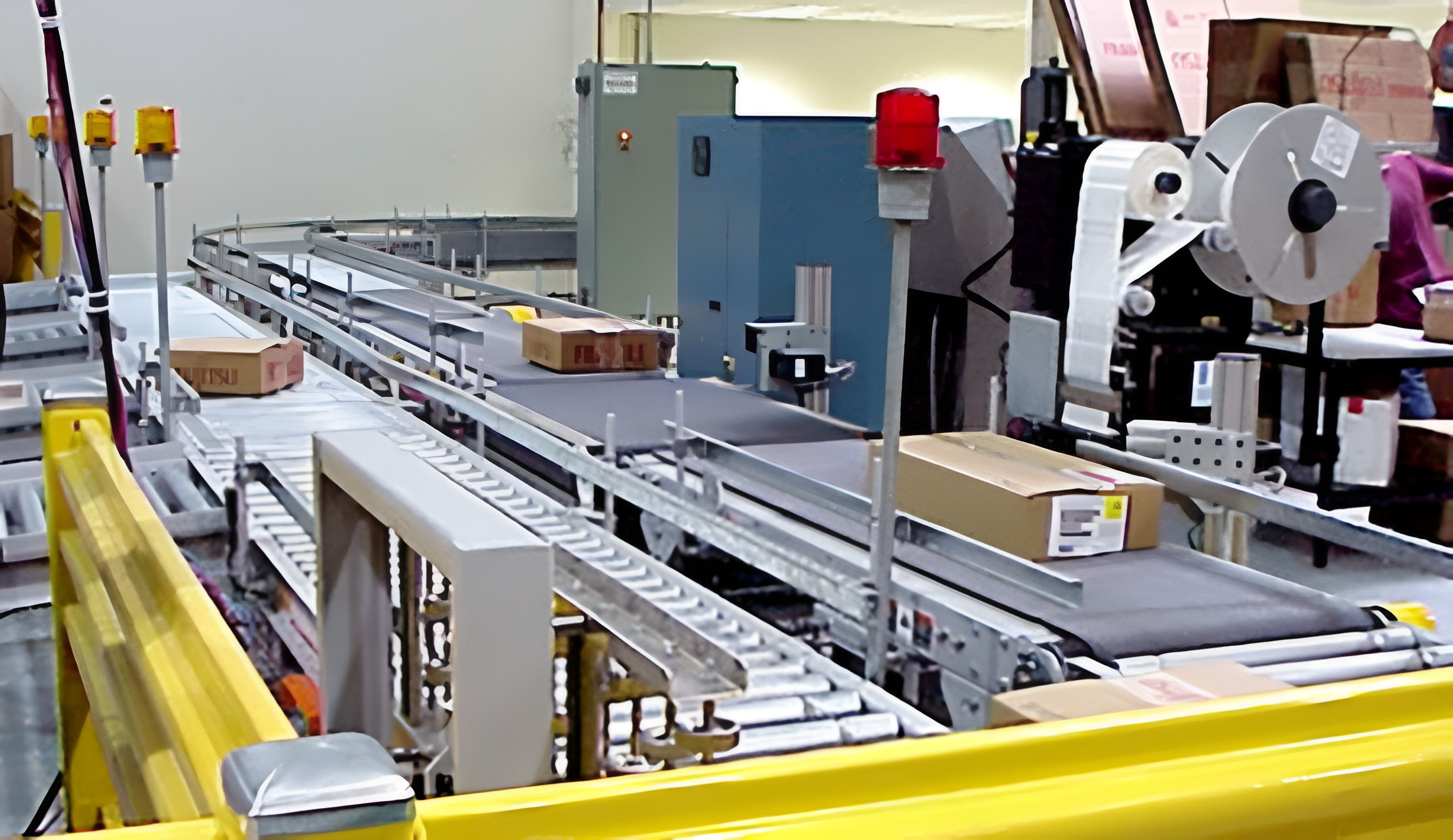
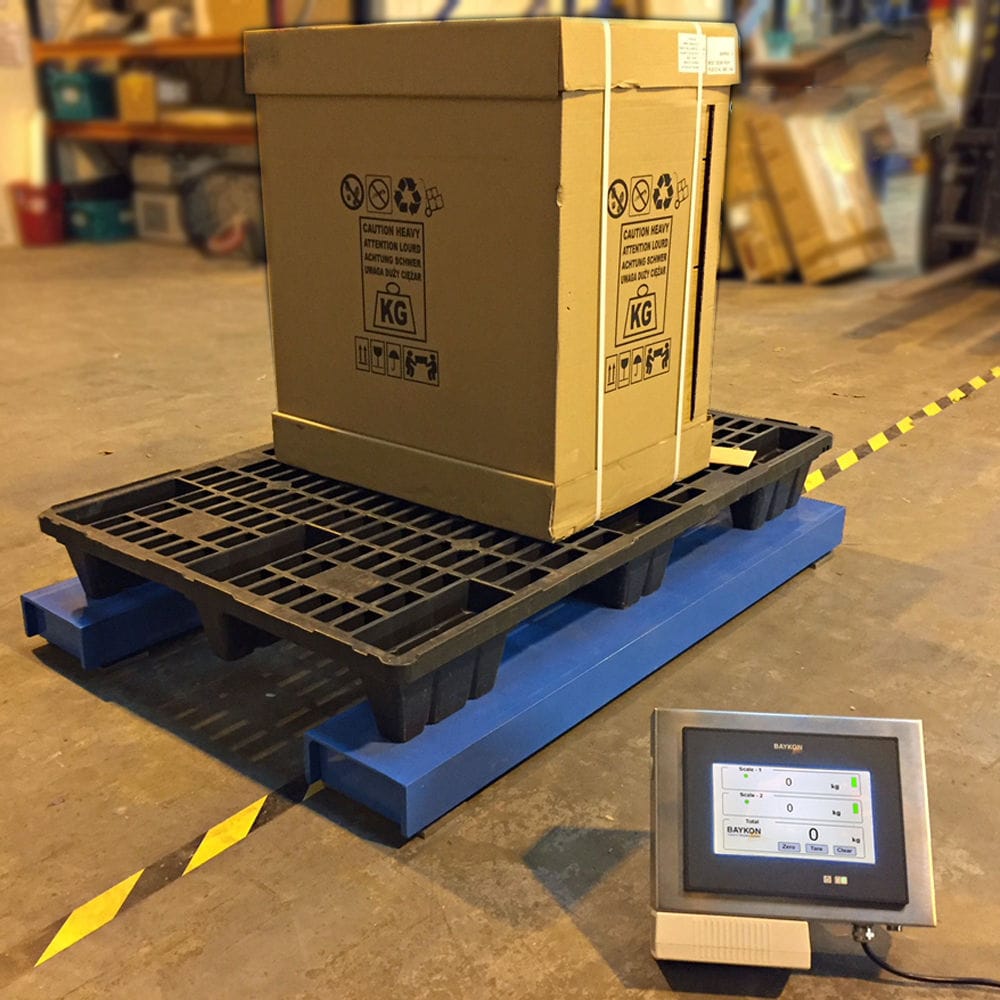


The rotary liquid filling machine takes advantage of the high measurement accuracy of the electronic scale. The signal measurement module of the electronic scale is connected to the weighing instrument through a data line. During the measurement process, the pressure signal from the electronic scale is continuously transmitted to the weighing instrument. When the preset quantitative weight is reached, the weighing display controls the pump to stop and the pneumatic valve to close. Its function is to automatically divide a large amount of bulk liquid materials into small loads of the predetermined weight for quantitative packaging.


 020-34563445
The rotary liquid Filling machine can be divided into three parts: the full-sealed filling gun feeding filling, weighing and discharging. The sealing piston is connected to the feeding and discharging filling gun, and the filling counting wheel rotates synchronously with the weighing module platform. The other components are installed on the frame. The lower end of the filling gun is open, so that the liquid can enter the bucket during filling, and the feeding port of the piston is connected to the lifting cylinder and the filling gun. The weighing part consists of the weighing module, the bucket conveying hydraulic cylinder, the bucket clamping limiter and other components. The guide rod of the bearing is fixedly connected to the filling gun, and the guide sleeve, the hydraulic cylinder and the weighing module are all installed on the weighing plate of the conveyor. The weighing support plate is fixedly connected to the push rod axis of the electric cylinder and can move up and down together with the push rod axis of the electric cylinder. The hydraulic cylinder functions to lift the filling gun when filling and discharging, so that it can be separated from the weighing module and achieve a fully sealed filling process. When the push rod axis of the control electric cylinder moves vertically up and down, it can achieve stepwise precise weighing. When the piston rod of the feeding and discharging cylinder extends and retracts, the filling gun and the bucket are driven to move left and right by the electric cylinder, and the filling gun is used to discharge the material.
The automatic filling machine uses the PID filtering algorithm to eliminate interference signals. It is composed of PLC, weighing instrument and filling solenoid valve, and adjusts the target set value of weight according to different filling ranges to complete the filling. The filling machine uses the PLC signal to drive the transmission mechanism such as the motor to move the cylinder, and at the same time drives the encoder of the motor to feedback the pulse number to the driver. The driver compares the two pulses and determines the deviation, and performs calculation according to a certain control law to obtain the filling signal as the set value of the speed controller in the servo driver, and then through current regulation and power amplification, the cylinder moves in the direction to eliminate the deviation, thereby achieving the positioning of the cylinder stack.
The automatic filling machine takes advantage of the high accuracy of the Electronic scale to measure accurately, connects the electronic scale signal weighing module and the weighing instrument with data lines, and transmits the pressure signal of the electronic scale continuously to the weighing instrument during the measurement process. When the preset quantitative weight is reached, the weighing display controls the pump to stop and the pneumatic valve to close. Its function is to automatically divide a large amount of bulk liquid materials into predetermined weight portions for packaging. The liquid materials conveyed by weight or power are automatically loaded into several standard empty buckets, and the valve opening and closing is used to quantitatively control the weight of each bucket. The filling selects the preset target value, and automatically controls the running weight of each stage according to the setting of the target value, and collects the data in the form of digital quantity from the on-site equipment to send real-time data, and realizes the monitoring and control functions through the operation of the data.
The process workflow is as follows:
The first step, when the filling is idle, the piston rod of the sealing cylinder extends, blocking the discharge port of the filling machine piston to prevent liquid leakage; the hydraulic cylinder lifts the filling gun, making it separate from the weighing module, facilitating the easy entry of the empty load bucket into the filling position.
The second step, when the filling weighing module (when a load-free bucket is detected to be in place, then the filling weighing and discharging process is started, first making the hydraulic cylinder's filling gun descend, the filling gun and the cylinder push the bucket downward, and it comes into contact with the weighing module, making the weighing module enter the weighing measurement state. At this time, the load on the weighing module is the sum of the weight of the filling gun discharging and the weight of the empty bucket.) Step 3: Control the lowering of the material pipeline push rod. Through the electric cylinder support, the filling gun also descends. When the material in the bucket contacts the load on the weighing module and the load starts to increase, by measuring the continuously rising material load in the bucket, when the load on the weighing module increases to the target amount, the push rod of the electric cylinder stops filling and rises once to the original position. At this point, the upper edge clamping device of the bucket is released, and the automatic sealing cap starts to rotate, forming a fully sealed filling state. Meanwhile, the opening of the filling bucket and the bottom surface of the filling gun maintain a distance of 50 to 100 mm.
Step 4: According to the requirements, arrange multiple pistons to deliver materials simultaneously. During filling, the filling amount is controlled by the feeding counting wheel and the feeding counter. Based on the experiments, determine the termination filling amount of the volumetric filling to be 90% of the total filling volume, and convert it into the count value of the feeding counter. When the count value of the feeding counter reaches the count value of the termination filling amount, stop volumetric filling.
Step 5: After the filling is completed, the push rod of the electric cylinder rises, causing the bucket and the filling gun to separate. Ensure that the change in the load on the weighing module acting on the bucket is only related to the change in the loaded liquid. At this time, although the bucket and the filling gun have separated, the liquid between the bucket and the filling gun forms a new drip layer, and the leak cup remains in a sealed state. When the weight on the weighing module reaches the rated filling volume, the feeding motor stops working, the piston rod of the sealing cylinder extends, and the outlet of the sealing cylinder is blocked to prevent liquid leakage. Thus, the filling is completed.
Step 6: After the filling is completed, the hydraulic cylinder extends and lifts the filling gun, so that the filling bucket rotates to the pressurization position and is separated from the weighing module. Ensure that the weighing module does not bear the load. At this time, although the bucket and the filling gun have separated, the liquid between the bucket and the filling gun forms a new drip layer, and the leak cup remains in a sealed state. When the weight on the weighing module is the rated filling volume, the feeding motor stops working, the piston rod of the sealing cylinder extends, and the outlet of the sealing cylinder is blocked to prevent liquid leakage. Thus, the filling is completed.
Step 7: Display the numerical value of the filling and weighing and send the control to the upper computer to complete the filling and discharging of one bucket, and return to the next filling and discharging cycle process.