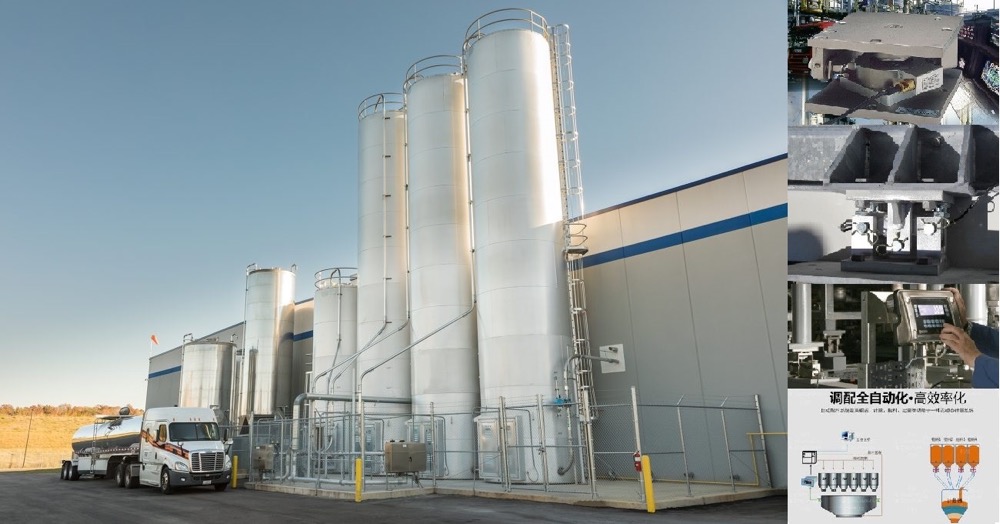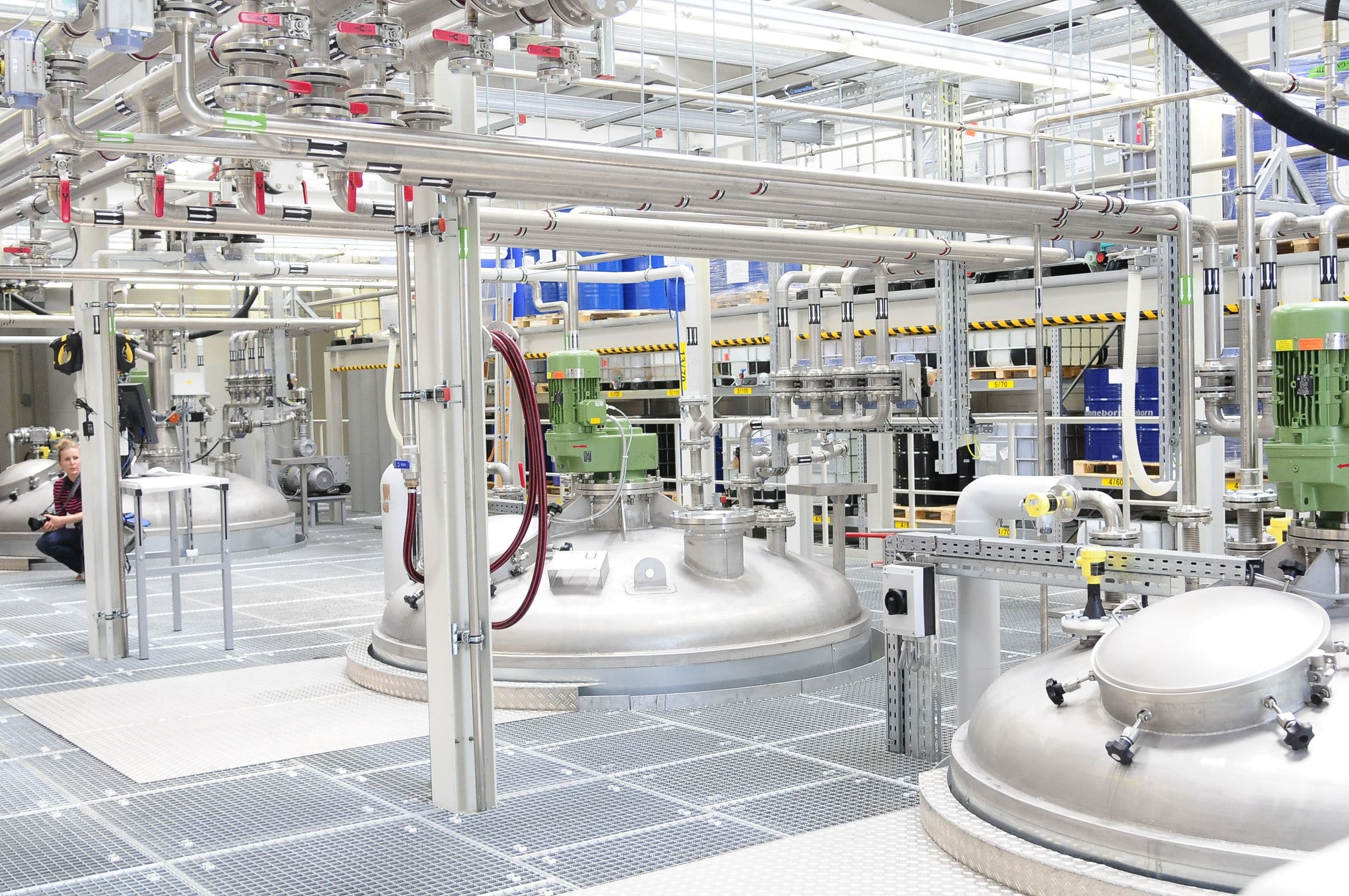


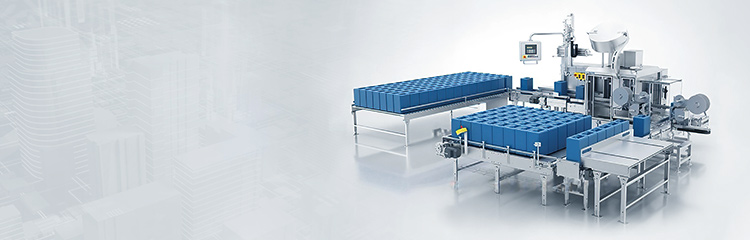


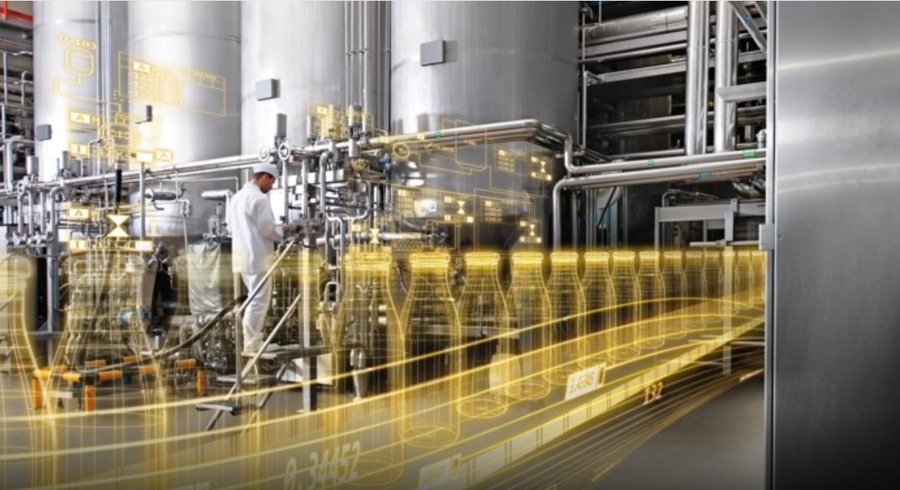
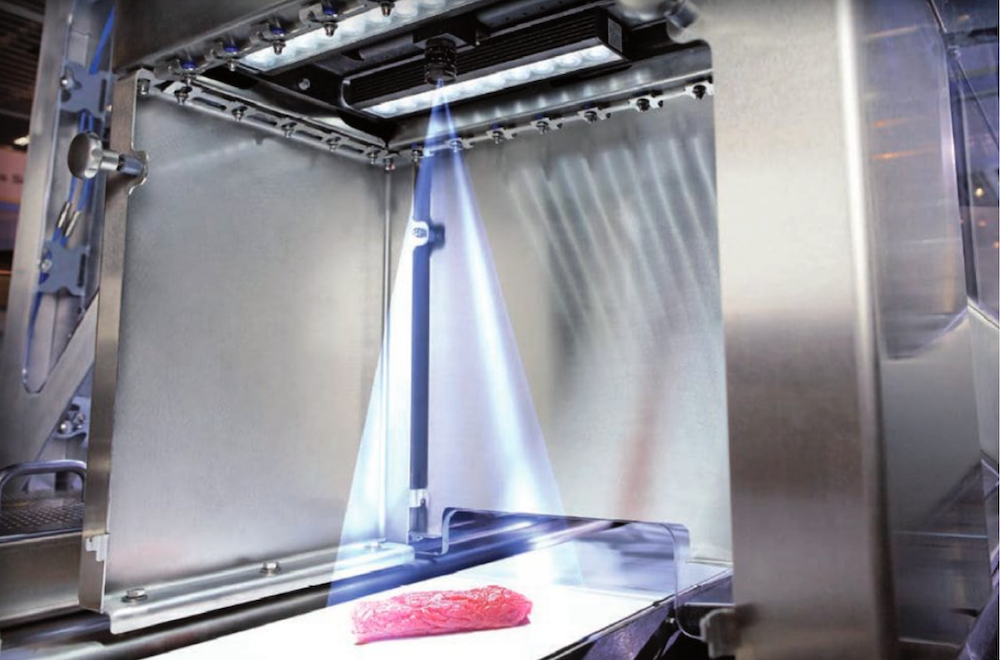
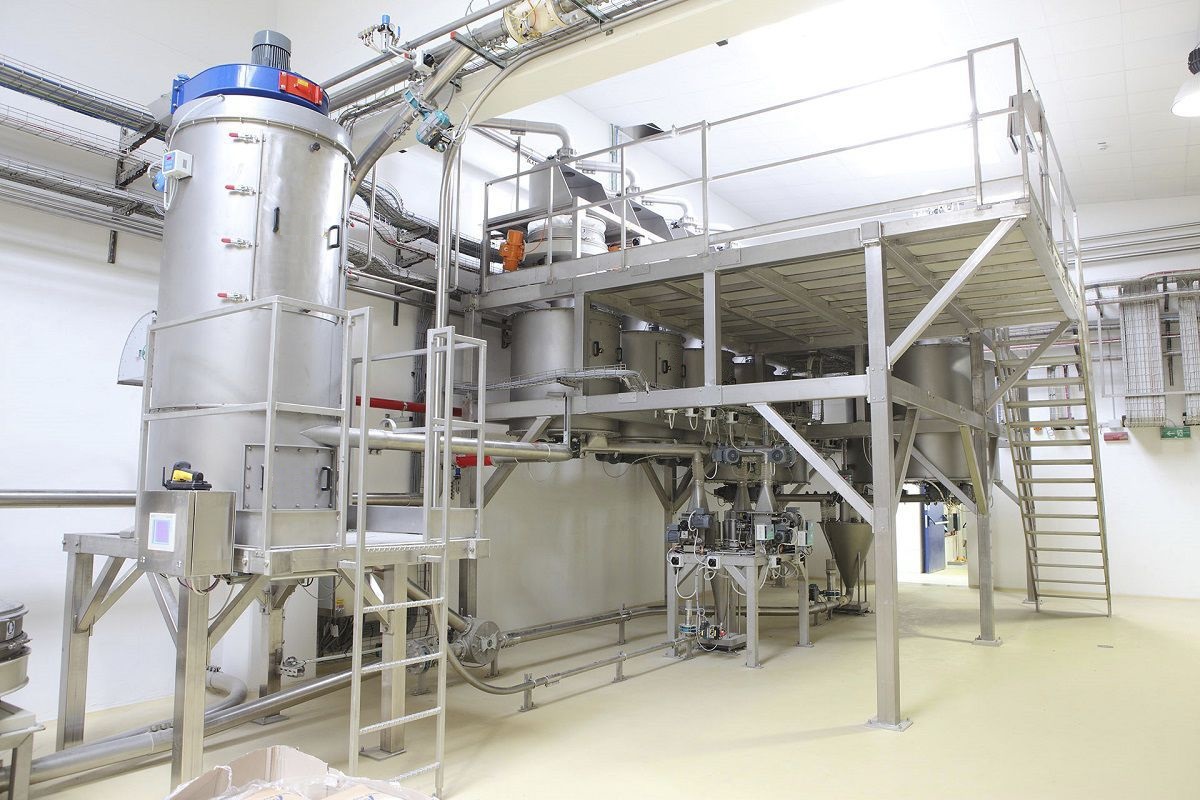
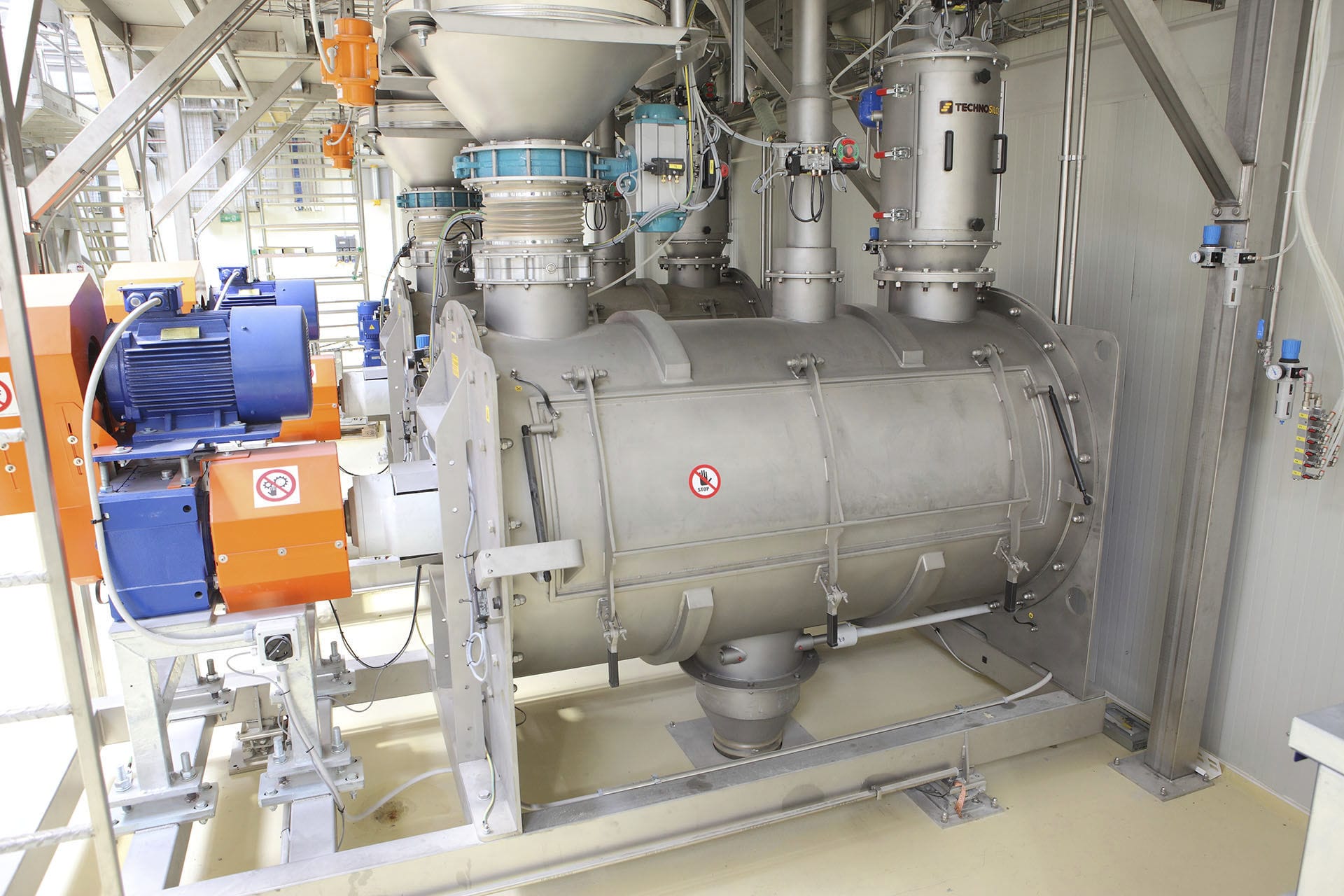
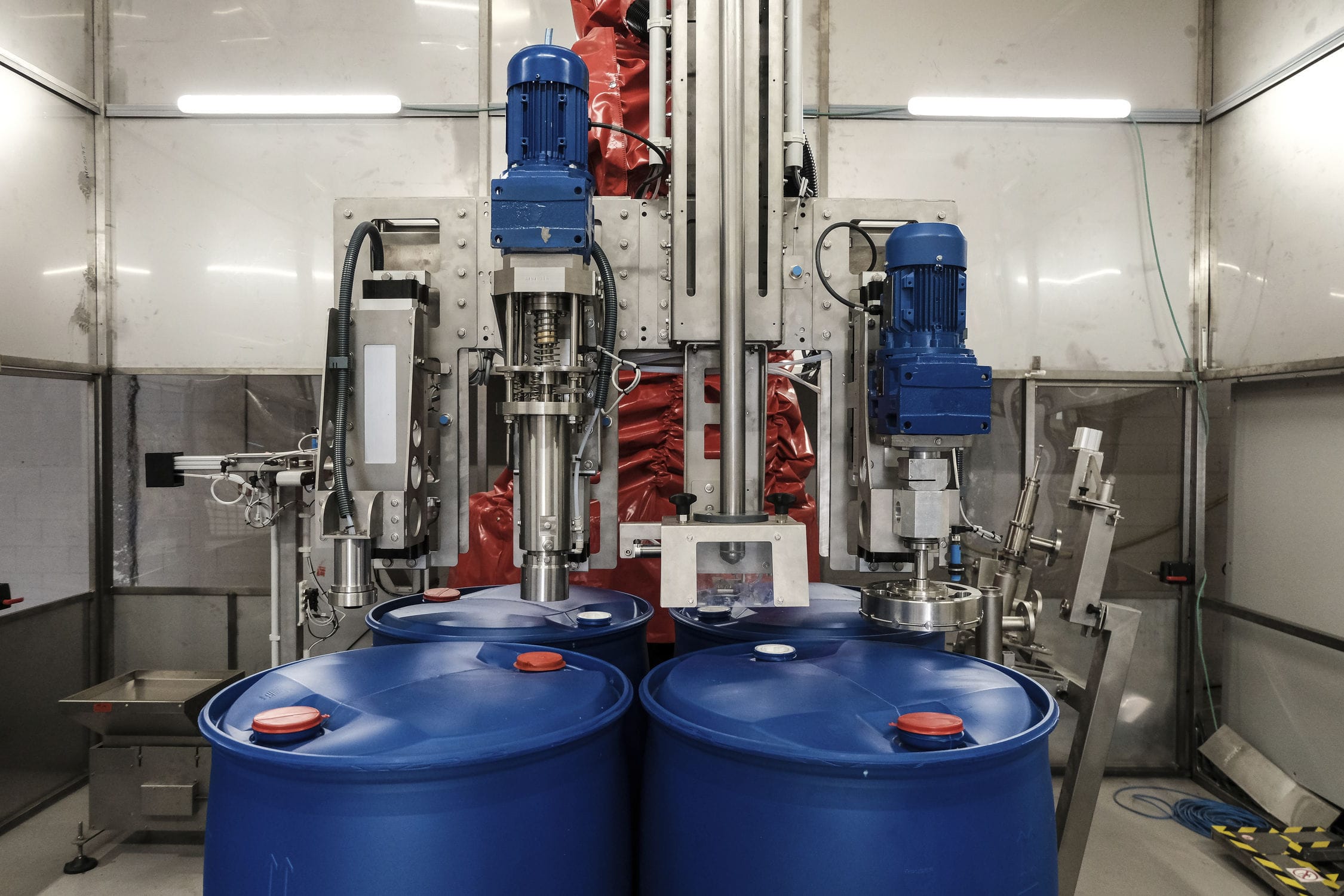
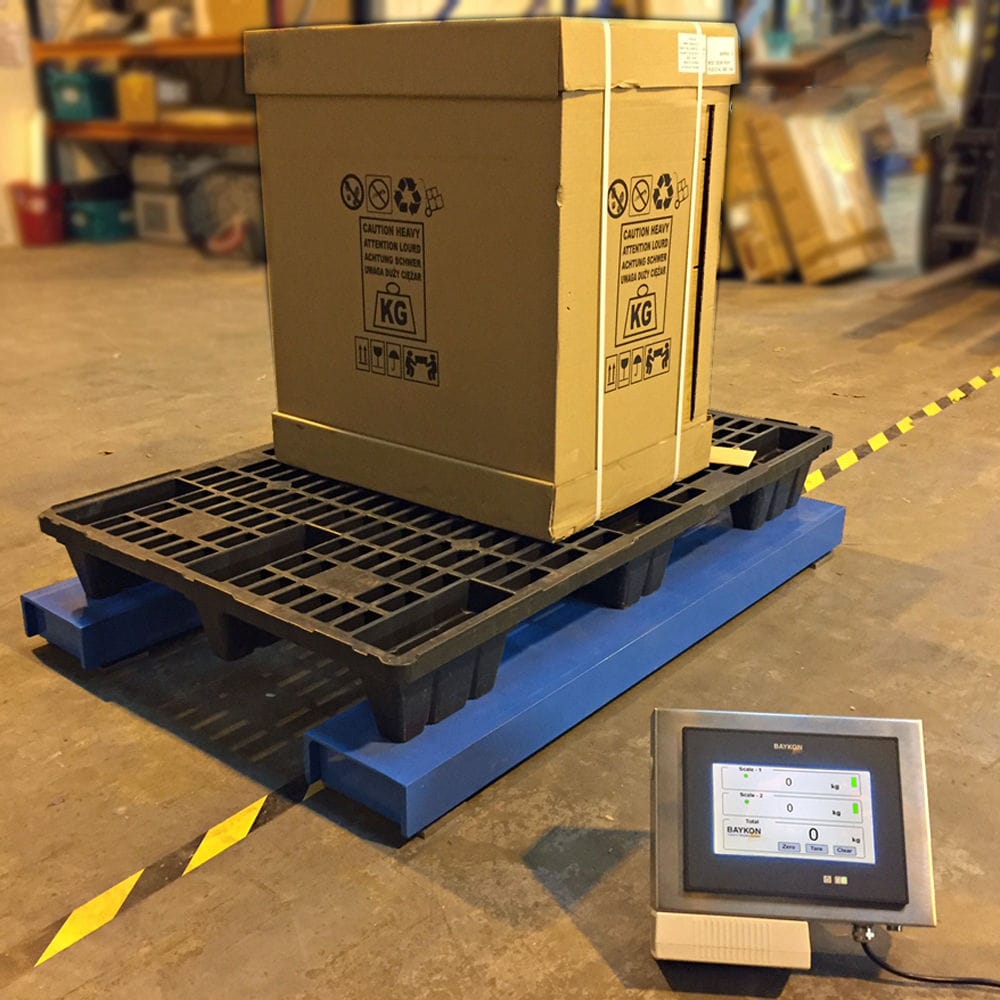


The Central weighing and unloading system adds the required materials into the mixing bin in turn according to a certain ratio. At the same time, PLC monitors the pulse signal sent by the material level meter to determine the position of the material in the bin, so as to control the on-off of the charging valve; After the feeding is completed, according to the preset mixing delay time, the PLC starts the mixing motor to ensure that the material is fully stirred in the mixing bin to complete the mixing operation; Then enter the discharge and pressing stage, the PLC controls the discharge valve action, the material is output from the mixing bin, pressed into the storage tank, complete a cycle of automatic batching control process.

 020-34563445
The central control system for weighing and batching adopts small and medium-sized distributed control, achieving "decentralized control and centralized management" and overcoming the problem of "dangerous concentration"; The upper computer and lower computer are relatively independent. It has manual, automatic, and semi-automatic switching functions. When online, it transmits information to each other according to specific protocols. When offline, a single scale can independently achieve closed-loop process control. The upper computer is far away from the operation site, which improves the stability of the weighing control system and enhances the working environment for operators; The lower computer adopts a programmable controller with strong anti-interference ability, simple and easy programming, and can operate reliably for a long time in harsh environments; By adopting PID regulation, the batching accuracy of the Batching system can be improved, and the optimal working switch sequence can be set according to production needs to better solve the problems of material head and tail, and automatically modify the material ratio batching. The ingredient scale has three control modes: manual, semi-automatic, and automatic. When operating manually, turn the switches of the on-site control box and instrument box to the manual position, and control them through the start stop button, potentiometer, frequency meter, etc. on the on-site control box. The weighing instrument displays the instantaneous and cumulative measurement of the material. Emergency operations need to be carried out under manual maintenance and debugging work. When semi-automatic, turn the switches of the on-site control box and instrument box to the automatic position, and control them through start stop buttons, frequency meters, weighing display instruments, etc. Adjust the quantity of ingredients, display the instantaneous and cumulative quantities of materials; You can also adjust the ingredient quantity by setting the recipe through the on-site operation screen. Mainly used for on-site operations when no upper level control is required. When fully automatic, turn the instrument box switch to the linkage position, and the upper computer controls the start and stop of the belt, dynamically displaying the amount of material, the running status of the belt, and various alarm indicators It can collect and process weighing signals and switch status from various ingredient control circuits, achieving automatic control of the entire ingredient system's belt scale feeding, weighing detection, material quantity adjustment, bin selection and switching, and other ingredient processes. At this time, the on-site manual control of the ingredient system is not working and is completely operated through the central control room.
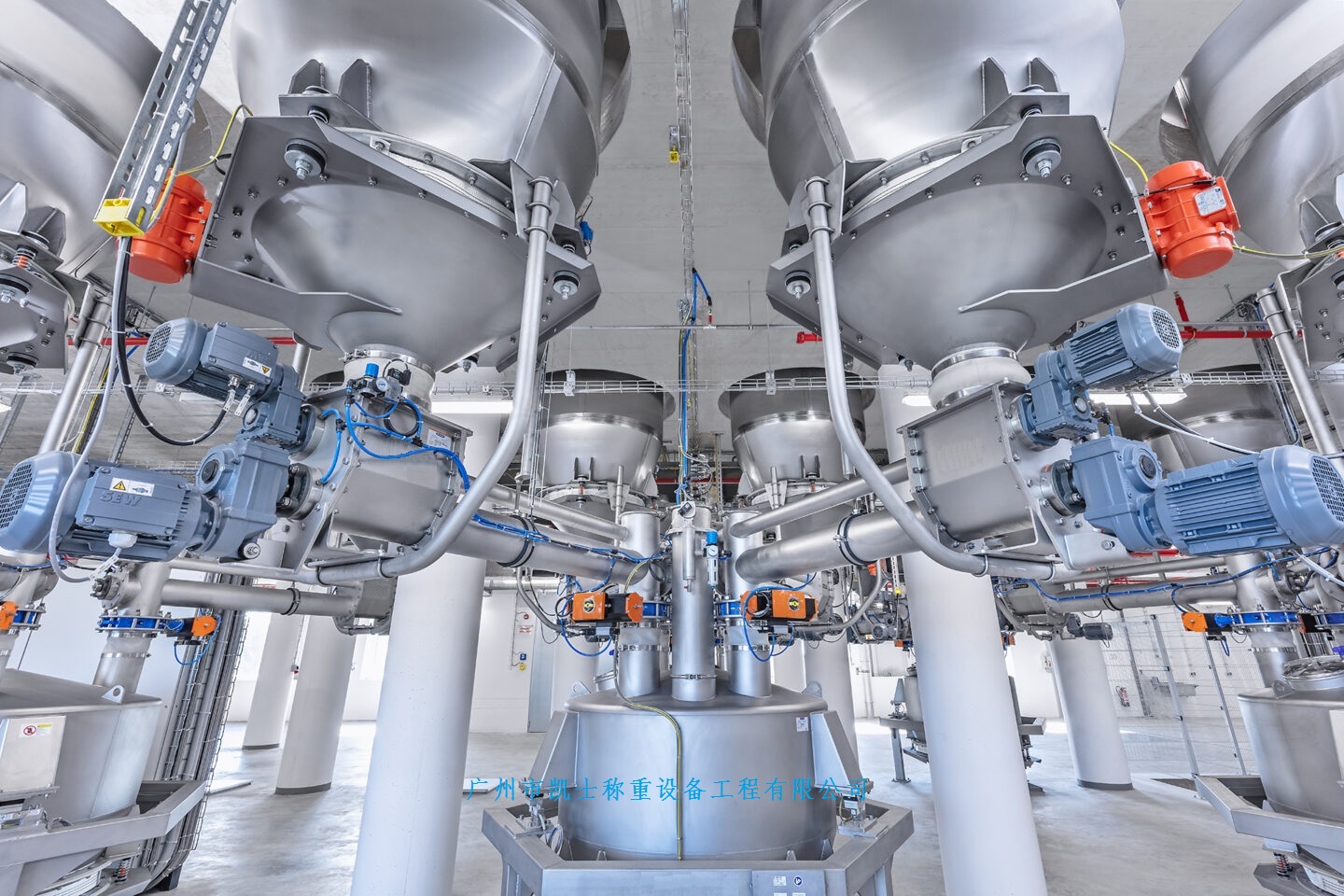
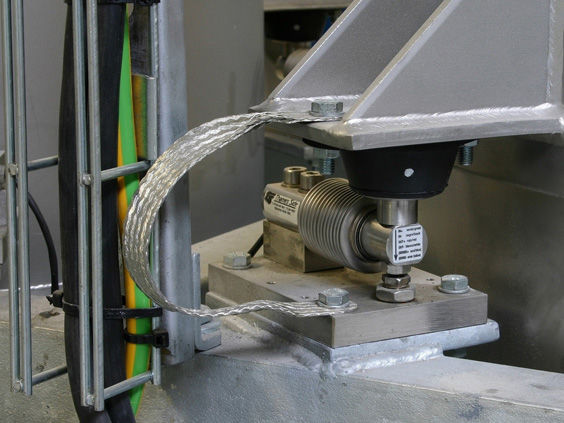
The weighing and batching machine is equipped with a silo, a plug-in valve, a weighing screw machine, an electronic weighing scale, a quantitative mixer, a rotary mixer, and a mixer; The plug-in valve is located between the discharge port of the silo and the feed port of the weighing screw machine; The weighing screw machine and the quantitative mixer are connected by an Electronic scale, and the rotary mixer is installed at the outlet of the quantitative mixer. The rotary mixers are connected by an electronic scale; The output port of the rotary mixer is connected to the feed port of the mixer. The batching system first connects the silo, plug valve, weighing screw machine, electronic scale, quantitative mixer, rotary mixer, and mixer. The weighing screw machine and the quantitative mixer, as well as the quantitative method and the rotary mixer, are connected by electronic scales to eliminate the influence of system vibration on the accuracy of weighing. When the mixer system is started, the rotary mixer automatically starts, passing through the hopper through the plate valve 2, weighing screw machine, weighing scale, quantitative mixer, and rotary mixer. The quantitative mixer starts measuring the incoming amount. When the incoming amount reaches the system set value, the weighing screw stops working and feeding. When the required hydrogen is lower than the system set value, the weighing screw starts working and feeding begins. This cycle ensures the continuity of feeding. The rotary mixer starts to deliver the material into the mixer according to the system set speed. When there is a deviation between the actual conveying amount calculated by the quantitative mixer and the system set value, the speed of the weighing screw machine and the quantitative rotary mixer are automatically adjusted to ensure accurate feeding.
The main functions of the ingredient system
Monitoring function: Detect and monitor parameters such as instantaneous flow rate, daily accumulation, monthly accumulation, and annual accumulation during the weighing and batching process;
Screen display: The computer monitor can display the operating status of relevant control parameters during the batching process, as well as real-time display of batching curves and tables;
Print management: can print ingredient reports at any time, save and query;
Communication function: Bidirectional data exchange between industrial control computer, PLC, and instrument;
Data processing: It can automatically process the collected signals and output them to the corresponding control variables;
Control function: Automatically control the normal operation of the equipment based on the corresponding set values before operation, including PID regulation;
Alarm function: The upper computer sends an alarm in the form of pictures and sound and light signals for various parameters exceeding the limit or abnormal equipment status.