





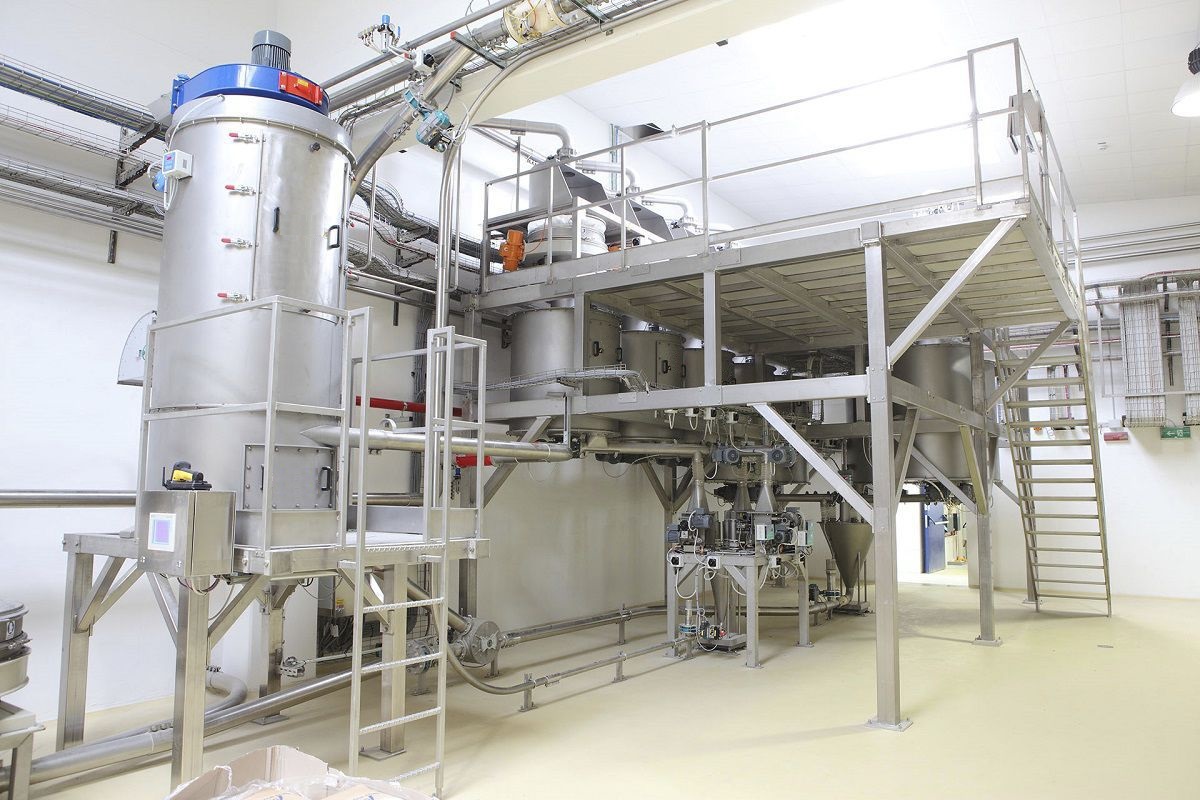
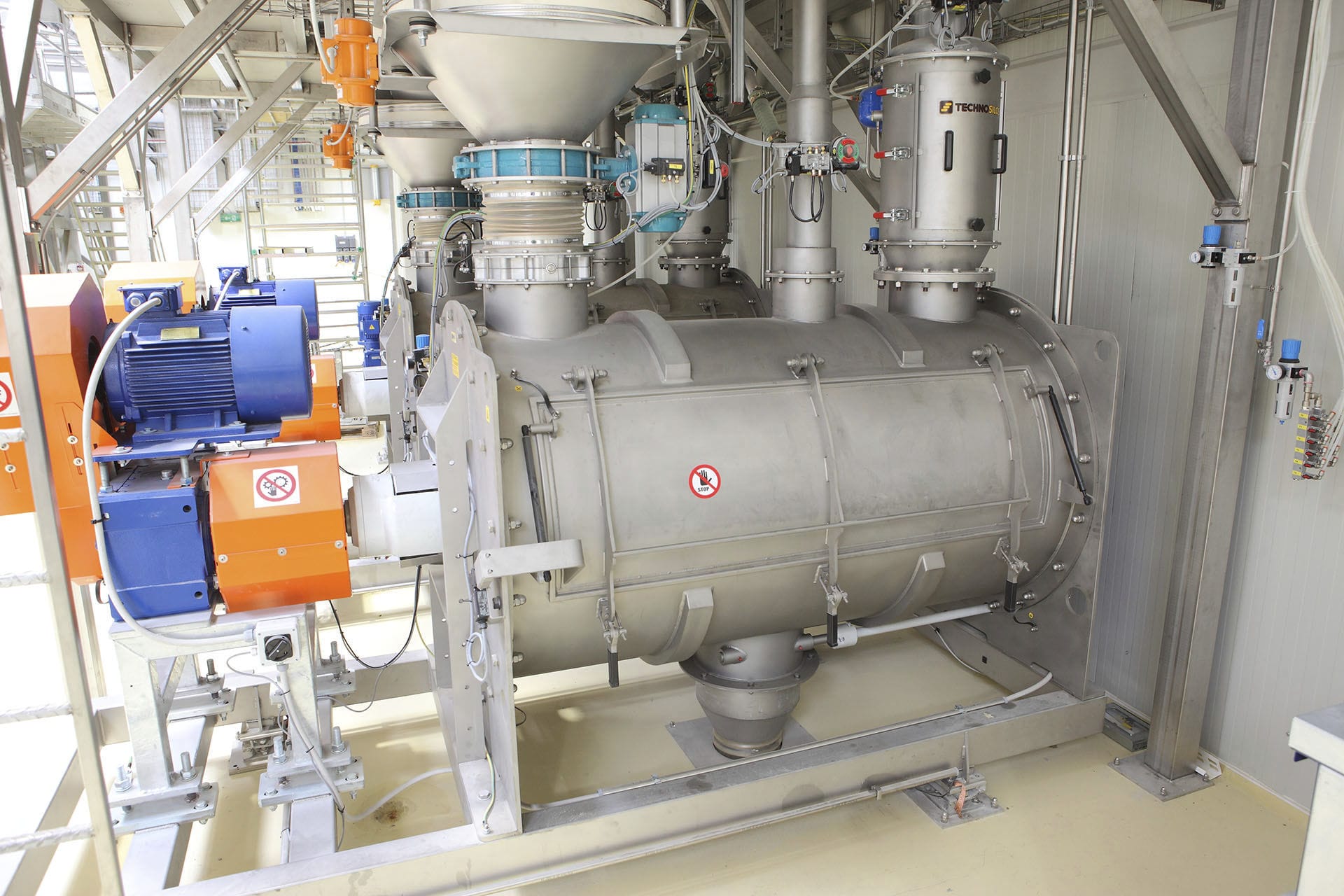


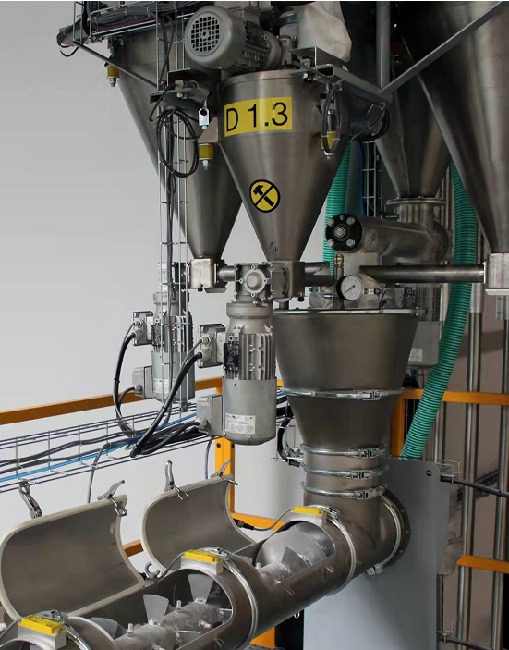
The movement of the mixed weighing and retaking machine is driven by two motors simultaneously. A frequency converter is added to the circuit to control the left and right movement of the screw conveyor system. The protection is mainly provided by the frequency converter without protection. When driving dual motors according to the usage requirements of the frequency converter, thermal relays are used in conjunction. The PLC outputs forward and reverse operation instructions to activate the corresponding intermediate relays. Then, the normally open point of the intermediate relay controls the frequency converter. The PLC directly sends 4~20mA to the frequency converter, and the frequency converter feeds back the speed regulation signal to form a closed-loop control.

 020-34563445
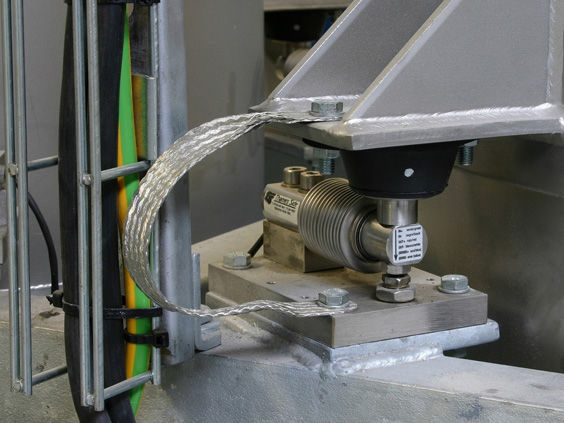
The walking control system of the mixed weighing reclaiming machine collects the pressure difference between the four suspended Weighing modules in front of and behind the screw motor silo when fully loaded and unloaded. It combines the dual-shaft frequency conversion signal, loading, steering, braking, and screw speed signal to calculate the load of the screw conveyor using the weighing module. At the same time, the weight data is sent to each weighing instrument for display. The transportation cycle data of the Weighing system can be saved and can communicate with the weighing instrument through the remote upper computer. The real-time status data of the material pile in the material yard collected by the PLC control device and the drive equipment through the material pile identification system is calculated and processed and stored on the upper computer.
After the operator in the central control room gives the working instructions for the stacker-returner, the Feeding machine will automatically run to the designated material pile to carry out material retrieval or stacking operations, and automatically adjust the position and status of the equipment through the weighing device. The movement of the feeding machine is changed from parallel control by two frequency converters to cross-control, and the two frequency converters simultaneously receive various control instructions issued by the PLC processor. Then, drive the walking motors on the left and right sides respectively to achieve the walking movement of the entire batching machine.
The movement of the screw conveyor is driven by two motors simultaneously. A frequency converter is added to the circuit, and the left and right movement of the screw conveyor system is controlled by the frequency converter. The protection is mainly not provided by the frequency converter. When driving dual motors according to the usage requirements of the frequency converter, thermal relays are used in conjunction. The PLC outputs forward and reverse operation instructions to activate the corresponding intermediate relays. Then, the normally open point of the intermediate relay controls the frequency converter. The PLC directly sends 4~20mA to the frequency converter, and the frequency converter feeds back the speed regulation signal to form a closed-loop control.
The traveling speed of the weighing and material retrieval machine varies from a low speed of 1m/mi to a high speed of 30m/mi. The traveling speed becomes a smooth stepless speed change, and the running directions are forward and backward respectively. There are two operation modes: One of them is operated by the driver's cab personnel, mainly using the Feeder for material retrieval operations. When the operator uses the control handle, the weighing system simultaneously sends out two signals: One type of signal is the switch signal, which is directly fed back to the PLC program. Then, the PLC program processes it through calculation. After comparing various limiting conditions in the program (including limit switches, collision protection switches, etc.), the output signal is transmitted to the internal integrated circuit of the frequency converter to start the walking frequency converter, thereby enabling the feeding machine to move forward or backward. The other one is a 4-20mA module controlled by analog quantities. The potentiometer designed in the operating handle generates analog quantity changes. The range of the operator operating the handle changes smoothly. The signal is transmitted to the internal integrated circuit of the walking frequency converter, thereby changing the operating speed. After the walking frequency converter receives the operation signal, according to the set parameters of the walking frequency converter of the feeding machine, the rectification part of the walking frequency converter starts to work first, followed by the inverter circuit. The analog quantity of the required frequency, amplitude and phase sequence is generated by using the pulse width modulation method, and finally the walking motor is put into operation.
The three major mechanisms of the screw removal machine - traveling, lifting and screw - are driven by frequency converters. During operation, the working mechanism needs to descend into the interior of the silo to control the materials. The specific working process is as follows: The screw enters the silo operation area, starts the screw to travel to the beginning of the silo, and the lifting mechanism descends to insert the screw blades of the screw mechanism into the material pile to a certain depth. Start the screw motor, select the working direction of the screw according to the distribution of materials, and at the same time start the motor of the walking mechanism to move forward slowly. When the screw conveyor approaches the end of the silo, the traveling mechanism stops moving forward and rapidly retreats backward. At the same time, the lifting mechanism rises to the highest position of the stroke and continues to travel until it detects the next silo section and then repeats the operation.
When the screw feeder is in operation, the motor is powered on and rotates, which is transmitted to the screw body to rotate. The purpose of picking up materials is achieved through the blades of the screw body. The walking gear screw motor drives the walking gear screw to rotate. The gear screw moves along the fixed rack, achieving the overall movement of the equipment and thus enabling uniform material retrieval from the bottom of the silo. By adjusting the parameters of the walking frequency converter, rapid no-load walking can be achieved. The power supply of the main drive motor is achieved by a control cabinet equipped with a frequency converter. By adjusting the rotational speed of the motor, the requirements for load start-up and quantitative material taking can be met. The power supply of the walking gear helical motor is realized by a control cabinet equipped with a frequency converter and a closed-loop controller. By adjusting the rotational speed of the gear helical motor, the requirements for load start-up and uniform material taking can be met. The power and control are driven by the screw. The screw body adopts a variable diameter and variable pitch structure, which can not only ensure the rigidity of the screw body but also make the material flow smoothly without any obstruction. The main drive and walking mechanism adopt variable frequency speed regulation, thereby meeting the requirements of load start-up and quantitative material taking, and adjusting the walking speed as needed. It is equipped with a main drive bearing temperature sensor, a two-level protection limit switch and an equipment movement positioning device to ensure that the equipment can operate automatically, safely and reliably.