






When the constant weightlessness screw scale body operates at a constant speed, if the tare weight is zero, the flow rate of the conveyed material is corresponding to the flow rate of the material inside the screw conveyor pipe. The body of the screw metering electronic scale is divided into two parts, upper and lower. The upper part is the speed-regulating feeding screw, which quantitatively adjusts the feeding according to the instructions of the computer. The lower part is the constant-speed metering screw, which is the metering section of the scale body.

 020-34563445
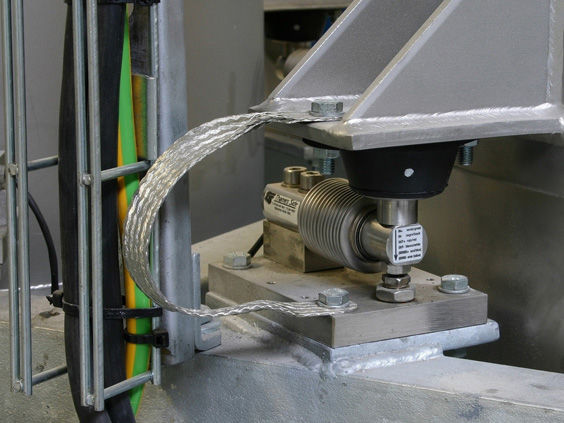
When the constant weightlessness screw scale body operates at a constant speed, if the tare weight is zero, the flow rate of the conveyed material is corresponding to the flow rate of the material inside the screw conveyor pipe. The body of the screw metering Electronic scale is divided into two parts, upper and lower. The upper part is the speed-regulating feeding screw, which quantitatively adjusts the feeding according to the instructions of the computer. The lower part is the constant-speed metering screw, which is the metering section of the scale body. The cantilever weighing structure with a cross reed as the fulcrum is equipped with a weighing module. During normal operation, the rotation of the metering screw drives the material through the metering cylinder. Due to the gravity of the material, the weighing module is subjected to force and outputs a voltage signal. The magnitude of the signal is directly proportional to the flow rate of the material and is calculated by the weighing instrument through sampling, counting and accumulation. It can display the instantaneous flow rate and cumulative volume of the material. On the other hand, the instantaneous flow rate is compared with the feeding amount. The deviation is adjusted by the PI digital adjustment operation and then a regulating signal is output. The speed of the speed-regulating motor is controlled by the speed control instrument to achieve the purpose of quantitative feeding.
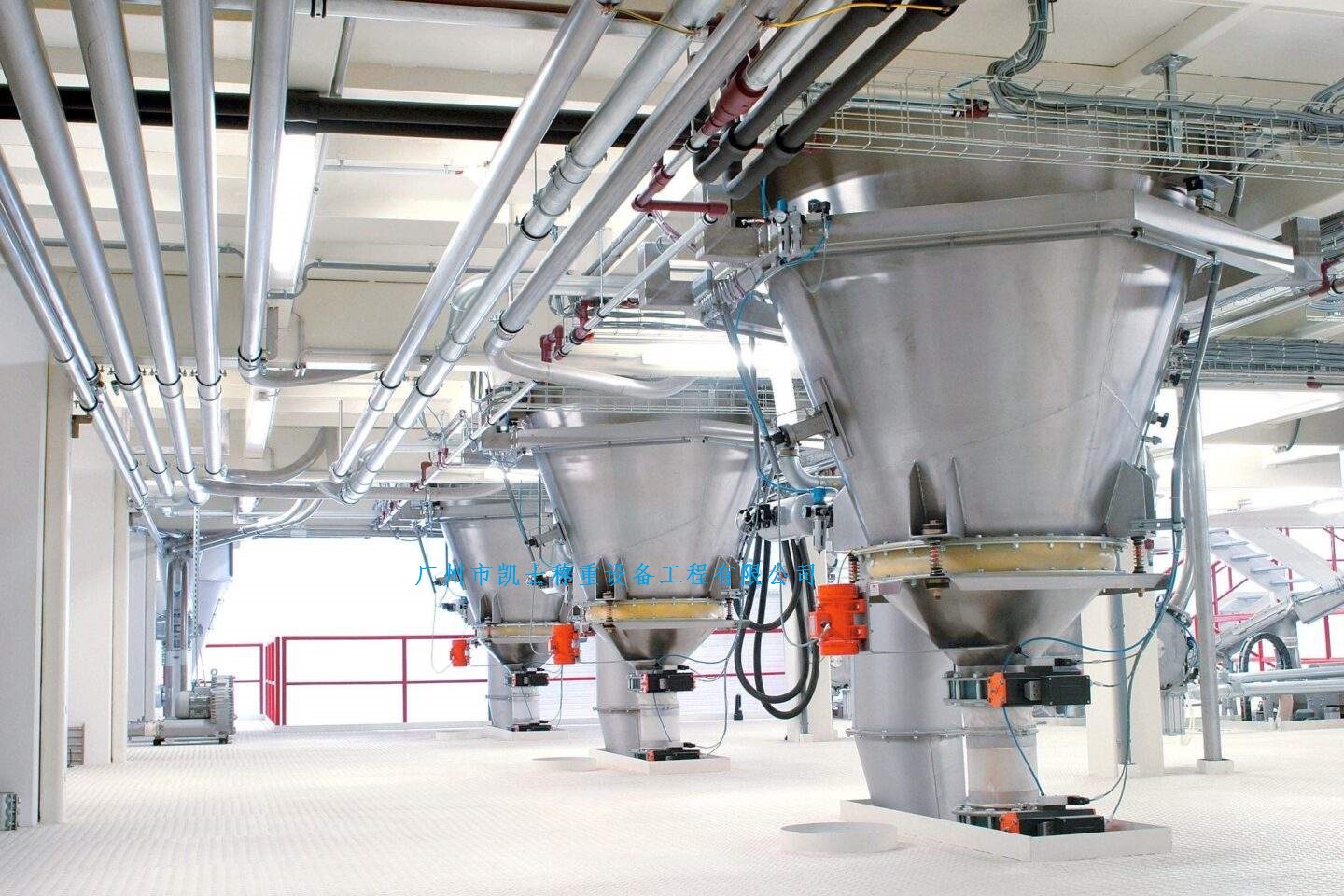
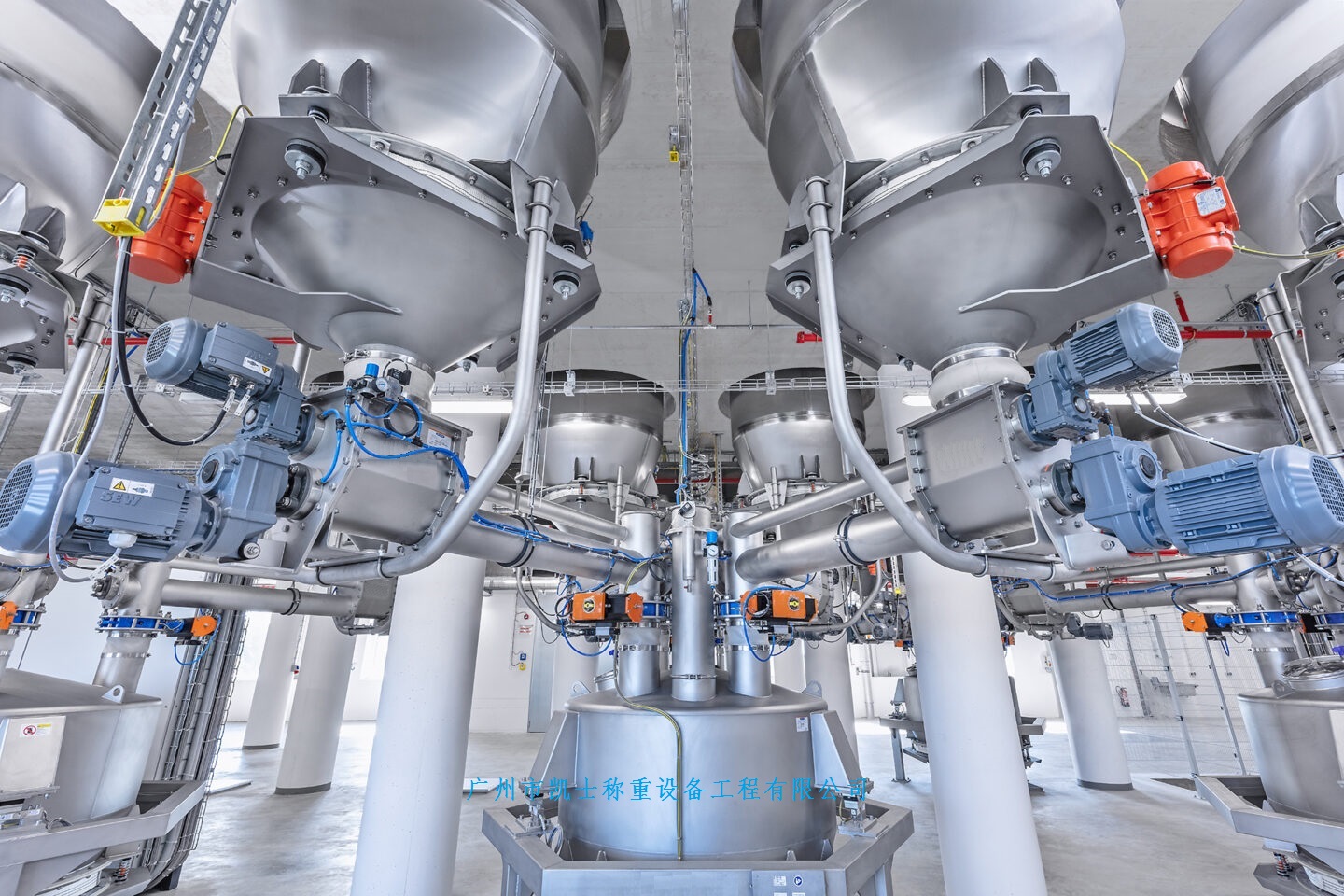
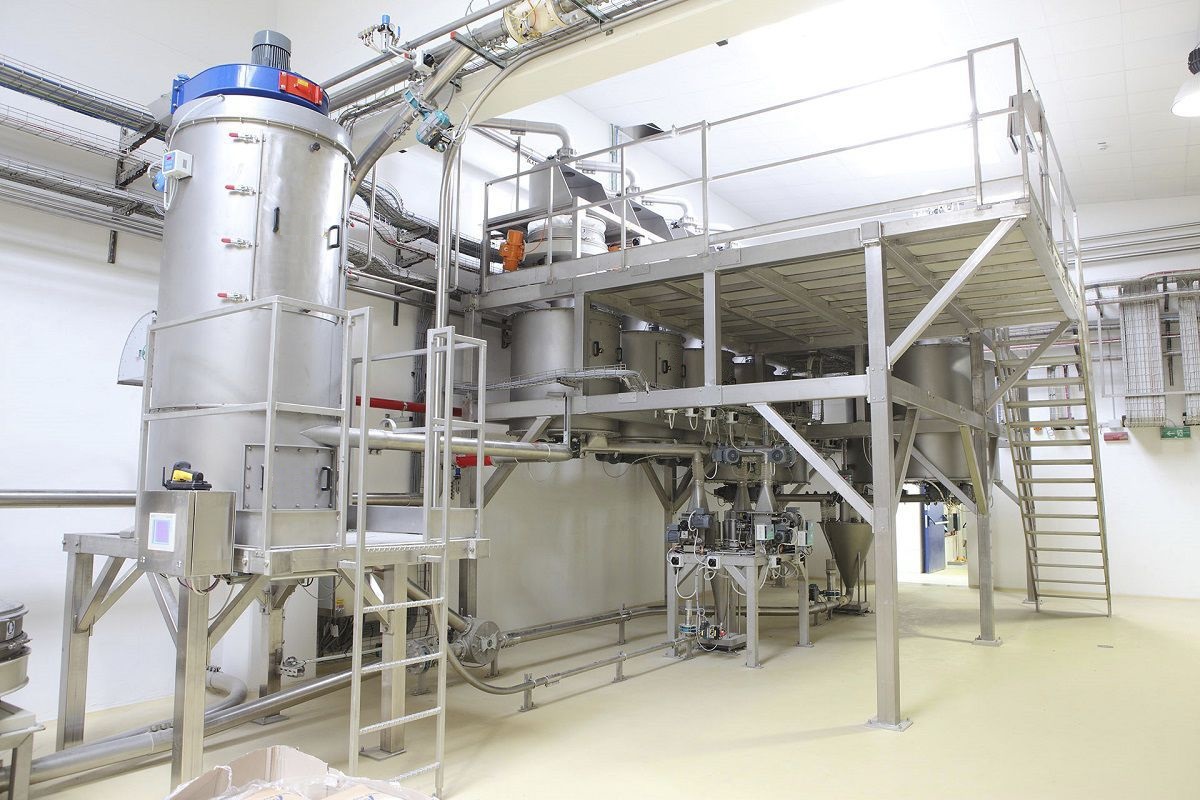
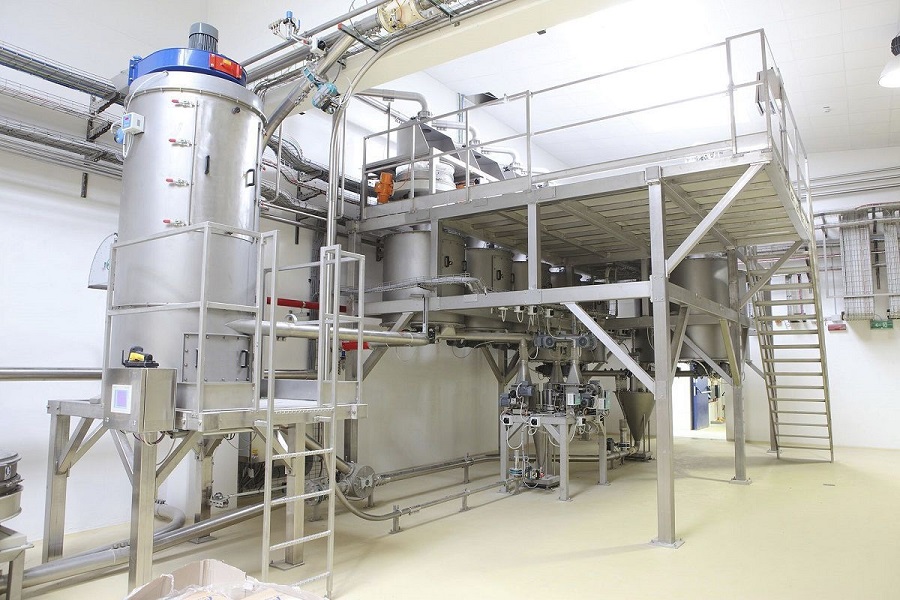
The feeding system is equipped with a main material tank. The auxiliary material tanks are divided into a recycled material tank, a main extrusion additive tank, and an auxiliary extrusion additive tank. Additive tank, main extrusion additive tank, feeding through weight gain meter; The extruder (i.e., the main extruder) adopts a blowing method, feeding through a screw scale, and feeding through a weight gain meter. The feeding of the two main material tanks and the two auxiliary material tanks is also carried out by blowing, while the feeding of all additive material tanks is done by suction. The following will provide a detailed introduction to the feeding system.
Before feeding, the bagged raw materials must first pass through a cleaning device for dust removal. The fan sucks the dust and debris into the dust collector (in addition, the dust collector is also connected to the main material tank, auxiliary material tank, and cyclone separator). After the cleaning is completed, the raw materials are poured into the hopper and then blown into the material tank under the wind pressure of the Roots blower through the rotary valve and the acceleration pipe. The recycled material tank and all additive tanks adopt the vacuum suction feeding method, and the Y-shaped pneumatic Angle seat valve is used to control the suction of the air duct.
The main material tank is fed into the screw scale through the same feeding pipe. In addition, the recycled material and the main extrusion additive tank are also conveyed to the screw scale respectively. The screw scale controls the pneumatic valve and the electric screw to mix and convey the three materials according to the set proportion and conveying speed. Under the screw scale, there is also a rotary valve, which is then blown to the main extruder through the acceleration pipe. The scraps are sucked into the crusher by the centrifugal fan for crushing, and then blown to the main extruder by another centrifugal fan.
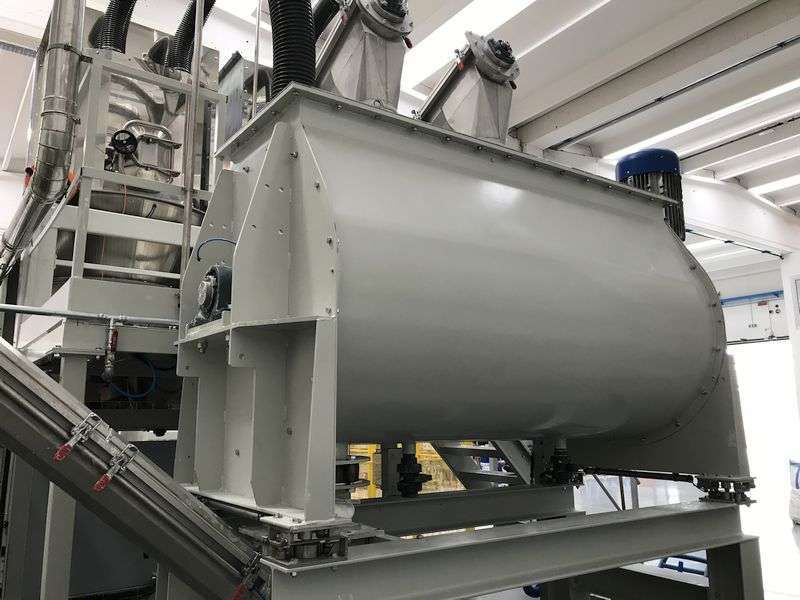
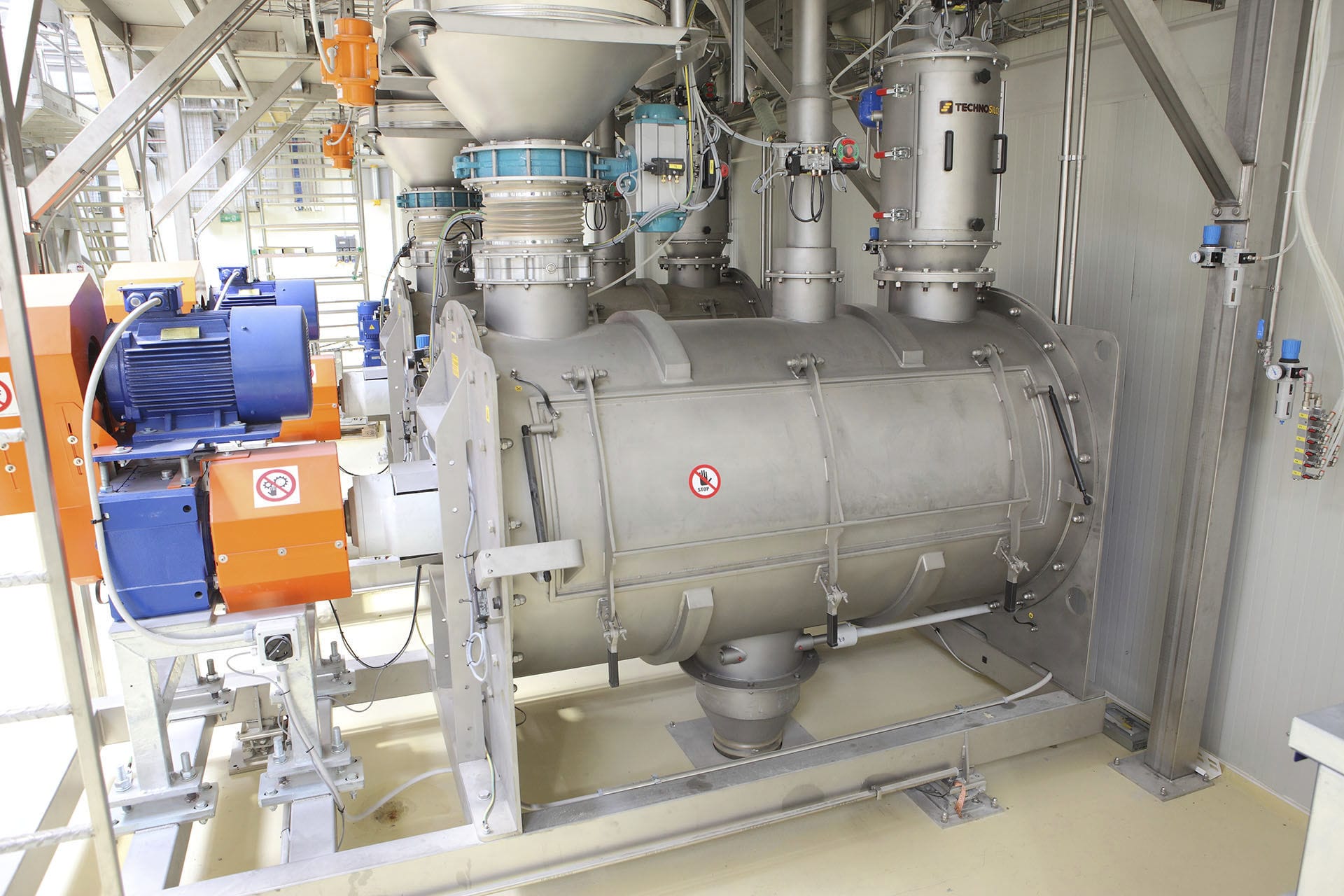
The raw materials blown to the extruder pass through the cyclone separator and directly fall into the buffer tank and then enter the batching machine, while the raw materials sucked into the extruder enter the feeding hopper and immediately fall into the buffer tank. Both the main raw materials and the crushed materials are sent to the main extruder, and after passing through their respective cyclone separators, they fall into the agitator for stirring and mixing, and finally enter the main extruder.