



 2025.12.03


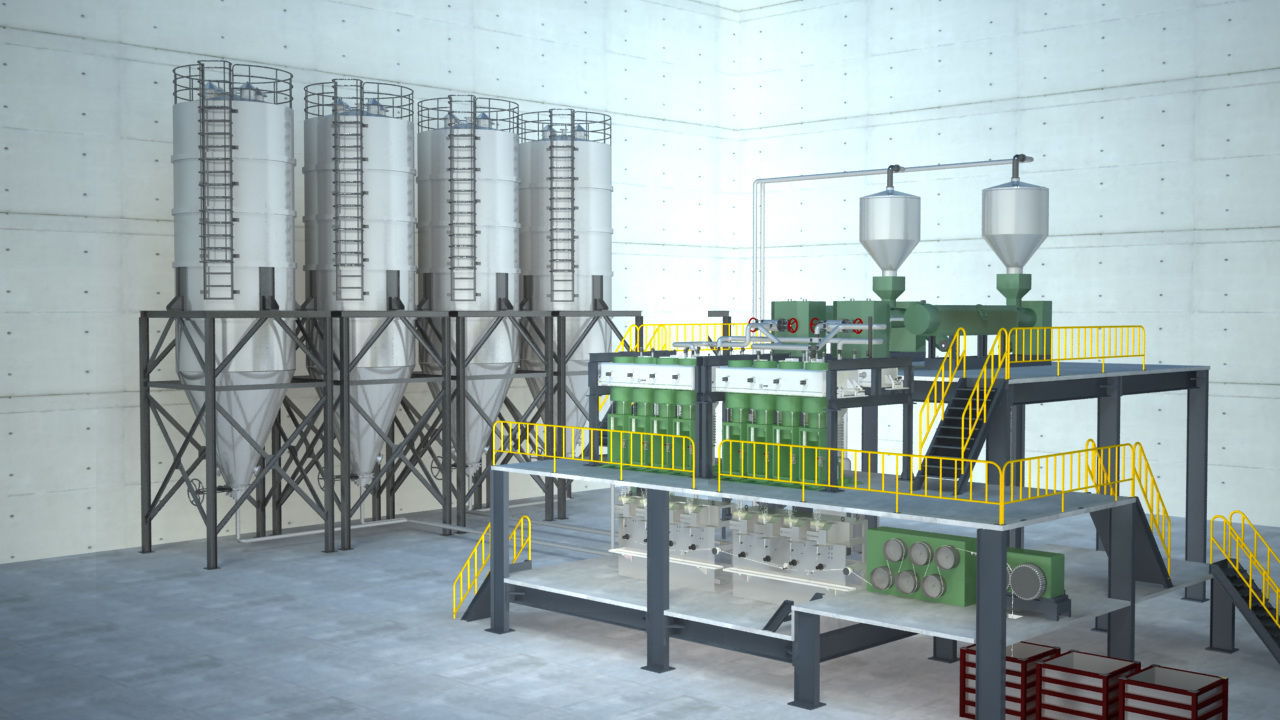
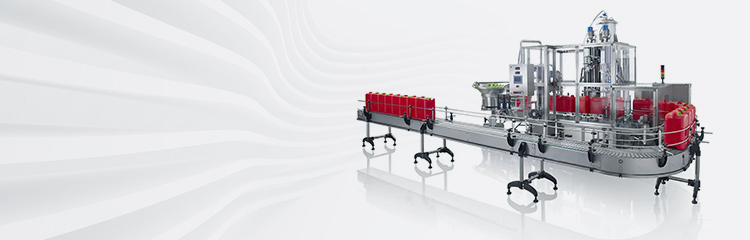
Summary:The weighing feeding machine is mainly composed of a large bag unloading machine, granular material silo, vacuum feeding equipment, buffer hopper, liquid level gauge, feeding device, metering hopper, unloading valve and electrical control system, etc. The weighing system uses a large bag unloader to remove plastic shavings from the flexible ton bags (1.0). Then, the plastic shavings are conveyed to a 20-meter-high collection hopper through vacuum feeding. The metering hopper is precisely fed by the feeding equipment below the collection hopper to ensure that the weight of the material in the hopper scale reaches the set weight. Finally, the material is conveyed to the reaction tank through the discharge valve.
In industrial fields such as medicine and chemical engineering, various feeding and conveying systems are widely applied. Powdered and granular materials are common types of materials. There are numerous types of material conveying equipment widely used in feeding and batching systems, such as bucket elevators, vibrating feeders, screw conveyors and belt conveyors, etc. The vacuum feeder is a conveying device that uses vacuum suction to transport granular and powdered materials. By adopting vacuum feeding and conveying, it can significantly reduce dust pollution in the workshop, improve cleanliness, greatly increase production capacity, and greatly save labor, reduce pollution, and be safe and reliable.
The weighing feeding machine is mainly composed of a large bag unloading machine, granular material silo, vacuum feeding equipment, buffer hopper, liquid level gauge, feeding device, metering hopper, unloading valve and electrical control system, etc. The weighing system uses a large bag unloader to remove plastic shavings from the flexible ton bags (1.0). Then, the plastic shavings are conveyed to a 20-meter-high collection hopper through vacuum feeding. The metering hopper is precisely fed by the feeding equipment below the collection hopper to ensure that the weight of the material in the hopper scale reaches the set weight. Finally, the material is conveyed to the reaction tank through the discharge valve.
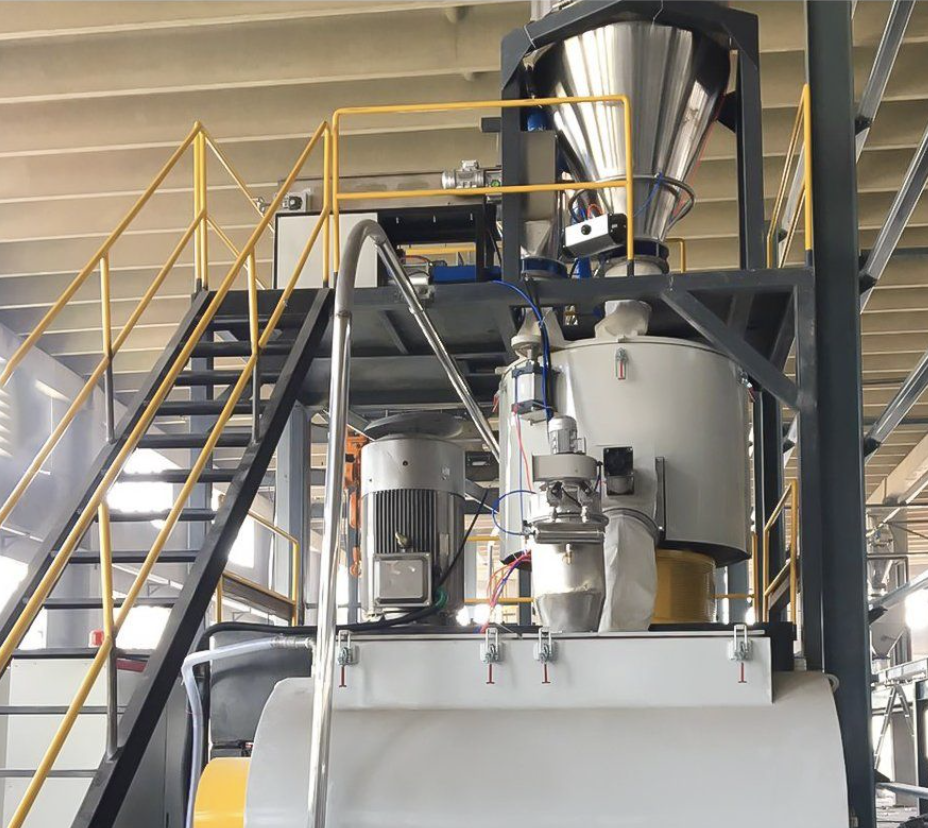
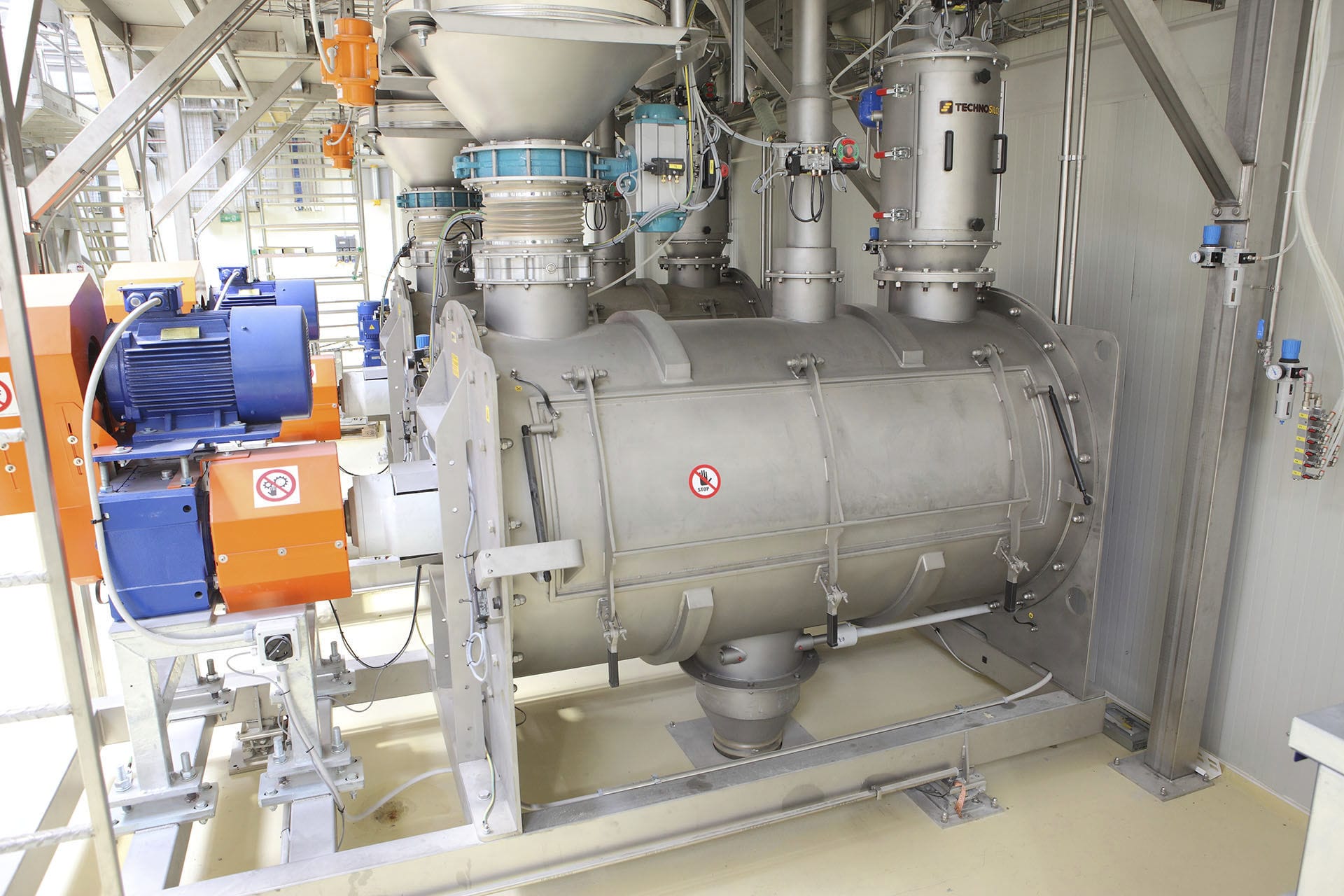
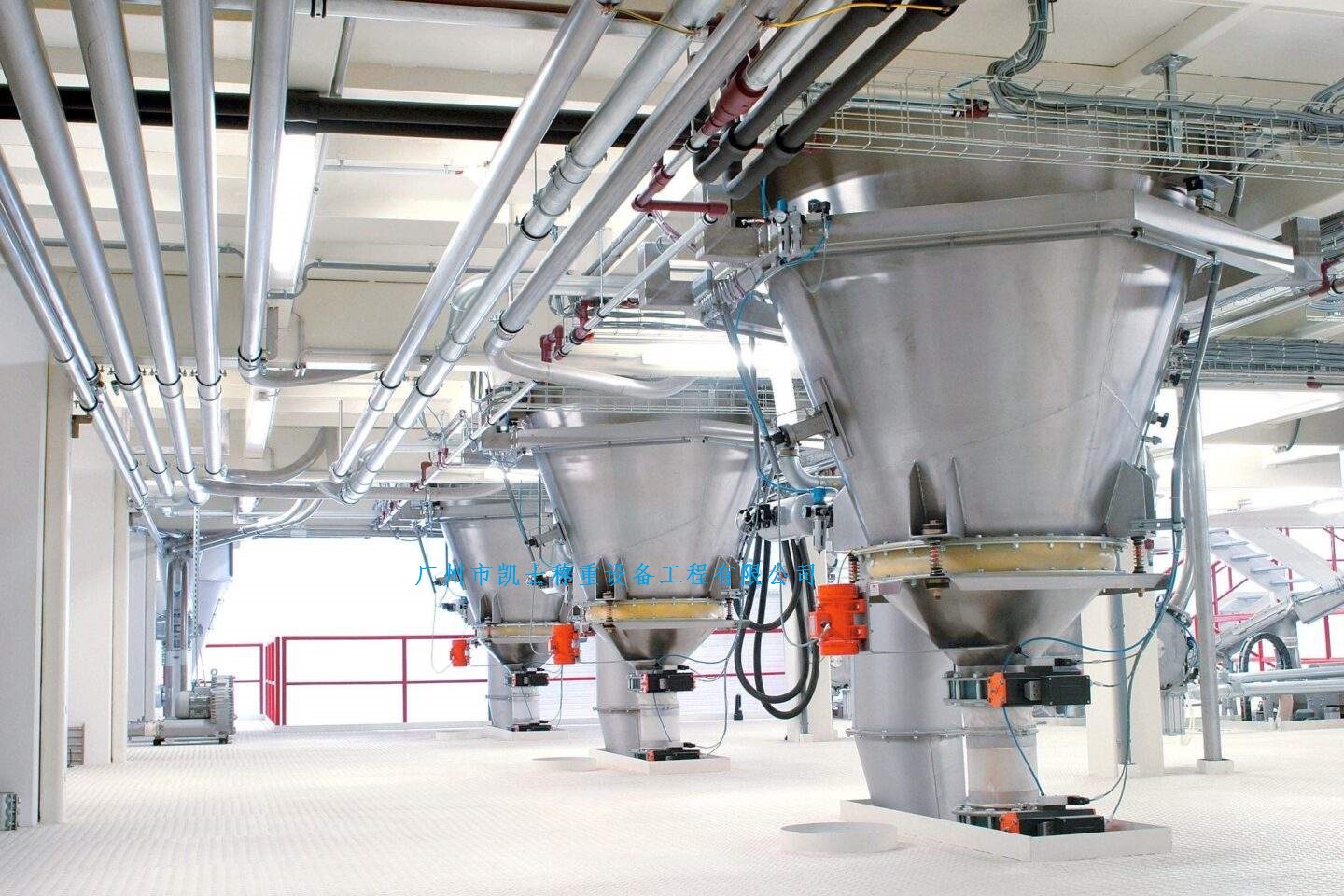
The large bag unloader is mainly composed of a large bag support frame, an electric hoist, a filter screen, etc., and is used for unloading 1.0t large bags of plastic shavings. The capacity of the granular material receiving hopper is 2.1m', made of SUS304 stainless steel, with a bottom inclination Angle greater than 30°. It is mainly used for material storage and also provides materials for the vacuum feeder. The main function of this system is to lift larger granular materials to a height of 20 meters on the third floor to provide materials for the weighing feeder. To achieve this goal, the vacuum conveying method was selected. The materials lifted by the vacuum feeder are discharged into the buffer hopper, which is equipped with high and low level detection switches to control the vacuum feeder to periodically convey the materials into the buffer hopper. The feeding mechanism adopts a three-stage feeding method driven by a cylinder to the sector door, ensuring the feeding accuracy. The feeding equipment and the weighing and metering hopper are connected flexibly. The weighing system consists of three high-quality weighing modules, and one hopper scale is paired with one weighing instrument. To prevent the material from arching and sticking to the wall, a pneumatic oscillator is installed on the hopper scale. At the same time, in order to minimize the influence of other equipment on the measurement, two flexible connections are respectively adopted at the upper and lower ends of this hopper scale, ensuring the measurement accuracy. The capacity of the hopper scale is 0.5m ', the material is SUS304, and the inner wall should be smooth. The discharge of the hopper scale adopts a rotary discharge valve. The electronic control system is composed of components such as Mitsubishi PLC, touch screen and weighing instrument. Reliable control of the system has been achieved through flexible software programming.
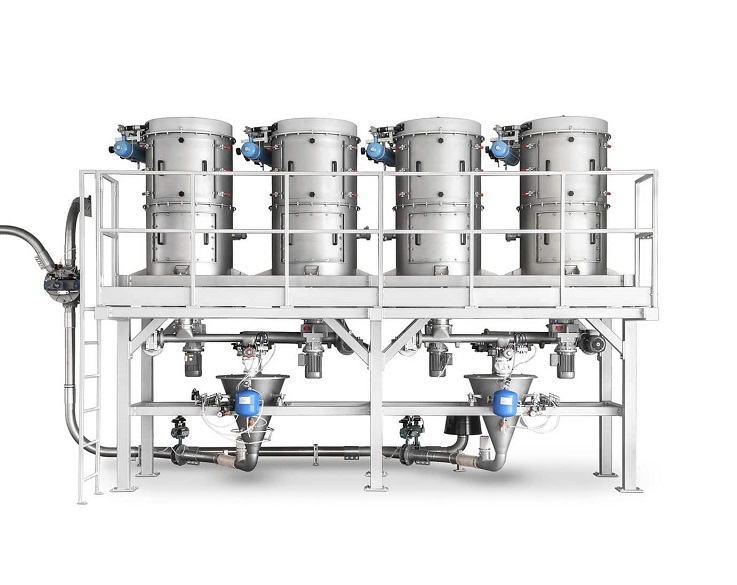
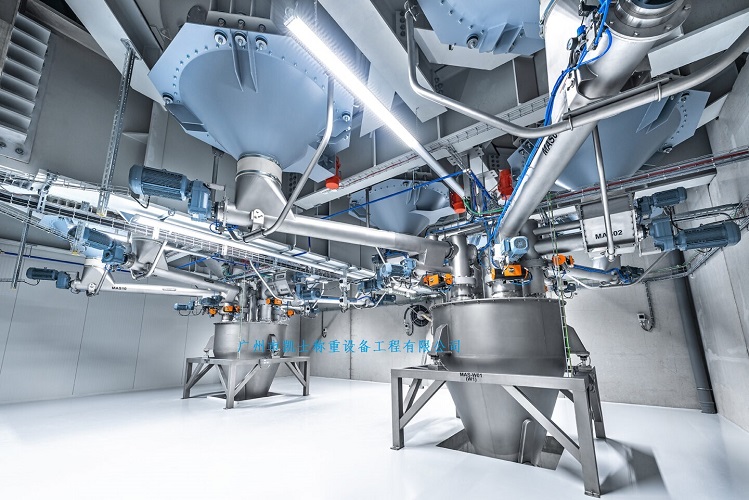
The vacuum feeding system is composed of a manual gate valve, a star feeder, an air filter, a material pipeline, a directional control valve, a separation container and a vacuum pump.
The working principle of the vacuum feeding system:
(1) The start-up of the vacuum pump creates a vacuum in the separation container of the vacuum feeding equipment. The vacuum force sucks the material from the storage bin into the separation container through the manual gate valve, star feeder, directional control valve and feed pipeline.
(2) Air and materials are separated in the filter chamber of the separation container, and the materials are collected in a small silo. The cyclone separator prevents fine powder from entering the filter to enhance the efficiency of the filter.
(3) After the small silo is filled with materials, the reversing valve switches, connecting the vacuum pipeline to the atmosphere, and the vacuum pump runs idle (to avoid frequent motor starts). After the separation container reaches pressure balance, the discharge valve opens, and the material automatically flows out through the discharge port and directly falls into the metering buffer hopper.
(4) When discharging materials, the filters in the filter bin will be automatically blown clean by the reverse-blowing airbags, enabling the filters to be recycled more effectively.
(5) The discharge bin is closed and the entire conveying process is restarted. The manual gate valve of the vacuum feeding system limits the material flow entering the system to prevent pipeline blockage. During debugging, adjust the appropriate opening degree to ensure smooth material flow without applying excessive material pressure to the star-shaped feeding valve, thereby reducing the load on the drive motor.
The structure of the star feeder is composed of a rotor impeller with several blades, a casing, sealing parts, a reducer, an electric motor, etc. The star batching machine is also known as a rotary feeder, air lock valve, star discharge valve and star discharger, etc. The star feeder can be used in the collection and feeding system. As a discharger for the silo, it is commonly used in pneumatic conveying systems. For pressure conveying systems or negative pressure output systems, the star feeder can supply materials to the conveying pipe uniformly and continuously. To ensure the stability of the gas and solid in the pneumatic output pipe, so that the pneumatic conveying can operate normally. At the same time, it can also isolate the upper and lower air pressure of the feeder to play a locking air role. The star feeder is an important component commonly used in pneumatic conveying systems.
When choosing a star feeder, factors such as the particle size of the material, the degree of material damage, and the vacuum degree requirements should be comprehensively considered. The materials in this system are 3mm to 4mm rectangular particles, which are relatively hard in texture and not easy to break. Generally, to ensure airtightness, the gap between the outer edge of the rotor impeller and the casing of the star feeder is relatively narrow. When the material is hard, the shear force on the rotor is relatively large, which is prone to cause the rotor impeller to be stuck or the motor to overload. Two measures will be taken to solve this problem.
(1) Increase the gap between the outer edge of the rotor impeller and the casing to ensure that the material can pass through this gap without being crushed. Make a high-outer and low-inner zigzag deflector plate to allow the material to pass through as much as possible.
(2) Pass through the central part of the star-shaped feeder to reduce the resistance at the outer edge of the impeller. The correct selection of the size of the conveying pipeline and its proper installation are crucial for good material conveying.
The diameter, length and number of turns of the conveying pipeline shall be determined according to the user's requirements and installation conditions, and the following principles shall be followed:
(1) When installing the conveying pipeline, unnecessary elbows should be avoided as much as possible.
(2) Avoid diagonal pipe layout. The minimum radius of stainless steel pipe elbows should be at least 10 times the pipe diameter.
(3) Choose steel pipes as much as possible instead of hoses to reduce friction.
(4) At all connection points of the pipeline, try to avoid sharp corners as much as possible.
The weighing equipment pipeline is made of 304 stainless steel, which is acid-resistant and corrosion-resistant. The inner and outer surfaces of the pipeline are mirror-polished, featuring low energy consumption, high efficiency and low noise. The snap-on design makes disassembly easy, cleaning convenient, and facilitates inspection, cleaning and disinfection.
The electrical control system mainly consists of an electrical control cabinet, a programmable logic controller (PLC), a human-machine interface (touch screen), a junction box, a weighing controller, a large screen display, solenoid valves and valve position control, motors and other drive components. The human-machine interface provides a flexible batching platform for the system. The touch screen is mainly used to control the setting and modification of system parameters, as well as the operating status of the weighing system. On the first floor far from the control room, a large screen monitor is set up, on which the weight data of the electronic scale is displayed synchronously. Below the large screen, there are indicator lights for feeding, discharging, overloading, etc., which show the operating status of the system and facilitate on-site operators to observe and monitor the feeding system. The system is configured with two control modes. Switch the selection switch on the control cabinet panel to the "manual" position. At this point, the system is in "manual mode" and the operation indicator light is on. The operator can operate the mobile device of the feeding system. Such as the start and stop of Roots vacuum pumps, the control of material feeding speed, the control of feed valves and discharge valves, etc. This method is mainly used for equipment commissioning and the handling of special situations in production. Switch the selector switch on the control cabinet panel to the "Automatic" position. The system will be in "Automatic mode", and the touchscreen will display the following screen. This screen is a simulated state of the actual system. When operating in automatic mode, the weighing control system indicates the actual operating status of the system through the color of the indicator light and the dynamic changes of the material flow rate (or air flow). There are status descriptions of various components on the screen. Among them, the red material flow indicates the actual material flow process, and the pink material flow indicates the direction of the air flow. In automatic mode, two automatic programs can be run: vacuum automatic feeding and automatic weighing. The start and stop of vacuum automatic feeding and automatic weighing can be controlled by the buttons "Feeding Start", "Feeding Stop", "Weighing Start" and "Weighing Stop". The action sequence of the vacuum feeder is controlled by PLC. After starting up, first reverse blow out the material, and then repeat this cycle in the order of feeding - reverse blowing - discharging - intermittent. After receiving the stop signal (non-emergency stop), it stops after completing one working cycle.
There is a delay after the vacuum pump starts. The opening time of the feed valve and the discharge valve; The time for opening the back-blowing valve and back-blowing to clean the filter; The time when the material falls when the discharge valve is open; System intermittent time; The start-up time of the feeding rotary valve is delayed. The closing time of the exhaust valve is delayed. Start-up time of star feeder; The exhaust valve starts slowly. The feed valve is delayed in closing. Determine the waiting time. The above time parameters can be conveniently set or modified through the touch screen. When a cycle ends and a continuous high material level signal is detected in the metering buffer hopper, the system is in a paused state and issues a prompt signal. When the material level is lower than the high material level, the vacuum feeder continues to work. To prevent the vacuum pump from overloading, during the operation of the feeder, it is necessary to ensure that one of the exhaust valve and the batching valve is in the open state for interlock control (the exhaust valve is a three-way valve, and the open state of the exhaust valve refers to the state connected to the atmosphere, while the closed state of the batching valve refers to the state connected to the vacuum pump and the feeding valve). When the feeding action begins, the material valve should be open for 2 seconds and then the exhaust valve should be closed. After the feeding action is completed, the exhaust valve should be opened 2 seconds in advance, and then the vacuum valve should be closed. To ensure the stable operation of the vacuum feeder, it is necessary to guarantee that all valves are in place. The weighing system is equipped with a valve position detection switch to monitor the on-off status of each valve. When the valve opens or closes abnormally, the system will issue an alarm to prompt the operator to handle it in time.
According to the weight feeding method, it can be divided into incremental method and subtractive method. To ensure measurement accuracy, the incremental method places higher demands on the control and stability of the feed equipment. However, this method has strict requirements for control accuracy and stability.