





 2026.04.15


Summary:The sorting machine uses a CCD camera to obtain the position information of the parts, and uses image processing and recognition technology to identify and position the workpieces. The images are used for template matching, edge detection and hybrid central moment calculations to achieve computer vision detection and sorting of products. Harris is used to The corner detection and virtual triangle matching method establishes a parts sorting system, which greatly reduces the error rate of sorting and meets the requirements for sorting parts quickly and accurately.
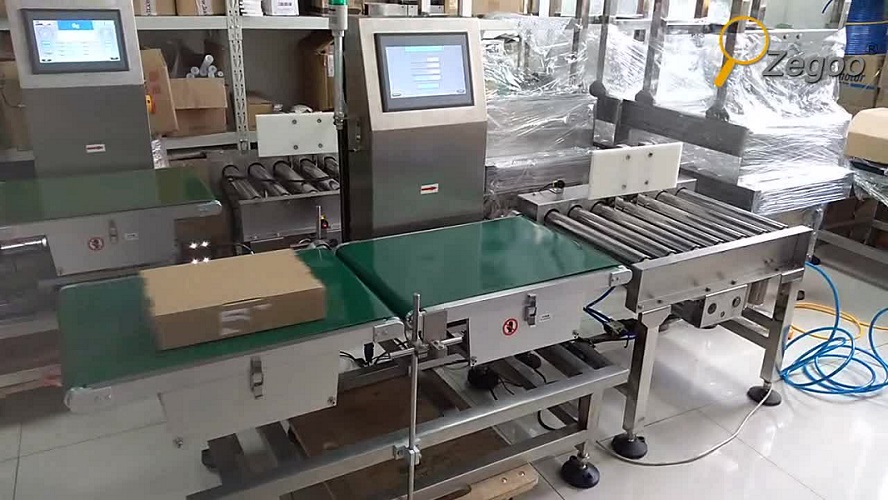
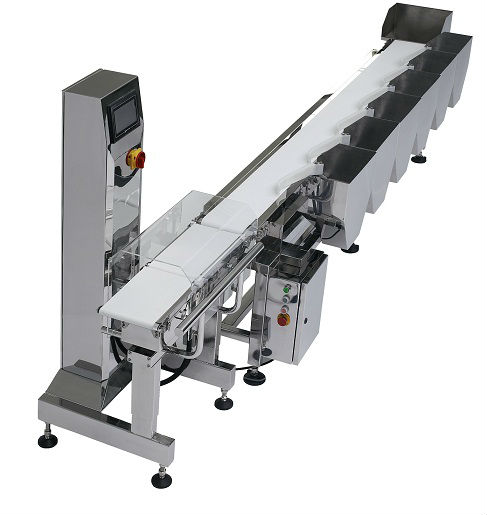
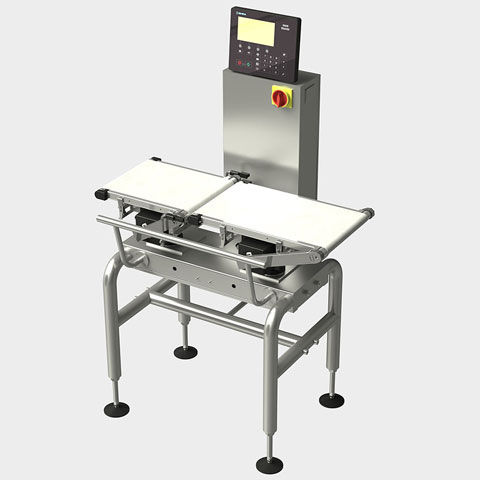
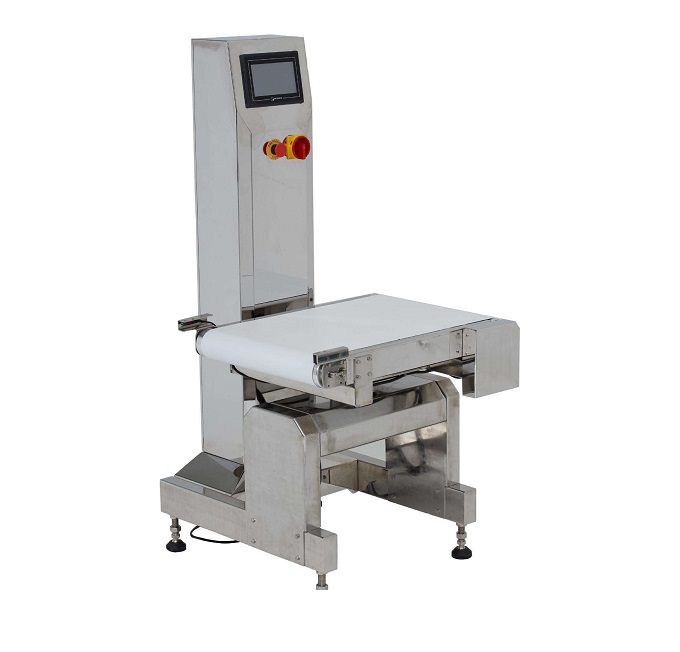
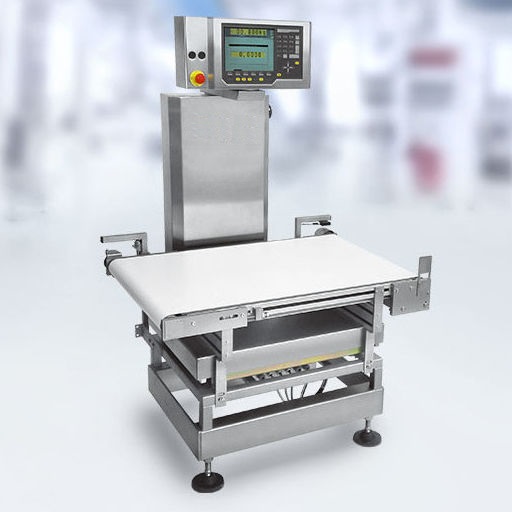
The sorting scale collects the images and weights of the parts on the conveyor belt through cameras and photoelectric sensors to identify the quality issues of the parts. It uses the Otsu method for image binarization processing, then extracts the contours and marks the connected regions. By calculating the circularity and color information of the two types of parts in the marked image and comparing it with the previously established standard information manually, the part sorting operation is completed. The sorting machine is mainly composed of a mechanical system, a weighing module, a synchronization control system, an image acquisition system, and an image processing system. The material support chain plate and material sorting lever of the sorting machine are installed on the circulating conveyor belt and can move forward together with the conveyor belt. The chain plate is in a double concave shape, and the materials are supported between two adjacent chain plates, while the sorting lever is exactly below the materials. A light box is set in the image acquisition area, and a friction belt is also installed under the chain plate. When the chain plate rolls on the friction belt, the materials flip and roll on the chain plate, and at the same time, they are transported forward along with the chain plate and the conveyor belt, thus presenting different surfaces of the materials successively to the camera. After the image processing system receives the images of each material captured by the camera, it extracts its quality parameters, performs image processing and grade determination. In the weighing area, there is an electronic scale under the chain plate, and at both ends of the electronic scale, there are weighing modules. The weighing sensor detects the material weight and transmits the material weight information to the sorting machine's weighing instrument through the weighing module's weighing instrument, achieving the real-time integration of material quality information and appearance quality assessment results, and determining the final material sorting grade. The sorting execution mechanism is installed above the material conveyor line and mainly consists of a sorting cam and a stepper motor. It is used to complete the automatic sorting and discharge of materials.
The sorting weighing machine uses a CCD camera to obtain the position information of the parts, and through image processing and recognition technology, it identifies and locates the workpieces. The image undergoes template matching, edge detection, and mixed central moment calculation to achieve computer vision detection and sorting of the products. It adopts the Harris corner detection and virtual triangle matching method to establish a parts sorting system, which effectively reduces the sorting error rate and meets the requirements of fast and accurate material sorting. Based on the relative moment of force of each pixel point on the contour of the workpiece image to the center of mass, a regional centroid algorithm is proposed, which can accurately detect the inner diameter of the parts in real time. Using a series of classic image processing algorithms, the radius and center coordinates of the circular hole of the measured workpiece are obtained, and then compared with the parameters of the standard workpiece, one can know the current workpiece specifications. The sorting machine is installed above the material conveyor line and is used to obtain effective dynamic weighing signals. The ADC chip analyzes and processes 100 effective data from the chaotic signals to obtain the sorting machine's weighing instrument. The inherent vibration frequency of the scale body and the weighing module is approximately several to several hundred hertz, and the data output rate of the AD chip is 1 kSPS, effectively obtaining the signal and stray interference signal. The materials move at a speed of 40 m/min along the belt, and the effective movement time on the scale platform is short. The conveying length of the sorting scale is set to ensure high weighing accuracy, and the distance of the impact vibration of the object on the scale platform and the intense vibration movement distance under the scale platform should be removed. When this distance is 15 cm, the actual effective weighing object movement length is only 15 cm, and the effective movement time of the weighing object is: 0.2255. If the data output rate of the AD chip is 1 kSPS, within 225 ms of the weighing object's movement, 225 data can be obtained, which is sufficient for the software to analyze and process the real weighing signal. The weighing data collected is measured by the noise-free resolution, which meets the requirements of the international OIMLR7610.000e standard. The noise-free resolution of the AD chip is 18 bits, accurately converting the analog dynamic signal into a digital signal. The feedback voltage of the weighing module's excitation voltage is processed by an operational amplifier for proportional summation, generating a voltage that passes through R14 and C5 to form a low-pass filter waveform as a reference voltage source to eliminate the influence of temperature on the sensor cable signal.
The sorting scale also uses DirectShow technology to complete the image acquisition operation. A regular camera serves as the image acquisition device, providing strong support for the capture and playback of multimedia streams as well as format conversion or encoding. Using DirectShow, data can be conveniently captured from a card supporting the WDM driver model and undergo corresponding post-processing and even be stored in a file. DirectShow uses a model called FilterGraph to manage the processing of the entire data flow, and the various functional modules involved in the data flow processing are called Filters. Each Filter is connected in a certain order in FilterGraph to coordinate their work and complete operations such as obtaining video from video devices or decoding video streams. For the color image data collected, binarization processing is required. Image binarization is a special case of image transformation, and it is the most basic method for extracting the shape of an object from the image. After binarization processing, the image is generally represented by two values: background and target. After grayscale processing of the collected color image, it is found that the target object and the background in the grayscale image are clearly distinct. Therefore, the automatic threshold segmentation method is used to complete the binarization processing. After marking the regions, the measurement of the feature parameters of the marked image is required, and the length of each marked area is calculated, and the maximum length is recorded as L and its corresponding region. For images containing parts, the found region is the part of the part. The number of pixels in the largest region is used as the area. During the counting process, the coordinates of the pixel that meets the requirements are recorded whenever found. After counting all the pixels in the region, based on these position coordinates, the corresponding color pixel information of the original color image on the electronic scale is obtained and the average values of the R, G, and B components are calculated and stored as the color basis for the sorting process. After contour extraction, in addition to the part contour in the image, there may also be other non-part contours. By using connected region marking to find the longest contour and its corresponding region, the part part can be accurately extracted. Through calculation of the circularity and color information of the part area and comparison with the standard information of the weighing system, the sorting work can be completed.
The outer edge of the chain plate of the weighing detection machine is supported on the electronic scale platform. At both ends of the electronic scale platform, weighing modules are installed. The spacing between adjacent chain plates is two link pitches, ensuring that two chain plates can be supported on the electronic scale platform simultaneously. The material is supported on the adjacent two chain plates, and its weight is transmitted to the electronic scale platform through the chain plates. To avoid the accumulation of errors during weighing, a method of placing one material at each position is adopted. When both chain plates with materials are on the electronic scale platform, the weighing data of the materials is collected. The structure of the weighing signal processing circuit, in the weighing section, the weighing modules installed under the electronic scale platform detect the material mass, convert the material mass signal into an analog voltage signal, and then filter it through a low-pass filter circuit, and after analog-to-digital conversion by an AD converter, it is sent to the weighing module's weighing instrument for data processing. The weighing control system adopts a modular structure. The synchronous timing signal generator is responsible for real-time detection of the dynamic position of the materials and generating the system's synchronous timing signal. Every time the conveying chain advances one link distance, that is, every time the sprocket rotates one tooth, the infrared photoelectric switch generates a pulse. This pulse signal is pulse-shaped and photoelectrically isolated within the system's synchronous timing signal generator, and then sent through the 485 bus to other modules of the system as the synchronous timing signal for the entire system. The camera weighing instrument is responsible for monitoring the working status of the camera and generating the external trigger signal of the camera under the synchronization of the synchronous timing signal. The graded execution weighing instrument is responsible for the dynamic registration of the material grade information and its real-time position, as well as the control of the graded execution mechanism. The weighing module weighing instrument is responsible for collecting and processing the weighing information of the materials. The main weighing instrument of the weighing and sorting machine receives the appearance quality detection results from the image processing system and the weighing information of the materials from the weighing module weighing instrument, and then comprehensively determines the final grade of the materials, as well as the parameter settings and status monitoring of each module of the system.
According to the structural design of the weight detection machine, the materials on the conveying chain are arranged in intervals by two adjacent supporting chain plates, and the distance between adjacent two chain plates is two link distances, and the distance between two adjacent materials is four link distances. The time for collecting and processing the weighing information of the materials cannot exceed four synchronous timing signal cycles to avoid affecting the subsequent processing of the weighing information of the materials. After the synchronous timing signal enters the weighing module weighing instrument, it is quartered and delayed appropriately to generate the "weighing start trigger signal". Adjusting the delay time can ensure that when the two chain plates carrying the materials are simultaneously on the electronic scale platform, the triggering of the weighing module weighing instrument to start data collection occurs. The collection time is one synchronous timing signal cycle. Every time a "weighing start trigger signal" pulse comes, the triggering of the weighing module weighing instrument occurs once. Since the material conveying speed is 0.61m/s, each synchronous timing signal cycle is 0.083s. The conversion time of the AD converter is 10s. After removing the influence of other factors, it can collect hundreds of weighing data for one material. In one synchronous timing signal cycle, 50 weighing data are collected for the materials, and after multiple experiments and analysis, these data are arranged in order of size, and then the 5 largest and 5 smallest values are eliminated, and the remaining data are averaged to obtain one final determined data.